


The Real Reason Men Struggle to Ask for Help
Men’s mental health counseling is a specialized form of therapy designed to meet men where they are — addressing how men actually experience stress, depression, anxiety, and emotional pain, rather than assuming they’ll open up the same way anyone else might.
If you’re looking for a quick answer, here it is:
What men’s mental health counseling helps with:
- Chronic stress, burnout, and work-life pressure
- Depression and anxiety (which often look like anger or irritability in men)
- Relationship problems, loneliness, and communication struggles
- Fatherhood, life transitions, and identity challenges
- Addiction, trauma, and grief
Why it works differently for men:
- Sessions are practical and goal-oriented, not just “talk about your feelings”
- Therapists trained in men’s issues understand gender role pressure and how it shapes behavior
- You don’t need to be in crisis to benefit — many men start therapy to get ahead of problems, not just recover from them
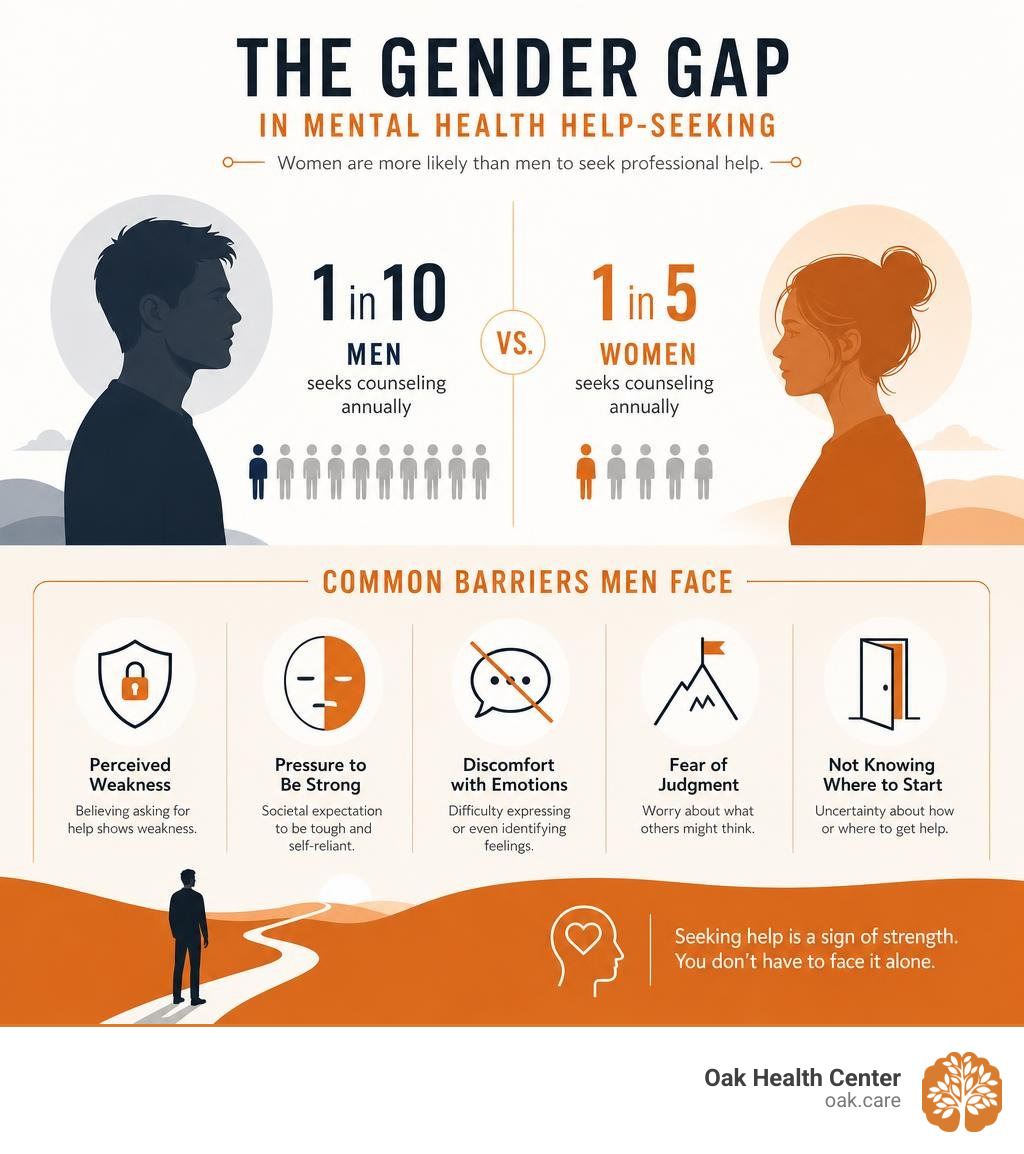
Here’s the uncomfortable truth: men are dying from untreated mental health problems. Men die by suicide at four times the rate of women — yet only about 1 in 10 men seeks counseling, compared to nearly 1 in 5 women. That gap isn’t because men suffer less. It’s because most men were taught that struggling in silence is strength.
It isn’t.
I’m Andrew Brewer, Practice Manager at Oak Health Center, where I’ve spent my tenure helping grow our provider team and expand mental health programs — including work directly connected to men’s mental health counseling and accessible care. In that time, I’ve seen how the right support changes lives, and why getting men through the door is one of the most important things a mental health practice can do.
The Silent Crisis: Why Men Avoid Men’s Mental Health Counseling
The reluctance of men to seek professional mental health support is a well-documented challenge. Statistics show that while men trail women by only about 4 million in the total U.S. population, they are significantly underrepresented in therapist offices. Only 9.9% of men seek counseling services annually compared to 17.1% of women. This disparity is not due to a lack of psychological distress; rather, it is rooted in deeply ingrained societal expectations and the psychological phenomenon known as gender role conflict.
From a very young age, boys are often socialized to adhere to traditional masculine norms. These norms dictate that “real men” should be self-sufficient, emotionally stoic, physically tough, and always in control. Asking for help is frequently framed as a sign of weakness or failure. This cultural conditioning creates a restrictive emotionality, where men learn to suppress vulnerable feelings like sadness, fear, or insecurity. Over time, this emotional shutdown can lead to intense internal conflict, shame, and isolation.
When men experience psychological pain, they often lack the tools or the vocabulary to express it. Because traditional counseling models were historically developed in the early 20th century with a focus on emotional exploration and verbal vulnerability—communication styles more aligned with female socialization—many men find standard therapy environments intimidating or unhelpful. They fear being judged, misunderstood, or forced into “awkward therapy speak” that doesn’t resonate with their lived experiences.
To understand how these barriers block growth, consider the differences between holding onto traditional masculine constraints and stepping into therapeutic growth:
| Traditional Masculine Barriers | Therapeutic Growth & Resilience |
|---|---|
| Stoicism & Restrictive Emotionality: Suppressing all emotions except anger or frustration. | Emotional Literacy: Learning to identify, understand, and express a full range of feelings safely. |
| Hyper-Independence: Believing that asking for help is a sign of personal failure. | Relational Connection: Recognizing that seeking support is a courageous act that builds strength. |
| Avoidance & Distraction: Masking pain through overworking, substance use, or risk-taking. | Active Problem-Solving: Addressing the root causes of distress with practical tools and strategies. |
| Fear of Vulnerability: Viewing emotional openness as a liability in relationships and work. | Authentic Power: Developing self-trust, deeper intimacy, and genuine resilience. |
When these traditional barriers prevent men from seeking men’s mental health counseling, the consequences can be devastating. Men are much more likely to abuse drugs and alcohol to self-medicate, mask uncontrolled addictions, or cope with chronic stress. The refusal to seek help contributes to the tragic reality that men account for the vast majority of suicide deaths. Understanding Why men avoid seeking help is the first step toward dismantling these barriers and saving lives.
How Mental Health Struggles Manifest in Men
Depression, anxiety, and trauma do not look the same in everyone. Because of gender role socialization, men are highly likely to display externalizing symptoms when they are struggling. Instead of expressing sadness, crying, or talking about feeling overwhelmed, a man’s distress often manifests behaviorally and physically.
Anger, irritability, and sudden outbursts are some of the most common ways men express underlying emotional pain. When a man feels powerless, scared, or deeply sad, cultural conditioning teaches him that anger is the only socially acceptable emotion to show. Consequently, chronic irritability or a low tolerance for frustration can actually be a mask for severe clinical depression or chronic anxiety.
Overworking is another common coping mechanism. Men often throw themselves into their careers, putting in extreme hours to avoid facing personal difficulties or relationship tension. This workaholism, while culturally rewarded, eventually leads to severe burnout, physical exhaustion, and deeper emotional disconnection.
Male loneliness is also reaching epidemic proportions. Research indicates that men’s social networks contract significantly after their twenties, leaving many adult men without close friends or confidants. This chronic isolation has severe physical and mental health consequences; in fact, long-term loneliness has a mortality impact comparable to smoking fifteen cigarettes a day. It elevates inflammatory markers, disrupts sleep, suppresses immune function, and increases cardiovascular risks.

Furthermore, mental health struggles in men are deeply intertwined with sexual and reproductive health. Conditions like sexual performance anxiety, erectile difficulties with psychological roots, low libido, and coping with prostate health challenges or male infertility can trigger intense feelings of shame and inadequacy. These issues are rarely discussed openly, yet they heavily impact a man’s self-esteem and relationship stability.
To explore these patterns deeper, academic reviews on New directions in male-tailored psychotherapy emphasize that we must look beyond standard diagnostic criteria to recognize male-specific phenotypes of distress. When we include externalizing symptoms like risk-taking, substance misuse, and anger, the apparent gender gap in mental health struggles begins to disappear.
Recognizing Depression and Anxiety in Men’s Mental Health Counseling
In a professional therapeutic setting, identifying male depression and anxiety requires looking past typical clinical presentations. Men frequently experience their psychological pain physically. Because the mind and body are fully connected, emotional distress that is carried in silence eventually speaks through physical ailments.
Common physical signs of male depression and anxiety include:
- Chronic muscle tension, especially in the neck, shoulders, and back
- Frequent, unexplained headaches or migraines
- Persistent sleep disturbances, including insomnia or sleeping excessively
- Unexplained digestive issues, such as stomach cramps or acid reflux
- Chronic fatigue and a general loss of physical energy
- Cardiovascular symptoms like a racing heart or chest tightness during periods of high stress
When men enter men’s mental health counseling, therapists work to help them connect these physical symptoms to their emotional root causes, translating bodily tension into valuable self-awareness.
Navigating Loneliness, Fatherhood, and Relationship Pressures
Major life transitions present unique challenges for men. The transition into fatherhood, for instance, brings a wave of new parenting pressures, financial worries, and shifts in identity. Many modern fathers want to be emotionally present and highly involved with their children, yet they struggle to balance these desires with traditional expectations to be the primary financial provider.
This pressure can strain romantic relationships. When a man struggles with emotional isolation, he may rely solely on his partner for emotional support—or, conversely, shut down entirely. This dynamic often leaves partners feeling like they are carrying all the emotional labor in the relationship, leading to resentment and frequent arguments.
In therapy, men can safely unpack these pressures. Counseling provides a dedicated space to navigate work-life balance, address intimacy issues, and learn how to communicate needs constructively without resorting to withdrawal or anger.
Modern Therapeutic Approaches That Work for Men
At Oak Health Center, we know that generic, one-size-fits-all therapy often fails to engage male clients. To make therapy effective for men, we utilize structured, evidence-based, and practical modalities that align with how men prefer to process information and solve problems.
One of the most effective frameworks is strengths-based therapy. Rather than focusing solely on pathology, deficits, or what is “broken,” a strengths-based approach identifies and leverages a man’s existing resilience, skills, and values. This orientation respects the client’s background and helps him feel empowered rather than criticized.
Cognitive Behavioral Therapy (CBT) is also highly successful. Because CBT is structured, goal-oriented, and focused on the relationship between thoughts, feelings, and behaviors, it appeals to men who prefer concrete strategies over abstract emotional exploration. Through our Psychotherapy services, we help men identify negative thought patterns, challenge cognitive distortions, and implement behavioral interventions that lead to real-world change.
For men seeking to build deeper connections, we also integrate relational and attachment-based methods. These approaches help men understand how their early life experiences shape their current relationship patterns. To explore the academic foundations of this work, the research on Counseling with male clients and relational resilience highlights how combining Relational-Cultural Theory, positive psychology, and shame resilience helps men move past isolation and build lasting, mutually empowering relationships.
Breaking the Stigma with Action-Oriented Men’s Mental Health Counseling
Many men are drawn to action-oriented, solution-focused therapy. They want to know: “What can I do today to start feeling better?” This approach treats therapy as a collaborative workshop where the therapist and client work together to build practical tools for emotional regulation, stress management, and conflict resolution.

We often recommend utilizing innovative, engaging resources like Man Therapy tools to help break the ice. By using humor, straightforward language, and a no-nonsense approach, these tools strip away the clinical jargon and make mental health care feel accessible, practical, and completely normal.
Through action-oriented counseling, men build emotional literacy—the ability to identify and articulate what they are experiencing—without feeling like they have to sacrifice their strength or masculinity.
Relational and Attachment-Based Methods
In relationship counseling, we frequently employ the Gottman Method, which provides couples with practical, research-backed tools to manage conflict, increase intimacy, and build empathy. For male clients, this method is highly effective because it breaks down complex relationship dynamics into clear, actionable steps.
By understanding secure attachment, men learn how to show vulnerability safely, reducing the habit of emotional shutdown during arguments. This not only relieves the emotional labor on their partners but also fosters a deeper, more secure bond at home.
What to Expect When Starting Therapy
If you have never been to therapy before, taking that first step can feel incredibly daunting. It is completely normal to feel hesitant, skeptical, or even a little anxious before your first session. Knowing what to expect can help ease those nerves.
Your first session is primarily an intake assessment and a chance to check the “vibe” with your therapist. There are no scripts, no expectations, and no pressure to share your deepest secrets right away. Instead, you and your therapist will focus on:
- Discussing what brought you to therapy and what you hope to achieve
- Exploring your current stressors, physical health, and daily routines
- Mapping out a personalized, goal-oriented treatment plan
- Establishing boundaries and discussing confidentiality
At Oak Health Center, we make finding the right fit easy. We offer convenient Locations for care across Southern California—including Beverly Hills, Fullerton, Laguna Hills, Rancho Cucamonga, and South Pasadena—alongside comprehensive statewide virtual services for those who prefer the flexibility of online therapy.
To help you prepare for your first session, here is a simple checklist:
- Identify your goals: Think about 1 or 2 specific areas of your life you want to improve (e.g., managing work stress, improving communication with your partner).
- Write down your symptoms: Jot down any physical or emotional changes you’ve noticed, such as sleep issues, irritability, or chronic fatigue.
- Check your insurance: Gather your insurance information so our team can help you maximize your benefits and handle the paperwork.
- Keep an open mind: Therapy is a collaborative process. You are in control of the pace and depth of the sessions.
Frequently Asked Questions About Men’s Therapy
How does men’s counseling differ from general therapy?
While the core psychological principles remain the same, men’s mental health counseling pays specific attention to the unique social pressures, gender role conflicts, and communication styles of men.
Traditional therapy models often expect clients to immediately dive into deep emotional expression. In contrast, male-tailored counseling respects that men often process stress through action, physical symptoms, or externalizing behaviors like irritability. It focuses on building a strong, collaborative alliance, utilizing structured and goal-oriented techniques, and translating emotional experiences into practical, real-world solutions.
What are the signs that a man needs professional counseling?
A man may benefit from professional counseling if he notices persistent changes in his behavior, mood, or physical health that standard coping strategies (like going to the gym or isolating) fail to resolve.
Key warning signs include:
- Uncharacteristic outbursts of anger, chronic irritability, or constant frustration
- Increased reliance on alcohol, drugs, gambling, or other compulsive habits to cope with stress
- Significant changes in sleep patterns, chronic fatigue, or unexplained physical pain
- Withdrawal from friends, family, and activities he used to enjoy
- Persistent feelings of burnout, hopelessness, or feeling “stuck” in his career or relationships
Where can I find specialized resources and support groups for men?
Finding specialized support is crucial for long-term recovery. In Southern California, you can access curated local networks, male-focused practitioners, and peer support groups.
For those in Los Angeles County, exploring Beverly Hills support groups can connect you with local men’s issues groups that offer a safe space to share experiences and build community. If you are located in the Inland Empire, searching for Rancho Cucamonga male therapists is an excellent way to find local, specialized clinicians who understand the specific challenges men face.
Conclusion
Seeking help is not a sign of weakness; it is the ultimate demonstration of courage and personal responsibility. Taking charge of your mental health is one of the most masculine things you can do—it protects your well-being, strengthens your relationships, and ensures you can continue to show up fully for the people who depend on you.
At Oak Health Center, we are dedicated to providing compassionate, comprehensive, and simplified mental healthcare tailored to your life. Whether you prefer to meet with a therapist in person at one of our Southern California locations or connect online through our virtual services, we are here to support you every step of the way.
Do not wait until you hit a breaking point to get your head back in the game. Contact us to get started today, or Schedule a consultation at our Beverly Hills clinic to take the first step toward a stronger, clearer, and more resilient life.