


When Pregnancy Feels Heavy: What You Need to Know About Depression During Pregnancy Treatment
Depression during pregnancy treatment is something far more pregnant women need than most people realize — and the good news is that effective, safe options exist.
Here is a quick overview of the main treatment approaches:
| Treatment Type | Examples | Best For |
|---|---|---|
| Psychotherapy | CBT, IPT | Mild to moderate depression |
| Medication | Sertraline, Escitalopram (SSRIs) | Moderate to severe depression |
| Lifestyle changes | Exercise, sleep hygiene, nutrition | All severity levels, used alongside other treatment |
| Combined approach | Therapy + medication | Moderate to severe or treatment-resistant cases |
Pregnancy is supposed to be a joyful time. But for many people, it is not — and that disconnect can make everything feel worse.
Between 7% and 9% of pregnant people in the United States experience depression during pregnancy. Many more go undiagnosed because symptoms like fatigue, sleep disruption, and appetite changes are easy to mistake for normal pregnancy discomfort.
This is not the “baby blues.” It does not go away on its own in a few weeks. And leaving it untreated carries real risks — for both the mother and the baby.
The right support can make a significant difference. This guide walks you through everything you need to know, from recognizing symptoms to understanding which treatments are safe during pregnancy.
I’m Andrew Brewer, Practice Manager at Oak Health Center, where I’ve helped build and expand mental health programs — including services that directly support perinatal mental health and depression during pregnancy treatment. My work sits at the intersection of operational strategy and compassionate care, and I’ve seen how access to the right treatment changes outcomes for both mothers and their babies.
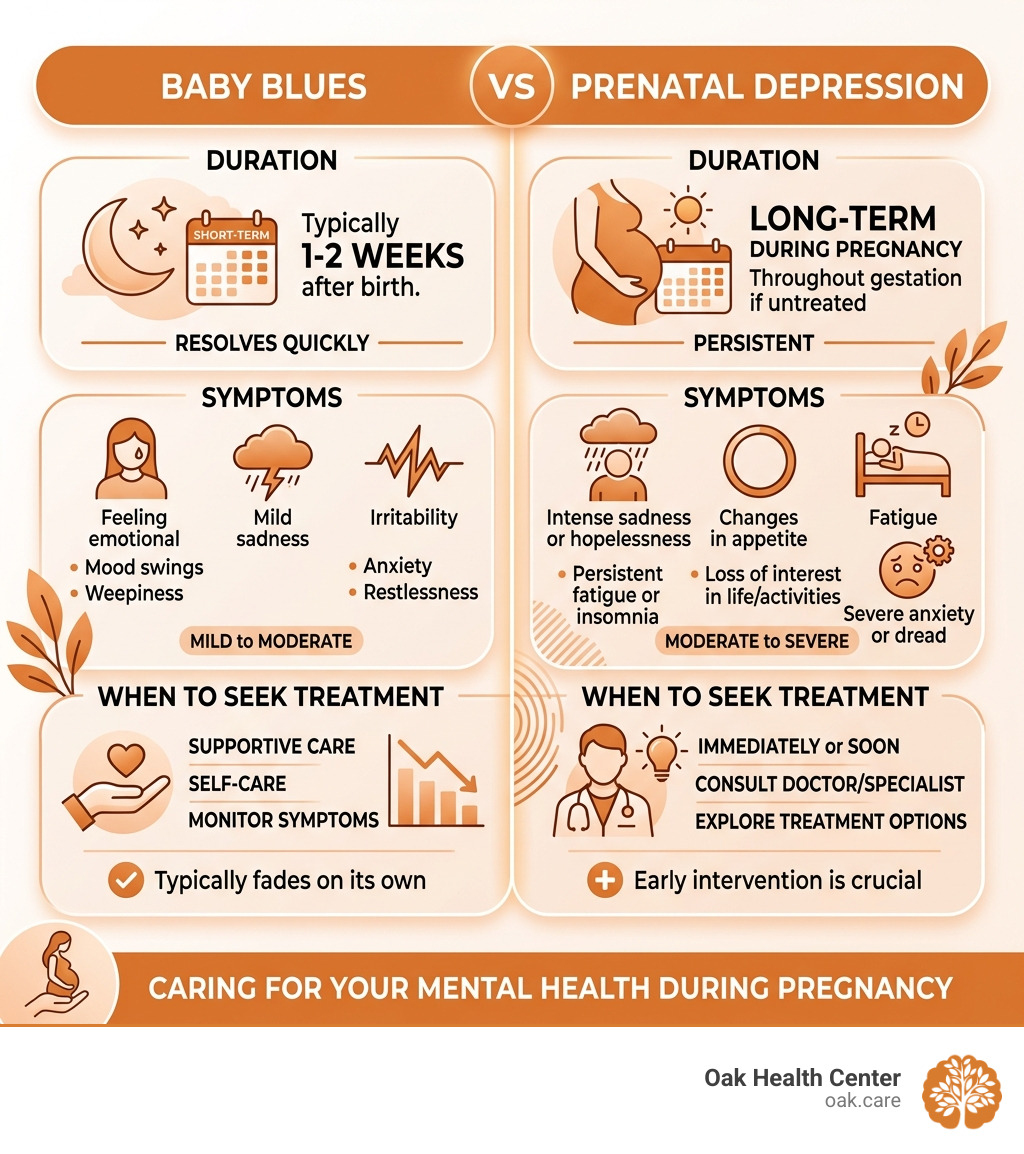
Understanding Prenatal Depression vs. The Baby Blues
It is common to hear the term “baby blues,” but that usually refers to the short-lived period of weepiness and irritability that occurs after birth. Prenatal depression (also called antepartum depression) is a clinical mood disorder that happens while you are still carrying your baby.
As we move through 2026, medical research has made it clearer than ever that this is a biological condition. It is often triggered by massive hormonal shifts that affect brain chemistry, specifically the neurotransmitters that regulate mood. Unlike the baby blues, which typically resolve within two weeks of delivery, prenatal depression can last throughout the entire pregnancy and, if left untreated, significantly increases the risk of postpartum depression.
According to the NIMH Perinatal Depression Guide, perinatal depression is a “real” medical illness. It isn’t a character flaw, and it isn’t something you can just “snap out of” with positive thinking.
Common Symptoms and Risk Factors
Recognizing the signs is the first step toward getting help. While everyone has “off” days, clinical depression involves symptoms that last for at least two weeks. These include:
- Anhedonia: Losing interest in things you used to love (like your favorite hobbies or even preparing for the baby).
- Persistent Sadness: Feeling “empty” or crying frequently without a clear reason.
- Sleep and Appetite Changes: Sleeping too much or being unable to sleep, and significant changes in eating habits beyond normal pregnancy cravings.
- Fatigue: An overwhelming sense of exhaustion that isn’t cured by a nap.
- Anxiety: Excessive worry about the baby’s health or your ability to be a parent.
Who is most at risk? Statistics show that 1 in 4 women will experience depression at some point in their lives, but certain factors increase the likelihood during pregnancy. A personal or family history of mood disorders is a major indicator. Other factors include stressful life events (like moving or job changes), a lack of social support, or an unplanned pregnancy.
The Risks of Untreated Depression
We often worry about the effects of medications on a fetus, but we must also consider the risks of untreated depression. When a mother is struggling, she may find it difficult to keep up with prenatal appointments, eat nutritiously, or avoid harmful substances like tobacco or alcohol.
The ACOG Clinical Guidance on Perinatal Mental Health notes that untreated prenatal depression is linked to:
- Preterm birth and low birth weight.
- Preeclampsia (high blood pressure during pregnancy).
- Postpartum relapse: There is a 50–62% chance of a major depressive episode after birth if prenatal symptoms aren’t managed.
- Maternal mortality: Tragically, mental health conditions are a leading cause of pregnancy-related deaths.
Diagnosis and Screening for Depression During Pregnancy Treatment
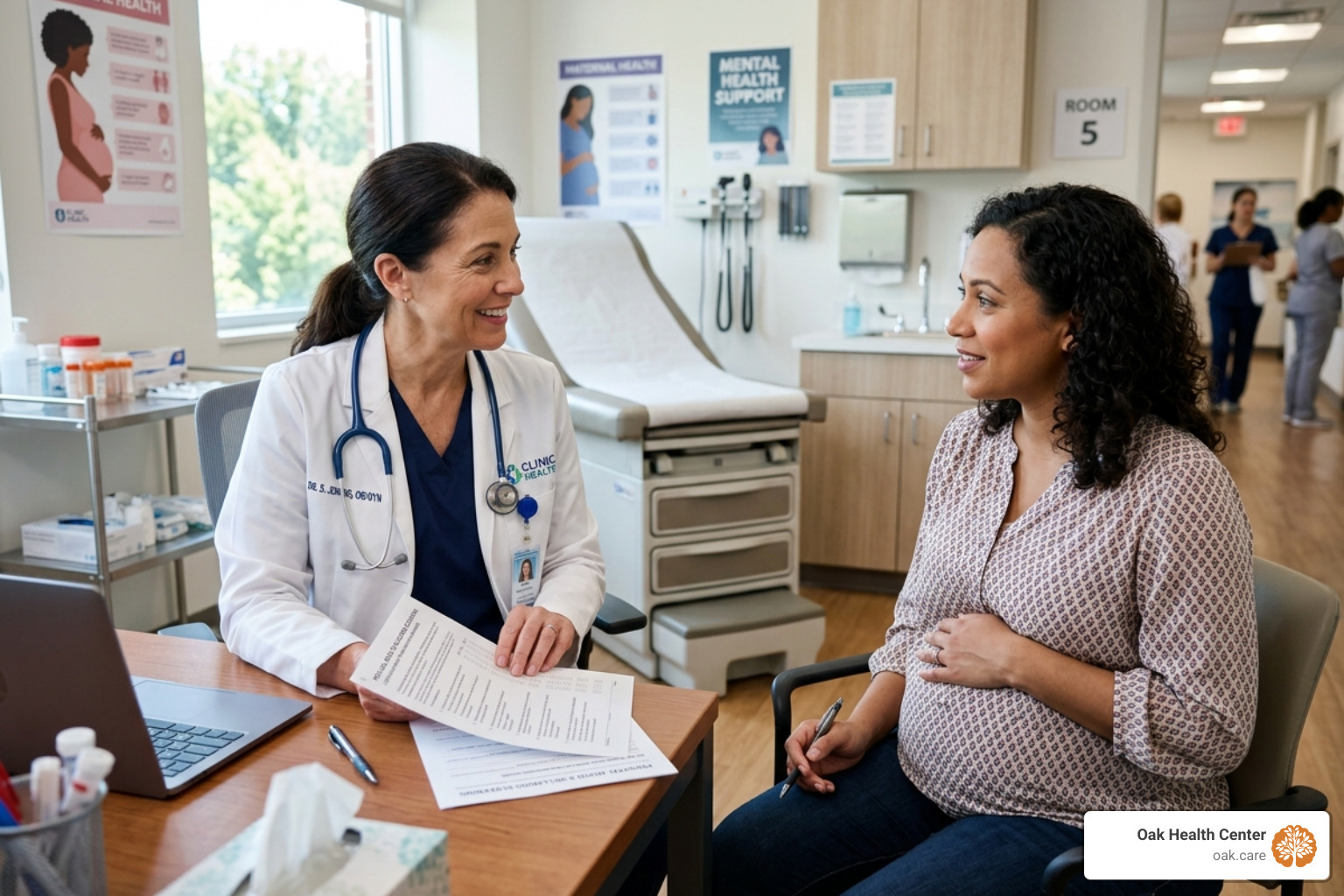
Because symptoms like fatigue and sleep issues are “par for the course” in pregnancy, doctors use specific tools to find the line between normal discomfort and clinical depression.
The American College of Obstetricians and Gynecologists (ACOG) recommends that all pregnant individuals be screened at least once during pregnancy. At Oak Health Center, we often see patients who were screened during their first trimester and again in their third trimester.
Commonly used tools include:
- EPDS (Edinburgh Postnatal Depression Scale): A 10-question tool specifically designed to screen for perinatal distress.
- PHQ-9 (Patient Health Questionnaire-9): A standard depression screening tool used across many medical fields.
Identifying Non-Somatic Symptoms
To get an accurate diagnosis, providers focus on “non-somatic” symptoms. Somatic symptoms are physical (like being tired), which everyone feels during pregnancy. Non-somatic symptoms are emotional and cognitive, such as:
- Guilt or Worthlessness: Feeling like you are already a “bad mom” or that the baby would be better off without you.
- Hopelessness: Feeling like things will never get better.
- Suicidal Ideation: Having thoughts of death or self-harm.
If you are experiencing these, it is vital to seek clinical assessment immediately. These are clear indicators that the brain’s “alarm system” is overwhelmed.
Differentiating Pregnancy Discomfort from Clinical Depression
It’s the age-old question: “Am I depressed, or am I just pregnant?” The NHS Guide to Depression in Pregnancy suggests looking at the persistence of the mood. If you are tired but can still find moments of joy or humor, it might just be the pregnancy. However, if the cloud of sadness doesn’t lift for two weeks or more, or if you find it impossible to concentrate on daily tasks, it’s time to talk to a professional.
Evidence-Based Depression During Pregnancy Treatment Options
Once a diagnosis is made, the focus shifts to management. At Oak Health Center, we believe in a multidisciplinary approach—meaning your OB-GYN, psychiatrist, and therapist should all be on the same page.
| Feature | Psychotherapy | Pharmacotherapy (Medication) |
|---|---|---|
| Primary Goal | Developing coping skills and changing thought patterns | Balancing brain chemistry |
| Safety Profile | No known physical risks to the fetus | Generally safe, but requires risk-benefit analysis |
| Time to Effect | May take several weeks to see progress | Usually takes 2–6 weeks to feel full effects |
| Best For | Mild to moderate cases; prevention | Moderate to severe cases; history of relapse |
We offer comprehensive psychotherapy services and tele-behavioral health across California to make this care accessible.
Psychotherapy and Counseling for Depression During Pregnancy Treatment
Talk therapy is often the first line of defense. According to the AAFP Peripartum Depression Detection and Treatment guidelines, psychotherapy can reduce the incidence of depression in at-risk patients by up to 39%.
- Cognitive Behavioral Therapy (CBT): This helps you identify negative thought loops (e.g., “I’m going to be a terrible mother”) and replace them with more realistic, balanced perspectives.
- Interpersonal Therapy (IPT): This focuses on your relationships. Pregnancy changes your role in the family and your relationship with your partner; IPT helps you navigate these transitions and build a stronger support system.
Medication Safety and Depression During Pregnancy Treatment
For many, therapy alone isn’t enough. The decision to use medication is always a balance: the risks of the medication versus the risks of the untreated illness.
The ACOG FAQ on Treating Depression During Pregnancy confirms that many antidepressants are considered safe during pregnancy. First-line options typically include:
- Sertraline (Zoloft): Often preferred because it has a very low rate of transfer to the baby during pregnancy and through breast milk.
- Escitalopram (Lexapro): Another SSRI with a strong safety profile and high tolerability.
Our psychiatry services focus on finding the lowest effective dose to keep both mom and baby healthy.
Advanced and Holistic Management Strategies

Treatment isn’t just about a pill or a therapy session; it’s about a lifestyle that supports your brain.
Managing Treatment-Resistant Cases
Sometimes, standard SSRIs don’t do the trick. This is often seen in treatment-resistant depression or when a patient has underlying Bipolar Disorder.
In these cases, we look at what treatment-resistant depression really means and explore other options:
- Mood Stabilizers: Medications like Lithium or Lamotrigine may be used, though they require close monitoring by a specialist.
- TMS (Transcranial Magnetic Stimulation): This is a non-invasive treatment that uses magnetic fields to stimulate nerve cells in the brain. You can learn how TMS therapy works for depression as a drug-free alternative for severe cases.
Non-Pharmacological Wellness Practices
Complementary strategies can significantly boost your mood. The California Department of Public Health emphasizes the importance of holistic wellness:
- Exercise: Pregnancy-safe movement (like walking or swimming) releases endorphins.
- Nutrition: Focusing on Omega-3 fatty acids and minimizing processed sugars can help stabilize energy levels.
- Sleep Hygiene: While “sleeping like a baby” is a myth in the third trimester, maintaining a consistent routine is vital for mental health.
- Mindfulness: Meditation and breathing exercises can lower cortisol levels, benefiting both you and the baby.
Frequently Asked Questions about Prenatal Depression
Are antidepressants safe for my baby during pregnancy?
Most modern research suggests that the absolute risk of birth defects from common SSRIs is very low (often less than 1%). In many cases, the risk to the baby from the mother’s high stress levels and poor self-care due to untreated depression is much higher. Always discuss your specific history with a provider.
How common is depression during pregnancy in 2026?
It remains one of the most common complications of pregnancy. Approximately 7% to 9% of pregnant people in high-income countries like the U.S. struggle with prenatal depression, though some studies suggest rates as high as 15% when including milder symptoms.
When should I seek immediate help for severe symptoms?
If you have thoughts of harming yourself or the fetus, or if you are experiencing hallucinations or delusions, seek help immediately. You can call or text 988 (the Suicide & Crisis Lifeline) or go to the nearest emergency room.
Conclusion
At Oak Health Center, we know that depression during pregnancy treatment is a journey that requires compassion, expertise, and a local touch. Whether you are in Beverly Hills, Fullerton, Laguna Hills, Rancho Cucamonga, or South Pasadena, our team is here to provide the support you need. We also offer virtual care for anyone in California, ensuring that help is never out of reach.
The long-term outlook for women who seek treatment is excellent. By addressing depression now, you are not only taking care of yourself—you are giving your baby the best possible start in life.
If you’re struggling to find a psychiatrist in South Pasadena or any of our other Southern California locations, we are ready to help.
Schedule a consultation at Oak Health Center today and let’s work together to bring the joy back to your “bump” journey.