


Finding ABA Therapy in Beverly Hills
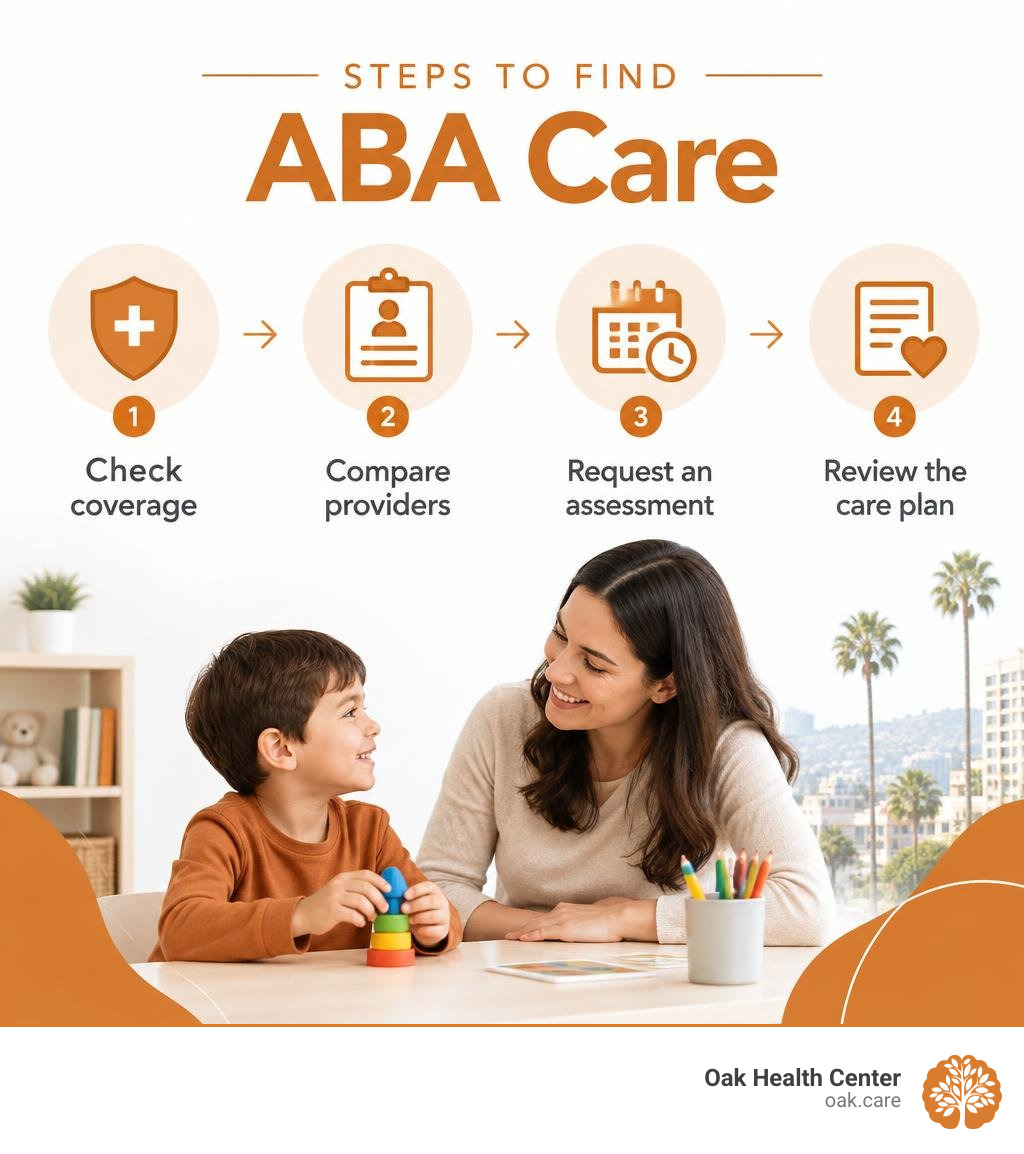
Start with your health plan’s provider directory or an ABA provider directory. Ask each provider whether they serve Beverly Hills, offer in-home or center-based sessions, have a Board Certified Behavior Analyst (BCBA) supervise care, and accept your insurance. Your local Regional Center can also explain whether your child qualifies for developmental services.
ABA therapy uses practice, positive reinforcement, and progress tracking to build skills that matter in daily life. This guide will help you compare local options and understand what happens before your child starts care.
I’m Andrew Brewer, practice manager at Oak Health Center, where I work with clinical teams to improve care systems and access. I bring that operations perspective to this guide to ABA therapy Beverly Hills families can use when choosing a provider.
Aba therapy beverly hills terms to learn:
Understanding Applied Behavior Analysis: Principles and Clinical Benefits
Applied Behavior Analysis (ABA) is widely recognized as the gold standard, evidence-based intervention for autism spectrum disorder (ASD) and various developmental delays. At its core, ABA is an applied science focused on understanding how behavior works, how it is affected by the environment, and how meaningful learning occurs.
Rather than relying on generic interventions, ABA breaks down complex daily milestones—such as expressive communication, social interaction, emotional regulation, and self-help routines—into small, manageable steps. By pairing targeted efforts with positive reinforcement, therapists encourage beneficial behaviors while systematically decreasing behaviors that cause distress or interfere with safety.
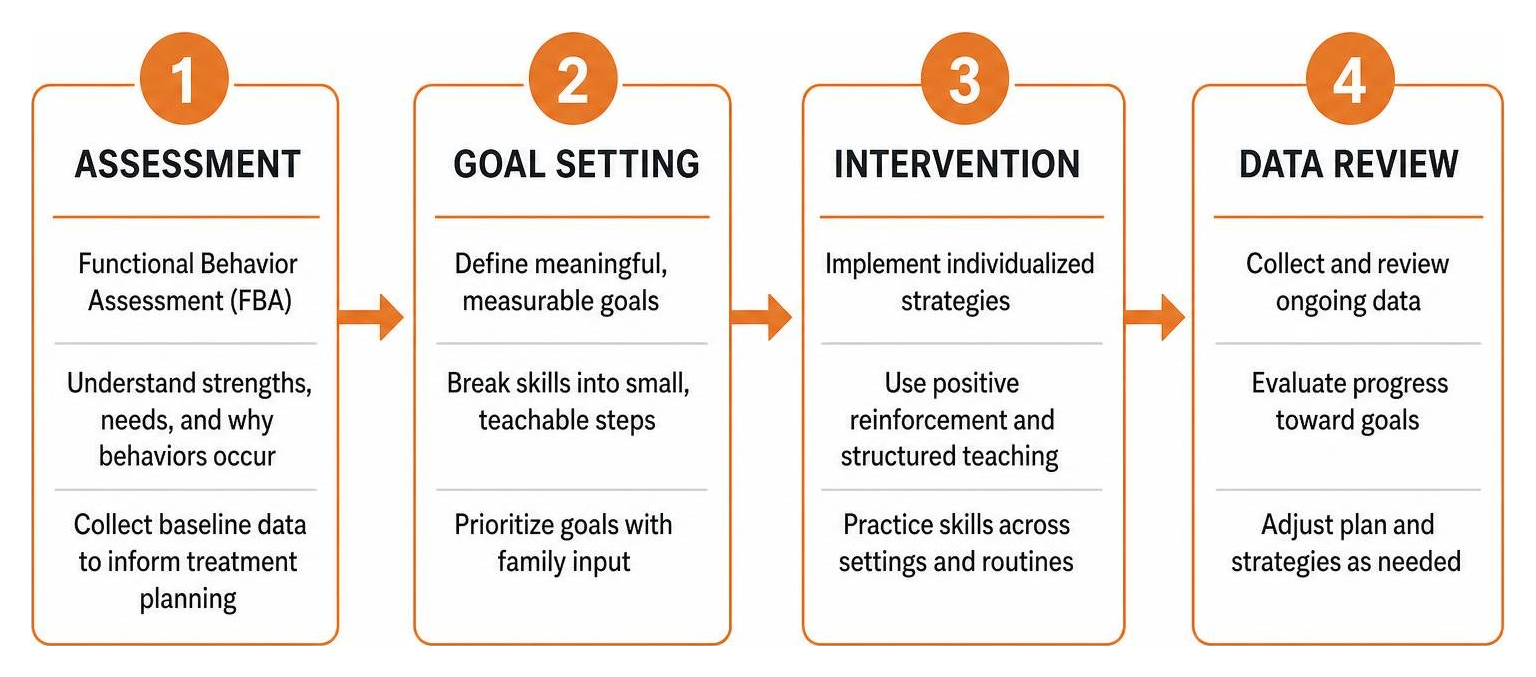
Families interested in demystifying ABA therapy principles often find that the process relies on objective data rather than guesswork. Every intervention begins with a Functional Behavior Assessment (FBA) to determine why specific behaviors occur. Ongoing data collection ensures that goals adapt dynamically to your child’s evolving progress. Families can also consult national Applied Behavior Analysis autism resources to better understand clinical terminology and home-based practice strategies.
Key Therapist Credentials: BCBA vs. RBT Roles
When evaluating behavioral programs, understanding who directs and delivers your child’s care is essential:
- Board Certified Behavior Analyst (BCBA): A master’s- or doctoral-level clinician certified by the Behavior Analyst Certification Board (BACB). The BCBA conducts comprehensive developmental evaluations, designs individualized treatment plans, analyzes performance data, and oversees behavioral technicians.
- Registered Behavior Technician (RBT): A paraprofessional credentialed to implement behavioral treatment plans directly under the regular, close supervision of a BCBA.
- Direct-BCBA Model: In boutique or concierge behavioral frameworks, a BCBA provides all direct therapy sessions themselves rather than delegating delivery to technicians.
Comparing Center-Based and In-Home Behavioral Support
Choosing between in-home support and center-based behavioral clinics depends on your family’s daily lifestyle, your child’s sensory profile, and their specific learning goals.
| Feature | In-Home ABA Therapy | Center-Based ABA Therapy |
|---|---|---|
| Primary Environment | Natural family setting (living room, bedroom, backyard) | Structured clinical center or specialized learning campus |
| Skill Focus | Morning and bedtime routines, sibling interactions, natural mealtime habits | Peer socialization, group readiness, transition between structured rooms |
| Distraction Level | Reflects realistic home distractions and family dynamics | Controlled sensory environment with minimized external distractions |
| Caregiver Involvement | Direct, real-time parent coaching during daily living activities | Scheduled parent training conferences and periodic clinical observations |
| Travel Requirements | Clinicians travel directly to your residence | Family travels to and from the clinical site |
Accessing In-Home ABA Therapy Beverly Hills Programs

In-home behavioral interventions bring structured support directly into your child’s natural living space. This format allows clinicians to address behaviors where they naturally arise—whether that means learning smooth transitions from playtime to dinner, managing bedtime routines, or practicing cooperative play with siblings.
For families across Beverly Hills, Miracle Mile, Mid-Wilshire, Beverly Grove, Fairfax, Hancock Park, West Hollywood, Culver City, West LA, and Santa Monica, in-home programs eliminate travel stress along busy Los Angeles corridors. Most importantly, in-home sessions make it easy for parents and caregivers to observe techniques firsthand, reinforcing positive behavioral strategies throughout the week.
Navigating ABA Therapy Beverly Hills Families Trust
Los Angeles County features an extensive network of developmental specialists. When building a care team, families often choose between large regional therapy agencies, boutique private practices, and integrated behavioral clinics that coordinate care alongside child psychiatrists and clinical psychologists.
Exploring specialized behavior therapy programs helps families target developmental hurdles, attention challenges, and emotional regulation simultaneously. To view and filter local developmental specialists, families can search directories for finding early intervention providers by clinical specialty and location.
How to Choose ABA Therapy Beverly Hills Providers
Selecting the right behavioral team requires clear communication. When evaluating potential providers, consider using our practical guide to finding behavior therapy options and ask the following questions:
- Supervision Ratios: How many hours of direct BCBA supervision are allocated for every 10 hours of technician-delivered therapy?
- Therapist Turnover: What steps does the agency take to maintain consistent staffing for your child’s weekly schedule?
- Caregiver Coaching: How frequently are structured parent coaching sessions integrated into the treatment plan?
- Multidisciplinary Collaboration: Does the behavioral team coordinate with outside speech therapists, occupational therapists, pediatricians, and psychologists?
California Insurance Mandates, Private Pay, and Regional Centers
Navigating payment pathways in California involves several distinct options:
- California Autism Insurance Mandate (SB 946): California state law requires most state-regulated commercial health plans to cover medically necessary behavioral health treatment, including ABA, for individuals diagnosed with autism spectrum disorder.
- Regional Centers: California’s 21 Regional Centers—including the Westside Regional Center serving Beverly Hills and West Los Angeles—contract with the Department of Developmental Services (DDS) to coordinate and fund community-based developmental interventions for eligible individuals.
- Private-Pay and Concierge Services: Some specialized practices operate outside of insurance networks. These providers offer direct, flexible care and provide detailed superbills that families can submit to their insurance providers for potential out-of-network reimbursement.
Step-by-Step Guide: From Diagnostic Assessment to Ongoing Care

Starting behavioral therapy involves a clear, supportive process designed to establish realistic developmental baselines:
- Diagnostic Evaluation: A comprehensive assessment performed by a pediatric neurologist, developmental pediatrician, or licensed clinical psychologist confirms a formal diagnosis (such as ASD).
- Functional Behavior Assessment (FBA): A BCBA conducts structured clinical observations, interviews family members, and uses standardized assessment tools (like the VB-MAPP or ABLLS-R) to map developmental strengths and challenges.
- Treatment Plan Development: The BCBA designs a customized plan complete with individualized goals, positive reinforcement protocols, and parent training milestones.
- Direct Intervention: RBTs or BCBAs conduct regular 1- to 3-hour sessions focused on skill acquisition and behavior reduction. If a child also shows co-occurring neurodevelopmental concerns, clinicians often integrate structured behavioral strategies for ADHD into daily learning routines.
- Reauthorization and Goal Revision: Every six months, the clinical team reassesses progress, provides updated data reports to insurance providers or Regional Centers, and updates treatment goals.
Frequently Asked Questions About ABA Therapy in Beverly Hills
Does my child need a formal autism diagnosis to receive ABA services?
For services funded through commercial health insurance or California Regional Centers, a formal medical diagnosis of autism spectrum disorder (or an eligible developmental condition) from a qualified physician or psychologist is required. However, private-pay behavioral coaching practices can deliver ABA-based support for emotional regulation, ADHD, or routines without requiring a formal diagnostic report.
How many hours per week do children typically spend in ABA therapy?
Weekly therapy schedules depend entirely on clinical need. Comprehensive, early-intervention programs for young children typically involve 20 to 40 hours per week. Focused behavioral programs targeting specific social or behavioral goals often range from 10 to 15 hours weekly. Sessions generally run between 1 and 3 hours per visit and step down in frequency as your child masters key milestones.
What age groups can benefit from ABA interventions?
ABA principles apply across all stages of development. Early intervention programs frequently work with toddlers as young as 18 months to build foundational language and motor imitation skills. School-aged children and teenagers focus on peer socialization, executive functioning, and emotional regulation, while young adults use behavioral strategies to support independent daily living and community integration.
Conclusion
Finding the right behavioral therapy team is an important step toward helping your child develop confidence, communication skills, and everyday independence. Whether your family chooses in-home sessions or an integrated clinical setting, consistent positive reinforcement and active caregiver involvement build a strong foundation for long-term growth.
At Oak Health Center, we provide thoughtful, comprehensive mental healthcare across Southern California. If you are exploring behavioral resources or looking for coordinated outpatient care, we invite you to connect with our team through our Beverly Hills location to learn how our comprehensive services can support your family’s path forward.