

What Does TMS Therapy for Depression Cost? Here’s What to Expect
Understanding TMS therapy for depression cost is the first step toward deciding if this treatment is right for you. Here’s a quick summary:
| Cost Factor | Typical Range |
|---|---|
| Single session (cash pay) | $300 – $500 |
| Full course (20–36 sessions) | $6,000 – $15,000 |
| With insurance (out-of-pocket) | $300 – $3,000 total |
| Initial consultation | $100 – $300 |
| SAINT protocol (advanced) | $30,000 – $36,000 |
Most patients with insurance pay far less than the sticker price. Many major commercial plans, Medicare Part B, and a growing number of Medicaid programs now cover TMS for treatment-resistant depression.
Nearly 5% of adults experience regular episodes of depression, according to the National Center for Health Statistics. For about 30% of them, standard treatments like medication and therapy simply don’t work well enough. That’s where TMS — Transcranial Magnetic Stimulation — comes in.
TMS is an FDA-cleared, non-invasive treatment that uses targeted magnetic pulses to stimulate specific areas of the brain. It requires no anesthesia, no surgery, and no recovery time. But it does come with a price tag that can feel overwhelming at first glance.
The good news: the full cost is rarely what patients actually pay. Insurance coverage has expanded significantly, and financing options are widely available. This guide breaks it all down clearly so you can plan with confidence.
I’m Andrew Brewer, Practice Manager at Oak Health Center, where I helped build and expand our TMS program from the ground up — giving me direct, hands-on experience with the real-world TMS therapy for depression cost, insurance navigation, and financial planning that patients face. That background shapes everything in this guide.
How TMS Works for Treatment-Resistant Depression
Before we dive into the dollars and cents, it helps to understand what exactly you are paying for. TMS isn’t just “another pill”; it is a sophisticated form of neurostimulation. When we talk about How TMS Therapy Works for Depression, we are looking at a process that targets the biological roots of your mood.
The technology uses a magnetic coil to deliver short, repetitive magnetic pulses—similar in strength to an MRI—to the prefrontal cortex. This is the area of the brain responsible for mood regulation. In many people with depression, this area is “underactive.” The magnetic pulses induce a small electric current that stimulates nerve cells, encouraging them to fire more effectively and release neurotransmitters.
One of the biggest advantages of TMS is that it is a non-systemic treatment. Unlike antidepressant medications that travel through your bloodstream and can cause weight gain, sexual dysfunction, or nausea, TMS stays localized to the brain. This makes it a preferred option for those who have struggled with medication side effects.
At Oak Health Center, we often see patients who come to us after “failing” multiple rounds of medication. Understanding Treatment-Resistant Depression is vital because it changes the goal of treatment. We aren’t just looking for a slight improvement; we are looking for remission. Research shows that about 30% to 40% of patients achieve full remission with standard rTMS, while over 50% to 60% see a significant response (meaning their symptoms are cut at least in half).
Breaking Down the TMS Therapy for Depression Cost
When you first look at the “sticker price” for a full course of treatment, it can be a bit of a shock. However, it’s important to remember that this cost covers high-end medical technology, the expertise of a specialized technician, and regular physician oversight.
Average Session and Course Prices
Without insurance, the average cost for a single session of TMS therapy typically runs between $300 and $500. Because a standard course involves 20 to 36 sessions (usually 5 days a week for 6 to 9 weeks), the total tms therapy for depression cost ranges from $6,000 to $15,000 out-of-pocket.

Comparing Protocols
The specific protocol your doctor recommends will significantly impact the price. Here is how the different types of TMS stack up:
| Protocol Type | Total Estimated Cost | Notes |
|---|---|---|
| Standard rTMS | $6,000 – $15,000 | Most common; widely covered by insurance. |
| Accelerated iTBS | $7,000 – $14,000 | Shorter sessions (3 mins vs 20-40 mins); similar success rates. |
| SAINT™ Protocol | $30,000 – $36,000 | Intensive 5-day protocol; high remission rates but often cash-pay. |
While the SAINT protocol offers incredible results (with some studies showing nearly an 80% remission rate), it is often not yet covered by standard insurance plans, making it a high-end investment. For more details on these variations, you can view our guide on Insurance Coverage and Costs for TMS Therapy.
Regional Variations in tms therapy for depression cost
Geography plays a major role in what you’ll pay. In high-cost-of-living areas like Southern California—specifically in markets like Beverly Hills or South Pasadena—facility overhead is higher. Urban clinics may charge 30% to 50% more than rural providers.
However, being in a major metropolitan area like Los Angeles or Orange County also means you have access to more experienced providers and the latest technology, such as Deep TMS (dTMS) or fMRI-guided targeting, which can improve the “value” of each session by increasing the likelihood of success.
Out-of-Pocket Expenses for tms therapy for depression cost
Even with insurance, you may face some out-of-pocket costs. These typically include:
- Deductibles: You may need to meet your annual deductible before insurance kicks in.
- Specialist Copays: Many plans charge a copay for every single visit. If your copay is $40 and you have 36 sessions, that’s $1,440.
- Maintenance Sessions: Some patients require “booster” sessions months later to maintain their results.
The good news is that TMS is considered a qualified medical expense for Health Savings Accounts (HSA) and Flexible Spending Accounts (FSA). Using pre-tax dollars can effectively save you 20% to 30% on the total cost. You can find more about these financial tools in this guide on What Is TMS Therapy and How Much Does It Cost? – CareCredit.
Insurance Coverage and Requirements
As we head through 2026, insurance coverage for TMS has never been better. It is no longer considered a “last resort” but a standard part of the interventional psychiatry toolkit. Most major commercial plans, Medicare Part B, and Tricare now provide coverage.

The Prior Authorization Process
Insurance companies don’t just hand out approvals; they require proof of “medical necessity.” To qualify for coverage, most insurers (including those we work with at our Fullerton and Laguna Hills locations) require:
- Diagnosis: A confirmed diagnosis of Major Depressive Disorder (MDD).
- Failed Medications: Documentation that you have tried 2 to 4 different antidepressant medications from different classes without success.
- Psychotherapy: Evidence that you have participated in at least two months of evidence-based psychotherapy.
At Oak Health Center, we handle the heavy lifting of the prior authorization process for our patients. We know exactly what documentation is needed to show What Treatment-Resistant Depression Really Means to your insurance carrier. For a look at how specific clinics handle these rates, you can check Rates & Insurance – Fullerton, CA.
Comparing the Value: TMS vs. Other Depression Treatments
When evaluating the tms therapy for depression cost, it is helpful to look at it as a long-term investment in your health rather than a one-time expense.
Lifetime Cost-Effectiveness
A landmark lifetime analysis found that rTMS is actually the “dominant” therapy compared to antidepressant medications. While pills are cheap in the short term, they often fail, leading to more doctor visits, different prescriptions, and lost productivity. The study found that rTMS provides better Quality-Adjusted Life Years (QALY) and can save between $2,952 and $11,140 over a patient’s lifetime.
Indirect Savings
- Avoided Hospitalization: Severe depression can lead to inpatient stays costing $1,000 to $2,000 per day. One successful course of TMS can prevent these crises.
- Workplace Productivity: Depressed employees miss an average of 31.4 workdays per year. Regaining your energy and focus has a direct financial return.
- Reduced Medication Reliance: Many of our patients are able to reduce or even eliminate some of their medications after successful TMS, saving on monthly pharmacy bills for years to come.
Explore our full range of Services to see how we integrate TMS into a total wellness plan.
Frequently Asked Questions about TMS Costs
Is TMS therapy covered by Medicare in 2026?
Yes, Medicare Part B covers TMS therapy in all 50 states, including all our Southern California locations. The criteria are similar to commercial insurance: you must show that you haven’t responded to standard medications and therapy. Medicare typically covers 80% of the cost after your deductible is met, and if you have a supplemental (Medigap) plan, your out-of-pocket cost could be as low as $0.
Are there payment plans available for TMS?
Absolutely. We understand that even with insurance, a $1,500 copay total can be a lot to handle at once. Many clinics, including ours, offer internal payment plans or work with third-party financing like CareCredit. These options allow you to break the cost into manageable monthly installments, sometimes with 0% interest for a set period.
Does the cost include brain mapping and consultations?
Generally, yes. The total course cost or the insurance-negotiated rate usually includes:
- Initial Consultation: Meeting the doctor to determine if you are a candidate.
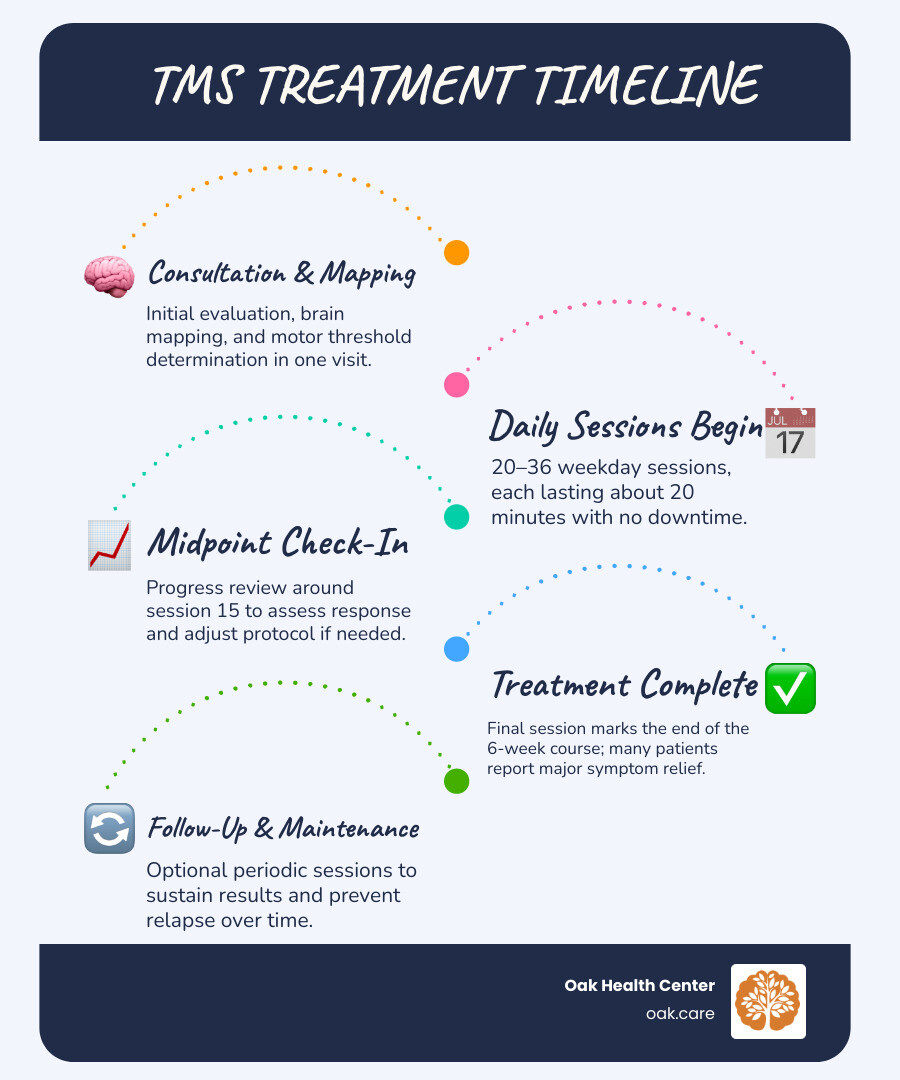
- Motor Threshold Mapping: The first session where we find the exact spot on your head and the right “dosage” of magnetic energy.
- Physician Supervision: Regular check-ins to monitor your progress and adjust the treatment if needed.
Conclusion
The tms therapy for depression cost is a significant consideration, but it shouldn’t be a barrier to feeling like yourself again. In 2026, with expanded insurance coverage and a better understanding of the long-term savings, TMS has become an accessible reality for thousands of Californians.
At Oak Health Center, we pride ourselves on providing comprehensive, compassionate care across our five Southern California locations: Beverly Hills, Fullerton, Laguna Hills, Rancho Cucamonga, and South Pasadena. We also offer virtual services for patients throughout California.
If you’re ready to move past the cycle of ineffective medications, we invite you to schedule a financial consultation. We’ll help you verify your benefits and find a path forward that fits your budget. For More info about Transcranial Magnetic Stimulation, visit our service page or reach out to us today. Your mental health is an investment—and you are worth it.