


When Standard Treatments Fail: What a New Drug for Treatment-Resistant Depression Means for You
If you’ve tried multiple antidepressants without relief, a new drug for treatment-resistant depression may finally offer a real path forward. Here’s a quick look at what’s emerging right now:
Newest and most promising options as of June 2026:
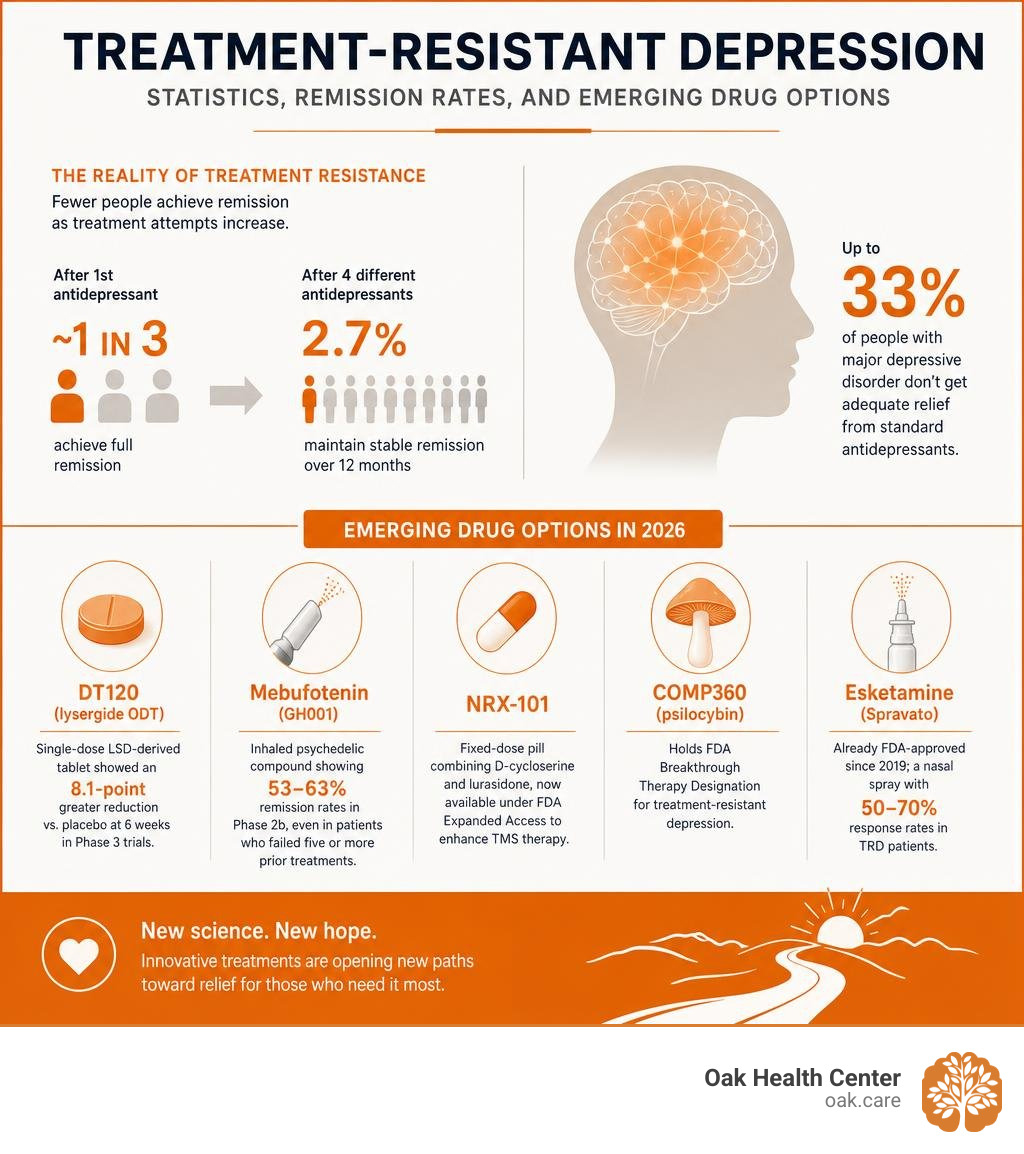
- DT120 (lysergide ODT) — A single-dose LSD-derived tablet that showed an 8.1-point greater reduction in depression symptoms vs. placebo at 6 weeks in Phase 3 trials
- Mebufotenin (GH001) — An inhaled psychedelic compound showing 53–63% remission rates in Phase 2b, even in patients who failed five or more prior treatments
- NRX-101 — A fixed-dose pill combining D-cycloserine and lurasidone, now available under FDA Expanded Access to enhance TMS therapy
- COMP360 (psilocybin) — Holds FDA Breakthrough Therapy Designation for treatment-resistant depression
- Esketamine (Spravato) — Already FDA-approved since 2019; a nasal spray with 50–70% response rates in TRD patients
Treatment-resistant depression is more common than most people realize. Only about one-third of people with major depressive disorder achieve full remission from their first antidepressant. After four rounds of different medications, that number drops to just 2.7% maintaining stable remission over 12 months.
That’s a lot of people still struggling — and for a long time, the options were limited.
But 2025 and 2026 have brought a wave of genuinely new science. Researchers are no longer just tweaking the same serotonin-based pathways that have dominated psychiatry for decades. They’re exploring psychedelic compounds, NMDA receptor modulators, and GABA-targeting drugs — each working through entirely different mechanisms in the brain.
This article breaks down the most important new developments, what the clinical data actually shows, and what it could mean for you or someone you care about.
I’m Andrew Brewer, Practice Manager at Oak Health Center, where I’ve helped grow and expand programs including TMS and other emerging treatment services. While my background is in operations and organizational development rather than clinical care, I’ve worked closely alongside the clinical teams shaping how Oak Health Center delivers cutting-edge options — including treatments relevant to a new drug for treatment-resistant depression — to patients across Southern California. That perspective informs how I’ve approached this overview.
The Breakthrough of DT120: A New Drug for Treatment Resistant Depression
For decades, the pharmacological approach to depression remained largely unchanged. Traditional selective serotonin reuptake inhibitors (SSRIs) and serotonin-norepinephrine reuptake inhibitors (SNRIs) require daily dosing and often take four to eight weeks to show any noticeable effect. For up to 33% of people with major depressive disorder, these conventional medications fail to provide adequate relief.
Enter DT120, a highly anticipated new drug for treatment-resistant depression that has recently taken the psychiatric research world by storm.

DT120 is a proprietary formulation of lysergide (LSD) tartrate salt developed by Definium Therapeutics. While the idea of using psychedelic substances to treat mental health disorders might have seemed radical a decade ago, it has rapidly moved into mainstream clinical science. In fact, following recent regulatory shifts—including a federal executive order instructing the FDA to prioritize reviews in the psychedelic space—DT120 has successfully completed its largest clinical trial to date.
According to topline data, DT120 has produced some of the most robust antidepressant effects ever observed in a late-stage clinical trial. The CEO of Definium Therapeutics noted that the Phase 3 data represents an unprecedented leap forward, offering a potential paradigm shift in how we manage severe, chronic depression. You can read more about this historic milestone in the news coverage of Definium’s LSD depression drug produces ‘best ever’ ph. 3 data.
How DT120 Works as a New Drug for Treatment Resistant Depression
Unlike standard daily pills, DT120 is designed as an orally disintegrating tablet (ODT) administered as a single-dose therapy. It works primarily as a partial agonist at the serotonin-2A (5-HT2A) receptor.
When DT120 binds to these receptors, it triggers a rapid cascade of neuroplasticity—the brain’s ability to reorganize itself by forming new neural connections. Chronic depression is known to cause physical changes in the brain, including up to a 20% shrinkage of the hippocampus due to lost synaptic connections. DT120 essentially helps “re-wire” these damaged pathways.
Rather than masking symptoms on a daily basis, this single-dose intervention helps the brain heal itself, creating durable, long-term changes in mood and cognitive processing. This rapid and sustained action is detailed further in the clinical overview of this Novel LSD Formulation Shows Rapid, Durable Efficacy in Depression Trial – Psychiatry Advisor.
Clinical Trial Results and Efficacy of DT120
The primary clinical evidence supporting DT120 comes from the landmark Phase 3 Emerge study, which evaluated 149 adult participants across 20 clinical sites. The trial utilized the Montgomery-Åsberg Depression Rating Scale (MADRS), a standard 60-point scale used by clinicians to measure the severity of depressive symptoms.
The results of the Emerge study were remarkably positive:
- Rapid Onset: As early as Week 1, patients receiving a single 100 µg dose of DT120 showed a massive 17.6-point drop on the MADRS scale, compared to just a 3.4-point drop in the placebo group—representing a placebo-adjusted difference of -14.2 points.
- Primary Endpoint (Week 6): The DT120 group achieved a -13.3 mean change in MADRS scores compared to -5.2 for the placebo group, yielding a highly statistically significant placebo-adjusted difference of -8.1 points.
- Durable Benefits: The antidepressant effect remained highly durable. At Week 12, patients still maintained a 7.3-point placebo-adjusted improvement over the placebo group, despite receiving only one dose.
- Response and Remission: At Week 6, 35% of patients treated with DT120 achieved a clinical response (defined as a 50% or greater reduction in MADRS scores) compared to just 7% of placebo patients. Furthermore, 24% of the DT120 group achieved full remission (MADRS score of 12 or less) compared to a mere 3% in the placebo group.
This clinical success represents a massive milestone for psychedelic-assisted medicine, proving that a single, controlled dose can yield long-term mental health benefits. For a deeper look at the cultural and scientific impact of these findings, you can read the report on how LSD Just Passed Its Biggest Test Yet for Treating Depression.
How This New Treatment Compares to Existing TRD Options
To understand why a new drug for treatment-resistant depression like DT120 is so revolutionary, it helps to compare it to the treatments currently available to patients in Southern California.
| Treatment Option | Administration Method | Dosing Frequency | Time to Relief | Common Side Effects / Considerations |
|---|---|---|---|---|
| DT120 (Lysergide ODT) | Orally disintegrating tablet | Single dose (with potential repeat after months) | Within 24 hours | Mild-to-moderate transient dissociation, mild blood pressure changes on dosing day; requires 6-hour clinic monitoring |
| Standard Antidepressants | Oral pill | Daily | 4–8 weeks | Weight gain, sexual dysfunction, insomnia, emotional blunting, high relapse rates upon discontinuation |
| Esketamine (Spravato) | Nasal spray | Twice weekly for 4 weeks, then weekly/bi-weekly | Within hours | Dissociation, nausea, temporary blood pressure spike; requires 2-hour in-clinic monitoring |
| IV Ketamine | Intravenous infusion | Series of 6 infusions over 2–3 weeks | 24–72 hours | Dissociation, dizziness; high relapse rate (68–75%) within 6 months without maintenance infusions |
| Standard rTMS | Magnetic coil to scalp | Daily for 4–6 weeks | 4–6 weeks | Mild headache, scalp discomfort; requires high time commitment |
| Electroconvulsive Therapy (ECT) | Brief electrical stimulation under anesthesia | 2–3 times weekly for 3–4 weeks | 1–2 weeks | Temporary memory loss, confusion, headache; requires general anesthesia |
Traditional daily medications often feel like a lifetime commitment, and as our Ultimate Guide to Treatment Resistant Depression outlines, the chances of finding relief diminish with each subsequent medication trial. DT120 bypasses the daily struggle entirely by offering a single-dose alternative that works in hours rather than months.
Administration, Safety, and Side Effects
Because DT120 is a potent psychedelic compound, it cannot be picked up at a standard pharmacy and taken at home. It must be administered in a specialized, certified clinical environment.
During the dosing session, the patient places the orally disintegrating tablet under their tongue. Because the active psychedelic effects of lysergide typically last several hours, patients remain in a comfortable, supportive environment at the clinic for an average of 5.8 hours (with a median of 5.1 hours). A trained clinical chaperone is present throughout the session to provide non-interventionist “grounding” support.
In terms of safety, the Phase 3 Emerge trial showed that DT120 was remarkably well-tolerated:
- 99% of adverse events were classified as mild to moderate and were entirely transient, occurring almost exclusively on the day of administration.
- Common transient side effects included mild sensory distortions, nausea, and minor blood pressure fluctuations, which resolved completely as the drug wore off.
- Crucially, there was no observed increase in suicidal ideation or behavior, and the study reported exceptionally low discontinuation rates.
This safety profile is highly competitive when compared to existing rapid-acting options like esketamine or IV ketamine, which can sometimes cause more intense, uncomfortable dissociative episodes or require ongoing, long-term maintenance visits. To learn more about navigating these safety profiles, read our guide on What Treatment Resistant Depression Really Means and What You Can Do About It.
The Broader Landscape of Emerging TRD Therapies
While DT120 is leading the headlines, it is part of a much larger, highly dynamic wave of innovation in neuropsychiatry. The global major depressive disorder market is expanding rapidly, reflecting a massive unmet need for treatments that work when standard options fail.

Several other pipeline drugs are currently making their way through clinical development, each targeting unique biological mechanisms:
- COMP360 (Psilocybin): Developed by COMPASS Pathways, this psilocybin-based therapy has received FDA Breakthrough Therapy Designation and is currently in Phase 3 trials. Like DT120, it uses a psychedelic-induced neuroplasticity model paired with psychological support.
- Zuranolone: A neuroactive steroid that acts as a GABAA receptor positive allosteric modulator, designed to rapidly rebalance brain networks.
- REL-1017 (Esmethadone): An NMDA receptor antagonist that targets hyperactive channels to lift depression rapidly without causing dissociative side effects.
For a comprehensive review of these and other pipeline candidates, you can explore the medical literature on Emerging Medications for Treatment-Resistant Depression – PMC.
Comparing DT120 to Other Pipeline Candidates for a New Drug for Treatment Resistant Depression
Another highly promising candidate in the rapid-acting category is Mebufotenin (GH001), an inhalable formulation of 5-MeO-DMT developed by GH Research.
In a Phase 2b trial recently published in JAMA Psychiatry, GH001 demonstrated a remarkable phenomenon: severity-independent efficacy. Traditionally, the more antidepressants a patient has failed in their lifetime, the less likely they are to respond to a new one (as famously demonstrated by the STAR*D trial). However, GH001 broke this pattern entirely.
The trial showed that patients achieved consistent remission rates (between 53.9% and 63.6% on Day 8) regardless of whether they had failed two, three, or even five or more conventional antidepressants. This suggests that psychedelic-derived therapies can completely bypass the biological resistance built up from years of chronic depression. You can read the full peer-reviewed findings in the GH Research Announces Publication of Phase 2b Results for Mebufotenin (GH001) in JAMA Psychiatry and Reports New Finding of Severity-Independent Efficacy in TRD | GH Research press release.
Additionally, researchers are looking at ways to combine new drugs with established non-invasive procedures. For example, the FDA recently granted an Expanded Access Protocol for NRX-101 (a combination of D-cycloserine and lurasidone) to be used specifically to augment and enhance the effects of Transcranial Magnetic Stimulation (TMS), opening up even more personalized treatment pathways for patients.
Frequently Asked Questions about Treatment-Resistant Depression
What qualifies as treatment-resistant depression?
Historically, treatment-resistant depression (TRD) is diagnosed when an individual with major depressive disorder does not experience adequate symptom relief (at least a 50% reduction in symptoms) after completing at least two separate trials of conventional antidepressant medications. These trials must be at an adequate dose and taken consistently for at least six to eight weeks each.
If you are wondering if your current struggles fit this definition, our resource on Understanding Treatment Resistant Depression When Standard Treatments Arent Enough provides a clear framework for what to discuss with your doctor.
How do emerging TRD therapies differ from standard antidepressants?
Standard antidepressants (like SSRIs) primarily work by slowly increasing the levels of neurotransmitters like serotonin or norepinephrine in the synaptic cleft over several weeks.
In contrast, emerging TRD therapies like DT120, GH001, and esketamine target entirely different pathways—such as the glutamate system or serotonin-2A receptors. They stimulate rapid neuroplasticity, allowing the brain to quickly build new neural pathways and repair the cellular damage caused by chronic stress and depression. This results in relief that is measured in hours or days rather than weeks or months. For more on this biological shift, see What Treatment Resistant Depression Really Means and What You Can Do About It.
When will these new drugs be available to the public?
While esketamine (Spravato) is already widely available and covered by most insurance plans, next-generation drugs like DT120 and GH001 are still completing their final regulatory steps.
Definium Therapeutics is currently awaiting results from its second Phase 3 trial (the Ascend study) before submitting a final New Drug Application (NDA) to the FDA. Given the FDA’s Breakthrough Therapy Designations and recent federal directives to expedite reviews for promising psychedelic therapies, industry experts anticipate these options could begin reaching specialized clinical centers within the next couple of years.
Conclusion
The emerging clinical data surrounding DT120 and other pipeline therapies brings a powerful message to anyone who has felt stuck in the fog of chronic depression: you are not out of options. The rapid evolution of psychiatric medicine means that the treatment plans of tomorrow look radically different—and far more hopeful—than the daily pills of the past.
At Oak Health Center, we are dedicated to bringing compassionate, cutting-edge mental healthcare to our communities across Southern California. Whether you prefer to visit us in person at our offices in Beverly Hills, Fullerton, Laguna Hills, Rancho Cucamonga, or South Pasadena, or utilize our convenient statewide virtual services, our goal is to simplify your access to the support you deserve. We specialize in advanced, evidence-based options for treatment-resistant depression, tailoring every care plan to your unique biology and lifestyle.
If you or a loved one are ready to explore a new path toward lasting recovery, we encourage you to take the first step today. Explore psychiatric services at Oak Health Center and let us help you find the hope and healing you’ve been searching for.