


Finding the Right Depression Treatment Centers in California: What You Need to Know First
Depression treatment centers in California range from outpatient therapy clinics to intensive residential programs — and finding the right fit can feel overwhelming, especially when you’re already struggling.
Here are the most trusted types of depression treatment available to California residents:
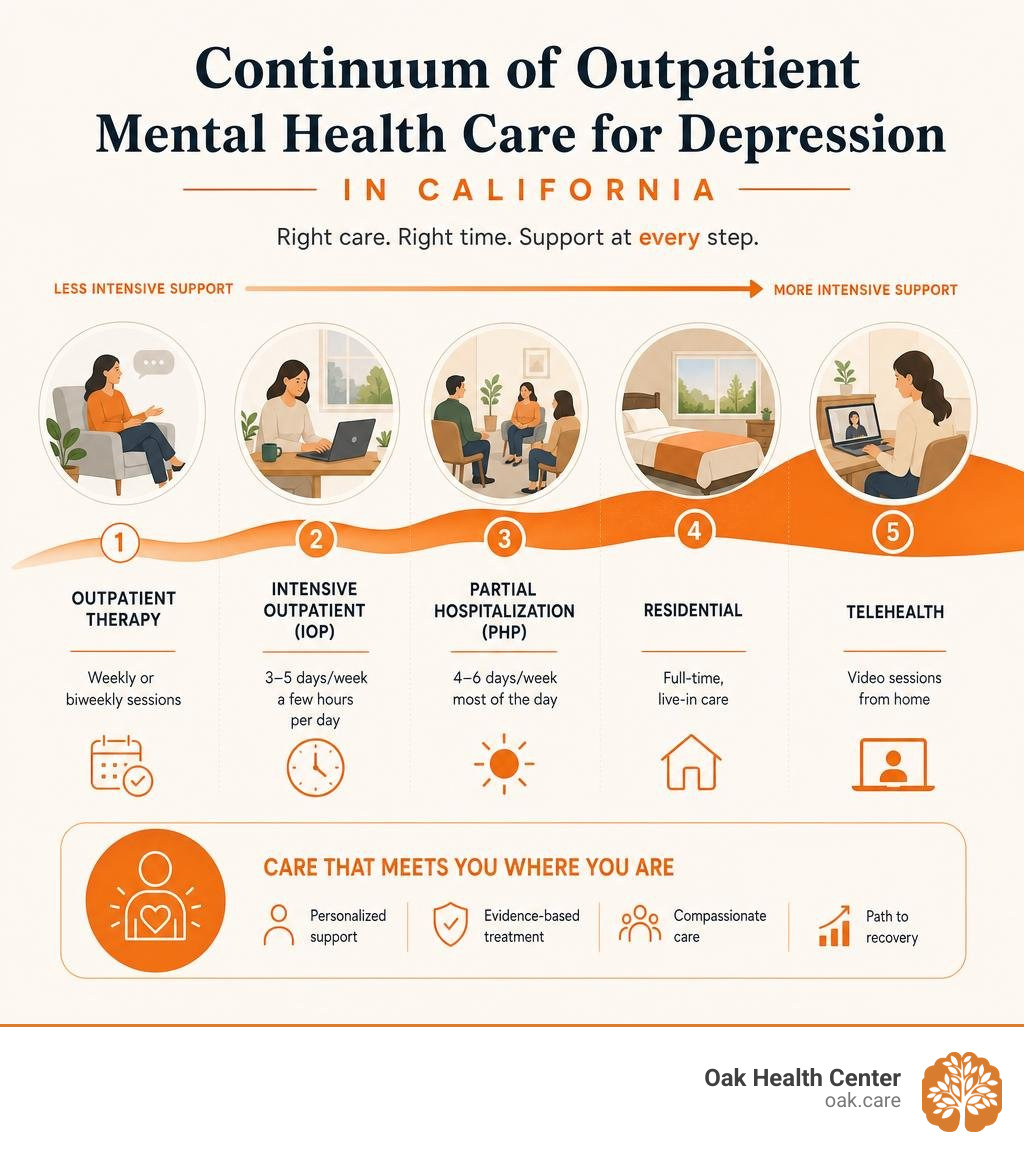
| Level of Care | Best For | Typical Format |
|---|---|---|
| Outpatient Therapy | Mild to moderate depression | Weekly or biweekly sessions |
| Intensive Outpatient (IOP) | Moderate depression, daily life still manageable | 3-5 days/week, a few hours per day |
| Partial Hospitalization (PHP) | Severe symptoms, needs structure but not 24/7 care | 4-6 days/week, most of the day |
| Residential | Severe or treatment-resistant depression | Full-time, live-in care |
| Telehealth | Any severity, limited access to in-person care | Video sessions from home |
The stakes are real. Nearly 32% of California adults reported symptoms of depression or anxiety in early 2023. And according to national data, an estimated 21 million U.S. adults experienced at least one major depressive episode in 2021 — with 87.9% saying it interfered with work, home, or social life.
If you’re reading this, you’re already taking an important step.
I’m Andrew Brewer, Practice Manager at Oak Health Center, where I’ve helped grow our clinical programs — including depression care — from the ground up. My work supporting the expansion of mental health services gives me a practical perspective on how depression treatment centers in California vary and what actually matters when choosing care. Let me walk you through what to look for.
How to Choose the Best Depression Treatment Centers California Has to Offer
When looking for depression treatment centers in California, the first step is understanding that mental healthcare is not a “one-size-fits-all” scenario. The right program depends entirely on the severity of your symptoms, your daily responsibilities, and your personal recovery goals.
For many people, taking time away from work, school, or family to enter a 24/7 residential facility isn’t feasible—or even clinically necessary. Modern psychiatric care offers highly structured outpatient alternatives that allow you to receive intensive, evidence-based treatment while sleeping in your own bed at night.
The Outpatient Continuum of Care
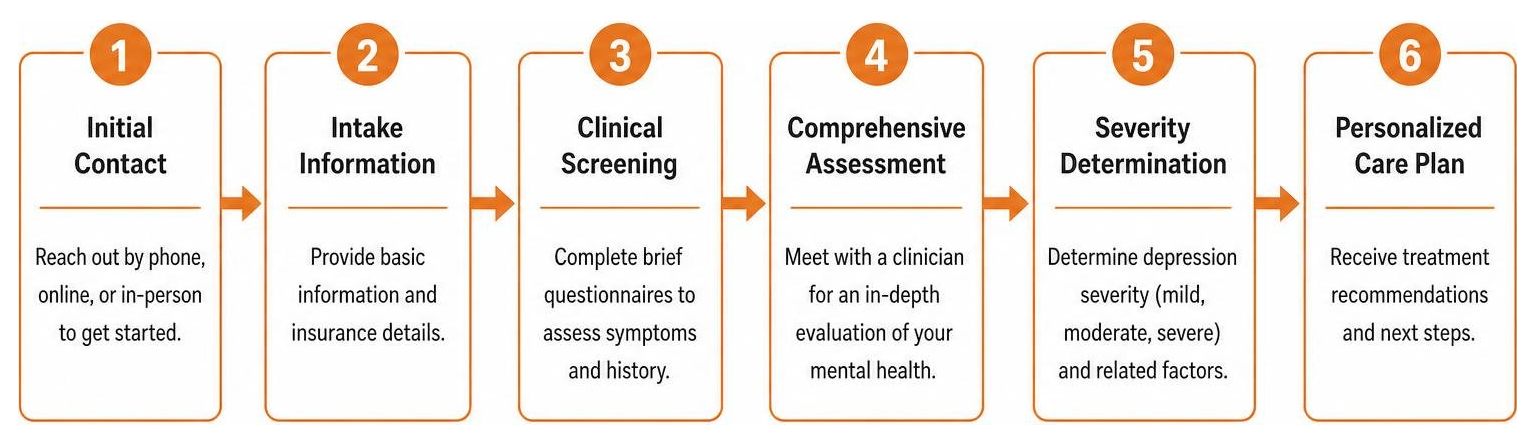
To help you navigate your options, let’s break down the primary outpatient and community-based services available in Southern California:
- Outpatient Therapy: This is the traditional foundation of mental healthcare. It typically involves meeting with a licensed therapist once or twice a week for 50-minute sessions. It is highly effective for mild-to-moderate depression, helping you build coping mechanisms, identify cognitive distortions, and process life stressors.
- Intensive Outpatient Program (IOP): An IOP is a step up in intensity. If weekly therapy isn’t providing enough support, or if your symptoms are starting to severely impact your daily functioning, an IOP provides a structured mid-level care option. Patients typically attend programming for 3 to 5 days a week, spending 3 to 4 hours per day in a combination of group therapy, individual counseling, and psychiatric evaluation.
- Psychiatric Medication Management: Medication is often a vital component of a comprehensive treatment plan. Working with a dedicated psychiatrist or psychiatric nurse practitioner ensures that your medication is carefully selected, monitored, and adjusted. Rather than relying on a general practitioner, specialized psychiatric providers understand the nuances of drug interactions, side effects, and modern augmentation strategies.
- Telehealth Services: In 2026, virtual care has become a seamless, highly effective way to receive treatment. Telehealth allows you to meet with psychiatrists, therapists, and even participate in group sessions from the comfort of your home. This eliminates travel barriers and makes it easier to consistently attend appointments around a busy schedule.
Comparing Your Care Options
To help visualize how these levels of care fit into your life, consider the following comparison:
| Feature | Standard Outpatient Therapy | Intensive Outpatient Program (IOP) | Virtual Telehealth Care |
|---|---|---|---|
| Weekly Time Commitment | 1 to 2 hours | 9 to 15 hours | 1 to 5 hours (flexible) |
| Living Arrangement | Live at home | Live at home | Live at home |
| Core Components | Individual talk therapy | Group, individual, & psychiatric care | Video therapy & virtual psychiatry |
| Ideal Candidate | Mild/moderate symptoms; high daily functioning | Moderate/severe symptoms; needs structured support | Busy schedule; values convenience; stable environment |
| Average Duration | 3 to 6 months (or ongoing) | 8 to 12 weeks | Variable based on clinical needs |
Recognizing the Signs That It’s Time to Seek Professional Care
Depression can be incredibly deceptive. It often convinces individuals that their struggles are simply “laziness,” a lack of willpower, or a temporary phase they should be able to snap out of. However, clinical depression is a legitimate medical condition that alters brain chemistry.
Here are the key signs that indicate it is time to connect with professional depression treatment centers in California:
- Persistent Sadness or Emptiness: Feeling down, hopeless, or “flat” almost every day for more than two consecutive weeks.
- Anhedonia: A complete loss of interest or pleasure in activities, hobbies, and social interactions you used to love.
- Interference with Daily Responsibilities: Struggling to perform at work, keep up with schoolwork, or maintain household duties. Statistics show that nearly 88% of people with depression experience significant interference in these areas.
- Severe Sleep and Energy Disturbances: Suffering from chronic insomnia, waking up early without being able to fall back asleep, or sleeping excessively (hypersomnia) while still feeling constantly fatigued.
- Irritability and Outbursts: Uncharacteristic anger, frustration, or aggressive outbursts over minor matters. Research shows that up to 58.7% of adults with Major Depressive Disorder (MDD) experience these aggressive outbursts.
- Changes in Weight or Appetite: Significant weight loss or gain, or a dramatic increase or decrease in daily appetite.
- Cognitive Difficulties: Finding it incredibly difficult to concentrate, make simple decisions, or remember daily tasks.
- Thoughts of Self-Harm or Suicide: Any thoughts of wishing you were no longer here, self-harm, or active suicidal ideation require immediate professional intervention.
If you or a loved one are experiencing these symptoms, you don’t have to carry this weight alone. You can Find mental health clinics near you to explore accessible, localized support options that fit your lifestyle.
Evidence-Based and Alternative Therapies for Depression
The most reputable depression treatment centers in California utilize a multi-disciplinary approach. Because depression often co-occurs with other mental health conditions—such as generalized anxiety disorder, panic attacks, PTSD, trauma, or substance use disorders—treatment must address the whole person.
When searching for the right program, look for providers who seamlessly integrate evidence-based clinical therapies with modern, innovative alternative treatments. This combination gives you the best chance of achieving long-term, sustainable recovery. To learn more about the broader landscape of clinical options, you can Explore depression treatment options across the state.
Clinical Modalities at Depression Treatment Centers California Programs Offer
At the core of any high-quality clinical program are evidence-based psychotherapies. These are structured, scientifically validated talk therapies designed to help you rewire negative thinking habits and develop practical coping mechanisms.
- Cognitive Behavioral Therapy (CBT): CBT is the most widely researched and utilized therapy for depression. It operates on the principle that our thoughts, feelings, and behaviors are deeply interconnected. By identifying negative, self-defeating thought patterns (such as catastrophizing or “all-or-nothing” thinking), a CBT therapist helps you challenge and replace them with more realistic, balanced perspectives.
- Dialectical Behavior Therapy (DBT): Originally developed to treat borderline personality disorder, DBT has proven highly effective for severe depression, emotional dysregulation, and chronic suicidal ideation. DBT teaches four core skill sets: mindfulness, distress tolerance, emotion regulation, and interpersonal effectiveness. It is especially useful if your depression manifests as intense, overwhelming emotional waves or self-destructive impulses.
- Trauma-Informed Care: Past trauma, childhood adversity, and PTSD can fundamentally alter the nervous system, leaving the brain’s internal alarm system highly sensitized. Trauma-informed care ensures that your therapy team understands the deep connection between past trauma and current depressive symptoms. Rather than asking “What is wrong with you?”, trauma-informed clinicians ask, “What happened to you?”, creating a safe space for gradual, deep healing.
To complement these therapeutic approaches, psychiatric providers often utilize medication to help stabilize brain chemistry. To understand how these tools fit together, you can Learn about medications for depression and how clinical teams find the right fit for your biological needs.
Innovative Approaches at Depression Treatment Centers California Facilities Utilize
For some individuals, standard talk therapy and first-line antidepressant medications (like SSRIs or SNRIs) are not enough. When someone has tried multiple standard treatments without finding relief, they may be dealing with treatment-resistant depression (TRD).
Fortunately, modern neuropsychiatry has introduced groundbreaking alternative treatments that target the brain’s pathways in entirely new ways:
- Transcranial Magnetic Stimulation (TMS): TMS is a non-invasive, FDA-approved medical procedure that uses precise magnetic pulses to stimulate nerve cells in the prefrontal cortex—the area of the brain responsible for mood regulation. It is entirely drug-free, requires no anesthesia, and has virtually no systemic side effects. Patients sit comfortably in a treatment chair and can return to their normal daily activities immediately after each short session.
- Ketamine-Assisted Therapy: For rapid relief from severe, treatment-resistant symptoms and acute suicidal thoughts, ketamine therapy has emerged as a option. Administered under strict medical supervision, low-dose ketamine helps promote neuroplasticity, essentially helping the brain grow new neural connections and bypass damaged, depressive pathways.
If standard options have left you feeling stuck, you can Read about alternative treatments for depression to see how these modern techniques stack up. You can also Understand treatment-resistant depression more deeply, or explore How TMS therapy works to see if this innovative, non-invasive technology is the right path forward for your recovery.
Navigating Insurance, Costs, and Accreditations
Seeking professional help is a courageous decision, but the practical logistics of insurance, out-of-pocket costs, and verifying a provider’s clinical credentials can sometimes feel like an added barrier. Understanding what to look for can simplify this process and prevent unexpected financial stress.
Understanding Insurance and Costs
Most major health insurance plans cover depression treatment under their behavioral and mental health benefits. However, the extent of your coverage often depends on the type of insurance plan you hold and the level of care you require:
- PPO Insurance Plans: Preferred Provider Organization (PPO) plans typically offer the greatest flexibility. They allow you to seek care from both in-network and out-of-network providers. Many premium outpatient and intensive outpatient programs work primarily with PPO plans, allowing you to utilize your out-of-network benefits to cover a substantial portion of the treatment costs.
- Out-of-Pocket Costs: Depending on your deductible, co-insurance, and copayments, you may have some out-of-pocket responsibilities. It is highly recommended to have the treatment center’s admissions team perform a free, confidential insurance verification before you begin treatment. This ensures you receive a clear, transparent breakdown of any expected costs up front.
- Single-Case Agreements: In some instances, if a specific specialized treatment (like TMS or a highly structured IOP) is not available in-network, your insurance provider may negotiate a “single-case agreement” with an out-of-network facility to cover your care at in-network rates.
To explore localized treatment options and verify directories of credentialed professionals in your area, you can Find reputable California mental health providers to begin narrowing down your search. Utilizing trusted directories like Psychology Today can help you identify licensed professionals and accredited programs that align with your specific clinical needs throughout Southern California.
Verifying Accreditations and Clinical Credentials
To ensure you receive the highest standard of safe, ethical, and effective care, always verify a treatment provider’s professional credentials and organizational accreditations:
- State Licensing: Any legitimate clinical facility in California must be licensed and regulated by appropriate state agencies, such as the California Department of Health Care Services (DHCS).
- Gold-Standard Accreditations: Look for facilities accredited by The Joint Commission or the Commission on Accreditation of Rehabilitation Facilities (CARF). These independent, non-profit organizations evaluate healthcare providers on rigorous performance, safety, and quality-of-care standards.
- Clinical Staff Credentials: Ensure your treatment team consists of fully licensed professionals, including board-certified psychiatrists, licensed clinical psychologists, licensed marriage and family therapists (LMFTs), and licensed clinical social workers (LCSWs).
Frequently Asked Questions about Depression Treatment in California
How long do typical depression treatment programs last?
The duration of a depression treatment program depends entirely on the individual’s clinical needs and the level of care they are receiving.
Standard outpatient talk therapy is highly flexible and typically runs for 3 to 6 months with weekly or biweekly sessions, though many people choose to continue therapy long-term for ongoing support and personal growth.
For more structured programs, an Intensive Outpatient Program (IOP) generally lasts between 8 to 12 weeks, requiring a commitment of several hours per day, a few days a week.
Recovery is a continuous journey rather than a destination. A high-quality provider will work with you to build a comprehensive continuum of care, ensuring a smooth transition and ongoing support as you step down from intensive programs back into your normal daily routine.
Can I receive treatment for co-occurring anxiety and depression?
Absolutely. In fact, co-occurring anxiety and depression are incredibly common. It is very rare for clinical depression to exist in a complete vacuum; many individuals struggle with a combination of low mood, chronic worry, panic attacks, trauma, or substance use issues.
Reputable treatment providers utilize integrated mental health treatment models. This means a single, coordinated clinical team addresses all of your symptoms simultaneously. Treating depression without addressing underlying anxiety—or vice versa—often leads to incomplete recovery. Through careful clinical coordination, your psychotherapist and psychiatrist will design a unified care plan that manages both conditions concurrently.
How can families participate in the recovery process?
Depression doesn’t just affect the individual; its impact ripples through families, partnerships, and close friendships. Because of this, family involvement can be an incredibly powerful component of long-term recovery.
Many outpatient and intensive programs offer structured family therapy sessions and psychoeducation. Family therapy provides a safe, clinically guided environment to repair strained relationships, improve communication, and address systemic household dynamics.
Psychoeducation helps your loved ones understand that depression is a biological medical condition, equipping them with the tools to provide constructive, non-judgmental support without enabling unhealthy behaviors or experiencing caregiver burnout.
Conclusion

If you are ready to take the next step toward reclaiming your life, we are here to support you. At Oak Health Center, we believe that accessing high-quality, compassionate mental healthcare should be as simple and stress-free as possible.
We provide comprehensive, personalized psychiatric care and psychotherapy across five convenient Southern California locations:
- Beverly Hills, CA
- Fullerton, CA
- Laguna Hills, CA
- Rancho Cucamonga, CA
- South Pasadena, CA
In addition to our welcoming physical clinics, we offer secure, statewide virtual services, allowing you to access top-tier psychiatric and therapeutic support from anywhere in California. Our simplified intake process is designed to connect you with the right clinician quickly, avoiding the long wait times and administrative hurdles often associated with mental healthcare.
You do not have to navigate this journey alone. Please reach out to our warm, professional team today to Schedule a consultation at Oak Health Center Beverly Hills or any of our Southern California locations. Let’s start the conversation.