

Understanding Depression Fatigue: Causes and Biological Mechanisms
Managing depression fatigue starts with a practical, multi-step plan: work with a clinician to rule out sleep disorders and medical causes, consider activating medication adjustments, use morning bright light therapy to anchor your circadian rhythm, and break tasks into micro-steps to reduce the effort required to begin. These strategies can be combined with low-intensity movement and energy budgeting to restore daily function while the underlying mood disorder is treated.
Fatigue is not an occasional byproduct of mood disorders; it is one of their most persistent hallmarks. Over 90% of individuals diagnosed with major depressive disorder (MDD) experience profound, debilitating exhaustion. Furthermore, in clinical studies, more than 90% of MDD patients report severe fatigue despite more than 80% already taking prescribed antidepressant medications. Up to one-third of individuals who achieve clinical remission or response continue to battle lingering lethargy, making fatigue the second most prominent residual symptom of depression.
The neurobiology behind this depletion involves complex brain circuits and neurotransmitter pathways. While classic models of depression focused primarily on serotonin, energy regulation, reward processing, and psychomotor speed are heavily driven by catecholamines—specifically dopamine and norepinephrine.
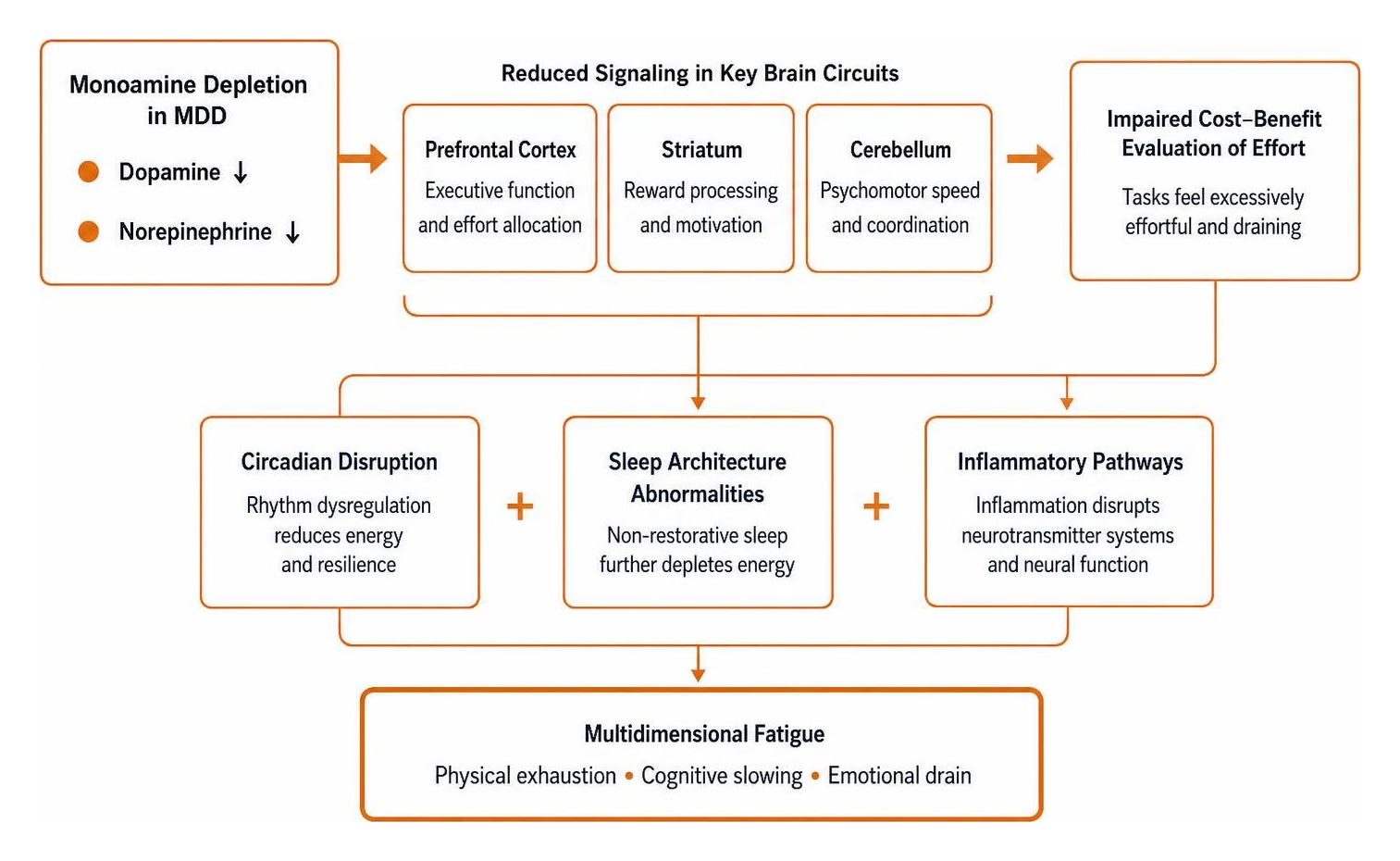
When dopamine and norepinephrine signaling falters within the prefrontal cortex, striatum, and cerebellum, the brain struggles to calculate the cost-benefit ratio of expending effort. Every movement, chore, or decision suddenly feels like swimming through wet concrete. Compounding this challenge, circadian disruptions and sleep architecture abnormalities create a self-reinforcing downward spiral. Understanding how anxiety, depression, and sleep problems feed each other is fundamental to untangling why rest alone rarely restores vitality.
Physical, Cognitive, and Emotional Dimensions of Depression Fatigue
Depressive exhaustion is multidimensional. Rather than presenting as a single feeling of sleepiness, it manifests across distinct domains:
- Somatic (Physical) Fatigue: Patients experience muscular heaviness, slowed movement (psychomotor retardation), and a profound lack of physical stamina. Everyday tasks like washing dishes or taking a shower demand monumental willpower.
- Cognitive Fatigue: Commonly described as “brain fog,” this dimension involves impaired executive functioning, slowed processing speed, poor working memory, and difficulty sustaining attention.
- Emotional and Motivational Fatigue: This includes apathy, anhedonia (the inability to feel pleasure), and a marked reduction in drive. Initiating goal-directed behaviors feels insurmountable.
Research shows that depression symptom severity directly correlates with general fatigue, physical fatigue, reduced activity, reduced motivation, and mental fatigue. Recognizing these nuanced signs is essential when identifying symptoms of anxiety and depression in clinical settings.
The Neuro-Immune Connection: Inflammation and Cytokines
Why does the body feel physically ill during a depressive episode? Emerging psychiatric research highlights the neuro-immune axis. In depressed individuals, systemic immune activation triggers the release of pro-inflammatory cytokines, notably Interleukin-6 (IL-6) and Tumor Necrosis Factor-alpha (TNF-α).
These circulating inflammatory markers cross the blood-brain barrier, altering monoamine metabolism and dampening dopamine production in basal ganglia circuits. Higher levels of pro-inflammatory cytokines such as IL-6 correlate strongly with cognitive, somatic, and psychosocial fatigue scores. Your immune system initiates “sickness behavior”—a biological state designed to conserve energy during infection—even in the absence of a pathogen.
Differential Diagnosis: Depression, Medication Side Effects, and Medical Conditions
Because fatigue is a shared symptom across numerous medical and psychiatric conditions, clinicians must guard against diagnostic overshadowing—the tendency to attribute all physical complaints purely to a mental health diagnosis. For example, nearly a quarter of individuals with systemic lupus erythematosus (SLE) report clinically significant depressive symptoms, while anemia, hypothyroidism, and sleep apnea frequently mimic mood disorders.
A comprehensive clinical assessment involves laboratory panels alongside validated measurement tools such as the Massachusetts General Hospital Cognitive and Physical Functioning Questionnaire (MGH-CPFQ), the Fatigue Severity Scale (FSS), or the Multidimensional Fatigue Inventory (MFI-20) (Targum & Fava, 2011). Our clinical team provides thorough diagnostic evaluations through our psychiatry services to uncover the precise drivers of low vitality.
ME/CFS vs. Mood-Related Exhaustion
Distinguishing Myalgic Encephalomyelitis/Chronic Fatigue Syndrome (ME/CFS) from depressive lethargy is critical for developing an appropriate treatment strategy. While both conditions are more prevalent in women and involve severe functional impairment, their underlying physiology and response to exertion differ significantly.
| Diagnostic Factor | Major Depressive Disorder (MDD) Fatigue | ME/CFS (Chronic Fatigue Syndrome) | Medication-Induced Sedation |
|---|---|---|---|
| Hallmark Trigger | Pervasive lack of drive and physical energy regardless of exertion | Post-Exertional Malaise (PEM): Severe symptom crash 12–48 hrs post-effort | Direct pharmacological effect peaking after dosing |
| Physical Signs | Psychomotor slowing, sleep architecture shifts | Sore throat, tender lymph nodes, orthostatic intolerance | Drowsiness, dry mouth, motor unsteadiness |
| Response to Gentle Exercise | Often yields modest mood and energy elevation | Exacerbates symptoms; requires strict metabolic pacing | No change in underlying drug sedation |
| Psychological Profile | Primary guilt, worthlessness, anhedonia | Frustration over physical inability to complete desired tasks | Intact mood unless comorbid depression is present |
Differentiating Antidepressant Sedation from Residual Depression
One of the most vexing clinical scenarios occurs when antidepressant therapy successfully elevates mood but leaves the patient feeling exhausted. It is crucial to determine whether this lethargy represents residual depression or treatment-emergent pharmacological sedation (Targum & Fava, 2011).
Certain medications carry high antihistaminergic ($H_1$ receptor blockade) and anticholinergic profiles that induce daytime drowsiness. Sedating tricyclic antidepressants (such as amitriptyline) and specific agents like mirtazapine can cause persistent grogginess. Furthermore, standard Selective Serotonin Reuptake Inhibitors (SSRIs) can occasionally blunt dopamine signaling downstream, causing an apathy-fatigue syndrome. Working with an experienced provider is vital for finding medication to treat depression that supports mood without sacrificing daily alertness.
Medical and Pharmacological Checklist for Restoring Energy
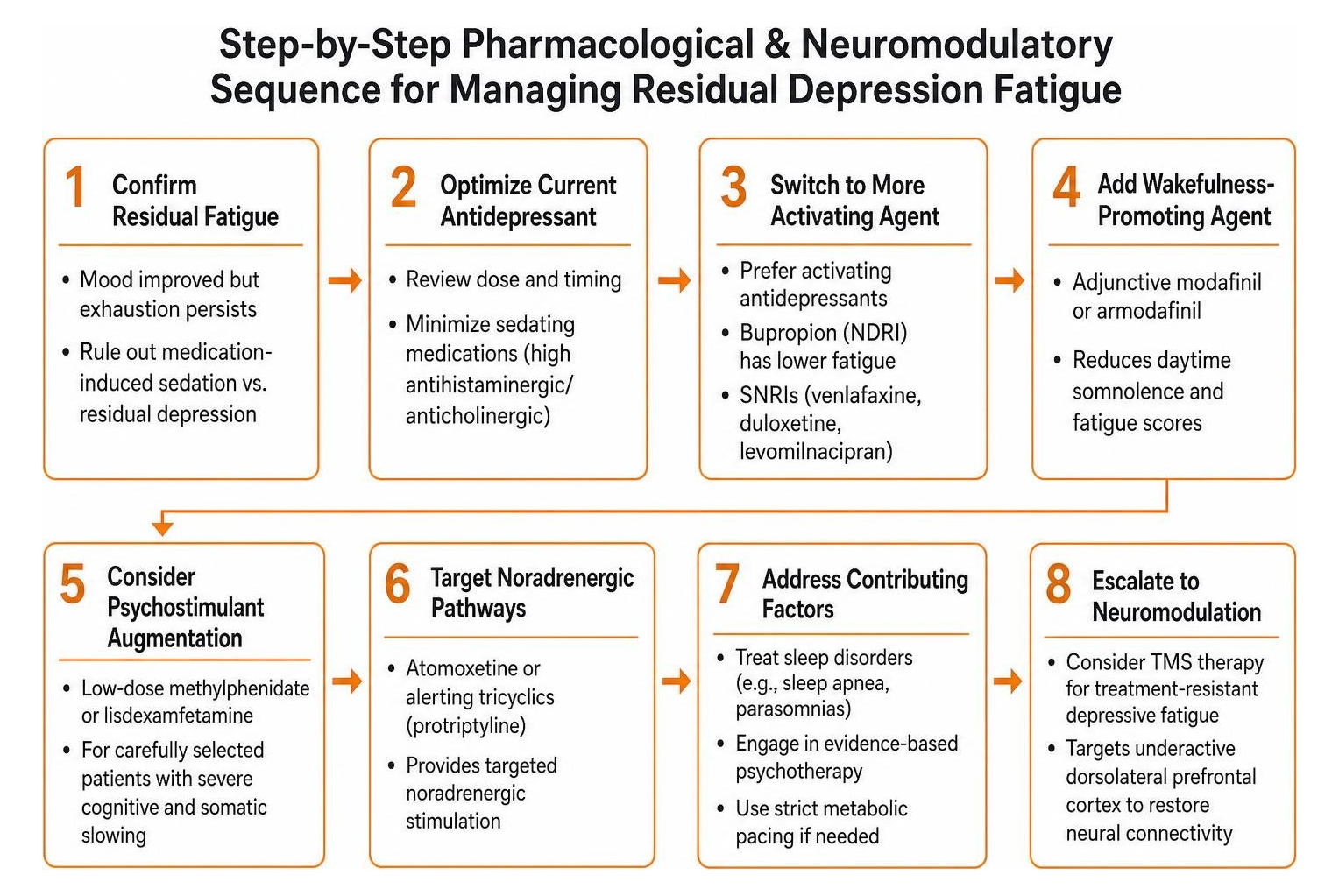
When residual fatigue persists, leaving it unaddressed substantially increases the risk of a depressive relapse (Targum & Fava, 2011). Psychiatrists have several evidence-based pharmacological strategies to restore energy pathways:
- Switching to Activating Agents: Bupropion (a norepinephrine-dopamine reuptake inhibitor, or NDRI) demonstrates significantly lower rates of residual fatigue and hypersomnia compared to traditional SSRIs (Targum & Fava, 2011).
- Serotonin-Norepinephrine Reuptake Inhibitors (SNRIs): Medications with potent noradrenergic activity, such as venlafaxine, duloxetine, or levomilnacipran, help improve psychomotor drive and executive focus.
- Wakefulness-Promoting Agents: Adjunctive modafinil or armodafinil has demonstrated rapid efficacy in reducing daytime somnolence and fatigue scores in partially responsive MDD patients (Demyttenaere et al., 2005).
- Psychostimulant Augmentation: Low-dose psychostimulants (e.g., methylphenidate, lisdexamfetamine) can be considered for carefully selected patients with severe residual cognitive and somatic slowing (Targum & Fava, 2011).
- Noradrenergic Agents: Atomoxetine or alerting tricyclics like protriptyline provide targeted noradrenergic stimulation.
Advanced Interventions for Treatment-Resistant Cases
When traditional medications fail to resolve persistent depressive exhaustion, advanced neuromodulation and multimodal therapies provide vital alternatives. Exploring how TMS therapy works for depression shows how non-invasive magnetic pulses target underactive regions in the dorsolateral prefrontal cortex, helping to restore neural connectivity and improve energy levels without systemic medication side effects.
Combining neuromodulation with evidence-based psychotherapy allows patients to address negative cognitive loops that exacerbate mental drain, while specialized clinical sleep programs correct sleep apnea or underlying parasomnias that quietly undermine recovery.
Daily Lifestyle and Behavioral Interventions to Reclaim Vitality
While biological interventions correct neurochemical signaling, daily behavioral strategies help rebuild physical stamina and break the cycle of immobilization.

Behavioral Checklist to Overcome Depression Fatigue
- [ ] Incorporate Morning Bright Light Therapy: Expose your eyes to 10,000-lux white light for 30 minutes within an hour of waking to anchor your circadian rhythm, suppress daytime melatonin, and enhance morning alertness.
- [ ] Practice Micro-Tasking and Graded Activity: When an entire chore feels overwhelming, break it into micro-steps. Commit to washing just one dish or writing a single sentence. Reducing initiation friction helps bypass motivational paralysis.
- [ ] Engage in Low-Intensity Movement: You do not need an intense workout to stimulate neurogenesis and dopamine release. A gentle 10-minute morning walk or light stretching can increase perceived vitality without triggering energy crashes.
- [ ] Adopt an Energy-Budgeting Framework: Treat your daily stamina like a financial account. Allocate energy to high-priority essentials and schedule brief 5-minute cognitive rest periods between demands to avoid mid-afternoon burnout.
- [ ] Optimize Sleep Hygiene Consistency: Maintain identical wake-up and bedtimes seven days a week. Keep the bedroom dark, cool, and free of stimulating screens.
Frequently Asked Questions About Mood and Exhaustion
Why does depression cause severe physical tiredness even after sleeping for ten hours?
Depression fundamentally alters sleep architecture. It reduces restorative slow-wave (deep) sleep and causes irregular, fragmented Rapid Eye Movement (REM) cycles. Even if you spend ten hours in bed, the brain spends less time in the metabolic recovery stages required for physical restoration, leaving you feeling exhausted upon waking.
How can I tell if my exhaustion is caused by my antidepressant or my depression?
Evaluate the timeline. If the fatigue intensified shortly after starting or increasing the dose of an antidepressant—and peaks several hours after ingestion—medication sedation is likely a contributing factor. Conversely, if the exhaustion is accompanied by low motivation, emotional numbness, brain fog, and feelings of guilt, it is more likely residual depressive symptomatology (Targum & Fava, 2011).
Can exercise really help depression fatigue if I have zero energy to start?
Yes, provided it is approached gently. High-intensity workouts can feel impossible when depleted, but low-intensity aerobic movement (such as walking) triggers endorphin release, improves mitochondrial efficiency, and elevates catecholamine activity without draining your limited reserves. The key is starting with short, manageable increments.
Conclusion
Overcoming depressive exhaustion requires a compassionate, multidimensional approach that looks beyond mood elevation alone. At Oak Health Center, we provide simplified access to comprehensive psychiatric evaluations, specialized sleep medicine, evidence-based psychotherapy, and advanced treatments like TMS across our Southern California clinics in Beverly Hills, Fullerton, Laguna Hills, Rancho Cucamonga, and South Pasadena, as well as via telehealth statewide.
For further practical strategies and clinical insights on rebuilding your daily vitality, explore our comprehensive guide on kicking depression fatigue for good.
References
Koen Demyttenaere, Jürgen De Fruyt, Stephen M. Stahl. “The many faces of fatigue in major depressive disorder.” The International Journal of Neuropsychopharmacology, 2005. DOI 10.1017/s1461145704004729. Pedraz-Petrozzi B, Neumann E, Sammer G. “Pro-inflammatory markers and fatigue in patients with depression: A case-control study..” Scientific reports, 2020. PMCID PMC7289841. Targum SD, Fava M. “Fatigue as a residual symptom of depression..” Innovations in clinical neuroscience, 2011. PMCID PMC3225130.