


Introduction
Core evidence-based anxiety coping skills in modern therapy center on three main pillars: somatic nervous system regulation (such as box breathing, physiological sighs, and sensory grounding), cognitive restructuring to challenge and reframe automatic cognitive distortions, and systematic exposure to build distress tolerance without relying on safety aids. Rather than attempting to eliminate all stress, clinical therapy equips you with practical techniques to calm physiological arousal, shift unhelpful thought patterns, and build lasting emotional resilience.
Anxiety disorders are among the most common mental health conditions worldwide. Around 42% of the population will meet diagnostic criteria for an anxiety or related disorder at some point in their lives, with past-year prevalence rates hovering around 21%. Diagnostic comorbidity is often the rule rather than the exception: rates climb as high as 81% when lifetime psychiatric diagnoses are considered.
When your nervous system is stuck in an ongoing fight-or-flight response, everyday tasks can feel overwhelming. Modern clinical therapy leverages nervous system regulation, cognitive flexibility, and a strong therapeutic alliance to help you navigate stress and regain control.
Somatic and Physiological Anxiety Coping Mechanisms
When anxiety peaks, your sympathetic nervous system floods the body with adrenaline and cortisol. Your heart races, your breathing turns shallow, and your muscles lock up. Trying to rationally debate your anxious thoughts while experiencing intense physiological arousal rarely works because the prefrontal cortex goes partially offline during panic.
To regain balance, we must recruit the parasympathetic nervous system—our internal braking system—via the vagus nerve. Practicing step-by-step relaxation exercises that melt anxiety away gives your body the physical signals it needs to settle before you try to change your thinking patterns.
| Technique | Target Physiology | Best Situation for Use | Time Needed |
|---|---|---|---|
| Box Breathing | Downregulates heart rate via prolonged exhalation | Acute panic spikes, before public speaking | 2–3 minutes |
| 5-4-3-2-1 Grounding | Re-engages prefrontal cortex through sensory stimuli | Dissociation, racing catastrophic thoughts | 3–5 minutes |
| Progressive Muscle Relaxation (PMR) | Releases neuromuscular bracing and muscle tension | Chronic tension, evening wind-down for sleep | 10–15 minutes |
| Physiological Sigh | Re-inflates collapsed alveoli and expels excess $CO_2$ | Immediate de-escalation during an anxiety attack | 30–60 seconds |
Diaphragmatic Breathing and Grounding
Diaphragmatic breathing (often practiced as box breathing or belly breathing) encourages deep, slow expansion of the abdomen rather than short, rapid chest movements. Taking slow, controlled breaths with extended exhalations stimulates the vagus nerve, signaling the brain that immediate danger has passed.
Grounding techniques anchor your attention in the physical environment when catastrophic thoughts begin spiraling. The 5-4-3-2-1 method asks you to identify:
- 5 things you can see around the room
- 4 things you can physically feel (the chair beneath you, your feet on the floor)
- 3 distinct sounds you can hear
- 2 things you can smell
- 1 taste in your mouth
This sensory inventory halts cognitive spirals by forcing your brain to process real-time environmental input instead of imagined catastrophes.
Progressive Muscle Relaxation and Interoceptive Calming
Chronic anxiety causes unconscious, sustained muscle contraction. Progressive Muscle Relaxation (PMR) trains you to notice and release this physical tension. By systematically tensing specific muscle groups (such as your shoulders, fists, or jaw) for five seconds and then releasing them for fifteen seconds, you learn to spot subtle physical warning signs before they escalate into severe distress.
For individuals who experience sudden panic spikes, interoceptive calming exercises are also helpful. These exercises teach your brain to tolerate uncomfortable internal physical sensations—such as an elevated heart rate or slight dizziness—without interpreting them as medical emergencies.
Core Modalities in Anxiety Coping Skills Therapy
Modern psychotherapy relies on structured, empirically tested frameworks to help individuals break free from anxiety loops. Pioneered by Aaron Beck, cognitive behavior therapy principles from NCBI Bookshelf demonstrate that our thoughts, physical feelings, and behaviors constantly influence one another.
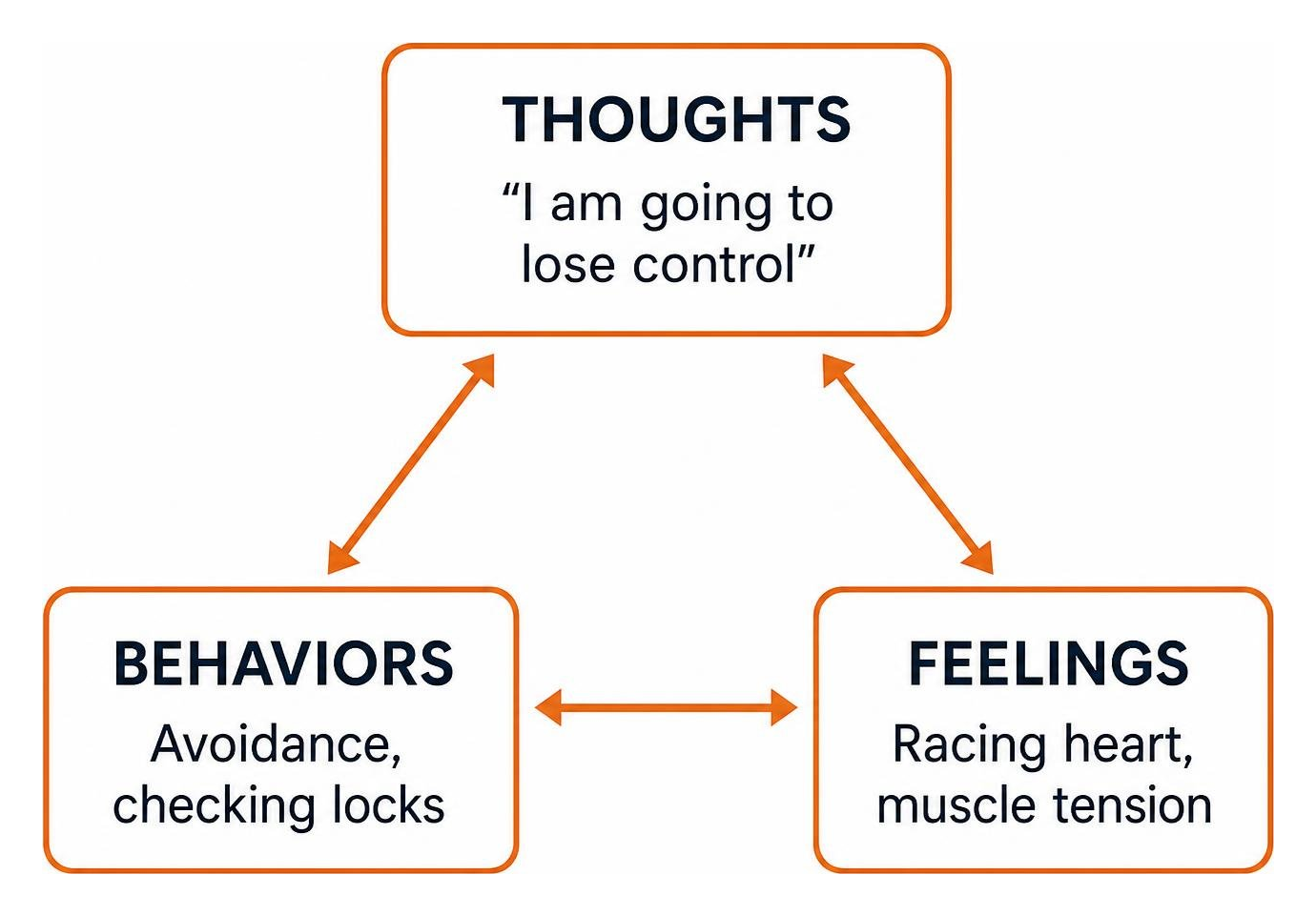
Understanding evidence-based CBT strategies and broader evidence-based psychotherapy approaches helps you address both the mental patterns and the behavioral habits that sustain chronic worry.
Cognitive Restructuring and Thought Reframing in Anxiety Coping Skills Therapy
Cognitive restructuring teaches you to identify automatic thoughts and evaluate the underlying assumptions driving them. Common cognitive distortions include:
- Catastrophizing: Assuming the absolute worst-case scenario is guaranteed to happen.
- All-or-Nothing Thinking: Viewing a situation as a total failure if it falls short of perfection.
- Mind Reading: Assuming you know others are judging you negatively without concrete evidence.
- Emotional Reasoning: Believing that because you feel endangered, you must be in actual danger.
In structured therapy, patients use thought records to write down an upsetting event, identify the automatic thought, label the distortion, and draft a balanced, evidence-based alternative. Behavioral experiments are then used to test these thoughts in real-world situations, showing that worst-case assumptions rarely come true.
Implementing Exposure and Desensitization in Anxiety Coping Skills Therapy
Exposure therapy is one of the most effective tools for treating anxiety. According to Harvard Health insights on anxiety therapy, exposure-based treatments achieve significant symptom reduction in 60% to 80% of patients across 8 to 12 sessions, with benefits often lasting several years.
Exposure works through extinction learning—repeatedly facing a feared cue in a safe setting so the brain forms new safety memories that compete with old fear associations. Exposure methods include:
- In-Vivo Exposure: Confronting feared objects or environments in real life (e.g., entering a crowded grocery store, driving on a freeway).
- Imaginal Exposure: Systematically visualizing feared outcomes or processing traumatic memories under clinical guidance.
- Interoceptive Exposure: Intentionally bringing on harmless physical sensations (like hyperventilating into a paper straw or spinning in a chair) to desensitize fear of panic-like symptoms.
Transdiagnostic Unified Protocol vs. Disorder-Specific Protocols
Historically, clinical therapy required separate treatment manuals for panic disorder, social anxiety, and generalized worry. Today, the Unified Protocol (UP) offers an evidence-based transdiagnostic approach that targets the shared mechanisms underlying all emotional disorders.
Because distinct clinical presentations often overlap—as detailed in our clinical presentation of anxiety disorders guide—transdiagnostic therapy simplifies recovery by addressing emotional avoidance and cognitive rigidity across diagnoses. In clinical trials evaluating group transdiagnostic treatments, 88% of participants demonstrated clinically significant improvement compared to just 42% in waitlist control groups.
Eliminating Safety Aids to Enable Extinction Learning
When faced with distress, many people rely on safety aids—subtle habits or physical crutches used to prevent or reduce anxiety in the moment. While safety aids provide temporary relief, they inadvertently reinforce fear networks by preventing your brain from learning that you can manage the situation on your own.
As outlined in VA clinical guidelines on treating anxiety disorders, the emotional processing model explains that fear structures require full emotional activation alongside disconfirming evidence to be rewritten. When safety aids are used, any positive outcome is attributed to the crutch (“I only survived that presentation because I held a water bottle”) rather than your own resilience. Over time, these hidden habits worsen anxiety.
Identifying Overt and Covert Safety Behaviors
Safety aids generally fall into two broad categories:
- Overt Safety Behaviors: Visible actions such as repeatedly checking door locks, seeking reassurance from family, sitting exclusively next to emergency exits, or needing a companion present to run simple errands.
- Covert Safety Behaviors: Internal mental habits such as repeating silent prayers, mentally rehearsing conversations word-for-word, distracting yourself during social interactions, or taking unprescribed sedatives or alcohol to take the edge off before social events.
Systematic Safety Aid Fading Strategies
Overcoming safety aids requires gradual fading during everyday exposure practice. Therapists help patients design antiphobic exercises that systematically strip away safety behaviors while maintaining contact with the feared situation:
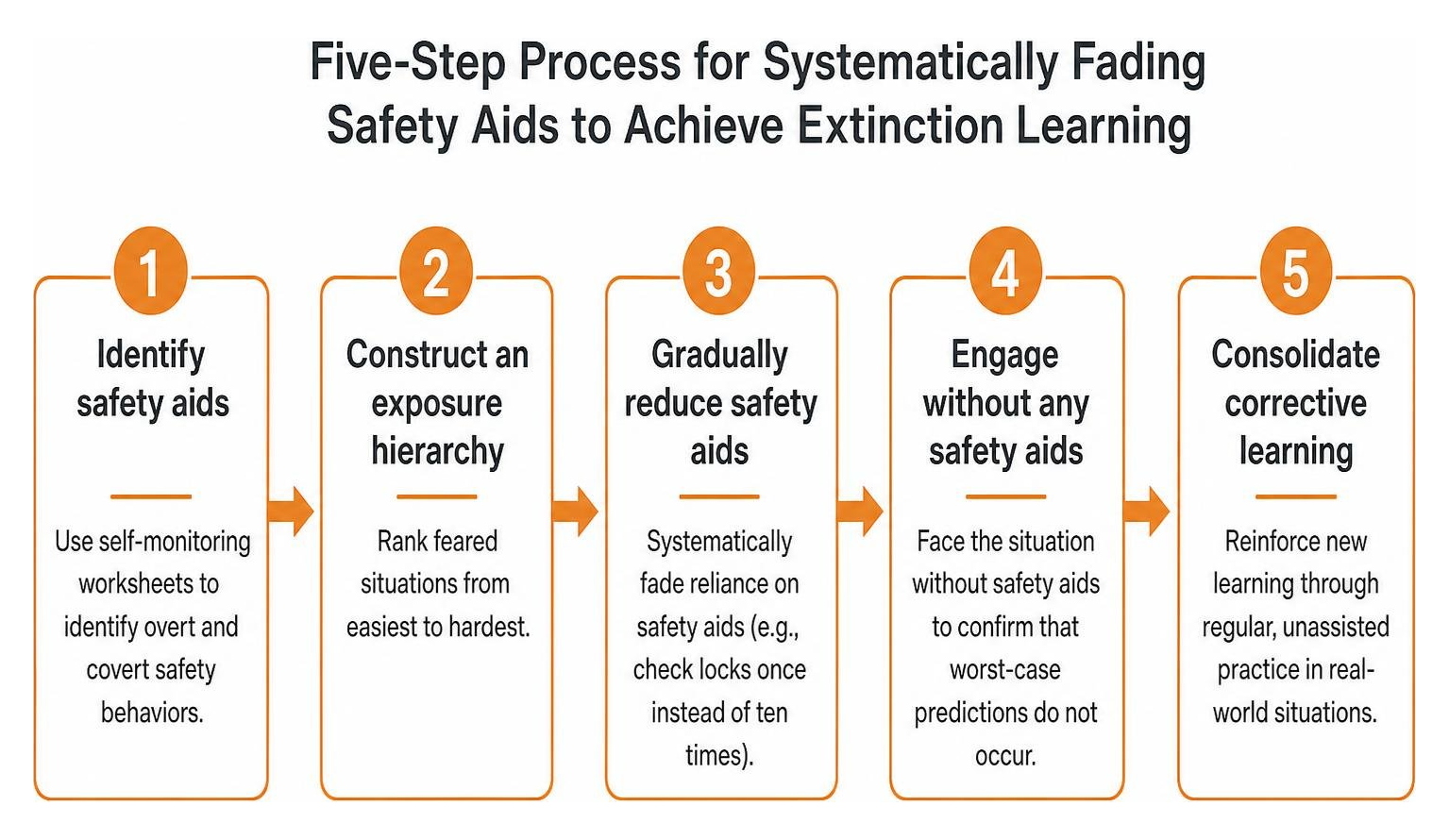
By tolerating uncertainty without leaning on emotional crutches, your brain learns that anxious arousal naturally rises, peaks, and declines on its own.
Holistic Lifestyle Pillars and Medication Considerations
Evidence-based coping skills work best when supported by everyday physical health habits. A balanced routine stabilizes the nervous system and makes psychological interventions far more effective. For many individuals, managing anxiety symptoms without prescription medication through therapy and lifestyle adjustments is entirely achievable.

- Physical Activity: Regular aerobic exercise (like brisk walking, swimming, or cycling for 150 minutes per week) lowers resting baseline arousal and helps metabolize stress hormones.
- Nutritional Stability: Eating regular, nutrient-dense meals with adequate protein, complex carbohydrates, and omega-3 fatty acids prevents blood sugar swings that can mimic panic symptoms.
- Limiting Stimulants: Reducing caffeine and avoiding nicotine prevents unnecessary spikes in heart rate that can trigger anxiety spirals.
Restorative Sleep and Nervous System Recovery
Sleep and anxiety share a close, two-way relationship. Poor sleep impairs prefrontal regulation of the amygdala, leaving you more vulnerable to daytime anxiety. At the same time, high evening arousal can make it difficult to fall asleep.
Understanding the bidirectional link between anxiety and sleep quality is key to breaking this cycle. Practicing consistent sleep hygiene—keeping a regular wake-up time, dimming screens an hour before bed, and overcoming nighttime insomnia and anxiety—creates the physical foundation your brain needs for emotional regulation.
Pharmacotherapy Integration and Relapse Prevention
While psychotherapy is a primary treatment for anxiety disorders, combining medication with therapy can be helpful in certain cases. Medications like Selective Serotonin Reuptake Inhibitors (SSRIs) or Serotonin-Norepinephrine Reuptake Inhibitors (SNRIs) can reduce baseline distress enough to make exposure exercises manageable.
However, medication needs careful clinical oversight. While short-term benzodiazepine use may offer fast relief, clinical studies show that adding pharmacotherapy can sometimes reduce long-term gains at 6-month follow-up if patients attribute their success entirely to pills rather than their own coping skills.
Working with licensed providers through outpatient psychotherapy services ensures that any medication regimen supports, rather than replaces, the active skills you are developing.
Frequently Asked Questions About Anxiety Coping Skills
What is the fastest coping skill to stop an acute anxiety attack?
The physiological sigh is one of the quickest ways to reduce acute physical arousal. Take two quick inhales through your nose (one deep breath followed immediately by a short top-off inhale), then release a slow, full exhale through your mouth. Repeating this two to three times activates the parasympathetic nervous system, lowers your heart rate, and resets respiratory patterns within 60 seconds.
Why do coping strategies stop working when anxiety becomes severe?
When distress reaches extreme levels, your nervous system interprets the situation as an immediate survival threat. If you use coping strategies as hidden safety aids—trying desperately to force anxiety down to zero—you inadvertently tell your brain that the physical sensations are dangerous. Coping skills are designed to help you tolerate and ride out emotional discomfort, not eliminate normal feelings entirely.
How long does it take for therapy-based coping skills to become automatic?
Building new neural pathways takes time and regular practice. Most structured CBT protocols span 8 to 16 weekly sessions. With daily practice of diaphragmatic breathing, thought reframing, and safety-aid fading, most people notice meaningful improvements in emotional regulation within 6 to 8 weeks.
Conclusion: Building Sustainable Anxiety Resilience
Recovering from chronic anxiety is not about never feeling worried again; it is about knowing how to respond when worry arises. By combining physiological de-escalation tools, cognitive reframing, systematic exposure, and healthy daily habits, you develop a reliable framework for handling life’s uncertainties.
If worry is interfering with your work, sleep, or daily routines, learning to spot the everyday signs of anxiety is a helpful first step. At Oak Health Center, we provide compassionate, evidence-based psychotherapy and psychiatric support across our Southern California clinics in Beverly Hills, Fullerton, Laguna Hills, Rancho Cucamonga, and South Pasadena, as well as through secure telehealth statewide. With the right tools and consistent guidance, lasting emotional resilience is well within your reach.