


What GAD DSM-5 Actually Means — and Why It Matters
The GAD DSM-5 diagnostic criteria are the official clinical standards used to identify Generalized Anxiety Disorder — one of the most common and most misunderstood mental health conditions in the United States.
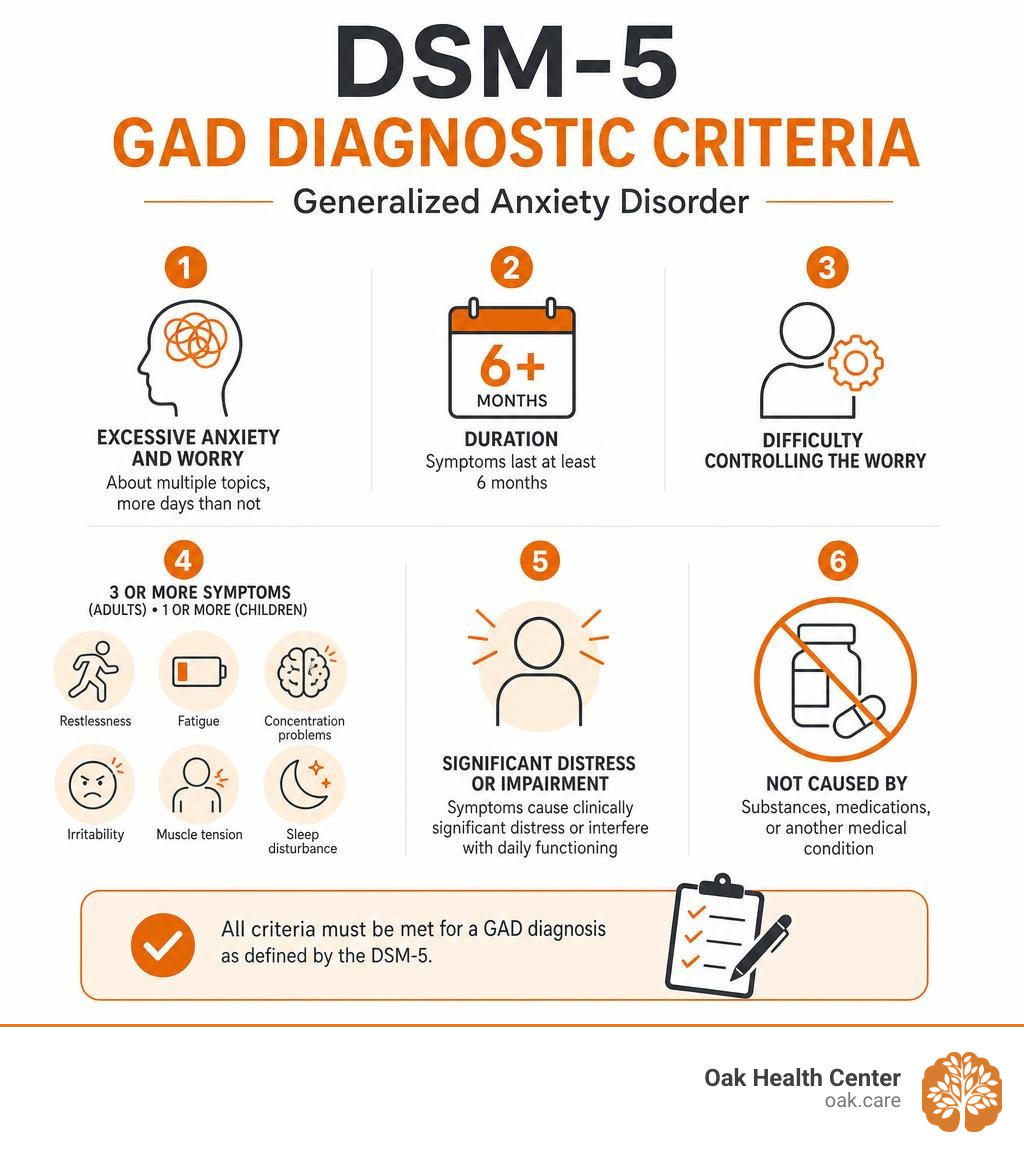
Here’s a quick summary of what DSM-5 requires for a GAD diagnosis:
- Excessive anxiety and worry about multiple topics, more days than not
- Duration of at least 6 months
- Difficulty controlling the worry
- 3 or more physical or cognitive symptoms in adults (only 1 required in children): restlessness, fatigue, concentration problems, irritability, muscle tension, or sleep disturbance
- Significant distress or impairment in daily functioning
- Symptoms not caused by substances, medications, or another medical condition
Many people — especially busy professionals — live with these symptoms for years before getting a diagnosis. In fact, only about 20% of people with anxiety symptoms ever seek treatment.
GAD is not just “being a worrier.” It is a recognized clinical condition with clear criteria, effective treatments, and real consequences when left unaddressed.
I’m Andrew Brewer, Practice Manager at Oak Health Center, where I’ve worked alongside our clinical teams to build and expand mental health programs — including services directly relevant to conditions like GAD DSM-5 — as we grew from a small practice into a comprehensive care center. In the sections below, we’ll walk through every dimension of the DSM-5 criteria so you can understand exactly what clinicians look for and why it matters.
Diagnostic Criteria and Symptoms of GAD DSM-5
To receive a formal diagnosis of Generalized Anxiety Disorder under the Diagnostic and Statistical Manual of Mental Disorders, Fifth Edition (DSM-5), an individual’s symptoms must align with a highly specific set of clinical standards. Clinicians do not diagnose GAD based on a temporary period of stress or a general sense of being a “worrywart.” Instead, the gad dsm 5 framework requires a pattern of chronic, pervasive worry that disrupts daily life.
The formal diagnostic criteria are structured as follows:
- Criterion A: Excessive Anxiety and Worry: The individual must experience excessive anxiety and worry about a variety of events or activities (such as work performance, health, finances, or family responsibilities). This worry must occur more days than not for at least 6 months.
- Criterion B: Difficulty Controlling the Worry: The person finds it difficult to control or quiet the worry. It often shifts from one topic to another, feeling like an uncontrollable loop of “what-if” scenarios.
- Criterion C: Associated Physical and Cognitive Symptoms: The anxiety and worry must be accompanied by at least three of six specific somatic or cognitive symptoms (with only one symptom required for children). These symptoms must be present more days than not over the preceding 6 months.
- Criterion D: Functional Impairment: The symptoms must cause clinically significant distress or impairment in social, occupational, or other important areas of functioning.
- Criterion E: Exclusion of Substances and Medical Conditions: The disturbance cannot be attributable to the physiological effects of a substance (such as drug abuse or medication) or another medical condition (such as hyperthyroidism).
- Criterion F: Exclusion of Other Mental Disorders: The worry is not better explained by another mental health condition, such as panic attacks in panic disorder, social evaluation in social anxiety disorder, or contamination fears in obsessive-compulsive disorder.
In everyday life, these criteria manifest in very tangible ways. A person might find themselves unable to sleep because they are mentally rehearsing every bad outcome for a presentation next week, or they might experience constant, unexplained physical aches. For a closer look at how these patterns play out outside the clinic, you can read about 5 Ways Anxiety Shows Up in Everyday Life.
Core Symptoms of GAD DSM-5 in Clinical Practice
While the cognitive experience of worry is the hallmark of GAD, the physical and psychological toll it takes on the body is what often drives individuals to seek medical help. The gad dsm 5 criteria outline six core symptoms, of which adults must meet at least three:
- Restlessness or Feeling Keyed Up or On Edge: This is a constant state of mental or physical tension. Patients often describe it as an inability to sit still, a feeling of vibration under the skin, or a persistent sense of impending doom.
- Muscle Tension: Unlike the transient tension of physical exertion, GAD-related muscle tension is chronic. Patients may experience clenched jaws, tight shoulders, neck pain, or general body stiffness that does not resolve with rest.
- Irritability: Constant worry and physical discomfort deplete emotional reserves, making individuals highly sensitive to minor frustrations, loud noises, or unexpected changes in plans.
- Easy Fatigability: Worrying is hard work. The constant activation of the body’s stress response consumes massive amounts of energy, leaving individuals feeling physically and mentally exhausted even without physical exertion.
- Difficulty Concentrating or Mind Going Blank: The brain’s working memory is frequently monopolized by anxious thoughts, leaving little room for processing daily tasks, reading, or holding conversations.
- Sleep Disturbance: This can include difficulty falling asleep, staying asleep, or experiencing restless, unsatisfying sleep.
The relationship between sleep and anxiety is a bidirectional cycle: worry prevents sleep, and sleep deprivation heightens anxiety. To understand this dynamic more deeply, explore our guide on Understanding the Anxiety-Sleep Connection.
Pediatric and Cultural Variations Under GAD DSM-5
The presentation of GAD is not uniform across age groups or cultural backgrounds. The DSM-5 accounts for these variations by adjusting diagnostic thresholds and acknowledging different ways distress is expressed.
Pediatric Presentation
In children and adolescents, the diagnostic threshold is lower. Only one of the six core symptoms is required for a diagnosis of GAD. Children’s worries typically center on their competence, school performance, sports, punctuality, or catastrophic events like earthquakes or wars. They frequently seek excessive reassurance from parents and teachers, yet this reassurance provides only temporary relief.
Cultural Variations and Somatic Expression
How GAD is expressed is heavily influenced by cultural context. In many non-Western cultures, mental distress is communicated primarily through somatic (physical) complaints rather than cognitive statements of worry. For example:
- An individual might report chronic headaches, stomachaches, or a feeling of heat in the head rather than stating, “I am worried about my job.”
- Cultural Idioms of Distress: Specific cultural concepts, such as ataques de nervios in Latino populations or khyâl cap (wind attacks) in Cambodian populations, describe intense physical and emotional reactions to stress that overlap significantly with GAD and panic symptoms.
Clinicians must remain sensitive to these cultural nuances to avoid misdiagnosis or underdiagnosis.
Evolution of GAD: Comparing DSM-IV and DSM-5
The transition from the DSM-IV to the DSM-5 brought several refined changes to the diagnostic criteria for Generalized Anxiety Disorder. These updates were designed to simplify the diagnostic process, reduce artificial diagnostic overlaps, and improve clinical utility.
The most notable changes include:
- Removal of the Axis System: The DSM-5 eliminated the traditional multi-axial system (where clinical disorders were listed on Axis I and personality disorders/medical conditions on other axes). GAD is now diagnosed alongside other psychiatric and medical conditions on a single, non-axial list.
- Simplified Exclusion Criteria: In the DSM-IV, a GAD diagnosis was excluded if the anxiety focused exclusively on features of another Axis I disorder (such as panic attacks, social phobia, or obsessive-compulsive disorder). The DSM-5 simplified this exclusion, stating simply that the worry must not be better explained by another mental disorder.
- Clarity on Cognitive vs. Somatic Balance: The updated criteria place a stronger emphasis on the cognitive uncontrollability of the worry, recognizing that while physical symptoms are highly common, the psychological struggle to control worry is the defining core of the disorder.
To see how these criteria map side-by-side, refer to the DSM-IV to DSM-5 GAD Comparison or review the summary table below:
| Diagnostic Feature | DSM-IV Criteria | DSM-5 Criteria |
|---|---|---|
| Primary Focus | Axis I clinical disorder classification. | Non-axial, integrated diagnostic listing. |
| Exclusionary Overlap | Highly restrictive; could not diagnose if worry was confined to features of other Axis I conditions. | Simplified; worry must not be better explained by another mental disorder. |
| Symptom Requirements | 3 of 6 physical/cognitive symptoms for adults; 1 for children. | Maintained the same symptom count but clarified the cognitive nature of uncontrollable worry. |
| Substance/Medical Rule-out | Required ruling out direct physiological consequences of a substance or general medical condition. | Maintained, with clearer emphasis on ruling out medication-induced anxiety. |
Overall, these changes have made the gad dsm 5 criteria more accessible for primary care clinicians, who are often the first line of contact for individuals struggling with chronic anxiety.
Epidemiology, Assessment, and Treatment of GAD
Generalized Anxiety Disorder is a highly prevalent condition with a chronic, fluctuating course. Understanding its epidemiological patterns, assessment tools, and evidence-based treatments is essential for effective clinical management.

Key Epidemiological Facts
- Prevalence: GAD affects approximately 2% of the global population and 3% to 4% of the U.S. population within any given 1-year period.
- Gender Distribution: The lifetime prevalence of GAD is twice as high in women (7.7%) as in men (4.6%).
- Age of Onset: The median age of onset for GAD is 30 years, which is notably later than other anxiety disorders (such as specific phobias or social anxiety). However, many patients report feeling like “anxious people” for as long as they can remember.
- Course: GAD is typically chronic, with symptoms waxing and waning throughout life, often intensifying during periods of high environmental stress.
Because GAD symptoms frequently overlap with depressive symptoms, clinicians must carefully evaluate both. To learn more about why these two conditions are so frequently assessed together, read our analysis on Double Trouble: Why Doctors Use Both GAD-7 and PHQ-9.
Common Comorbidities: Depression and Other Anxiety Disorders
It is exceptionally rare for GAD to exist in isolation. In clinical settings, the vast majority of patients diagnosed with GAD meet the criteria for at least one other psychiatric disorder.
The most common comorbidities include:
- Major Depressive Disorder (MDD): Up to 60% of individuals with GAD will experience a co-occurring depressive episode. The shared genetic vulnerability (often linked to high neuroticism) and the sheer exhaustion of chronic worry make depression a frequent companion to GAD.
- Other Anxiety Disorders: Panic disorder, social anxiety disorder, and specific phobias are highly comorbid with GAD.
- Substance Use Disorders: Many individuals attempt to self-medicate their chronic physical tension and racing thoughts with alcohol or cannabis, leading to secondary substance use issues.
These overlapping conditions can create a complex web of symptoms. For a deeper look at how anxiety, depression, and sleep issues reinforce one another, check out How Anxiety, Depression, and Sleep Problems Feed Each Other.
Clinical Assessment: Screening Tools and Severity Measures
In primary care and psychiatric settings, structured screening tools are used to detect GAD and track treatment progress over time.
The GAD-7 Scale
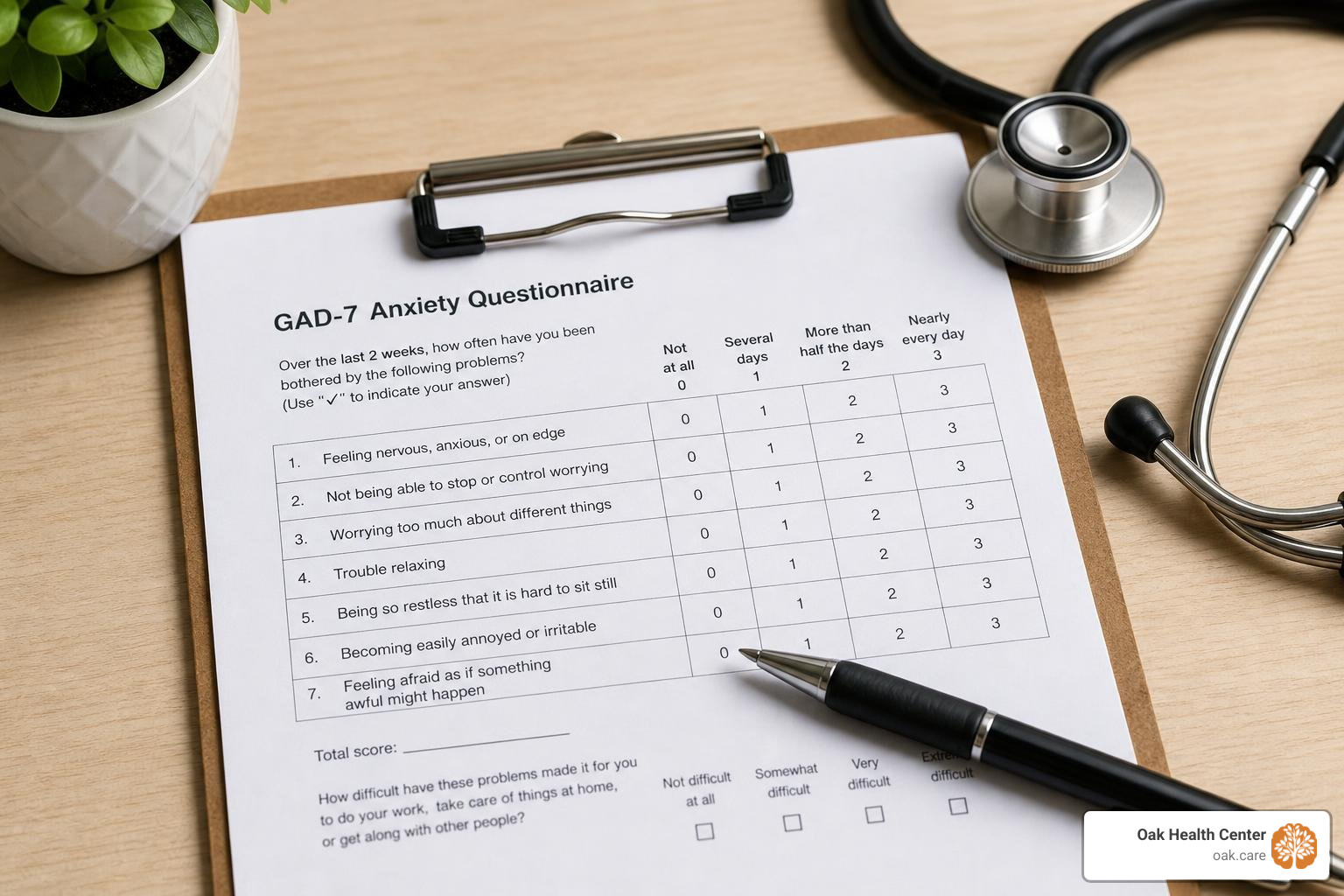
The GAD-7 is a rapid, 7-item self-report questionnaire that asks patients how often they have been bothered by specific anxiety symptoms over the past two weeks.
- Scores of 5, 10, and 15 represent cutoffs for mild, moderate, and severe anxiety, respectively.
- A score of 10 or greater indicates the need for a formal diagnostic interview.
The Severity Measure for Generalized Anxiety Disorder—Adult
To provide a more comprehensive clinical picture, the American Psychiatric Association (APA) developed the APA Severity Measure for GAD. This 10-item self-report tool evaluates both the frequency and the severity of cognitive and physical symptoms, yielding an average score that categorizes GAD severity from “none” (0) to “extreme” (4).
Differential Diagnosis: Ruling Out Mimics
Because GAD presents with a wide array of physical symptoms, it is frequently misdiagnosed or attributed to primary physical illnesses. Clinicians must conduct a thorough differential diagnosis to rule out medical and psychiatric mimics:
- Endocrine Conditions: Hyperthyroidism and pheochromocytoma can cause autonomic hyperarousal, rapid heart rate, and sweating that mimic anxiety.
- Cardiovascular and Pulmonary Conditions: Cardiac arrhythmias, mitral valve prolapse, and chronic obstructive pulmonary disease (COPD) can trigger physical sensations of panic and worry.
- Substance-Induced Anxiety: High caffeine intake, nicotine withdrawal, stimulant medications (such as ADHD treatments), and illicit drug use can induce severe anxiety states.
- Other Psychiatric Disorders:
- Obsessive-Compulsive Disorder (OCD): In OCD, worries are intrusive, ego-dystonic obsessions paired with repetitive compulsions. In GAD, worries are typically about real-life, everyday concerns.
- Post-Traumatic Stress Disorder (PTSD): Anxiety in PTSD is tied directly to traumatic memories and hypervigilance regarding trauma-related triggers.
Evidence-Based Treatment Strategies
Managing GAD effectively requires a combination of pharmacological, psychotherapeutic, and lifestyle interventions tailored to the individual’s severity level. For a complete clinical overview of treatment guidelines, refer to the Merck Manual GAD Guidelines.
1. Pharmacotherapy
- First-Line Medications: Selective Serotonin Reuptake Inhibitors (SSRIs, e.g., escitalopram, sertraline) and Serotonin-Norepinephrine Reuptake Inhibitors (SNRIs, e.g., venlafaxine, duloxetine) are the gold standards. These medications help regulate neurotransmitter pathways in the brain’s fear and worry circuits. It typically takes 3 to 6 weeks of consistent use to see therapeutic benefits.
- Short-Term Adjuncts: Benzodiazepines may be used briefly during acute crises to provide immediate relief, but they are generally avoided for long-term treatment due to the risks of tolerance and dependence.
- Alternatives: Buspirone is a non-benzodiazepine anxiolytic that can be effective for patients who do not tolerate SSRIs.
2. Psychotherapy
- Cognitive Behavioral Therapy (CBT): CBT is the most extensively researched and effective psychotherapy for GAD. It helps patients identify irrational thought patterns (such as “catastrophizing”), challenge their worries, and develop healthier coping mechanisms.
- Acceptance and Commitment Therapy (ACT): ACT teaches patients to accept their anxious thoughts without judgment while focusing on value-driven actions.
If you are interested in exploring non-pharmacological paths to recovery, read our guide on Managing Anxiety Without Medication.
3. Lifestyle Modifications
Simple, consistent lifestyle changes can significantly lower baseline physical tension:
- Regular Exercise: Aerobic exercise at 60% to 90% of maximum heart rate for 20 minutes, three times a week, has been shown to reduce anxiety.
- Sleep Hygiene: Maintaining a consistent sleep schedule helps stabilize mood and energy levels.
- Stimulant Reduction: Cutting back on caffeine and nicotine directly reduces physical symptoms of jitteriness and rapid heart rate.
Global Barriers to Care and Treatment-Seeking Rates
Despite the high prevalence and clear diagnostic criteria of GAD, global treatment-seeking rates remain remarkably low. Only about 20% of individuals with GAD symptoms seek professional help.
Several factors contribute to this treatment gap:
- The “Worry” Stigma: Because worry is a universal human experience, many individuals dismiss their clinical symptoms as a personal failing or a personality trait (e.g., “I’ve just always been a nervous person”), rather than recognizing it as a treatable medical condition.
- Somatic Misattribution: Many patients seek care from primary care physicians for physical complaints (like chronic headaches or stomach issues) without realizing these symptoms are driven by an underlying anxiety disorder. This often leads to unnecessary medical testing and missed psychiatric diagnoses.
- Socioeconomic Disparities: Access to evidence-based psychotherapy and psychiatric care varies widely by country income level and local healthcare infrastructure. In low- and middle-income regions, mental health resources are often highly limited, leaving the vast majority of GAD cases untreated.
If you find that your symptoms are worsening despite your best efforts to manage them on your own, you can learn more about Why Your Anxiety Keeps Getting Worse.
Frequently Asked Questions about GAD
What is the minimum duration of symptoms required for a GAD diagnosis?
Under the gad dsm 5 criteria, symptoms of excessive anxiety and worry must be present more days than not for at least 6 months. This duration helps clinicians differentiate clinical GAD from transient, acute stress reactions to life events (such as a job transition, bereavement, or temporary financial strain).
How many symptoms are required to diagnose GAD in children versus adults?
- Adults (18+): Must exhibit three or more of the six core physical and cognitive symptoms (restlessness, fatigue, concentration difficulties, irritability, muscle tension, or sleep disturbance) more days than not for at least 6 months.
- Children and Adolescents: Only one of the six core symptoms is required for a diagnosis, reflecting the developmental differences in how young people experience and express anxiety.
What are the first-line treatments recommended for GAD?
The most effective, evidence-based treatments for GAD are:
- Cognitive Behavioral Therapy (CBT): A structured psychotherapy that targets cognitive distortions and maladaptive behaviors.
- Pharmacotherapy: Specifically, SSRIs (such as escitalopram) and SNRIs (such as venlafaxine).
- Lifestyle Modifications: Incorporating regular aerobic exercise, practicing good sleep hygiene, and reducing intake of stimulants like caffeine and nicotine.
Conclusion
Understanding the gad dsm 5 diagnostic criteria is the first step toward reclaiming control over chronic, life-disrupting worry. GAD is a highly treatable clinical condition, not a permanent personality trait.
At Oak Health Center, we provide comprehensive, compassionate mental healthcare designed to simplify your path to support. Whether you prefer in-person visits at one of our five Southern California locations — Beverly Hills, Fullerton, Laguna Hills, Rancho Cucamonga, and South Pasadena — or the convenience of our statewide virtual services, our clinical team is here to help you build a personalized care plan.
Ready to take the next step? More info about psychotherapy services is available on our website to help you find the right fit for your mental wellness journey.