


When Nothing Else Works: What You Need to Know About Ketamine Infusion for Depression
Ketamine infusion for depression is a fast-acting treatment that delivers a low dose of ketamine through an IV to relieve depressive symptoms — often within hours, not weeks.
Here’s a quick snapshot of what it involves:
| What You Want to Know | The Short Answer |
|---|---|
| How fast does it work? | Relief can begin within 4 hours of the first infusion |
| Who is it for? | People with treatment-resistant depression who haven’t responded to other treatments |
| How is it given? | IV infusion of 0.5 mg/kg over 40 minutes, typically 2-3 times per week |
| How many sessions? | Usually 6 infusions over 2-3 weeks, plus possible maintenance sessions |
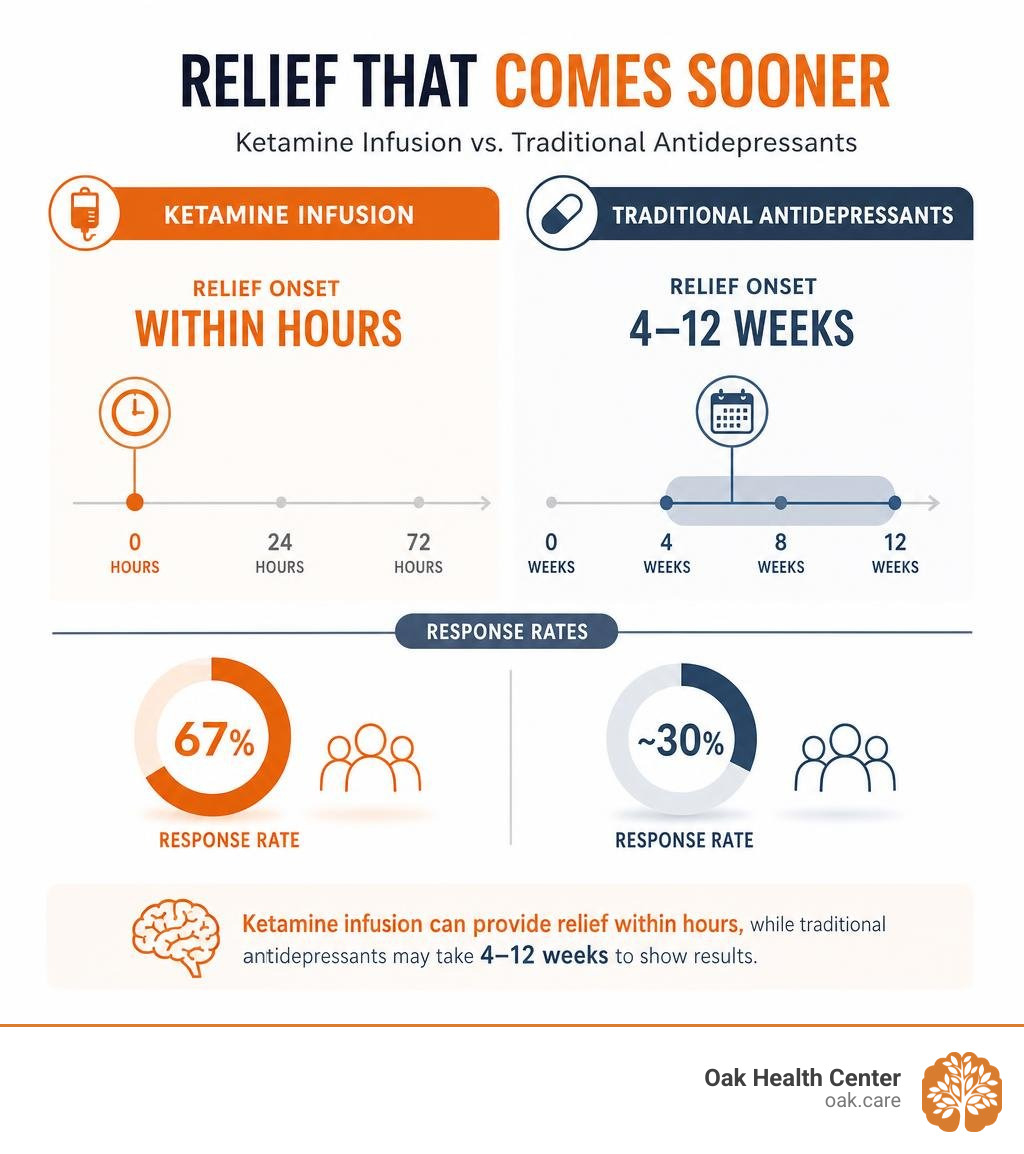
| What’s the success rate? | Up to 67% response rate and 52% remission in clinical studies |
| Is it covered by insurance? | Often not — most patients pay out-of-pocket (~$600 per session) |
| Is it safe? | Yes, under proper medical supervision with monitoring |
If you’ve tried antidepressants and therapy without finding real relief, you’re not alone. Traditional antidepressants can take 4 to 12 weeks to show results — and for many people, they don’t work at all. Ketamine offers something different: a completely different mechanism of action in the brain and a speed of relief that no standard antidepressant can match.
This guide walks you through everything you need to know — how ketamine works, what the clinical evidence says, what a typical treatment looks like, and whether it might be right for you.
I’m Andrew Brewer, Practice Manager at Oak Health Center, where I’ve helped build and expand innovative treatment programs — including working alongside clinical teams to make emerging therapies like ketamine infusion for depression more accessible to our patients across Southern California. I’ll make sure this guide gives you clear, honest, and practical information so you can make a confident, informed decision.
Ketamine infusion for depression helpful reading:
Understanding Ketamine Infusion Therapy
For decades, the mental health field relied almost exclusively on standard medication management to treat major depressive disorder. However, as many as one-third of individuals dealing with depression find that standard options fail to lift the heavy fog of their symptoms. This has led researchers and clinicians to look beyond conventional boundaries.
Ketamine, originally developed in the 1960s as a safe anesthetic, has emerged as one of the most significant breakthroughs in psychiatric medicine in a generation. When administered in low, subanesthetic doses via an intravenous (IV) line, ketamine works rapidly to target areas of the brain associated with mood, emotional regulation, and stress.
To fully understand this modern approach, it helps to look at exploring holistic and alternative ways to treat depression, which highlights how expanding our therapeutic toolkit can help individuals who feel completely stuck.
How Ketamine Infusion for Depression Works in the Brain
To understand why ketamine is so effective, we have to look at how it interacts with our neural pathways. Standard antidepressants focus primarily on monoamine neurotransmitters like serotonin, norepinephrine, and dopamine. Ketamine, however, targets glutamate, the most abundant excitatory neurotransmitter in the brain.
When a patient receives a ketamine infusion for depression, the medication acts as an N-methyl-D-aspartate (NMDA) receptor antagonist. By blocking the NMDA receptor, ketamine triggers a rapid surge of glutamate. This chemical cascade stimulates another set of receptors known as AMPA receptors.
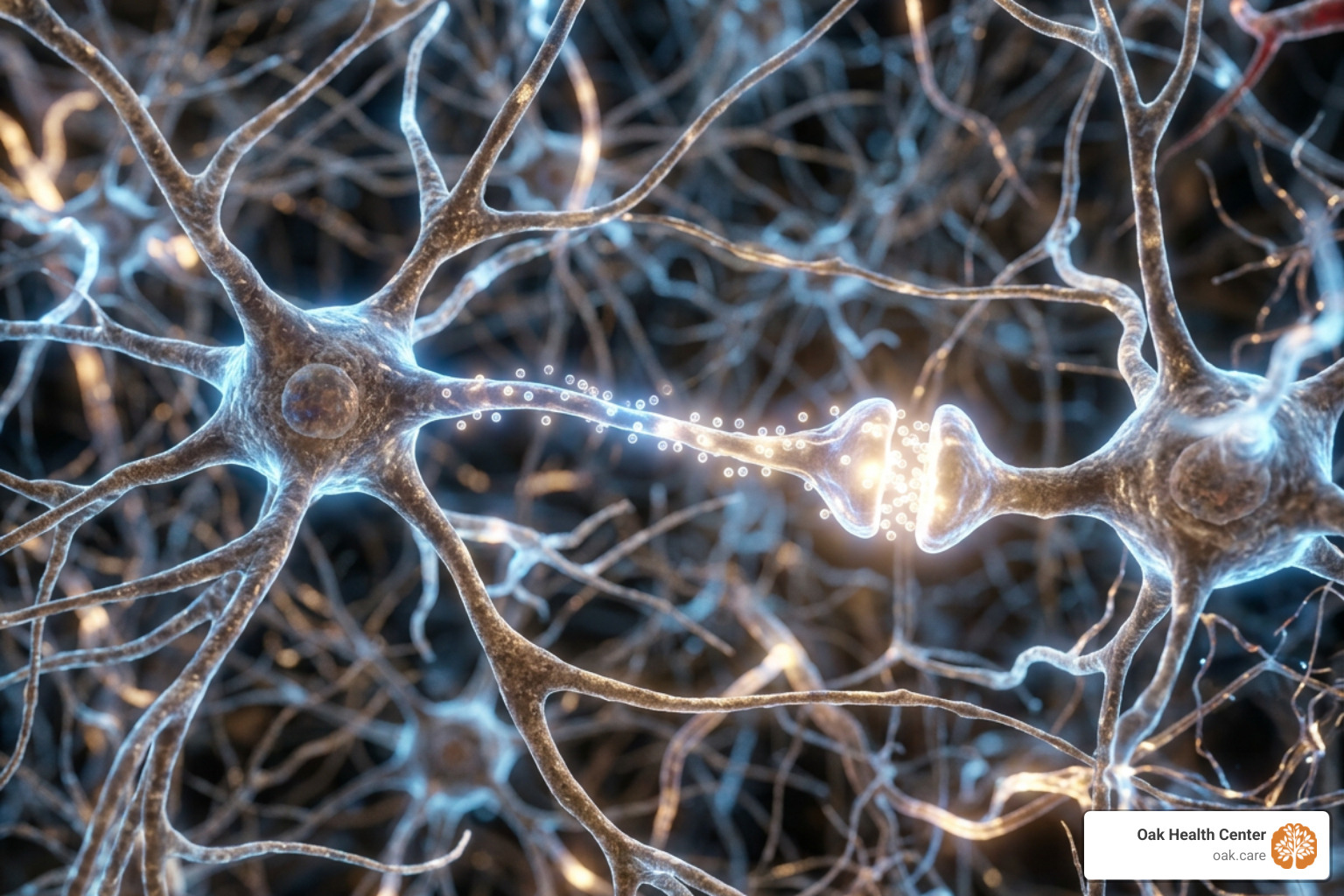
This activation releases brain-derived neurotrophic factor (BDNF), a protein often described as “Miracle-Gro for the brain.” BDNF promotes synaptogenesis—the creation of new synaptic connections between brain cells.
Over time, chronic depression and severe stress physically damage the brain, causing neural pathways to wither away like dry branches. Ketamine essentially repairs these pathways, restoring neuroplasticity and allowing the brain to adapt, heal, and build healthier communication networks.
If you want to understand how this differs from traditional pharmacology, you can read more about meds to treat depression: finding your perfect match.
Ketamine vs. Traditional Antidepressants
The traditional “monoamine hypothesis” suggests that depression is caused by a chemical imbalance of serotonin or norepinephrine. While selective serotonin reuptake inhibitors (SSRIs) and serotonin-norepinephrine reuptake inhibitors (SNRIs) work well for some, they have two glaring limitations:
- Delay in onset: They require weeks or even months of daily dosing to build up in the system and alter gene expression.
- Low efficacy for severe cases: Many patients cycle through three or four different medications without finding lasting relief.
Ketamine bypasses this system entirely. Instead of waiting for gradual shifts in neurotransmitter levels, a single 40-minute infusion initiates immediate cellular repair. For a deeper dive into the clinical pharmacology, you can review this scientific overview of ketamine therapy.
Below is a breakdown of how these two approaches compare:
- Traditional Antidepressants: Taken daily as oral tablets; takes 4 to 12 weeks to show efficacy; targets serotonin, norepinephrine, and dopamine; response rates drop significantly after the first two failed trials.
- Ketamine Infusions: Administered intravenously in a clinical setting; takes 2 to 24 hours to show efficacy; targets glutamate and NMDA receptors to rebuild neural pathways; maintains high efficacy even in treatment-resistant populations.
Clinical Evidence: Efficacy of Ketamine Infusion for Depression
The transition of ketamine from a niche anesthetic to a widely recognized treatment for depression is backed by robust clinical data. Over the past decade, numerous randomized controlled trials (RCTs) and systematic reviews have proven its exceptional efficacy, particularly for those facing severe, persistent symptoms.

When standard treatments fail, clinicians refer to the condition as Treatment-Resistant Depression (TRD). If you are currently navigating this difficult path, you may find comfort in our guide on understanding treatment-resistant depression when standard treatments aren’t enough.
Efficacy in Treatment-Resistant Depression (TRD)
The clinical evidence supporting ketamine for TRD is compelling. In a landmark study of 74 patients with severe treatment-resistant depression (the Bio-K study), researchers observed that 52% of participants achieved full remission and 67% achieved a significant response after receiving repeated ketamine infusions over an 11-day period.
Furthermore, a double-blind, randomized controlled trial published in the American Journal of Psychiatry evaluated the impact of single, repeated, and maintenance infusions. The trial showed that 59% of participants met response criteria (defined as a 50% or greater reduction in Montgomery-Åsberg Depression Rating Scale [MADRS] scores) after a series of six thrice-weekly infusions.
Notably, the median number of infusions required to achieve a response was three, indicating that most patients knew whether the treatment was working for them within the first week. You can read the detailed findings in this clinical trial on single, repeated, and maintenance infusions.
Rapid Reduction of Suicidal Ideation
One of the most profound aspects of ketamine infusion for depression is its ability to rapidly reduce suicidal thoughts. Traditional psychiatric medications can take weeks to work, which is a dangerous delay during a mental health crisis.
Clinical data shows that a single ketamine infusion can lead to a significant reduction in suicidal symptoms within just 4 to 24 hours. A comprehensive meta-analysis of 26 randomized clinical trials involving over 1,100 patients demonstrated a robust and rapid reduction in suicidal ideation (Standardized Mean Difference [SMD] of -0.69 at 24 hours) that was sustained for up to a month in many individuals.
For repeated infusions, the reduction in suicidal symptoms was even more pronounced, showing an SMD of -0.72 at the end of the treatment course. This rapid action makes ketamine an invaluable tool for acute stabilization. You can review the full statistical analysis in this meta-analysis on rapid symptom reduction.
Dosing Regimens, Timelines, and Maintenance Protocols
How is ketamine actually administered, and what should you expect during a treatment cycle? Because ketamine is highly potent, clinical protocols are carefully calibrated to maximize therapeutic benefits while minimizing side effects.
To explore where ketamine stands among other clinical interventions, check out our ranking of the best professional alternative treatments for depression ranked.
Single vs. Repeated Infusions
A single subanesthetic ketamine infusion (typically dosed at 0.5 mg/kg of body weight and delivered over 40 minutes via an infusion pump) can produce a dramatic drop in depressive symptoms. However, clinical trials have shown that the antidepressant effects of a single dose are usually transient, often lasting from a few days to a week.
To achieve lasting relief, clinical protocols utilize a “stabilization phase” consisting of repeated infusions. Typically, this involves six infusions administered over two to three weeks (often on a twice- or thrice-weekly schedule).
This repeated exposure allows for cumulative neuroplastic changes in the brain. Each infusion builds upon the last, helping to solidify the new neural connections and extend the duration of symptom relief. To learn more about how repeated clinical protocols are designed, you can read the KARMA-Dep study protocol.
The Role of Maintenance Infusions
Once a patient completes the initial stabilization phase and experiences a significant reduction in symptoms, the focus shifts to maintaining those gains. Because depression is a chronic condition, many patients require periodic “booster” or maintenance infusions.
The frequency of maintenance infusions is highly personalized:
- Weekly to Bi-Weekly: Some patients benefit from once-weekly or bi-weekly infusions for the first month following stabilization.
- Monthly or Longer: Many individuals find they can transition to a maintenance schedule of one infusion every 4 to 8 weeks.
- As-Needed (PRN): Others monitor their symptoms closely alongside their psychiatrist and schedule a booster only when they feel the familiar weight of depression beginning to return.
Without maintenance, the average time to relapse after completing an initial series is roughly 18 to 19 days. Establishing a proactive plan is essential for long-term recovery. You can learn more about how we structure comprehensive mental health care plans by visiting our services page.
Safety, Side Effects, and Patient Selection
As with any medical procedure, safety is our top priority. While ketamine is highly effective, it is a powerful psychoactive substance that must be administered under strict medical supervision in a clinical setting.
For patients seeking non-invasive, non-pharmacological alternatives that also target brain pathways, it is worth learning how TMS therapy works for depression.
Who is a Candidate for Ketamine Infusion for Depression?
Ketamine therapy is primarily indicated for adults experiencing:
- Moderate-to-severe Major Depressive Disorder (MDD)
- Treatment-Resistant Depression (TRD)
- Bipolar depression (under close psychiatric management to prevent manic switches)
- Severe depression accompanied by acute suicidal ideation
Who should avoid ketamine? Certain medical and psychological conditions are contraindications for ketamine therapy. These include:
- A history of active psychosis, schizophrenia, or severe mania
- Active, untreated substance use disorders (particularly involving stimulants or PCP)
- Uncontrolled or severe cardiovascular disease (such as a recent heart attack or severe, unmanaged hypertension)
- Severe liver disease (as ketamine is metabolized by the liver)
- A known allergy to ketamine
Common Side Effects and Safety Monitoring
During a ketamine infusion for depression, patients often experience mild, transient side effects that typically resolve within 60 minutes of the infusion’s completion.
Common side effects include:
- Dissociation: A feeling of being detached from one’s body, floating, or experiencing altered sensory perceptions (often described as a dream-like state).
- Mild Cardiovascular Changes: A temporary elevation in blood pressure and heart rate. On average, systolic blood pressure may rise by about 20-25 mmHg and diastolic by 15 mmHg, peaking near the end of the infusion.
- Nausea or Dizziness: Some patients experience mild motion sickness or nausea, which can be easily managed by pre-treating with an antiemetic like ondansetron (Zofran).
- Temporary Grogginess: Feeling tired or lightheaded immediately after the session.
To ensure safety, clinical best practices require continuous cardiorespiratory monitoring (tracking heart rate, blood pressure, and oxygen saturation) before, during, and after the infusion. Clinicians also use standardized tools like the Clinician Administered Dissociative States Scale (CADSS) to monitor and record dissociative effects.
If you’re interested in alternative brain-stimulation treatments that do not cause dissociative side effects, you can read about our services: Transcranial Magnetic Stimulation.
Ketamine Infusions vs. Esketamine (Spravato) Nasal Spray
When exploring ketamine therapy, you will likely come across two primary options: intravenous (IV) ketamine infusions and esketamine (Spravato) nasal spray. Understanding the differences between these two treatments is crucial for deciding which path to take.
| Feature | IV Ketamine Infusion | Esketamine (Spravato) Nasal Spray |
|---|---|---|
| FDA Approval Status | Off-label for depression (approved as an anesthetic) | FDA-approved for treatment-resistant depression & acute suicidality |
| Administration Route | Intravenous (IV) line, precisely controlled | Self-administered nasal spray under clinical supervision |
| Bioavailability | 100% (entire dose enters the bloodstream immediately) | ~48% (absorbed through the nasal mucosa) |
| Dosing Precision | Highly customizable based on exact body weight | Standardized doses (56 mg or 84 mg) |
| Insurance Coverage | Primarily self-pay / out-of-pocket (~$600/session) | Often covered by commercial insurance & Medicare |
| REMS Program | No (governed by clinical/medical board standards) | Yes (requires enrollment in the Spravato REMS program) |
| In-Office Monitoring | Required (typically 1.5 to 2 hours total visit) | Required (strict 2-hour observation period) |
Efficacy, Cost, and Access Barriers
The choice between IV ketamine and Spravato often comes down to a balance of clinical efficacy, cost, and insurance coverage.
- Efficacy: IV ketamine is considered by many clinicians to be the gold standard of ketamine therapy because of its 100% bioavailability and highly customizable dosing. The infusion rate can be adjusted in real-time if a patient experiences discomfort or excessive dissociation. Spravato is also highly effective but relies on nasal absorption, which can vary based on nasal congestion or administration technique.
- Cost and Insurance: Because IV ketamine is used off-label for depression, most insurance companies do not cover the cost of the infusions, meaning patients must pay out-of-pocket (typically around $600 per session). In contrast, because Spravato is FDA-approved, many insurance plans cover the medication and clinical monitoring, making it a much more financially accessible option for many families.
- Access Barriers: Spravato must be administered at an approved REMS (Risk Evaluation and Mitigation Strategy) clinical site, and patients must remain under medical observation for exactly two hours after taking the nasal spray. This requires a significant time commitment, but the potential for insurance coverage makes it highly attractive.
Current Limitations and Future Directions
While ketamine therapy represents a massive leap forward, there are still clinical gaps and areas requiring further research:
- Biomarkers: Researchers are actively searching for blood-based biomarkers or neuroimaging patterns that can predict which patients will respond best to ketamine before they begin treatment.
- Long-Term Safety: While short-term safety is well-established, studies are ongoing to evaluate the cognitive, bladder, and liver safety of long-term maintenance therapy over several years.
- Combination with Psychotherapy: There is growing interest in Ketamine-Assisted Psychotherapy (KAP), which pairs the neuroplastic window opened by ketamine with targeted cognitive behavioral therapy to help patients integrate their experiences and build lasting psychological resilience.
Frequently Asked Questions about Ketamine Infusions
How quickly does ketamine infusion work for depression?
Unlike traditional antidepressants that take weeks to alter brain chemistry, a ketamine infusion for depression works incredibly fast. Many patients report a noticeable lift in their mood and a reduction in anxiety within 4 to 24 hours of their first or second infusion. This rapid onset makes it a vital option for individuals in acute distress or experiencing severe suicidal thoughts.
How much does a ketamine infusion cost?
Because IV ketamine is currently administered off-label for psychiatric conditions, it is rarely covered by health insurance. Most clinics operate on a self-pay, fee-for-service model. On average, a single ketamine infusion costs approximately $600. A standard stabilization course of six infusions typically costs between $3,000 and $4,000, which patients pay out-of-pocket.
Is ketamine infusion therapy safe?
Yes, when administered by qualified medical professionals in a fully equipped clinical setting, ketamine infusion therapy has an excellent safety profile. The doses used for depression are subanesthetic—much lower than those used in operating rooms. While temporary increases in blood pressure, heart rate, and mild dissociation are common during the 40-minute infusion, these effects are closely monitored and resolve quickly once the infusion stops.
Conclusion
Navigating severe, treatment-resistant depression can feel like walking through a long, dark tunnel with no end in sight. But medical science has advanced, and you do not have to rely solely on traditional medications that take months to work. Ketamine infusion for depression represents a true paradigm shift, offering rapid, life-saving relief by physically rebuilding the neural pathways responsible for hope, resilience, and emotional balance.
At Oak Health Center, we are dedicated to providing compassionate, comprehensive, and highly personalized mental healthcare. With five physical locations across Southern California—including Beverly Hills, Fullerton, Laguna Hills, Rancho Cucamonga, and South Pasadena—as well as convenient statewide virtual services, we make it simple and stress-free to access the advanced support you deserve.
If you are ready to explore whether ketamine therapy, TMS, or our specialized psychiatric programs are right for your journey, we are here to help. Schedule a consultation for professional psychiatry services today, and let us take the next step toward healing together.