


When Frequent Crying May Point to Clinical Depression
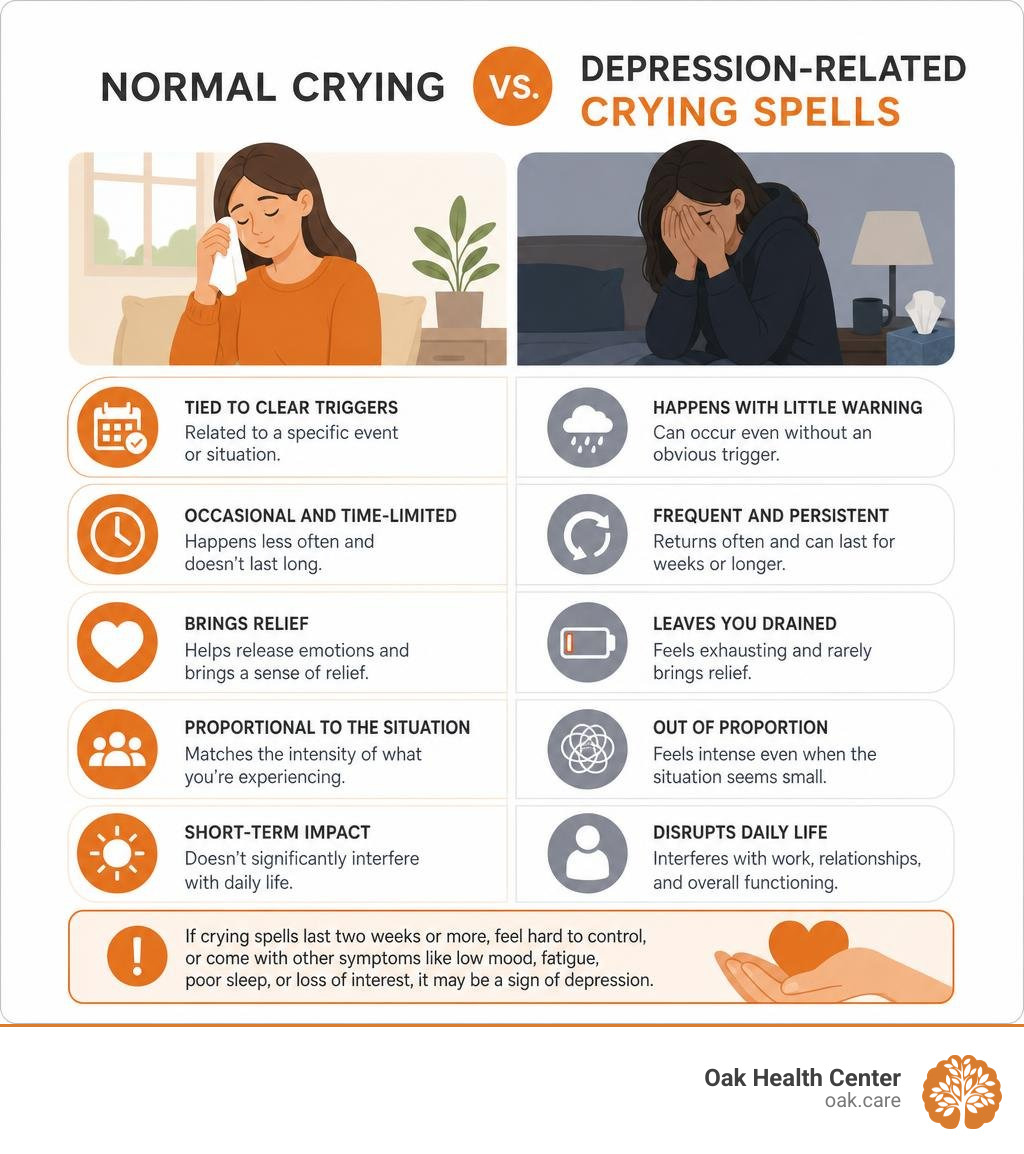
Depression and crying spells can show up as tears that feel frequent, hard to control, or out of proportion to what is happening. Unlike ordinary crying after a clear loss or stressful event, these episodes may happen with little warning, return often, and leave you feeling drained rather than relieved.
Crying by itself does not mean someone has depression. But it is worth taking seriously when it lasts for two weeks or more, disrupts work or relationships, or comes with other symptoms such as low mood, hopelessness, poor sleep, fatigue, loss of interest, or thoughts of self-harm.
A crying spell can be triggered by stress, conflict, exhaustion, anxiety, grief, or hormonal shifts. Sometimes there is no obvious trigger at all. Depression can lower the brain’s ability to regulate emotion, making small pressures feel overwhelming.
If tears are becoming difficult to manage, especially during the workday or when you are alone, support can help. A mental health professional can assess whether depression, anxiety, a hormone-related condition, grief, medication effects, or a neurological issue may be involved.
I am Andrew Brewer, Practice Manager at Oak Health Center, where I work alongside clinical teams that support accessible, well-coordinated mental health care. My work in healthcare operations has helped expand services for people navigating depression and crying spells, anxiety, sleep concerns, and other challenges that affect daily life.
The Science Behind Depression and Crying Spells: Why the Tears Won’t Stop
Crying is an innate human response designed to communicate distress, elicit social support, and restore emotional equilibrium. However, when crying becomes frequent, involuntary, and prolonged, it reflects deep changes in brain function rather than a simple lack of willpower.
In a healthy brain, emotion generation and emotion regulation exist in dynamic balance. When clinical depression takes hold, this delicate neurological balance breaks down. The National Institute of Mental Health (NIMH) provides a clinical overview of major depressive disorder, illustrating how this illness disrupts neurochemical balance, neural connectivity, and stress-response pathways.
| Feature | Normal Emotional Crying | Depression Crying Spells |
|---|---|---|
| Primary Trigger | Clear external event (grief, acute pain, joyful awe) | Minor stressors, neutral situations, or unprovoked |
| Duration | Typically brief (5 to 15 minutes) | Prolonged (often 30 minutes to over an hour) |
| Frequency | Occasional and situational | Multiple times weekly or daily |
| Post-Cry Mood | Relief, lightness, emotional reset (catharsis) | Exhaustion, deeper despair, headache, no relief |
| Controllability | Can be postponed or self-soothed | Involuntary, sudden, and resistant to willpower |
| Accompanying Symptoms | Transient emotional response | Anhedonia, chronic fatigue, sleep disruption |
Understanding Depression and Crying Spells vs. Normal Sadness
For individuals without clinical mood disorders, crying serves as an emotional pressure valve. Research shows that typical emotional crying brings a distinct post-cry mood improvement—often referred to as catharsis. Tears help discharge physiological tension and stimulate calming biochemical signals.
In depression, this pressure valve functions like a broken pipe. Clinical studies reveal that roughly 43% of individuals with major depressive disorder report crying frequently. Yet, instead of providing relief, these crying spells leave individuals feeling depleted, dissociated, and emotionally overwhelmed.
While crying spells are not an isolated diagnostic line-item in the DSM-5, they are heavily represented across validated screening instruments, such as the Beck Depression Inventory (BDI) and the Center for Epidemiologic Studies Depression Scale (CES-D). These episodes typically emerge in mild to moderate stages of depression, where emotional responsiveness is heightened and the brain’s regulatory threshold is lowered.
Neurological Dysregulation: The Amygdala, Prefrontal Cortex, and Hormones
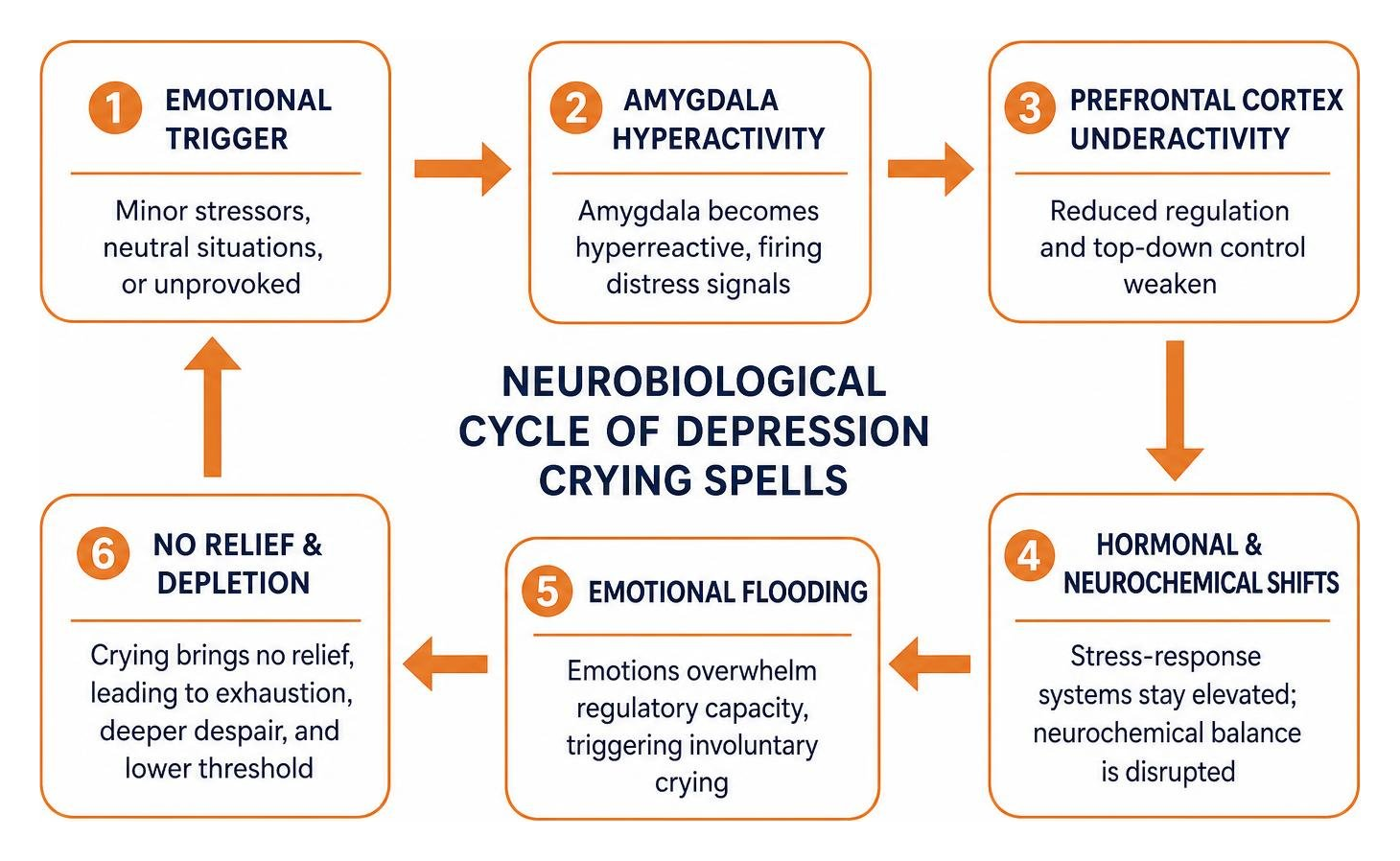
To understand why tears spill over uncontrollably, we must look at the brain’s emotional circuitry:
- Amygdala Hyperactivity: The amygdala serves as our internal alarm system, processing emotional significance and stress. In depression, the amygdala becomes hyperreactive, firing distress signals even in response to neutral or mildly demanding situations.
- Prefrontal Cortex Hypoactivity: The prefrontal cortex—specifically the dorsolateral and ventromedial regions—acts as the brain’s executive brakes, dampening emotional reactivity and modulating tears. In clinical depression, prefrontal activity is significantly reduced, meaning the brain loses its top-down inhibitory control over emotional outbursts.
- Neurotransmitter Imbalances: Low availability or impaired signaling of serotonin, dopamine, and norepinephrine destabilizes baseline mood and impairs the nervous system’s capacity to restore composure.
- Hypothalamic-Pituitary-Adrenal (HPA) Axis Dysregulation: Chronic depressive states keep the HPA axis on high alert, flooding the body with excess cortisol. Elevated cortisol sensitizes neural pathways to emotional distress, creating a continuous feedback loop of physiological vulnerability.
When Tears Disappear: Anhedonia and Emotional Blunting
While frequent crying is common, clinical depression can also present in the opposite manner: a total inability to cry. As depression shifts into deeper, more severe forms, individuals often experience profound anhedonia and emotional blunting.
During affective flattening, the brain’s emotional arousal and reward circuitry becomes so suppressed that the person feels hollow, numb, or detached from reality. Many individuals describe this state as far more distressing than weeping, noting that they desperately wish they could cry to release internal tension, but the neurological machinery necessary to produce emotional tears has shut down.
Common Triggers, Co-Occurring Conditions, and Differential Diagnoses

Depression-related weeping rarely happens in a vacuum. It interacts with environmental stressors, co-existing mental health conditions, and underlying physiology. A key characteristic of depression is emotion-context insensitivity—a state where emotional reactions do not match current environmental cues. A spilled cup of coffee, a brief work email, or a moment of quiet evening fatigue can trigger tears that seem out of nowhere.
Managing Daily Life When Depression and Crying Spells Overlap with Anxiety
Depression and anxiety co-occur in roughly 50% of cases, creating a storm of emotional sensitivity and autonomic arousal. When these conditions combine, crying spells often follow intense spikes in sensory overload, panic, or social worry.
Chronic autonomic activation keeps the nervous system in fight-or-flight mode. When anxiety pushes physical tension to its limit, the body releases that energy through weeping. This overlap creates substantial friction in daily life:
- Workplace Impairment: Sudden crying episodes during meetings or performance reviews can trigger intense embarrassment and workplace avoidance.
- Social Withdrawal: The fear of crying in public frequently leads individuals to isolate themselves, reinforcing loneliness.
- Relationship Strain: Partners may misinterpret constant tears as interpersonal dissatisfaction rather than a neurobiological symptom.
Learning how to identify co-occurring symptoms of anxiety and depression allows clinicians to address both baseline mood imbalances and acute nervous system hyperarousal.
Distinguishing Major Depression from Pseudobulbar Affect (PBA)
Frequent weeping is not always a mood disorder. A critical differential diagnosis is Pseudobulbar Affect (PBA), a neurological condition resulting from structural brain damage, such as a stroke, traumatic brain injury, amyotrophic lateral sclerosis (ALS), or multiple sclerosis (MS).
While depression crying spells match an internal feeling of sadness, PBA episodes are emotionally incongruent. A person with PBA may burst into uncontrollable weeping while feeling neutral or even cheerful, or switch abruptly from sobbing to pathological laughter. These episodes typically last only seconds to a couple of minutes and stem from damaged pathways between the cerebellum, brainstem, and cerebral cortex. Proper neurological evaluation ensures that individuals with PBA receive targeted interventions rather than standard psychiatric care alone.
Hormonal Shifts: Postpartum Changes, Menopause, and Stress
Endocrine fluctuations have a direct effect on neurotransmitters that regulate mood, making certain reproductive transitions prime periods for crying spells.
During the postpartum window, rapid drops in estrogen and progesterone, combined with sleep deprivation, trigger the transient “baby blues” in up to 80% of new parents. However, when crying persists past the two-week mark and brings persistent hopelessness, it points toward postpartum depression. Our clinical guide on perinatal and postpartum mental health outlines how hormonal transitions can destabilize emotional control and what steps help restore balance. Similar vulnerability windows occur during perimenopause and the late luteal phase of the menstrual cycle (Premenstrual Dysphoric Disorder).
In-the-Moment Coping Strategies and Immediate De-escalation Techniques

When an intense crying spell begins, telling yourself to “just calm down” rarely works because higher-level cognitive centers are temporarily overwhelmed by limbic activation. Instead, you need physiological interventions that activate the parasympathetic nervous system from the body upward.
Secondary physical symptoms—such as tension headaches, dry eyes, sinus pressure, and profound fatigue—frequently accompany these episodes. Addressing both the physical aftermath and emotional exhaustion is key to overcoming profound depression fatigue.
Somatic Grounding: The 5-4-3-2-1 Method and Cold Exposure
- The Mammalian Dive Reflex: Splash freezing cold water over your face, hold an ice pack wrapped in a towel against your eyes and cheeks, or grip an ice cube in your palm. Sudden temperature drops stimulate the vagus nerve, rapidly lowering heart rate and interrupting acute weeping loops.
- The 5-4-3-2-1 Sensory Method: Engage your senses to shift neurological focus away from internal despair back toward your external environment:
- 5 things you can see (the weave of your desk chair, a light fixture, a pen).
- 4 things you can physically feel (feet flat on the floor, texture of your sleeves).
- 3 things you can hear (air conditioning hum, distant traffic, your own breath).
- 2 things you can smell (coffee, hand cream, fresh air).
- 1 thing you can taste (a mint, water, or simply noticing the sensation in your mouth).
Nervous System Regulation: 4-7-8 Breathing and Workplace Recovery
When a crying spell hits at work or in public, step away to a private space (such as a restroom or your car) and use structured diaphragmatic breathing:
- 4-7-8 Paced Breathing: Inhale quietly through the nose for 4 counts, hold the breath gently for 7 counts, and exhale completely through the mouth with a soft whoosh for 8 counts. Repeat 4 times to stimulate parasympathetic recovery.
- Tactile Pressing: Press your hands firmly against your thighs or clasp your hands together tightly to provide grounding proprioceptive input.
- Post-Episode Grace Period: Give yourself 10 to 15 minutes before jumping back into complex tasks. Hydrate with cool water, use lubricating eye drops, and jot down brief notes in a journal to externalize any intrusive thoughts triggering the tears.
Evidence-Based Clinical Treatments for Emotional Dysregulation
While in-the-moment tools provide immediate relief, overcoming recurrent crying spells requires addressing the root causes of clinical depression. In the United States, major depressive disorder affects roughly 7% of adults each year, yet the gap between the onset of depressive symptoms and receiving first treatment averages over a decade. Seeking comprehensive clinical care early prevents persistent neural wear and restores emotional balance.
Psychotherapy and Cognitive Restructuring
Structured therapy helps rewire maladaptive thought patterns and strengthens emotion-regulation circuits in the brain. At Oak Health Center, we provide evidence-based psychotherapy services tailored to individual emotional challenges:
- Cognitive Behavioral Therapy (CBT): Helps patients identify and restructure cognitive distortions (such as catastrophizing or all-or-nothing thinking) that trigger crying episodes.
- Dialectical Behavior Therapy (DBT): Teaches practical distress-tolerance and emotion-regulation skills (such as the TIPP skills: Temperature, Intense exercise, Paced breathing, Paired muscle relaxation) to help navigate intense emotional waves without feeling overwhelmed.
- Interpersonal Therapy (IPT): Focuses on resolving underlying relational conflicts, life transitions, and unresolved grief that frequently drive unprovoked crying.
Psychiatric Medication and Advanced Interventional Therapies
For moderate to severe clinical depression, medication helps stabilize baseline neurochemistry, reducing the frequency and intensity of crying spells. Selective Serotonin Reuptake Inhibitors (SSRIs) and Serotonin-Norepinephrine Reuptake Inhibitors (SNRIs) work for roughly 60% of people with moderate to severe depression by improving synaptic neurotransmitter levels. Learn more about finding the right approach through our guide on medication management for depression.
When standard options are not enough, modern interventional approaches offer new paths forward:
- Transcranial Magnetic Stimulation (TMS): An FDA-cleared, non-invasive outpatient treatment that uses focused magnetic pulses to stimulate underactive neurons in the prefrontal cortex, helping restore the brain’s natural emotion-regulation networks. Learn how our team delivers advanced transcranial magnetic stimulation across our clinical practices.
- Esketamine / Ketamine Therapy: Rapid-acting therapies that modulate glutamate pathways to provide swift relief for severe or treatment-resistant depression.
Frequently Asked Questions About Depression-Related Tears
Does crying actually relieve depressive symptoms or make them worse?
In healthy emotional contexts, crying stimulates the release of endorphins and oxytocin, promoting a sense of catharsis. In clinical depression, however, crying rarely brings a post-cry mood lift. Because the brain’s regulatory circuits are impaired, a crying spell often deepens feelings of shame, hopelessness, and physical exhaustion, reinforcing the depressive loop rather than resolving it.
Can major depressive disorder make you cry for no apparent reason?
Yes. Depression lowers your neurological threshold for emotional expression, causing tears to flow with minimal or no conscious trigger. This unprovoked crying stems from emotion-context insensitivity and limbic system hyperactivity, meaning subconscious stressors, physical exhaustion, or minor sensory inputs can trigger crying spells.
How do you know when frequent crying spells require psychiatric evaluation?
You should consult a mental health professional if your crying spells:
- Occur regularly for two weeks or longer.
- Disrupt your ability to work, parent, or maintain daily relationships.
- Do not improve after standard rest, stress reduction, or situational resolution.
- Co-occur with persistent feelings of worthlessness, sleep loss, appetite changes, or thoughts of suicide.
Finding Long-Term Healing and Emotional Balance
Living with unpredictable crying spells can feel isolating, exhausting, and confusing. But crying often is not a personal weakness or character flaw—it is a physiological sign that your brain’s emotional regulatory systems need dedicated care and support.
At Oak Health Center, we provide comprehensive, compassionate mental healthcare tailored to your unique journey. Whether you visit our Southern California locations in Beverly Hills, Fullerton, Laguna Hills, Rancho Cucamonga, or South Pasadena, or access care through our secure virtual telehealth network across California, our team of psychiatrists, psychiatric nurse practitioners, and therapists is here to help you regain your footing.
You do not have to navigate emotional overwhelm alone. Reach out to our team today to explore specialized outpatient psychiatric care and take your first step toward lasting emotional balance.