


Understanding the Biological Link: Why Anxiety Dry Throat Happens
Yes, anxiety can directly cause a dry throat and sudden gagging. When your brain perceives a threat—whether it is a presentation at work or a sudden panic spike—it triggers the sympathetic nervous system. This fight-or-flight response suppresses watery saliva production, leaving your throat feeling parched and sticky, while stress hormones tighten the cricopharyngeus muscle at the top of the esophagus. That muscle tension creates the phantom lump known as globus sensation and can trigger a sudden, distressing gag reflex.
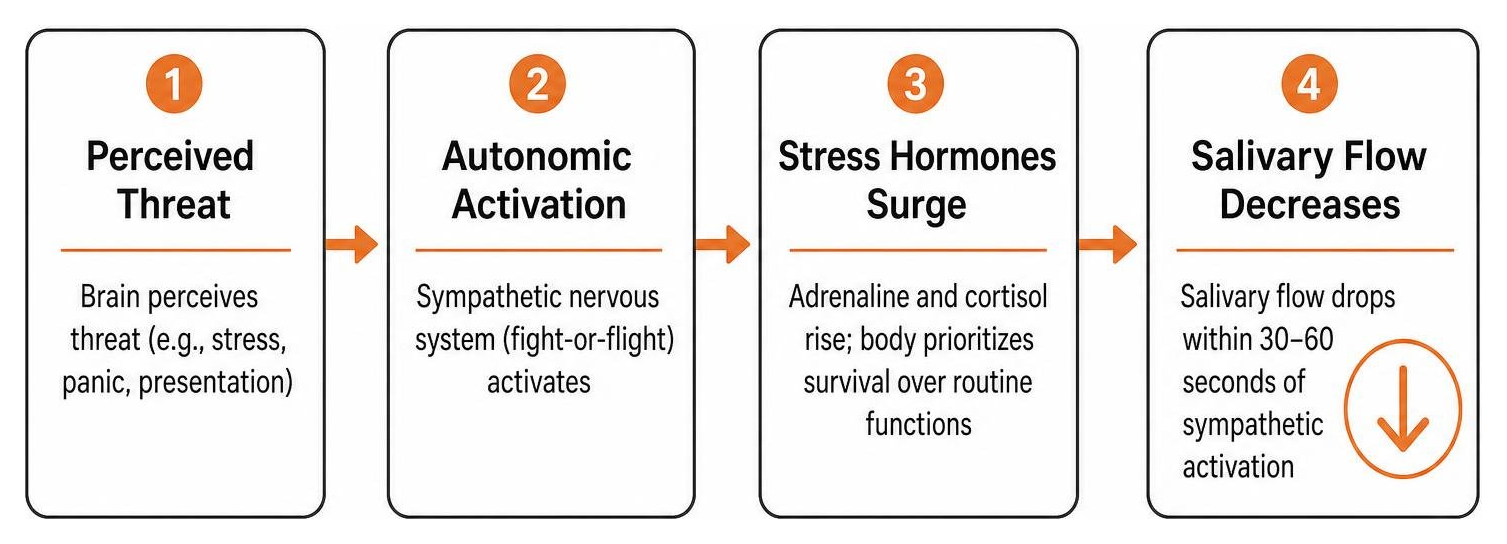
As adrenaline and cortisol surge into your bloodstream, your body directs fluid and energy toward your major muscle groups and vital organs. Salivary flow drops measurably within 30 to 60 seconds of sympathetic activation. The saliva you do produce undergoes a biochemical shift: instead of being thin, watery, and enzyme-rich, it becomes thick, viscous, and heavy with protein (particularly mucin and amylase). This leaves the mucous membranes lining your pharynx feeling parched and sticky. According to scientific research on salivary flow during acute stress, an estimated 73 percent of people experience dry mouth (xerostomia) as a direct physical manifestation of anxiety.
How Hyperventilation and Mouth Breathing Trigger Anxiety Dry Throat
Under acute stress, your breathing pattern instinctively shifts. Instead of slow, nasal breaths that filter and humidify incoming air, you tend to switch to rapid, shallow oral respiration. Taking quick gasps through the mouth pulls dry, unconditioned air directly across your delicate pharyngeal tissues.
This process causes rapid evaporative mucosal cooling, stripping away what little protective moisture remains on the walls of your throat. Hyperventilation also expels carbon dioxide faster than your cells produce it. This drop in arterial carbon dioxide causes mild blood vessel constriction, which amplifies feelings of dizziness, tingling, and throat tightness. If you find yourself gasping for air during high-stress moments, identifying physical indicators with an anxiety attack checklist can help you recognize whether hyperventilation is driving your symptoms.
Cricopharyngeal Spasms, Globus Sensation, and the Sudden Gag Reflex
Anxiety does not stop at drying out your mucous membranes; it also tightens the muscular ring located at the top of your esophagus, known as the cricopharyngeus muscle. When this muscle spasms under the influence of stress hormones, it produces a phantom sensation of a lump or constriction in the throat, clinically termed globus pharyngeus or globus sensation.
Up to 96 percent of individuals experiencing globus sensation report that their symptoms worsen significantly during periods of emotional strain. When your throat is bone-dry and the cricopharyngeus muscle is tightly contracted, swallowing your own saliva requires extra effort. This friction can trigger a heightened, hyperactive gag reflex or muscle tension dysphonia. Visceral anxiety—an acute hyper-awareness of internal bodily sensations—causes your nervous system to register this ordinary muscle tightness as an impending obstruction, which can provoke sudden, distressing dry-heaving or gagging. Medical experts discuss these physical patterns in clinical explanations of anxiety-induced throat tightness.
Sore Throat, Infection, or Stress: Identifying the Underlying Cause
Because a scratchy, tight throat is also the hallmark of common infections and digestive issues, sorting out the root cause can prevent unnecessary worry. Somatic symptom amplification occurs when stress makes normal physiological sensations feel intense or dangerous.
Reviewing common everyday signs, such as recognizing everyday physical manifestations of anxiety, can help you determine whether your throat distress stems from emotional tension or an underlying medical illness.
| Feature | Anxiety Dry Throat / Globus | Viral Pharyngitis (Infection) | Gastroesophageal Reflux (GERD) |
|---|---|---|---|
| Primary Sensation | Dryness, phantom lump, scratchiness, tight gagging | Burning pain, raw redness, sharp pain on swallowing | Acidic taste, burning in chest/throat, chronic clearing |
| Swallowing Food | Often improves while eating meals | Consistently painful with solids and liquids | May cause regurgitation or burning post-meal |
| Accompanying Signs | Rapid pulse, shallow breathing, muscle tension | Fever, swollen lymph nodes, body aches, tonsil exudate | Heartburn, sour taste, symptoms worsen lying down |
| Fluctuation | Peaks during stress; eases when distracted or calm | Constant over 3 to 7 days, regardless of mood | Peaks after heavy/acidic meals or late at night |
Breaking the Feedback Loop: Why Anxiety Dry Throat Persists Despite Drinking Water
A frequent point of frustration for many people is that chugging a glass of water does not resolve an anxiety-induced dry throat. You might drink several glasses, yet the back of your mouth remains parched and tight.
This happens because the issue is neurological, not systemic dehydration. Drinking water provides only brief surface moisture; it does not turn your salivary glands back on if your sympathetic nervous system remains switched on.
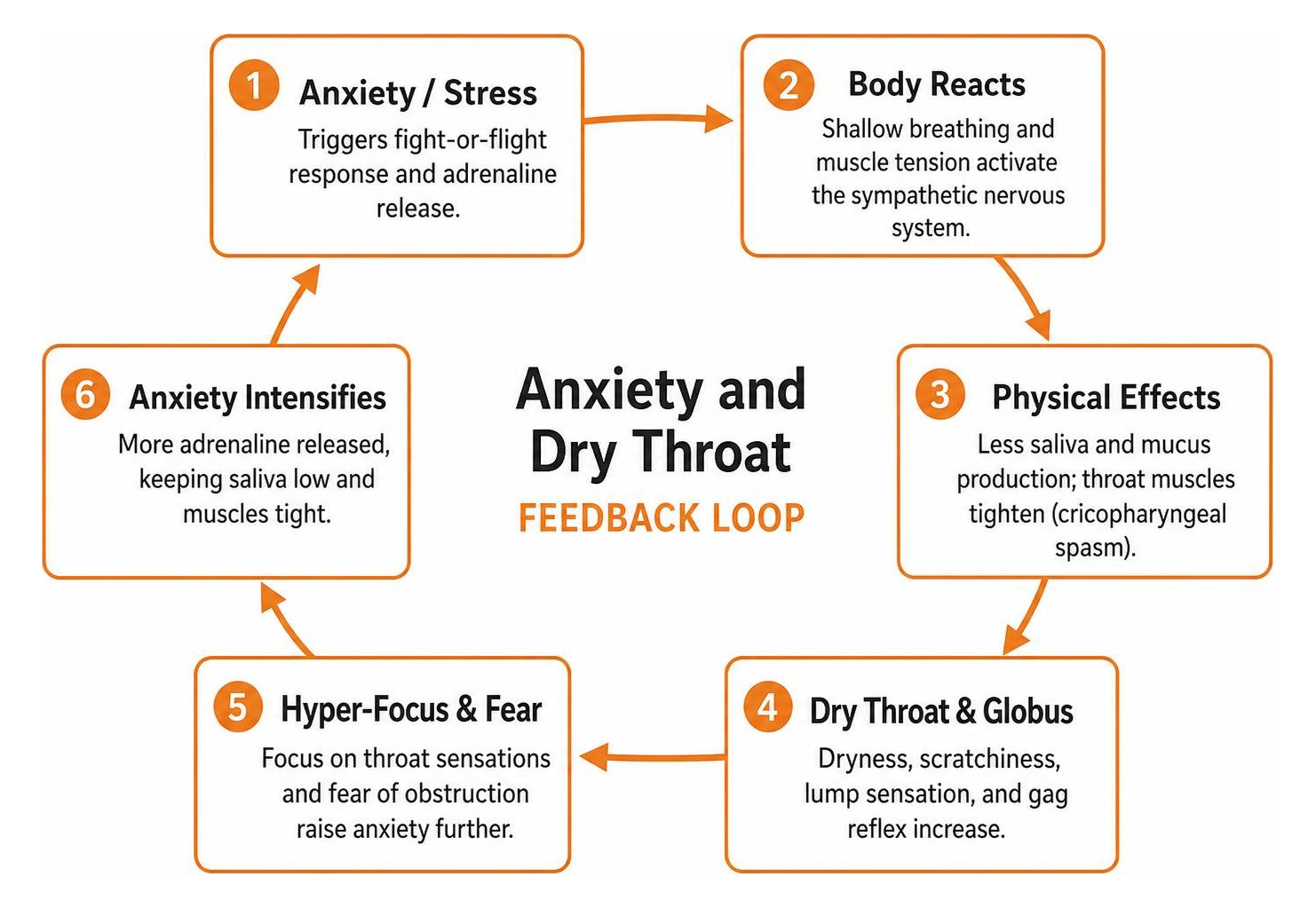
When you notice that water is not helping, health anxiety often kicks in. You start paying hyper-focused attention to every swallow, monitoring your throat for tightness. This hyper-vigilance triggers an additional release of adrenaline, keeping saliva production suppressed and muscle tension high. Exploring why your anxiety symptoms escalate over time sheds light on how breaking this loop requires calming your autonomic nervous system rather than just drinking more fluids.
Immediate Action Plan: How to Soothe Throat Dryness and Gagging
When an acute wave of throat tightness or sudden gagging hits, you need rapid, reliable tools to down-regulate your autonomic nervous system and rehydrate your oral tissues.
Integrating practical anxiety coping skills used in modern therapy can help you interrupt the panic response and restore parasympathetic balance.
Vagal Nerve Reset and Diaphragmatic Breathing Techniques
Engaging your vagus nerve sends an immediate physiological signal to your heart and salivary glands that the threat has passed. Use these targeted breathing methods:
- The Physiological Sigh: Inhale deeply through your nose until your lungs are nearly full, take a quick second “top-off” sniff of air through your nose, and then release a slow, unforced sigh out through your mouth. Doing this two or three times rapidly resets your oxygen-carbon dioxide balance and lowers heart rate.
- 4-7-8 Diaphragmatic Breathing: Inhale quietly through your nose for 4 seconds, hold your breath for a count of 7, and exhale completely through your mouth for 8 seconds. Focus on expanding your belly rather than lifting your chest and shoulders.
- Vocal Resonance (Gentle Humming): Making a low “hmmm” sound creates vibrations in the pharynx and larynx, stimulating vagal nerve endings and physically relaxing the cricopharyngeal muscles.
Sialagogues, Hydration Hacks, and Throat Relaxation Exercises
To restore natural moisture and relax the muscles responsible for the gag reflex, apply these practical remedies:
- Use Sour Sialagogues: Sucking on a sugar-free lemon drop, tart lozenge, or xylitol candy activates the gustatory-salivary reflex, coaxing your salivary glands to release lubricating fluids even during mild stress.
- Paced Sips of Room-Temperature Water: Rather than gulping large amounts of cold water (which can trigger esophageal spasms), take small, deliberate sips of lukewarm water or herbal tea.
- Perform Jaw and Neck Releases: Gently drop your chin toward your chest, roll your shoulders back and down, and massage the masseter muscles located just below your cheekbones. Clenching your jaw tightens the muscles of the floor of the mouth and pharynx.
- The “Swallowing Test”: If you feel like your throat is closing, take a single bite of a soft snack (like a cracker or banana). Functional globus sensation usually disappears during real swallowing because the pharyngeal muscles follow a natural, coordinated swallowing sequence.
Long-Term Treatment: Addressing Root Causes of Somatic Anxiety
While immediate coping tools manage acute episodes, resolving recurrent throat dryness and gagging requires addressing chronic nervous system hyperstimulation.

When your body stays in a low-grade state of chronic stress for weeks or months, your baseline sympathetic tone remains elevated, keeping saliva volume low. Exploring non-pharmacological psychotherapy options for anxiety can provide long-lasting relief from these persistent somatic patterns.
Cognitive Behavioral Therapy and Nervous System Desensitization
Cognitive Behavioral Therapy (CBT) is one of the most effective, evidence-backed treatments for somatic anxiety symptoms. Through CBT and interoceptive exposure techniques, you learn to:
- Identify and reframe catastrophic thoughts (e.g., “My throat is closing and I will suffocate”) into realistic assessments (e.g., “My throat muscles are tense because I am stressed; my airway is completely open”).
- Desensitize your brain to throat tightness by intentionally reducing body checking and throat clearing.
- Practice autonomic reconditioning through progressive muscle relaxation, regular physical exercise, and restorative sleep hygiene to lower overall baseline cortisol.
When to Seek Medical Evaluation for Persistent Throat Discomfort
While stress is a common culprit behind throat tension, physical symptoms should never be dismissed without proper evaluation. Schedule a visit with a medical professional or ear, nose, and throat (ENT) specialist if you experience:
- True progressive dysphagia (food consistently sticking in your esophagus or choking on liquids)
- Persistent unilateral throat pain or pain radiating to your ear
- Unexplained weight loss, night sweats, or chronic fever
- Visible blood in your saliva or phlegm
- A palpable lump or swelling in your neck or thyroid region
- Persistent symptoms that do not fluctuate with stress levels or fail to improve after several weeks
Additionally, ask your doctor or pharmacist to audit your current prescriptions. Many common medications—including certain antidepressants, antihistamines, blood pressure drugs, and decongestants—list dry mouth (xerostomia) as a primary side effect, which can compound stress-induced dryness.
Frequently Asked Questions About Anxiety and Throat Symptoms
Can chronic anxiety permanently damage salivary glands?
No. Chronic anxiety does not cause permanent structural damage or atrophy to your salivary glands. While ongoing stress can suppress saliva output for weeks or months through sustained sympathetic nerve signaling, your salivary glands retain their normal functional capacity. Once your nervous system returns to a balanced autonomic state through stress management, therapy, or lifestyle adjustments, normal saliva flow resumes.
Why does my throat feel like it is closing when having a panic attack?
During a panic attack, your body experiences an acute surge of adrenaline, causing the cricopharyngeus muscle to contract tightly while hyperventilation dries out your mucous membranes. This combination creates an illusion of constriction—often referred to as “air hunger.” In reality, your anatomical airway remains wide open. The sensation is caused by muscle tension and mucosal irritation, not a physical blockage.
Can anxiety-induced dry mouth cause difficulty swallowing solid food?
Yes, functional dysphagia can occur temporarily when anxiety decreases saliva production. Saliva serves as a natural lubricant that forms food into a smooth bolus for easy swallowing. Without sufficient saliva, dry or dense foods can feel rough or difficult to pass down the esophagus. Practicing relaxation techniques, eating slowly, and taking small sips of water with meals can help restore smooth swallowing coordination.
Finding Lasting Autonomic Balance
A dry, tight throat and unexpected gagging are distressing, but they are normal, physiological reactions of an overstimulated nervous system. Recognizing that your throat is reacting to stress hormones—rather than a dangerous physical blockage—is the first step toward breaking the anxiety feedback loop.
At Oak Health Center, our clinical team provides compassionate, personalized mental health support across Southern California—including Beverly Hills, Laguna Hills, Rancho Cucamonga, South Pasadena, and Fullerton—as well as through statewide virtual care. If persistent somatic symptoms or overwhelming worry are interfering with your day-to-day life, explore our comprehensive guide to recognizing severe anxiety symptoms or reach out to our team to find the support you deserve.