


When Worry Takes Over: Recognizing Severe Anxiety Disorders Symptoms
Severe anxiety disorders symptoms go far beyond everyday stress or nervousness. They are intense, persistent, and disruptive — and they affect far more people than most realize.
Here is a quick overview of the most common severe anxiety symptoms to know:
| Category | Key Symptoms |
|---|---|
| Emotional | Constant dread, uncontrollable worry, feeling on edge, irritability |
| Physical | Rapid heartbeat, chest tightness, muscle tension, sweating, nausea |
| Cognitive | Difficulty concentrating, racing thoughts, catastrophic thinking |
| Behavioral | Avoiding situations, seeking constant reassurance, withdrawing socially |
| Sleep | Trouble falling asleep, waking frequently, feeling unrested |
Anxiety disorders are the most common mental health conditions in the world. According to the World Health Organization, they affected 359 million people globally in 2021 — roughly 4.4% of the entire world population. In the United States alone, 31.1% of adults will experience an anxiety disorder at some point in their lifetime.
Yet despite how widespread they are, only about 1 in 4 people with anxiety disorders ever receive treatment.
That gap matters. Untreated severe anxiety does not simply stay the same — it tends to worsen over time, interfere with work and relationships, and increase the risk of depression, substance use, and other serious health problems.
If you are a busy professional in Southern California managing high-pressure demands, chronic worry can feel like just part of the job. But there is a real difference between normal stress and a clinical anxiety disorder — and knowing that difference is the first step toward feeling better.
I’m Andrew Brewer, Practice Manager at Oak Health Center, where I’ve helped grow our clinical programs and provider teams to better serve patients facing conditions including severe anxiety disorders symptoms. My work sits at the intersection of healthcare operations and patient access, and I’ve seen how the right support changes lives. In the sections below, we’ll walk through exactly what to look for — and what to do about it.
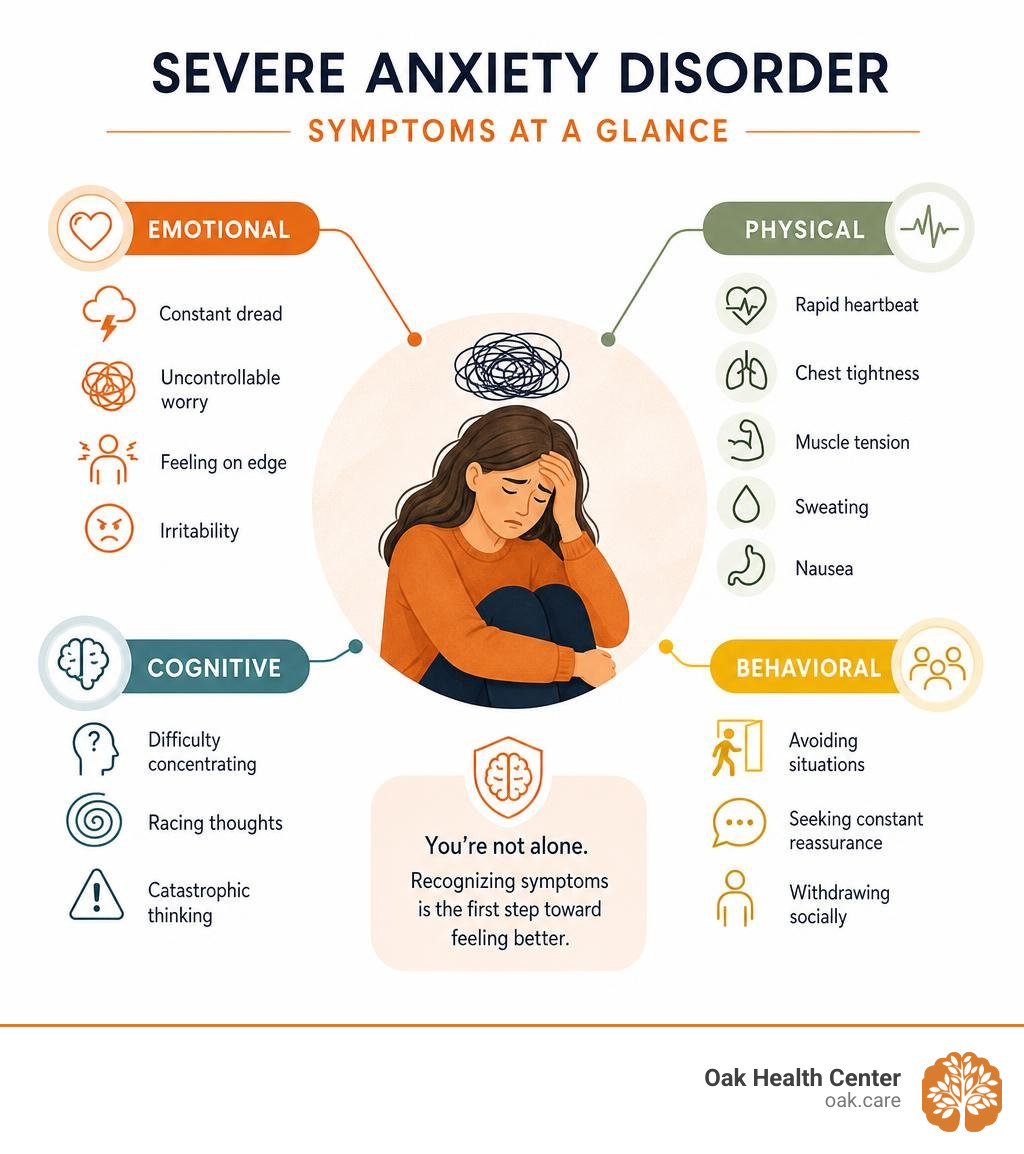
Severe anxiety disorders symptoms terms at a glance:
Clinical Overview of Severe Anxiety Disorders Symptoms
To truly understand how severe anxiety shapes a person’s life, we must look at it through both a global and biological lens. The NIMH Anxiety Disorders Overview highlights that these conditions involve much more than temporary fear. They are characterized by deep-seated anticipation of future threats, which triggers chronic hyperarousal in the brain—specifically within the amygdala, the brain’s emotional smoke detector.
When we look at the statistics, the scope of these disorders is staggering:
- Gender Disparity: Women are about twice as likely as men to be diagnosed with an anxiety disorder. This gap is influenced by a complex interplay of hormonal fluctuations, genetic vulnerability, and distinct psychosocial stressors.
- Adolescent Vulnerability: The lifetime prevalence of any anxiety disorder in U.S. adolescents is 31.9%, showing that these struggles often take root early in life.
- Adult Prevalence: The lifetime prevalence in U.S. adults stands at 31.1%, meaning nearly a third of the population will meet the clinical criteria for an anxiety disorder at some point.
Left untreated, these symptoms can create a self-reinforcing loop, gradually wearing down physical health, disrupting sleep, and making everyday tasks feel like monumental hurdles.
How to Differentiate Normal Stress from Severe Anxiety Disorders Symptoms
It is completely normal to feel nervous before a major presentation at work or a difficult conversation with a family member. However, clinical anxiety behaves very differently from everyday stress.
To help clarify this distinction, we can look at how they compare across key dimensions:
| Dimension | Normal Stress | Severe Anxiety Disorder |
|---|---|---|
| Trigger | Tied to a specific, identifiable external stressor (e.g., a deadline). | Often occurs without an obvious trigger, or is vastly out of proportion to the situation. |
| Duration | Dissipates once the situation is resolved or the trigger passes. | Persistent, lasting for months (typically 6+ months for a formal diagnosis). |
| Intensity | Mild to moderate; manageable using standard coping skills. | Overwhelming, intense, and often accompanied by physical panic. |
| Impact on Life | Temporary distraction; does not stop you from fulfilling responsibilities. | Highly disruptive; leads to avoidance of work, social circles, or daily tasks. |
| Physical Toll | Temporary muscle tension or mild headaches that resolve quickly. | Chronic physical symptoms like GI distress, severe insomnia, and heart palpitations. |
For women, the line between stress and clinical anxiety can be especially complex due to unique biological and environmental factors. If you are trying to determine where your feelings fall on this spectrum, our guide on Is It Just Stress or an Anxiety Attack? A Guide for Women offers a deeper look at these distinct experiences.
Recognizing Severe Anxiety Disorders Symptoms in High-Stress Environments
In high-achieving professional circles—whether in the legal offices of Beverly Hills or the corporate hubs of Orange County—severe anxiety is frequently masked as “extreme dedication.” High-achievers often channel their underlying dread into perfectionism, over-preparation, and long hours, a pattern commonly referred to as high-functioning anxiety.
However, keeping your anxiety under wraps takes a massive toll. Over time, the constant pressure to perform while managing chronic worry leads directly to severe workplace burnout. Professionals may find themselves constantly waiting for the “other shoe to drop,” struggling to delegate tasks, or experiencing executive dysfunction where making simple decisions feels paralyzing. To understand how this dynamic manifests and how to address it, explore our resource on Anxiety in High-Achieving Professionals: What You Should Know.
The Major Types of Anxiety Disorders and Their Overlapping Features
Anxiety is not a one-size-fits-all condition. It presents through several distinct clinical diagnoses, each with its own set of rules, yet they all share a common thread: an overactive nervous system.
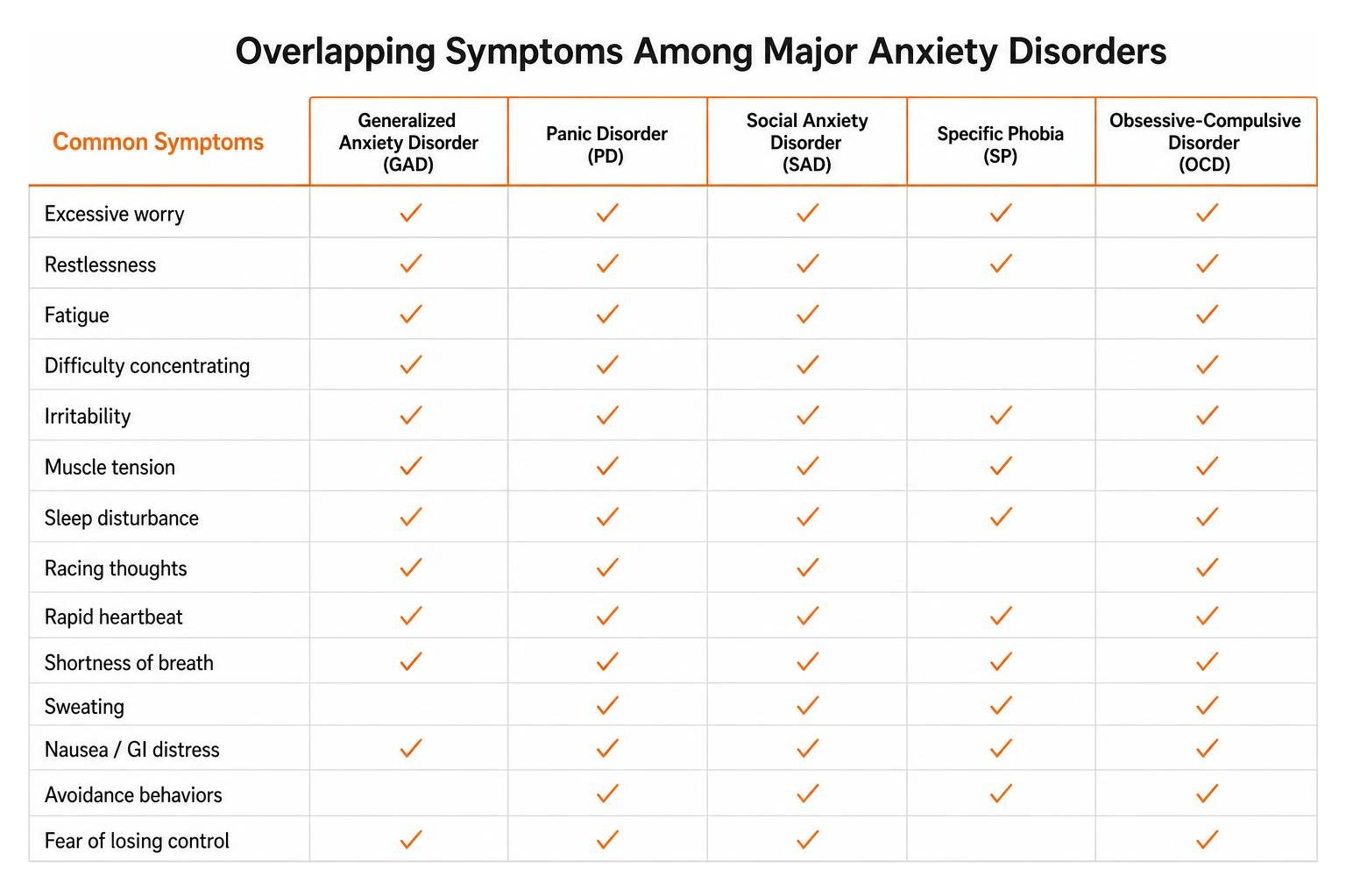
Generalized Anxiety Disorder (GAD)
Generalized Anxiety Disorder (GAD) is characterized by persistent, excessive, and unrealistic worry about everyday things like health, money, family, and work. According to the StatPearls Generalized Anxiety Disorder clinical database, GAD affects about 3% of the U.S. population in any given year.
Unlike a specific phobia, GAD worries are shifting and fluid. If one worry is resolved, the mind quickly finds another to take its place. To meet diagnostic standards, this worry must be difficult to control, occur more days than not for at least six months, and be accompanied by physical symptoms like restlessness, fatigue, and muscle tension.
Panic Disorder and Agoraphobia
While GAD is a slow, steady simmer of worry, Panic Disorder is a sudden boil. It is defined by recurrent, unexpected panic attacks—abrupt surges of intense fear or discomfort that peak within minutes.
According to the Mayo Clinic Anxiety Symptoms and Causes guidelines, these attacks often trigger a profound “fear of fear.” Individuals begin to live in constant dread of the next attack, which frequently leads to Agoraphobia. Agoraphobia involves avoiding specific situations—such as public transit, open spaces, or crowded areas—where escape might be difficult or help unavailable during a panic attack. In severe cases, a person’s world shrinks to the point where they struggle to leave their home.
Social Anxiety, Phobias, and Separation Anxiety
Other major types of anxiety disorders target specific environments or relationships:
- Social Anxiety Disorder: Affecting roughly 7% of the U.S. population, this involves an intense, persistent fear of being watched, judged, or scrutinized by others. It goes far beyond simple shyness, often causing people to avoid meetings, social gatherings, or public speaking entirely.
- Specific Phobias: These are irrational, intense fears of specific objects or situations (e.g., heights, flying, spiders), affecting up to 12% of the population.
- Separation Anxiety Disorder: While often associated with children, this condition affects up to 1.9% of adults. It involves development-inappropriate, severe distress when separated from key attachment figures. The diagnostic criteria and clinical features for this condition are detailed in the DSM-5 Separation Anxiety Guidelines.
Red Flag Symptoms: Physical, Emotional, and Behavioral Indicators
When anxiety transitions from moderate to severe, it leaves unmistakable clues across your body, mind, and daily habits. Recognizing these red flags early is essential for getting the right support.
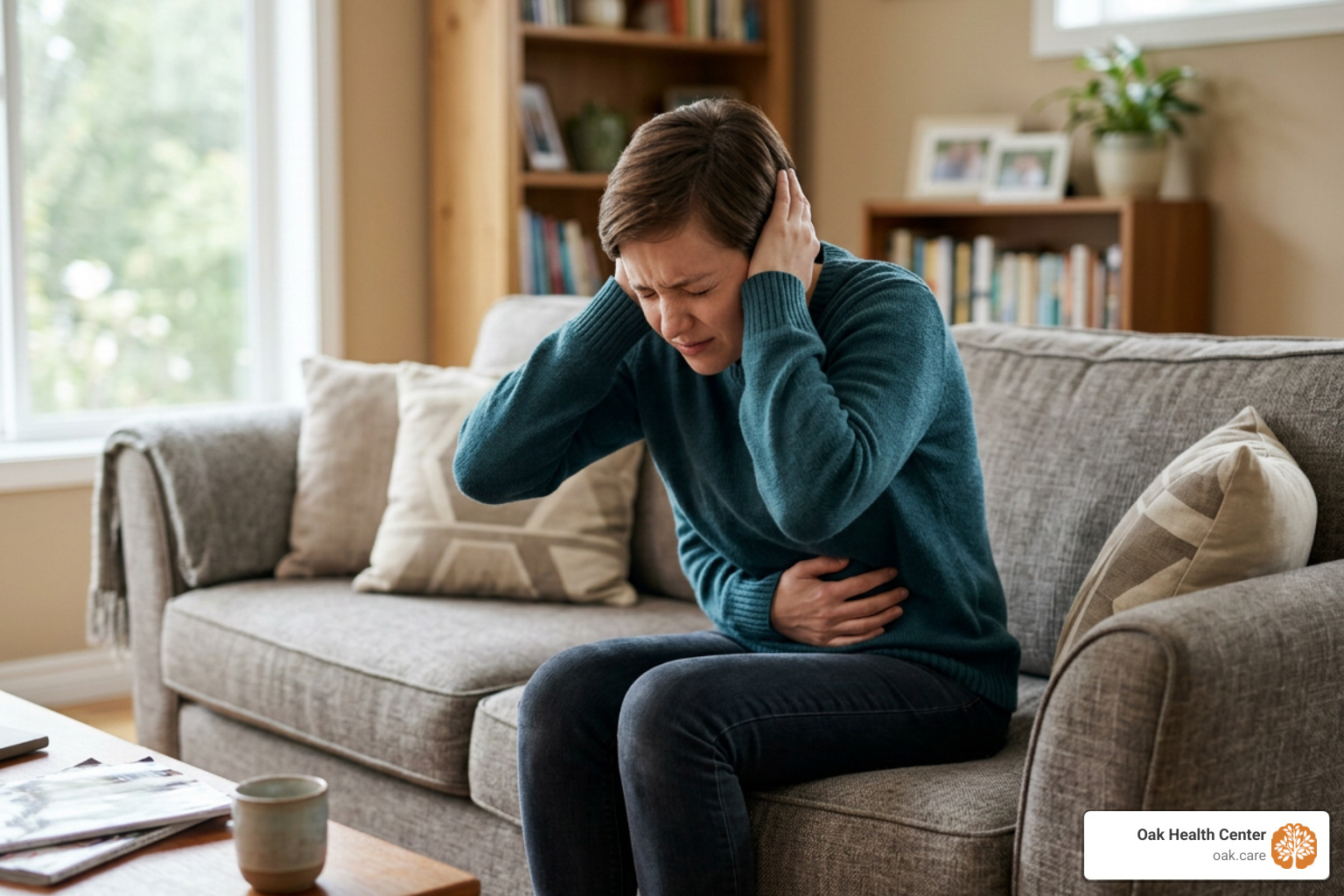
Severe Physical Symptoms and the Gut-Brain Connection
One of the most overlooked aspects of severe anxiety disorders symptoms is how heavily they impact the physical body. The gut and the brain are in constant communication via the vagus nerve—a pathway known as the gut-brain axis. When the brain is locked in a state of high alarm, it sends distress signals straight to the digestive tract.
This can result in:
- Chronic Muscle Tension: Waking up with a stiff neck, a locked jaw (bruxism), or shoulders that feel like granite because your body never truly relaxes.
- Digestive Distress: Experiencing routine nausea, bloating, cramping, or sudden bathroom urgency without any clear medical cause.
- Sensory Sensitivity: Feeling completely overwhelmed by everyday stimuli—such as bright lights, loud noises, or strong smells—because your nervous system is too exhausted to filter them out.
To learn more about how these somatic complaints quietly disrupt your daily routine, read our article on 5 Ways Anxiety Shows Up in Everyday Life and What to Do About It.
Emotional and Cognitive Warning Signs
Emotionally, severe anxiety can make you feel like you are losing your grip on reality. Many people experience depersonalization or derealization—a defense mechanism where the world feels strange, distant, or completely artificial, as if you are watching your life play out on a screen.
Cognitively, severe anxiety keeps the mind in a state of constant, exhausting vigilance. You might experience persistent brain fog, an inability to concentrate on simple tasks, and a lingering sense of impending doom that makes it impossible to enjoy quiet moments. When these patterns take hold, it can feel like a downward spiral. We break down why this happens and how to halt the cycle in Why Your Anxiety Keeps Getting Worse and What Actually Helps.
Behavioral Changes and Avoidance Patterns
To cope with these overwhelming feelings, people with severe anxiety often adopt subtle but highly disruptive behavioral habits:
- Reassurance Seeking: Asking the same questions repeatedly or constantly checking in with loved ones to temporarily quiet a racing mind.
- Social Isolation: Turning down invitations, avoiding phone calls, and skipping events to avoid potential triggers.
- Safety Behaviors: Only traveling along specific “safe” routes or refusing to go anywhere without a trusted companion.
While these behaviors provide temporary relief, they actually reinforce the brain’s belief that the world is a dangerous place, keeping the anxiety cycle going.
Diagnosis, Screening, and When to Seek Professional Help
Because severe anxiety can mimic many physical illnesses, receiving a comprehensive clinical evaluation is the most important step toward recovery.

Clinical DSM-5 Standards and Screening Tools
Licensed mental health professionals use standardized diagnostic criteria and screening questionnaires to evaluate the severity of your symptoms:
- The DSM-5-TR Criteria: For GAD, this requires excessive worry about several events or activities for more days than not over at least six months, along with at least three physical or cognitive symptoms. You can read more about these exact benchmarks in our clinical review: Meeting the Criteria: A Deep Dive into GAD DSM-5 Standards.
- The GAD-7 Scale: A brief, validated 7-item questionnaire used to screen for and monitor the severity of generalized anxiety. To understand how clinicians interpret these results, see Decoding Your GAD-7 Anxiety Score with MDCalc.
- The GAD-7 and PHQ-9 Combination: Because anxiety and depression frequently walk hand-in-hand, doctors often administer both the GAD-7 (for anxiety) and the PHQ-9 (for depression) to get a complete picture of your mental health. Learn why this dual approach is so valuable in Double Trouble: Why Doctors Use Both GAD-7 and PHQ-9.
Identifying Medical Causes and Co-occurring Conditions
Before diagnosing an anxiety disorder, a healthcare provider must rule out any underlying physical conditions that can mimic or worsen anxiety. These include:
- Thyroid disorders (especially hyperthyroidism)
- Cardiovascular issues or arrhythmias
- Respiratory conditions like asthma or COPD
- Vitamin deficiencies (such as B12 or Vitamin D)
Additionally, severe anxiety rarely exists in a vacuum. It frequently co-occurs with clinical depression and chronic sleep disorders, creating a complex web where each condition feeds the other. We explore this challenging relationship and how to break the cycle in How Anxiety, Depression and Sleep Problems Feed Each Other.
Evidence-Based Treatment Options and Recovery Strategies
The most encouraging news about severe anxiety is that it is highly treatable. With a personalized, evidence-based approach, you can retrain your nervous system and reclaim your quality of life.
Psychotherapy and Cognitive Behavioral Therapy (CBT)
Psychotherapy is widely considered the gold standard for treating severe anxiety. In particular, Cognitive Behavioral Therapy (CBT) helps you identify, challenge, and reframe unhelpful thought patterns while gradually reducing avoidance behaviors through structured exposure therapy.
For some individuals—especially those with mild to moderate symptoms, or those who prefer to avoid medication—therapy alone can provide deep, lasting relief. If you are curious about whether this path is right for you, read our guide on Managing Anxiety Without Medication: When Psychotherapy Is Enough.
Pharmacotherapy and Medication Management
For severe, disabling anxiety, combining psychotherapy with medication often yields the best and fastest results. According to the Merck Manual GAD Guidelines, several classes of medication are highly effective:
- SSRIs and SNRIs: First-line, daily medications (such as escitalopram, sertraline, or venlafaxine) that help balance key neurotransmitters like serotonin and norepinephrine over time. These typically take 3 to 6 weeks to become fully effective.
- Buspirone: An effective, non-habit-forming daily medication that specifically targets anxiety symptoms but requires 3 to 4 weeks of consistent use to show results.
- Benzodiazepines: Fast-acting medications (like alprazolam or clonazepam) that can quickly calm a severe panic attack. Because of the risk of physical dependence, these are typically prescribed only for short-term, occasional, or bridge use.
Frequently Asked Questions About Severe Anxiety
What is the difference between a panic attack and severe anxiety?
A panic attack is a sudden, intense spike of fear that peaks within minutes, often accompanied by physical symptoms like a pounding heart, chest pain, and shortness of breath. Severe anxiety, on the other hand, is usually a persistent, long-term state of worry and physical tension that fluctuates but does not resolve quickly.
Can severe anxiety cause physical illness?
Yes. Chronic, severe anxiety keeps your body in a constant fight-or-flight state, which floods your system with cortisol and adrenaline. Over time, this chronic stress can contribute to cardiovascular strain, weakened immune function, and chronic gastrointestinal disorders like Irritable Bowel Syndrome (IBS).
When does anxiety become a medical emergency?
Anxiety becomes an emergency if you experience thoughts of self-harm or suicide, or if physical symptoms like severe chest pain or shortness of breath occur without a previously diagnosed panic disorder (as these can also indicate a medical event like a heart attack). If you are in crisis, please call or text the Suicide & Crisis Lifeline at 988 immediately.
Finding Path Forward with Oak Health Center
If severe anxiety disorders symptoms are interfering with your career, your relationships, or your peace of mind, you do not have to carry this weight alone. Recovery is entirely possible with the right clinical support, a personalized treatment plan, and a compassionate team by your side.
At Oak Health Center, we make accessing high-quality mental healthcare simple and straightforward. We offer comprehensive, compassionate psychiatric services, medication management, and psychotherapy across our five convenient Southern California locations:
- Beverly Hills, CA
- Fullerton, CA
- Laguna Hills, CA
- Rancho Cucamonga, CA
- South Pasadena, CA
For patients throughout California, we also provide flexible, secure virtual telehealth services, allowing you to meet with our dedicated providers from the comfort of your home. To take your first step toward relief, explore our Oak Health Center Psychotherapy Services and schedule an appointment with us today. Let’s work together to help you feel like yourself again.