

Is Stress Making You Sick — or Is It Something More?
Anxiety attack symptoms in female patients are often mistaken for everyday stress — but knowing the difference can change everything.
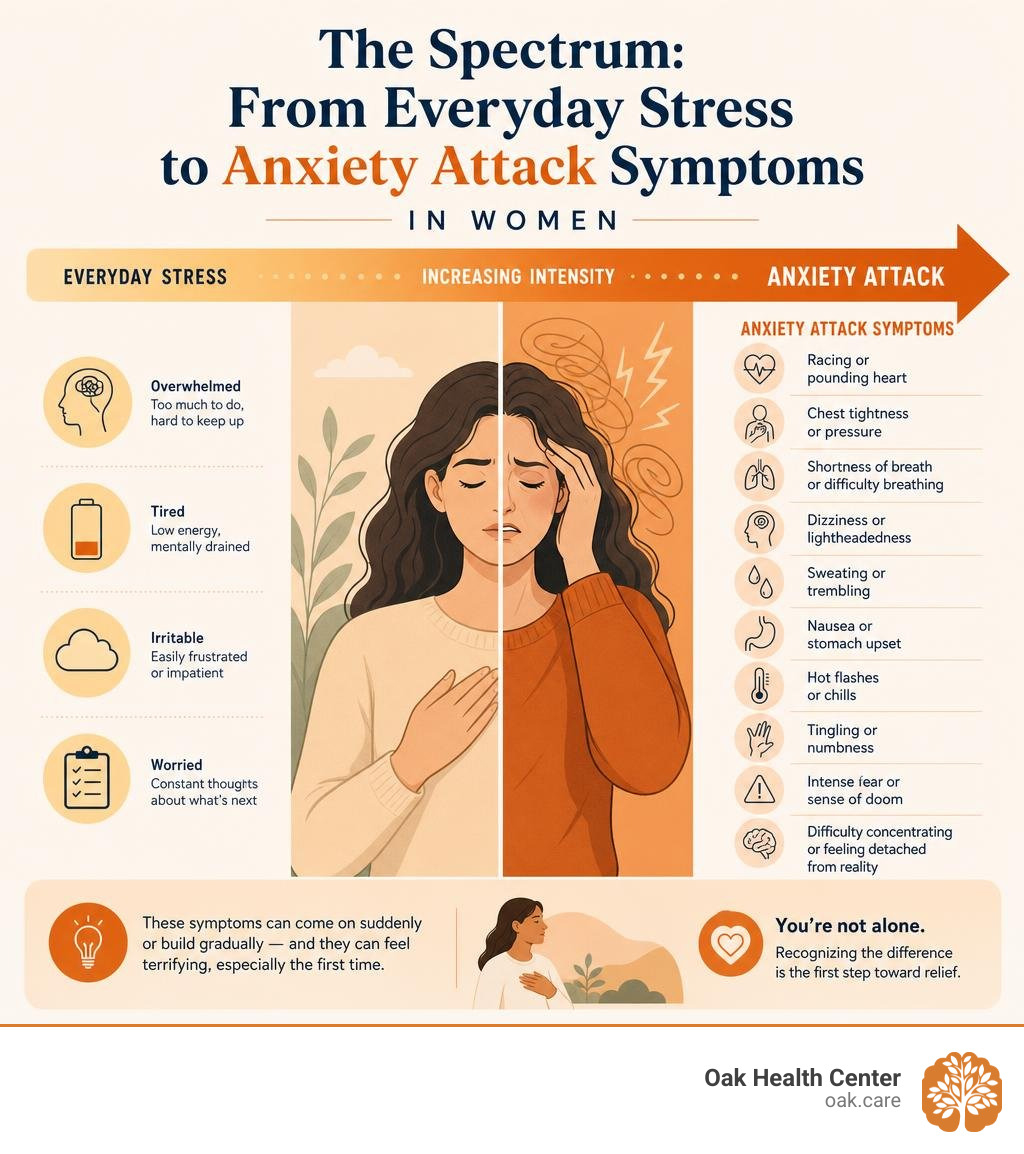
Here are the most common anxiety attack symptoms women experience:
- Racing or pounding heart
- Chest tightness or pressure
- Shortness of breath or difficulty breathing
- Dizziness or lightheadedness
- Sweating or trembling
- Nausea or stomach upset
- Hot flashes or chills
- Tingling or numbness
- Intense fear or sense of doom
- Difficulty concentrating or feeling detached from reality
These symptoms can come on suddenly or build gradually — and they can feel terrifying, especially the first time.
Here’s the hard truth: anxiety disorders are more than twice as common in women as in men. Nearly half of all U.S. adults experience anxiety symptoms at some point. And yet, women’s symptoms are frequently dismissed — by doctors, by loved ones, and sometimes even by themselves.
That “I’m probably just stressed” moment? It deserves a closer look.
Whether you’re a busy professional in Southern California juggling work, relationships, and everything in between — or you’ve been quietly struggling for months — this guide will help you recognize what’s happening in your body, understand why women experience anxiety differently, and know when it’s time to get support.
My name is Andrew Brewer, and as Practice Manager at Oak Health Center, I’ve worked alongside clinical teams to build and expand mental health programs — including anxiety treatment — that have helped thousands of women understand and manage anxiety attack symptoms in female patients across Southern California. From that experience, this guide is designed to give you clear, honest, and actionable information so you can take the next right step for your mental health.
Similar topics to anxiety attack symptoms female:
Recognizing Anxiety Attack Symptoms Female Presentation
When anxiety strikes, it does not just live in your mind. It takes over your entire physical being. For many women, an anxiety attack can feel like a sudden, violent physical betrayal. You might be driving down the Interstate 5, sitting in a meeting in Beverly Hills, or simply doing the dishes at home when your body suddenly sounds the alarm.
This physical takeover happens because of the mind-body connection. Your brain perceives a threat—even if that threat is an overwhelming mental to-do list rather than a physical danger—and instantly activates your sympathetic nervous system.
When this “fight-or-flight” response is triggered, your adrenal glands flood your bloodstream with stress hormones, primarily adrenaline and cortisol. These hormones cause real, immediate physiological changes: your blood vessels constrict, your heart pumps faster to send oxygen to your limbs, and your breathing speeds up. In a true survival scenario, this response saves your life. In the middle of a grocery store, however, it feels like an emergency.
Because women’s nervous systems and hormonal pathways interact uniquely, this fight-or-flight response often presents with distinct physical and emotional patterns.
Physical and Emotional Anxiety Attack Symptoms Female Bodies Experience
The physical symptoms of an anxiety attack in women can be incredibly diverse and intense. Some of the most common manifestations we see in clinical practice include:
- A Racing, Pounding Heart: Your heart rate skyrockets, and you can feel it beating against your ribs. This is often accompanied by a terrifying sensation that your heart is skipping beats or fluttering.
- Chest Tightness and Pressure: You might feel a heavy weight sitting on your chest, making it difficult to expand your lungs fully.
- Respiration Difficulties: Hyperventilating, feeling as though you cannot catch your breath, or experiencing a choking, smothering sensation are highly common in women.
- Dizziness and Lightheadedness: As your breathing patterns change, blood flow to the brain shifts slightly, leaving you feeling faint, unsteady on your feet, or as though the room is spinning.
- Nausea and Gastrointestinal Distress: The gut is often called the “second brain.” When cortisol surges, it can trigger sudden stomach cramps, nausea, or an urgent need to use the restroom.
- Hot Flashes or Chills: Sudden, intense shifts in body temperature can cause you to sweat profusely one minute and shiver with chills the next.
These physical sensations do not happen in a vacuum; they are accompanied by overwhelming emotional symptoms. Many women report a feeling of sudden, intense panic, a sense of losing control, or an impending sense of doom. You might also experience derealization (feeling like your surroundings are not real) or depersonalization (feeling detached from your own body).
To learn more about how these symptoms manifest in daily life, explore Anxiety symptoms in women: Causes, coping strategies, and more | Kaiser Permanente and read our guide on 5 Ways Anxiety Shows Up in Everyday Life and What to Do About It.
How Anxiety Attack Symptoms Female Patients Face Differ From Men
While both men and women experience anxiety, research shows that gender significantly influences how symptoms manifest and how they are handled.
One of the most notable differences lies in internalization versus externalization. Women are statistically much more likely to internalize their stress and anxiety. This means that instead of expressing anxiety through irritability, anger, or behavioral distractions—which is more common in men—women tend to turn the anxiety inward. This internalization leads to a higher frequency of physical symptoms, deep post-attack fatigue, and silent emotional shutdowns. A woman might look completely calm on the outside while experiencing a severe storm of anxiety internally.
Additionally, clinical data highlights that women are more likely than men to experience respiration-related difficulties during an attack. This includes intense sensations of being smothered, shortness of breath, and feeling faint.
These breathing difficulties and intense physical symptoms also place women at a higher risk for developing agoraphobia (the fear of places or situations that might cause panic). In fact, about two-thirds of people diagnosed with agoraphobia are women. Because the physical symptoms feel so public and uncontrollable, many women begin avoiding places where they fear an attack might occur, such as crowded shopping centers, public transit, or even driving.
For a deeper dive into these gender-specific differences, you can read Panic Attack Symptoms in Women: What’s Different and Why It Matters – PanicPeace.
Anxiety Attacks vs. Panic Attacks: What is the Difference?
In casual conversation, people often use the terms “anxiety attack” and “panic attack” interchangeably. However, in the clinical world, they refer to two distinct experiences. Understanding which one you are experiencing is a crucial step toward finding the right treatment.

The primary differences lie in their onset, intensity, and duration:
- Anxiety Attacks: These are not recognized as a formal diagnosis in the DSM-5; rather, they are periods of intensified anxiety. They typically build gradually, often triggered by prolonged stress, worry, or a specific life event. An anxiety attack can last for hours, days, or even weeks, characterized by persistent worry, restlessness, muscle tension, and physical fatigue.
- Panic Attacks: These are sudden, intense surges of overwhelming fear that peak within 10 minutes and usually resolve within 20 to 30 minutes (though they can leave you feeling exhausted for hours afterward). Panic attacks can occur “out of the blue” without an obvious trigger, even waking you up from a sound sleep.
To help visualize these differences, here is a quick comparison:
| Feature | Anxiety Attack | Panic Attack |
|---|---|---|
| Onset | Gradual; builds over hours or days | Sudden; peaks within 10 minutes |
| Intensity | Mild to moderate; persistent | Severe; overwhelming |
| Triggers | Usually tied to a specific stressor or worry | Can occur without any warning or trigger |
| Duration | Can last for days or weeks | Typically resolves within 20 to 30 minutes |
| Primary Feeling | Uneasiness, worry, dread, muscle tension | Terror, fear of dying, feeling out of control |
For comprehensive clinical information on panic episodes, refer to the Panic Disorder: What You Need to Know resource.
Distinguishing Anxiety from Cardiac Events and Other Medical Conditions
One of the most frightening aspects of a severe anxiety or panic attack is that it can mimic a heart attack. Many women end up in Southern California emergency rooms convinced they are having a cardiac event, only to be told it was “just anxiety.”
While it is always best to err on the side of caution and seek immediate medical evaluation for chest pain, understanding how to distinguish the two can bring immense peace of mind:
- Onset and Pain Character: Panic attack chest pain is often sharp, stabbing, and localized to the center of the chest, and it typically improves with deep breathing or grounding techniques. Heart attack pain, on the other hand, is usually described as a crushing pressure, squeezing, or fullness. In women, heart attack symptoms can also be subtle, presenting as deep fatigue, nausea, back pain, or pain radiating to the jaw, shoulder, or arm.
- Duration: A panic attack usually peaks quickly and begins to subside within 10 to 20 minutes. Cardiac pain is typically sustained and may worsen over time, persisting despite rest or relaxation attempts.
- Other Medical Mimics: Anxiety symptoms can also overlap with other underlying medical conditions. For example, thyroid problems (like hyperthyroidism) can cause rapid heart rate, sweating, and tremors. Gastrointestinal issues like Irritable Bowel Syndrome (IBS) or acid reflux can mimic the stomach distress and chest discomfort of anxiety.
If you find yourself constantly worrying about your physical symptoms, read our article on Why Your Anxiety Keeps Getting Worse and What Actually Helps to understand how health anxiety can feed into the panic cycle.
What Causes and Triggers Anxiety in Women?
Why are women twice as likely to experience anxiety? The answer is a complex interplay of biology, environment, and life experiences.
Anxiety is rarely caused by a single factor. Instead, it is usually a combination of:
- Genetics: A family history of anxiety or mood disorders can make you more vulnerable to developing these conditions.
- Brain Chemistry: Imbalances in neurotransmitters—the chemicals that transmit signals in your brain—can affect how your brain regulates fear and stress.
- Environmental Stress and Trauma: Past traumatic events, chronic stress from work or relationships, and major life changes can sensitize your nervous system, making it more reactive to daily stressors.
To explore the broader clinical context of these conditions, you can read more about Anxiety disorders.
The Hormonal Connection: Menstruation, Pregnancy, and Menopause
One of the most significant and overlooked drivers of anxiety in women is hormonal fluctuation. Estrogen and progesterone are not just reproductive hormones; they have a direct, profound impact on the brain chemistry that regulates mood, sleep, and the fear-response system.
- The Menstrual Cycle: Many women experience a sharp rise in anxiety during the late luteal phase—the days leading up to their period. During this time, estrogen and progesterone levels drop precipitously. For some women, this drop acts as a major trigger, lowering the threshold for panic attacks.
- Pregnancy and Postpartum: The massive hormonal shifts of pregnancy can trigger intense worry. Postpartum, estrogen and progesterone levels crash overnight. This sudden drop, combined with sleep deprivation, can lead to postpartum panic. This often involves intrusive, terrifying thoughts about harm coming to the baby—thoughts that are highly distressing but are actually a symptom of severe anxiety, not a desire to cause harm.
- Perimenopause and Menopause: Perimenopause is perhaps the most overlooked trigger for late-onset panic attacks. During this transition, estrogen levels fluctuate wildly before permanently declining. These erratic hormonal shifts can trigger sudden hot flashes, sleep disturbances, and first-time panic attacks in women who have never struggled with anxiety before.
Because hormones and sleep are so closely linked, these shifts often disrupt rest, which further fuels the anxiety cycle. For more on this connection, read about Understanding the Anxiety-Sleep Connection.
Societal Pressures, Caregiving, and Perfectionism
Beyond biology, the cultural and societal expectations placed on women play a massive role in fueling anxiety.
Many women suffer from what is known as the “Superwoman” syndrome—the internalized pressure to excel in every single area of life. You are expected to build a successful career, maintain a spotless home, be a deeply present partner, manage the family’s schedule, and look flawless while doing it.
This relentless pursuit of perfectionism and the constant pressure to manage all possibilities can quickly push your nervous system into chronic overload. Furthermore, women are statistically much more likely to carry the heavy emotional and physical burden of caregiving—whether for young children, aging parents, or both.
We often see this manifest in high-achieving professionals who feel they must overprepare and overwork to prove their worth, leaving little to no time for rest or self-care. To learn more about how this pressure impacts mental health, read our guide on Anxiety in High-Achieving Professionals: What You Should Know.
How to Manage and Treat Female Anxiety
If you are struggling with anxiety attack symptoms in female presentations, please know this: you do not have to suffer in silence, and you do not have to “just deal with it.” Anxiety is highly treatable, and taking the step to seek help is an act of wisdom and strength.
A comprehensive approach that combines professional clinical support with active self-care strategies is the most effective way to reclaim your life. For guidance on recognizing when your symptoms have reached a level that requires professional intervention, see Symptoms of anxiety and how to know when you need help.
Evidence-Based Treatments: Psychotherapy and Medication
At Oak Health Center, we believe in tailoring treatment to your unique biological, psychological, and lifestyle needs. The gold-standard clinical treatments for anxiety include:
- Psychotherapy: Cognitive Behavioral Therapy (CBT) is incredibly effective for anxiety. CBT helps you identify the negative, intrusive thought patterns that trigger your anxiety and teaches you how to systematically reshape them. It also utilizes exposure therapy to help you safely and gradually confront the situations you might be avoiding.
- Medication Management: For many women, medication is a powerful tool that helps calm the physical storm of anxiety so they can engage fully in therapy and daily life. This may include daily medications like Selective Serotonin Reuptake Inhibitors (SSRIs) or Serotonin-Norepinephrine Reuptake Inhibitors (SNRIs).
- A Warning on Quick-Fix Medications: While medications like alprazolam (Xanax) or other benzodiazepines are sometimes prescribed for acute panic attacks, they carry a high risk of dependency and are not recommended for long-term generalized anxiety management. It is incredibly important to never stop taking these medications suddenly (“cold turkey”), as abrupt withdrawal can trigger severe rebound anxiety, panic, and even medical emergencies. Safe, gradual tapering under close medical supervision is always required.
To learn more about your therapeutic options and when therapy alone is sufficient, read Managing Anxiety Without Medication: When Psychotherapy is Enough.
Lifestyle Changes and In-the-Moment Coping Strategies
In addition to professional treatment, having a toolbox of coping strategies you can use in the moment can help you feel in control when anxiety starts to rise.
- The 4-7-8 Breathing Technique: This breathing exercise is a natural tranquilizer for the nervous system. Inhale quietly through your nose for 4 seconds, hold your breath for 7 seconds, and exhale completely and audibly through your mouth for 8 seconds. Repeat this cycle four times to slow your heart rate and interrupt the panic response.
- Grounding Exercises (The 5-4-3-2-1 Method): When your mind is spinning out of control, bring yourself back to the present moment by naming:
- 5 things you can see around you
- 4 things you can physically touch
- 3 things you can hear
- 2 things you can smell
- 1 thing you can taste
- Prioritize Sleep Hygiene: Sleep and anxiety share a bidirectional relationship; poor sleep fuels anxiety, and anxiety ruins sleep. Establishing a consistent sleep schedule and a calming bedtime routine is essential.
- Limit Caffeine and Alcohol: Both caffeine and alcohol can mimic or trigger the physical sensations of panic, such as a racing heart and jitters. Reducing your intake can significantly lower your baseline anxiety.
For more practical tips on managing the intersection of sleep disruptions and anxiety, explore When Anxiety Keeps You Up: Understanding the Link Between Sleep and Anxiety Disorders.
Frequently Asked Questions about Female Anxiety
How long does a typical anxiety attack last in women?
While a sudden panic attack usually peaks within 10 minutes and begins to resolve within 20 to 30 minutes, a generalized anxiety attack can build slowly and linger for hours or even days. Following an intense episode, many women experience deep, lingering physical and emotional fatigue—often referred to as a “vulnerability hangover”—that can last for a day or two.
Can hormonal fluctuations directly cause panic attacks?
Yes. Rapidly shifting levels of estrogen and progesterone directly influence the brain chemicals (like serotonin and GABA) that keep us calm. These drops—especially during the premenstrual phase, postpartum, or perimenopause—can significantly lower your body’s threshold for stress, making you much more susceptible to sudden panic attacks.
How do I know if my anxiety requires professional treatment?
If your anxiety is interfering with your daily life, your relationships, your ability to work, or your sleep, it is time to seek professional support. You do not have to wait until you are at a breaking point to get help.
To get a clearer picture of your current anxiety levels, you can use our guide on Decoding Your GAD-7 Anxiety Score with MDCalc to understand how clinicians screen for generalized anxiety.
Conclusion
Living with anxiety can feel incredibly isolating, but you are not alone. Your physical and emotional symptoms are real, they are valid, and they are treatable.
At Oak Health Center, we are dedicated to providing compassionate, comprehensive mental healthcare tailored to the unique biological and lifestyle challenges women face. We provide simplified access to support across our convenient Southern California locations—including Beverly Hills, Fullerton, Laguna Hills, Rancho Cucamonga, and South Pasadena—as well as comprehensive virtual services throughout California.
Let us help you quiet the alarm system in your body so you can reclaim your peace of mind. Schedule a Psychotherapy Consultation with our team today.