


First-Line OCD Treatment Approaches
Navigating ocd treatment requires a structured, evidence-based roadmap. When intrusive thoughts take over daily life, jumping into random coping mechanisms often backfires. According to recent clinical practice guidelines, first-line interventions focus on disrupting the neurological and psychological loops that maintain obsessive-compulsive symptoms.
At the core of initial management is evidence-based psychotherapy—specifically cognitive behavioral techniques designed to target serotonin reuptake pathways and promote habituation. Habituation is the natural process where your brain learns that an anxiety-inducing trigger is not an actual emergency, allowing the false alarm to fade on its own. Through proper therapeutic channels, individuals can systematically rewire how they respond to intrusive imagery, urges, and doubts.
Exposure and Response Prevention (ERP) as Primary OCD Treatment
If there is a gold standard in psychotherapy for OCD, it is Exposure and Response Prevention (ERP). ERP is a specialized form of Cognitive Behavioral Therapy (CBT) that works on a simple yet radical premise: face the feared thought or situation (exposure) without performing a safety behavior, ritual, or mental check (response prevention).
In traditional therapy, someone might explore why they have a bad thought. In ERP, we focus on how to live with the thought without letting it dictate action.
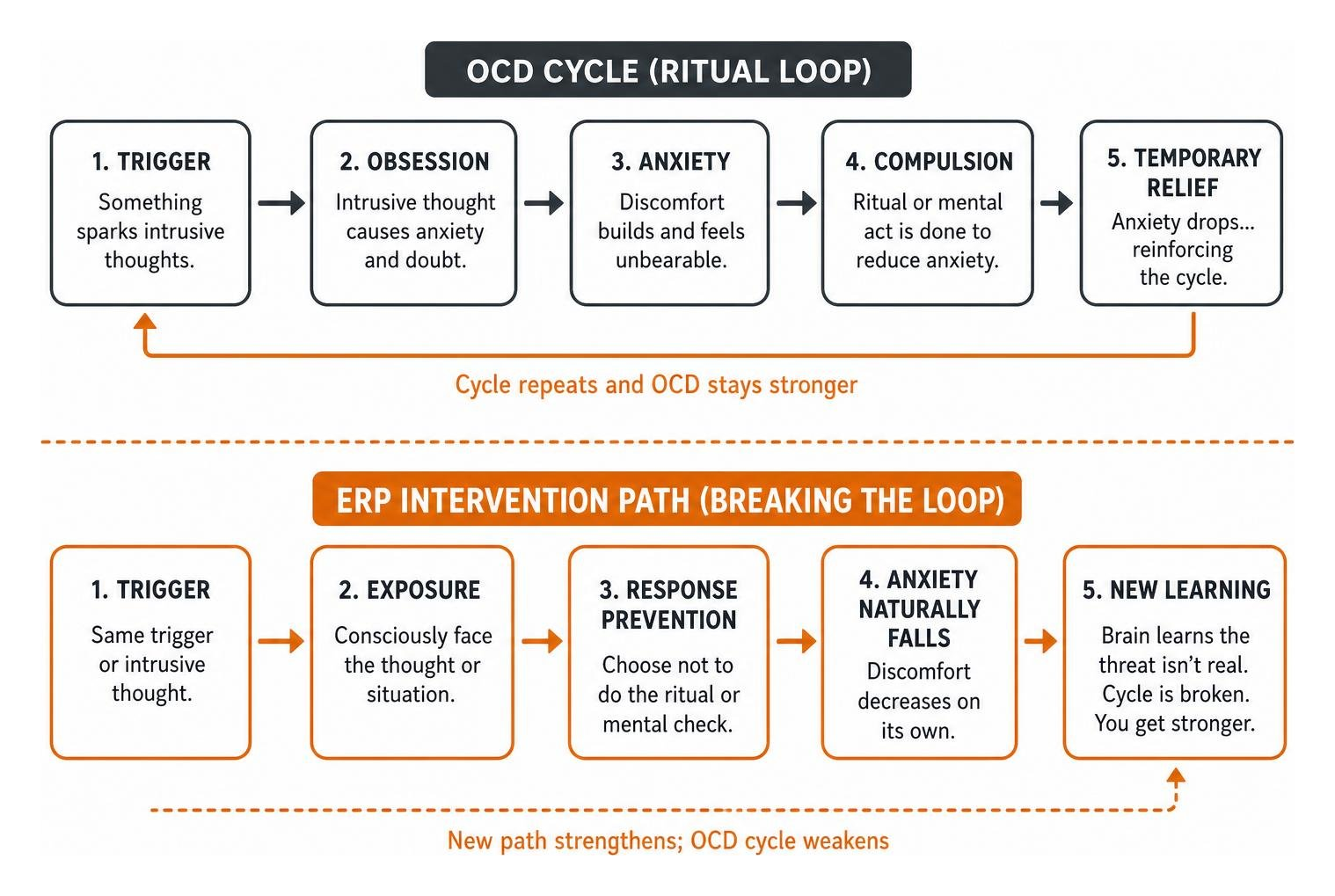
The ERP process involves a structured framework:
- Identifying Triggers: Mapping out specific situations, intrusive thoughts, or physical items that trigger distress.
- Building an Exposure Hierarchy: Ranking triggers on a scale from least distressing to most distressing.
- Gradual Exposure: Confronting triggers step-by-step, starting with low-level anxiety items before moving up.
- Response Prevention: Consciously choosing to resist ritual neutralization (e.g., refraining from hand washing, counting, seeking reassurance, or double-checking locks).
- Cognitive Restructuring: Learning through experience that anxiety naturally peaks and falls without compulsions, rebuilding confidence in handling uncertain outcomes.
Understanding how therapy helps OCD involves recognizing that compulsions are temporary band-aids. Compulsions provide brief relief, but they tell the brain that the obsession was a real threat. By stopping the compulsion, ERP breaks the cycle. People with mild OCD often see meaningful progress within 8 to 20 therapy sessions.
Pharmacotherapy: FDA-Approved SSRIs and High-Dose Protocols
While ERP addresses behavioral loops, medication targets the underlying neurochemistry. Selective Serotonin Reuptake Inhibitors (SSRIs) are the primary class of medications approved for OCD. They work by boosting available serotonin in brain circuits that manage fear and repetitive behaviors.
A critical detail about treating OCD with medication is that it often requires higher dosages than those used for major depressive disorder or general anxiety, alongside a longer trial period. It can take up to 12 weeks of consistent use at a therapeutic dose to evaluate whether a medication is working.
Five antidepressants carry specific FDA approval for treating OCD:
- Sertraline: Target adult dosage typically ranges from 150 mg to 200 mg daily (approved for ages 6+).
- Fluoxetine: Target adult dosage ranges between 60 mg and 80 mg daily (approved for ages 7+).
- Fluvoxamine: Target adult dosage ranges between 200 mg and 300 mg daily (approved for ages 8+).
- Paroxetine: Target adult dosage ranges from 50 mg to 60 mg daily (CR versions up to 75 mg).
- Clomipramine: A tricyclic antidepressant (TCA) with a target dosage of 150 mg to 225 mg daily (approved for ages 10+). Though highly effective, it is often considered a second-line option due to side effects.
| Medication | FDA-Approved Minimum Age | Standard Target OCD Dosage |
|---|---|---|
| Sertraline | 6 years old | 150 – 200 mg/day |
| Fluoxetine | 7 years old | 60 – 80 mg/day |
| Fluvoxamine | 8 years old | 200 – 300 mg/day |
| Clomipramine | 10 years old | 150 – 225 mg/day |
| Paroxetine | Adults | 50 – 60 mg/day |
Because medication carries risks—including side effects like GI upset, sleep alterations, sexual dysfunction, and FDA black box warnings regarding increased suicidal ideation in children and young adults during early treatment—prescriptions should always be managed under close medical supervision. Scheduling a dedicated psychiatric consultation ensures dosing is monitored safely.
Combining Medication and ERP for Effective OCD Treatment
Should you choose therapy, medication, or both? As detailed in the International OCD Foundation guide, combining ERP therapy with an SSRI often provides the strongest outcome, especially for moderate to severe cases.
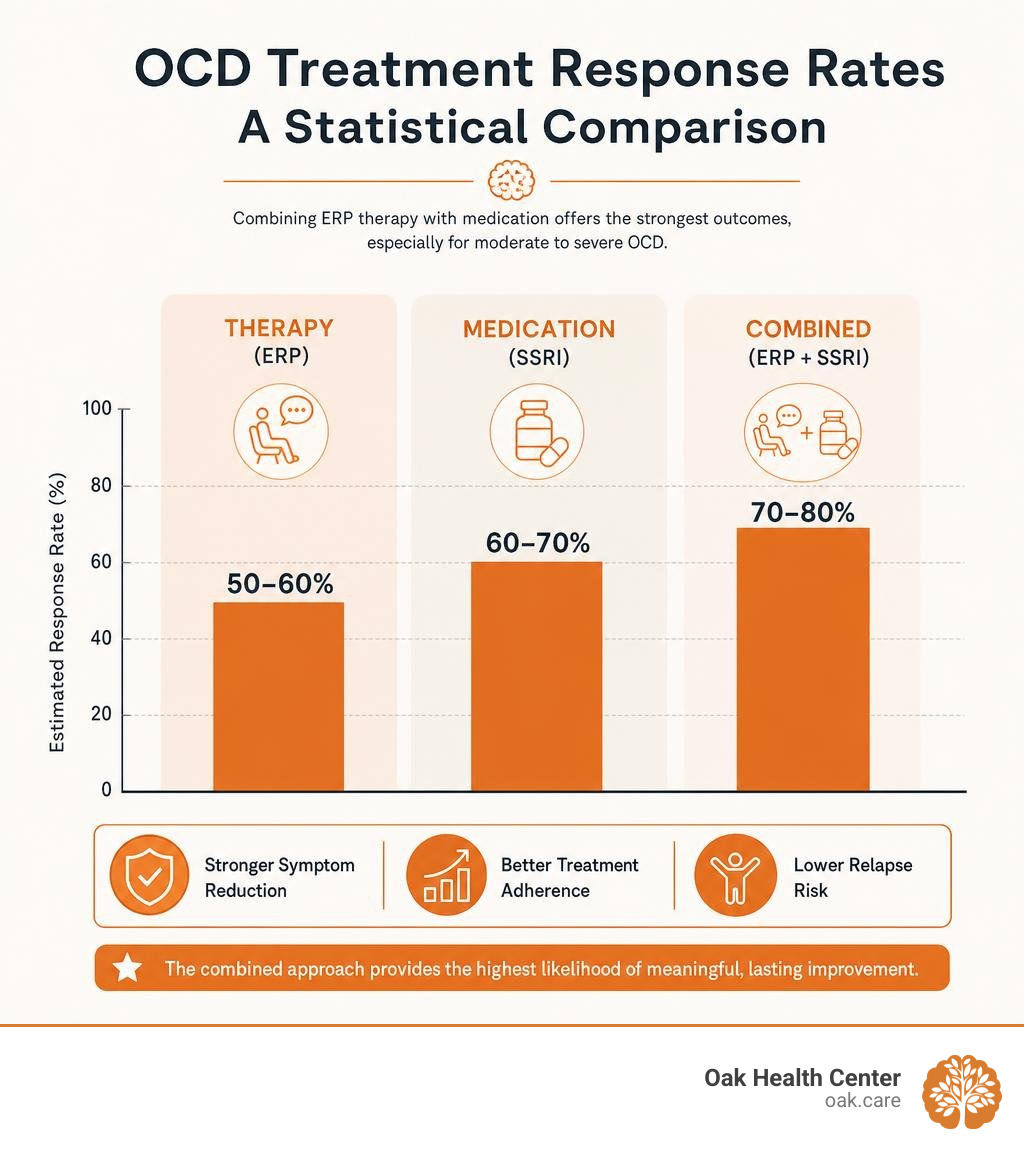
A combined approach offers clear advantages:
- Lowers the Distress Barrier: SSRIs can reduce baseline anxiety, making severe exposures in ERP feel manageable rather than overwhelming.
- Improves Treatment Adherence: When intrusive thoughts are overwhelming, medication helps stabilize mood enough for patients to actively participate in therapy homework.
- Boosts Relapse Prevention: ERP equips you with lifelong cognitive tools, while medication provides stable neurochemical support, offering a strong defense against future flare-ups.
Following a clear, step-by-step psychotherapy guide helps align medication schedules with therapy milestones for maximum benefit.
Advanced Options for Treatment-Resistant OCD
While first-line approaches help many people, statistics indicate that approximately 20% of patients do not respond fully to standard ERP and initial SSRI trials. Treatment resistance is generally considered when a patient maintains a high score on the Yale-Brown Obsessive Compulsive Scale (Y-BOCS)—typically 16 or higher—despite completing multiple adequate SSRI trials at maximum tolerated doses alongside structured ERP.
When initial options fall short, clinical frameworks outlined in the UpToDate OCD treatment overview guide the transition to second- and third-line interventions.
Second-Line Strategies and Antipsychotic Augmentation
When a first-line SSRI does not produce a response after 8 to 12 weeks, a doctor may switch to a different SSRI or transition to clomipramine. If a patient experiences a partial response—where symptoms improve slightly but remain intrusive—adding an augmenting agent is often the next step.
- Antipsychotic Augmentation: Adding low doses of atypical antipsychotics like aripiprazole or risperidone can boost SRI performance. Research indicates that about one-third of treatment-resistant patients respond to antipsychotic augmentation, particularly those with comorbid tic disorders.
- Glutamate Modulators: Emerging strategies look beyond serotonin to the brain’s glutamate pathways. Medications like memantine or N-acetylcysteine (NAC) are sometimes added to modulate excitatory signals involved in repetitive behaviors.
- Inference-Based Cognitive Therapy (I-CBT): For individuals who struggle with standard ERP, I-CBT serves as a strong alternative. It helps patients identify the “obsessional doubts” created by imagination and reconnect with their physical senses in the moment.
Neuromodulation and Interventional Procedures: TMS and DBS
For severe, long-term OCD that resists medication and therapy, advanced brain stimulation technologies offer new options.
- Transcranial Magnetic Stimulation (TMS): Deep TMS is FDA-approved for adults with treatment-resistant OCD. It uses targeted electromagnetic coils placed on the scalp to stimulate deeper brain structures involved in OCD circuits, such as the anterior cingulate cortex. Sessions run daily over several weeks. Clinical studies show that roughly 50% of patients receiving TMS experience a significant reduction in symptoms.
- Deep Brain Stimulation (DBS): Reserved for severe, highly resistant cases, DBS involves surgically implanting small electrodes into target brain regions connected to a neurostimulator in the chest. Meta-analyses demonstrate an average 47% decrease in Y-BOCS scores, with overall response rates between 57% and 66%.
Complementary Therapies and Approaches to Avoid
Understanding what not to do is just as crucial as knowing which treatments work. As noted in the Merck Manual professional guide, using unproven interventions can prolong suffering, delay effective care, and increase costs.
Evidence-Based Adjunctive Modalities
While ERP remains the primary therapy, other therapeutic frameworks can complement treatment by strengthening psychological flexibility and distress tolerance:
- Acceptance and Commitment Therapy (ACT): Rather than trying to change intrusive thoughts, ACT teaches you to accept anxiety-inducing thoughts without judgment while committing to values-based actions.
- Mindfulness-Based Cognitive Therapy (MBCT): Helps patients observe intrusive urges neutrally, recognizing them as temporary brain signals rather than immediate commands.
- Dialectical Behavior Therapy (DBT): Offers practical distress tolerance skills for managing severe emotional spikes during exposure exercises.
Learning about different types of mental health therapy helps clarify how these complementary modalities support your core ERP plan.
Ineffective or Potentially Harmful Approaches to Avoid
Not all mental health approaches work for OCD. In fact, some common therapies can unintentionally make OCD symptoms worse.
- Traditional Psychoanalysis & Psychodynamic Therapy: Searching for hidden childhood meanings behind intrusive thoughts can turn into a compulsion. It encourages overthinking thoughts that are simply random brain noise.
- Eye Movement Desensitization and Reprocessing (EMDR): While effective for PTSD, standard EMDR lacks strong evidence for primary OCD and should not replace ERP.
- Hypnotherapy and Brainspotting: These modalities lack scientific validation for OCD and can increase anxiety by encouraging internal monitoring.
- Standalone Benzodiazepines: Medications like alprazolam or clonazepam may temporarily numb anxiety, but they can hinder natural habituation during ERP and carry risks of dependency.
- Exposure Without Response Prevention: Facing a trigger without actively preventing rituals is counterproductive. Performing compulsions after exposure reinforces the OCD cycle.
Managing OCD Across Special Populations
OCD affects individuals across all life stages. According to the 2025 CANMAT/ICOCS international guidelines, care strategies should be adapted based on age, developmental stage, and physical health considerations.
Pediatric OCD, PANDAS/PANS, and Family-Based Interventions
In children, OCD can show up differently than in adults. Kids may lack the awareness to recognize that their intrusive fears are irrational, often involving parents directly in their compulsions.

- Pediatric Onset: Children as young as 4 or 5 can develop OCD. First-line therapy focuses on family-based ERP tailored to the child’s developmental age.
- PANDAS/PANS: Pediatric Autoimmune Neuropsychiatric Disorders Associated with Streptococcal Infections (PANDAS) and Pediatric Acute-onset Neuropsychiatric Syndrome (PANS) involve a sudden, severe onset of OCD symptoms following an infection. Treatment addresses both the immune response (using anti-inflammatories or antibiotics under medical supervision) and behavioral symptoms through ERP.
- Supportive Parenting for Anxious Childhood Emotions (SPACE): This parent-based program helps families reduce “family accommodation”—such as answering reassurance questions or participating in cleaning rituals—without requiring the child to attend every session directly.
Pregnancy, Lactation, and Geriatric Considerations
- Perinatal OCD: Intrusive thoughts about harm can surface or intensify during pregnancy or the postpartum period. ERP is the safest first-line choice. If SSRIs are necessary, clinicians conduct careful risk-benefit evaluations to choose options with the lowest transfer rates during lactation.
- Geriatric Care: Older adults require lower initial doses of medication due to age-related shifts in metabolism and increased sensitivity to anticholinergic side effects. Dosing is adjusted thoughtfully to avoid interactions with other health conditions.
Building a Comprehensive Care Plan and Coping Strategies
Treating OCD effectively requires a balanced approach. While working with a professional team is essential, day-to-day coping strategies build long-term resilience.
Key components of an effective self-management plan include:
- Psychoeducation: Learning how OCD operates neutralizes the shame around intrusive thoughts.
- Daily ERP Homework: Practicing exposure exercises consistently outside of session reinforces therapeutic gains.
- Tracking Symptoms: Keeping track of triggers and anxiety levels helps spot patterns and track progress over time.
- Lifestyle Foundations: Regular sleep, steady physical activity, and stress management help keep baseline anxiety in check.
- Building Support Systems: Involving trusted friends, family, or support groups helps reduce isolation without enabling compulsions.
Knowing what to expect in therapy helps make taking that initial step toward recovery clearer and more comfortable.
Frequently Asked Questions About OCD Treatment
Referencing our FAQ page, here are answers to common questions about OCD care:
What is the most effective first-line treatment for OCD?
Exposure and Response Prevention (ERP) therapy, either on its own or paired with an FDA-approved SSRI, is the most effective first-line treatment. For moderate to severe symptoms, combining ERP with medication usually delivers the best outcomes.
How long does it take for OCD treatment to work?
Therapy typically involves noticeable shifts within 8 to 20 ERP sessions. SSRI medications often require up to 12 weeks at therapeutic doses before full benefits become clear. Recovery is a gradual process that builds over time.
What happens if standard OCD treatments fail?
When initial approaches are not enough, options include adjusting SSRI doses, trying an atypical antipsychotic, or exploring non-invasive brain stimulation like Transcranial Magnetic Stimulation (TMS). Intensive outpatient programs also provide structured support for complex cases.
Conclusion
Living with OCD can feel exhausting, but evidence-based care offers a reliable path forward. Recovery does not mean eliminating every intrusive thought; it means learning to dismiss those thoughts without letting compulsions take over your day.
At Oak Health Center, we offer personalized care across our Southern California clinics in Beverly Hills, Fullerton, Laguna Hills, Rancho Cucamonga, and South Pasadena, alongside statewide virtual care. Our team coordinates psychiatric evaluations, therapy, and advanced options like TMS in one supportive environment.
If you are ready to take the next step, explore our comprehensive psychotherapy services or reach out to schedule an evaluation today.