


When Worry and Sadness Won’t Go Away: Recognizing Anxiety and Depression
Anxiety disorders and depression symptoms often show up together — and knowing what to look for can make a real difference in getting the right help.
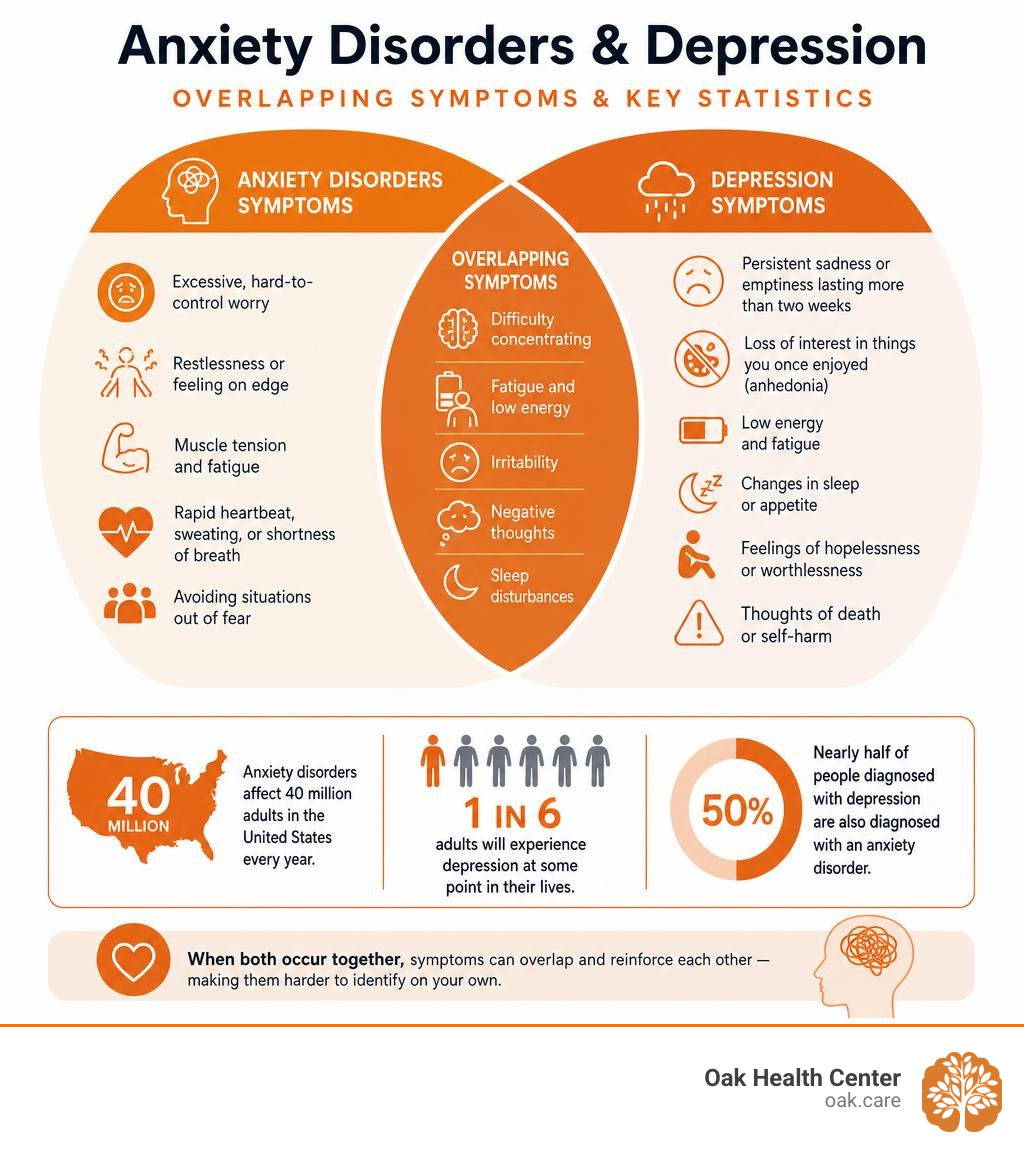
Here is a quick overview of the most common signs:
Common Anxiety Disorder Symptoms
- Excessive, hard-to-control worry
- Restlessness or feeling on edge
- Muscle tension and fatigue
- Rapid heartbeat, sweating, or shortness of breath
- Avoiding situations out of fear
Common Depression Symptoms
- Persistent sadness or emptiness lasting more than two weeks
- Loss of interest in things you once enjoyed (anhedonia)
- Low energy and fatigue
- Changes in sleep or appetite
- Feelings of hopelessness or worthlessness
- Thoughts of death or self-harm
When both occur together, symptoms can overlap and reinforce each other — making them harder to identify on your own.
The reality is that these are not just “bad days” or normal stress. Anxiety disorders affect 40 million adults in the United States every year. Depression affects roughly 1 in 6 adults at some point in their lives. And nearly half of people diagnosed with depression are also diagnosed with an anxiety disorder.
If you are a busy professional juggling work, relationships, and daily stress, it can be easy to dismiss these feelings as burnout. But persistent symptoms that interfere with your functioning are a sign worth taking seriously.
I’m Andrew Brewer, Practice Manager at Oak Health Center, where I’ve worked alongside clinical teams to build and expand mental health programs — including care for patients navigating anxiety disorders and depression symptoms. In that role, I’ve seen how early recognition leads to better outcomes, and this guide is designed to help you get there faster.
Anxiety disorders and depression symptoms definitions:
Understanding Anxiety Disorders and Depression Symptoms

To truly understand anxiety disorders and depression symptoms, we must first look at how clinical professionals define and diagnose these conditions. These are not character flaws or temporary moods; they are complex, biologically based medical conditions that alter how the brain processes emotions, stress, and daily experiences.
In the clinical world, doctors and therapists rely on standardized guidelines, such as the Diagnostic and Statistical Manual of Mental Disorders (DSM-5), to make accurate diagnoses. According to the NIMH guide on depression, clinical depression involves a persistent sad, anxious, or “empty” mood that lasts for at least two weeks. On the other hand, generalized anxiety disorder (GAD) requires excessive, difficult-to-control worry about a variety of everyday things occurring more days than not for at least six months.
Because the symptoms of these two conditions frequently intertwine, a thorough evaluation is essential. At Oak Health Center, we utilize our specialized psychological assessment services to carefully map out your unique symptom profile. This clinical clarity is crucial because treating anxiety requires a slightly different roadmap than treating depression, even though their paths cross quite often.
Core Signs of Anxiety Disorders
While everyone experiences occasional nerves before a big presentation or a major life change, clinical anxiety is a different beast entirely. It is characterized by a persistent, overwhelming sense of dread or apprehension that does not go away when the stressor passes.
Some of the most common ways clinical anxiety manifests include:
- Cognitive and Emotional Symptoms: Constant, circular worrying; a persistent sense of impending doom; irritability; and difficulty concentrating because your mind is hyper-focused on potential threats.
- Physical Symptoms: Muscle tension (especially in the shoulders, neck, and jaw), a racing heart, shallow breathing, trembling, sweating, and chronic fatigue.
- Behavioral Patterns: Avoiding social situations, delaying projects out of a fear of failure, or over-preparing to an exhausting degree.
To help you spot these signs in your own life, we have broken down 5 ways anxiety shows up in everyday life, from subtle physical cues to behavioral shifts that you might otherwise mistake for high-achieving perfectionism.
Core Signs of Depressive Disorders
Depression is far more than just feeling blue. It is a systemic state of low energy, low motivation, and a heavy, persistent sadness that blankets every aspect of your life.
The core symptoms of clinical depression include:
- Anhedonia: This is the clinical term for the inability to feel pleasure. Activities, hobbies, and social interactions that used to bring you joy suddenly feel completely flat and pointless.
- Pervasive Fatigue: A deep, heavy exhaustion that sleep cannot fix. Even simple tasks like taking a shower or making a meal can feel like climbing a mountain.
- Negative Cognitive Patterns: Intense feelings of worthlessness, self-criticism, hopelessness, and inappropriate guilt.
- Vegetative Signs: Noticeable changes in sleep patterns (either insomnia or sleeping too much), major shifts in appetite and weight, and a drop in physical movement or speech (psychomotor retardation).
When these symptoms become deeply entrenched and standard approaches do not seem to help, it may point to a more complex presentation. Understanding this distinction is key, which is why we recommend reading our clinical overview on understanding treatment-resistant depression to learn what happens when standard therapies require a more advanced approach.
How to Tell the Difference Between Anxiety and Depression

If you are feeling both overwhelmed and exhausted, you might wonder: Am I anxious, depressed, or both?
While they frequently co-occur, they are distinct conditions with different core drivers. The easiest way to separate them is to look at your energy levels, your physical state, and your cognitive focus regarding the future.
- Anxiety is future-focused and high-energy. It is characterized by fear, hyper-vigilance, and an overactive “fight-or-flight” response. Your mind is constantly asking, “What if?” and preparing for a threat that hasn’t happened yet.
- Depression is past/present-focused and low-energy. It is characterized by hopelessness, flat emotions, and a sense that the battle is already lost. Your mind is telling you, “Why bother? Nothing will change anyway.”
To help clarify these differences, the Psychology Today comparison highlights how these two states of mind interact and influence our daily choices.
Let’s look at a direct comparison of how these differences manifest physically and cognitively:
| Feature | Anxiety Disorders | Depressive Disorders |
|---|---|---|
| Primary Focus | Future threats, uncertainty, and loss of control | Past regrets, present hopelessness, and worthlessness |
| Physical Energy | High physical agitation, restlessness, muscle tension | Low physical energy, heavy fatigue, slowed movements |
| Sleep Patterns | Difficulty falling asleep due to a racing, worried mind | Waking up too early and being unable to fall back asleep, or oversleeping |
| Appetite | Nervous stomach, temporary loss of appetite, or stress eating | Consistent loss of appetite or emotional overeating |
| Dominant Emotion | Fear, panic, apprehension, and irritability | Sadness, emptiness, flatness, and despair |
Distinguishing Anxiety Disorders and Depression Symptoms in Daily Life
In the messy reality of day-to-day living, these symptoms do not always stay in their neat clinical columns. They often collide, creating a frustrating cycle where one feeds the other.
Consider how sleep disturbances highlight this intersection:
- An anxious mind keeps you awake at 2:00 AM, worrying about tomorrow’s schedule.
- This lack of sleep leaves you physically exhausted and emotionally vulnerable the next day.
- Over time, this chronic exhaustion and inability to function normally can trigger feelings of hopelessness and despair—the very definition of depressive symptoms.
This complex relationship is why sleep is often the first thing to break down and the most critical thing to fix. To understand how these patterns lock together, we explore the physiological mechanisms in our guide on how anxiety, depression, and sleep problems feed each other.
The Biological and Environmental Causes of Mental Health Conditions
Neither anxiety nor depression is a sign of personal weakness. They are real, biological conditions rooted in a combination of genetics, brain chemistry, and environmental influences.
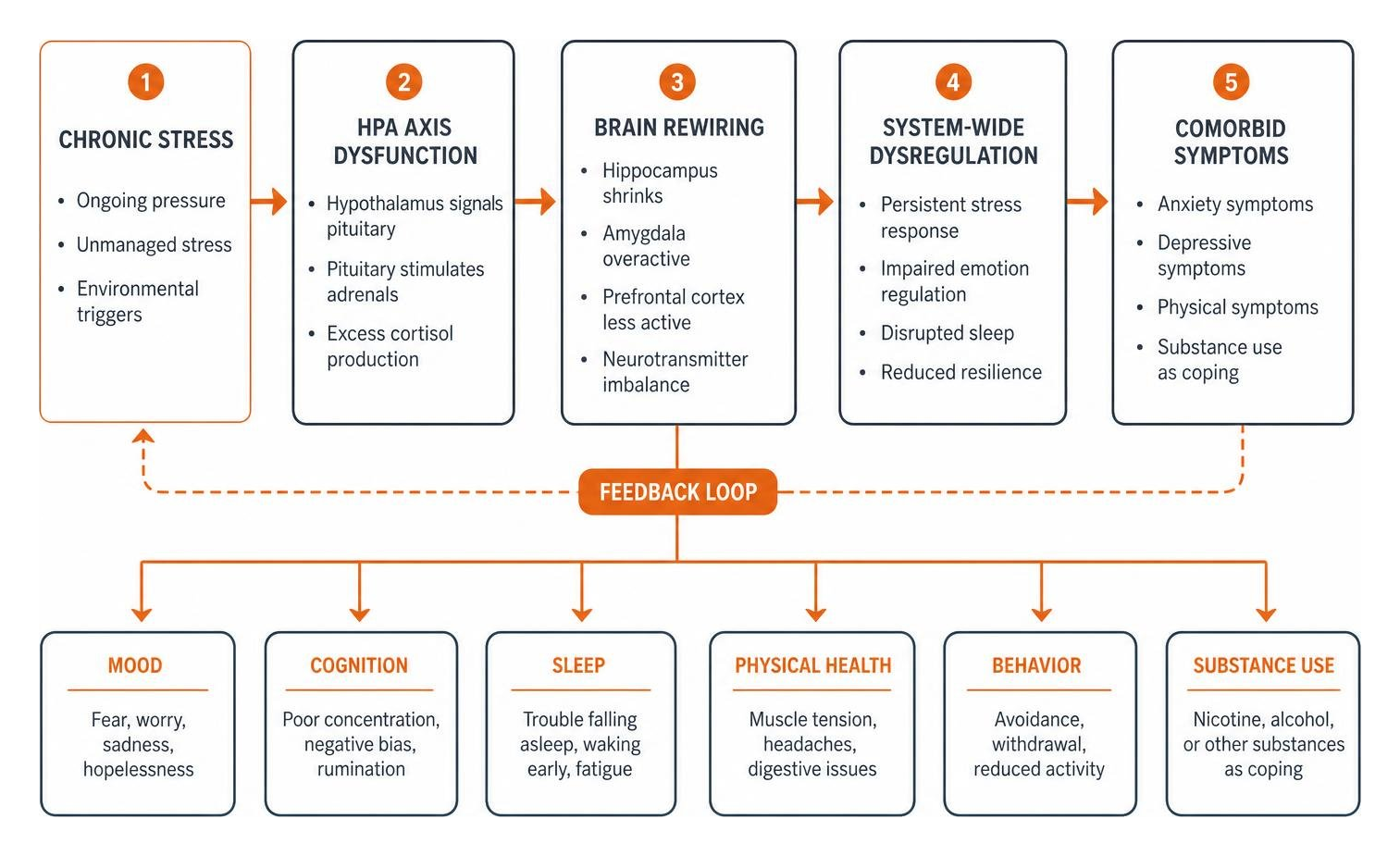
When you experience chronic, unmanaged stress, your body’s hypothalamic-pituitary-adrenal (HPA) axis remains constantly active. This floods your system with cortisol, which can physically alter brain structures like the hippocampus (which regulates memory and emotion) and deplete essential neurotransmitters like serotonin and dopamine.
Environmental habits also play a massive role in this biological cycle. For example, many individuals turn to substances like nicotine or alcohol to cope with their symptoms. According to the CDC data on mental health and smoking, adults with mental health conditions smoke about 3 out of every 10 cigarettes consumed in the United States. While smoking might feel like it relieves stress in the short term, nicotine actually increases physiological anxiety and worsens depression over time. Quitting smoking has been clinically proven to significantly improve long-term mental health outcomes.
If you are struggling with substance use as a way to cope with your mental health, our comprehensive addiction treatment program is designed to address both the substance use and the underlying anxiety or depression simultaneously.
Risk Factors for Developing Anxiety Disorders and Depression Symptoms
While anyone can develop these conditions, certain risk factors make some individuals more vulnerable:
- Family History: Having a first-degree relative (like a parent or sibling) with anxiety or depression increases your genetic risk.
- Trauma and Life Events: Experiencing childhood trauma, major loss, or prolonged stressful events (like financial strain or chronic illness) can reshape how your brain responds to stress.
- Personality Traits: Individuals who are naturally highly sensitive, prone to perfectionism, or easily overwhelmed are more susceptible.
If you have noticed your symptoms escalating over time, it is often because these risk factors are being compounded by daily habits and environmental triggers. To help you break this cycle, we have detailed why your anxiety keeps getting worse and provided practical steps to halt the downward spiral.
Evidence-Based Treatments and Coping Strategies
The most important thing to know about anxiety disorders and depression symptoms is that they are highly treatable. You do not have to live with a constant weight on your shoulders.
The gold standard of treatment typically involves a combination of professional therapy and, when appropriate, medical management. According to clinical guidelines like the Merck Manual on GAD, Cognitive Behavioral Therapy (CBT) is highly effective for identifying and changing negative thought patterns and behaviors.
For many people, psychotherapy alone is incredibly powerful. If you are curious about exploring non-pharmacological paths, our guide on managing anxiety without medication outlines how evidence-based talk therapy can give you the tools to regain control of your mind.
Advanced Medical Interventions
For some individuals, traditional talk therapy and standard medications do not quite provide the relief they need. This is especially true for those dealing with treatment-resistant depression or severe, deeply rooted anxiety.
Fortunately, modern psychiatry has developed highly effective, non-invasive treatments that target the brain’s pathways directly:
- Transcranial Magnetic Stimulation (TMS): This FDA-cleared, non-invasive treatment uses gentle magnetic pulses to stimulate the specific areas of the brain associated with mood regulation. It is a fantastic option for those who have not seen success with traditional antidepressants.
- Esketamine Nasal Spray: An innovative, rapid-acting treatment administered under clinical supervision, designed to help rapidly lift severe depressive symptoms.
To learn more about how these modern technologies work, you can read our detailed breakdown on how TMS therapy works for depression.
Frequently Asked Questions about Comorbid Mental Health Signs
Can you have anxiety and depression at the same time?
Yes, absolutely. In fact, it is incredibly common. Clinical studies show that nearly half of all people diagnosed with clinical depression also meet the criteria for an anxiety disorder.
As the Cleveland Clinic on anxiety vs depression explains, these two conditions are closely linked; the chronic stress and exhaustion of living with severe anxiety can easily lead to depression, while the hopelessness of depression can cause intense anxiety about your future and your ability to cope.
How do sleep problems affect anxiety and depression?
Sleep and mental health share a bidirectional relationship. Insomnia and disrupted circadian rhythms do not just happen because you are anxious or depressed; they actively worsen those conditions.
When you do not get restorative sleep, your brain cannot properly regulate your emotions, making you far more vulnerable to mood swings, panic, and despair. We dive deep into this cycle in our article on understanding the anxiety-sleep connection.
When is it time to see a professional for mental health symptoms?
You should consider seeking professional help if your symptoms have lasted for more than two weeks and are actively interfering with your daily functioning, your relationships, or your physical health.
If you find yourself avoiding social situations, struggling to perform at work, or feeling constantly exhausted, it is time to reach out. For a closer look at the signs that indicate you could benefit from clinical support, check out our guide on how to know when it’s time to see a psychiatrist.
Conclusion
Recognizing anxiety disorders and depression symptoms in your own life is the first and most important step toward healing. Whether you are dealing with a racing mind that won’t let you sleep, or a heavy sadness that makes it hard to get out of bed, please know that you do not have to navigate this journey alone.
At Oak Health Center, we are dedicated to providing compassionate, comprehensive mental healthcare tailored to your life. We offer simplified access to support across our five convenient Southern California locations — including Beverly Hills, Fullerton, Laguna Hills, Rancho Cucamonga, and South Pasadena — alongside our statewide virtual services.
If you are ready to take a step forward today, here are some actionable self-care steps you can start practicing right away:
- Focus on Sleep Hygiene: Try to go to bed and wake up at the same time every day, and keep screens out of your bedroom.
- Move Your Body: Even a 20-minute daily walk can help lower cortisol levels and boost your mood.
- Limit Stimulants: Reducing your intake of caffeine, alcohol, and nicotine can significantly decrease physical anxiety.
- Practice Mindful Breathing: Use simple breathing techniques to help calm your nervous system when you feel overwhelmed.
- Reach Out for Support: Talk openly with a trusted friend, family member, or professional about what you are going through.
If you are ready to explore professional support, we invite you to learn more about our professional psychotherapy services and schedule a consultation with our compassionate clinical team. Let’s work together to help you feel like yourself again.