


The Best Way to Treat OCD Starts With Evidence-Based Care
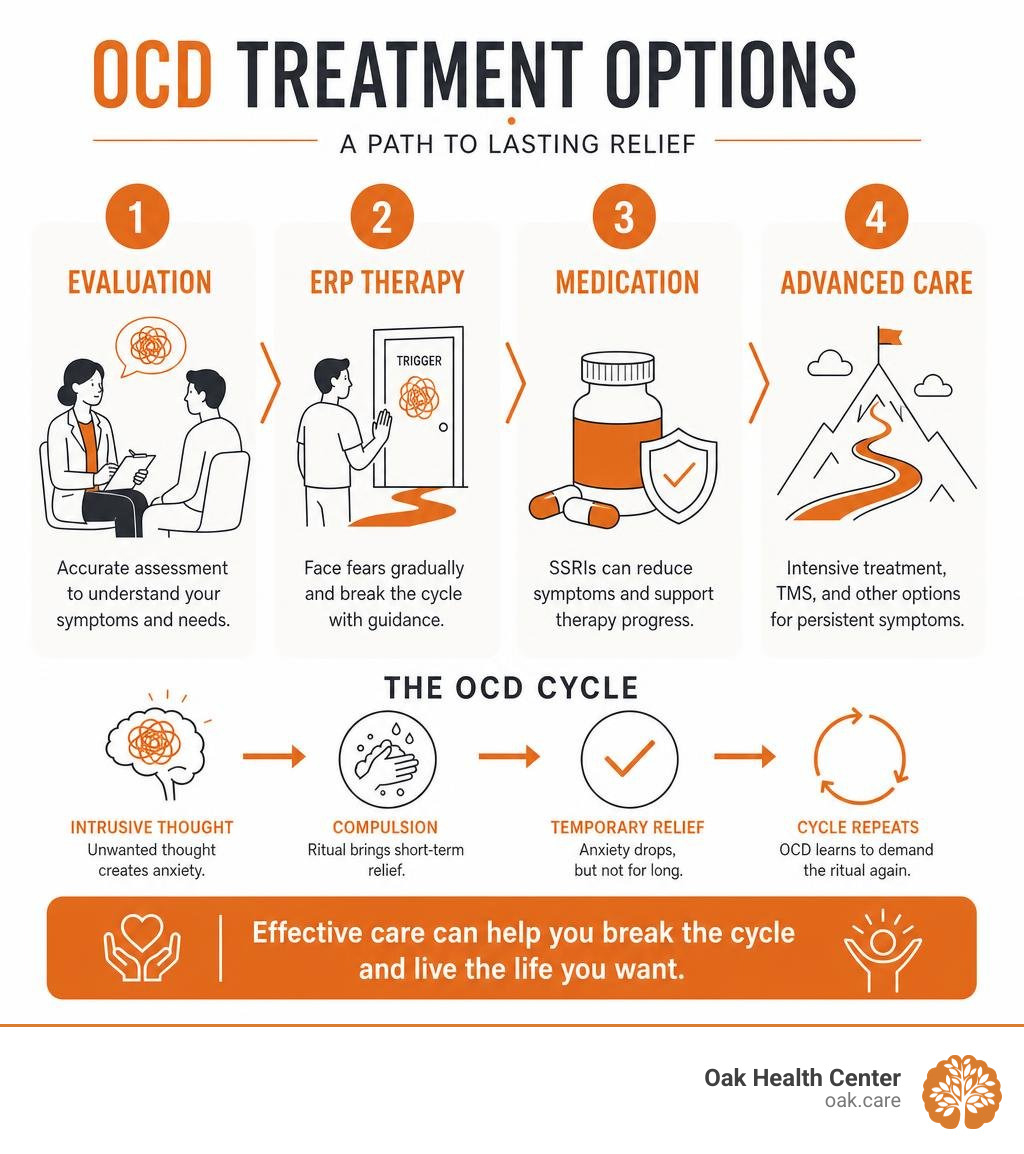
The best way to treat ocd is usually Exposure and Response Prevention (ERP) therapy, a specialized form of cognitive behavioral therapy, with medication such as an SSRI added when symptoms are moderate to severe, therapy is not enough on its own, or both are preferred. OCD is common, affecting an estimated 1% to 3% of people during their lifetime, but effective care can reduce the hold that obsessions and compulsions have on work, relationships, and daily life.
- Start with an accurate evaluation. OCD involves unwanted, distressing thoughts, images, or urges, plus compulsions or mental rituals meant to relieve distress.
- Use ERP with an OCD-trained therapist. ERP helps people face triggers gradually while practicing not doing the ritual that OCD demands.
- Consider medication when needed. SSRIs are first-line medicines for OCD, but they can take up to 12 weeks to show benefit and often require ongoing care.
- Get more support for severe or persistent symptoms. Intensive treatment, TMS, and other specialist options may help when standard treatment has not worked.
OCD is not a sign that a thought is true or that a person wants to act on it. The problem is the cycle: an intrusive thought creates anxiety, a compulsion brings short-term relief, and OCD learns to demand the ritual again.
I’m Andrew Brewer, Practice Manager at Oak Health Center, where I work with clinical teams that support the growth of accessible mental health programs, including psychotherapy, psychiatry, and TMS. My experience building systems that help patients connect with the right level of care informs this guide to the best way to treat ocd and how to find practical, compassionate support.
Understanding OCD: Symptoms, Diagnosis, and Clinical Challenges
Navigating obsessive-compulsive disorder begins with establishing a precise diagnostic picture. Because obsessive thoughts can cover a broad spectrum—ranging from contamination fears and harm obsessions to taboo moral themes—a comprehensive evaluation is essential. Diagnosing OCD typically requires a detailed clinical interview, a physical examination to rule out underlying medical factors, and structured diagnostic instruments.
Clinicians often use standardized measurement tools like the Yale-Brown Obsessive-Compulsive Scale (Y-BOCS) to measure symptom severity. A score of 16 or higher on the Y-BOCS generally indicates clinically significant OCD symptoms requiring structured intervention.
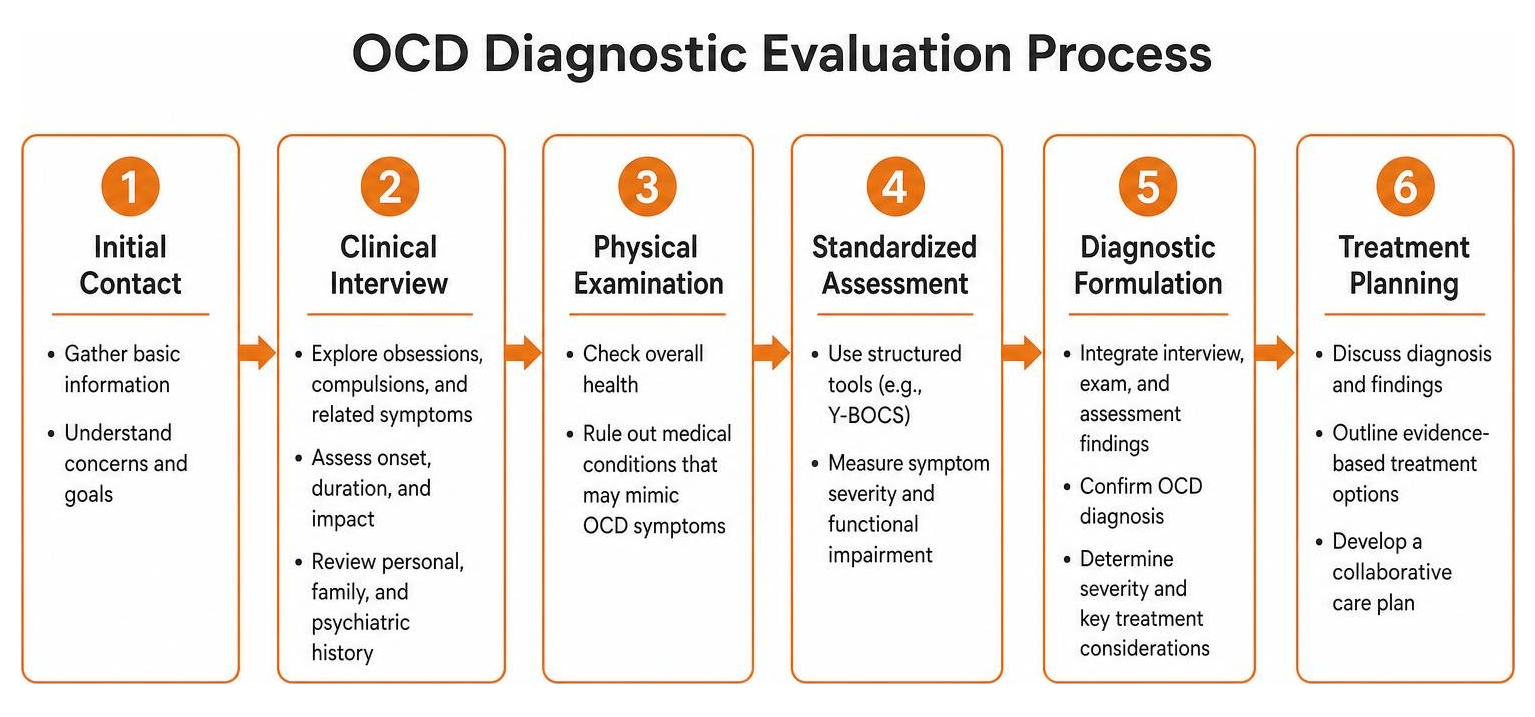
Getting an accurate diagnosis is not always straightforward. Studies indicate that less than a third of individuals living with OCD receive appropriate evidence-based pharmacotherapy, and even fewer receive specialized psychotherapy. Diagnostic delays can occur because patients feel embarrassed by the content of their intrusive thoughts or because non-specialized clinicians mistake OCD rituals for general anxiety. Detailed diagnostic standards, as discussed in Obsessive-compulsive disorder (OCD) – Diagnosis and treatment – Mayo Clinic, emphasize that a physical exam and thorough psychiatric assessment are necessary first steps to distinguish OCD from other conditions.
Differentiating OCD from Anxiety and Personality Disorders
A core challenge in treating OCD is separating its symptoms from overlapping mental health conditions:
- Generalized Anxiety Disorder (GAD): While GAD involves excessive worry about real-life concerns (such as finances, health, or family), OCD features intrusive, unwanted thoughts (obsessions) that feel irrational or incongruent with a person’s character (ego-dystonic). In OCD, these thoughts drive repetitive mental or physical actions (compulsions) performed to neutralize distress.
- Obsessive-Compulsive Personality Disorder (OCPD): Despite the similar name, OCPD is a distinct personality disorder characterized by pervasive perfectionism, orderliness, and a desire for control. Unlike OCD, individuals with OCPD typically see their habits and rules as correct and desirable (ego-syntonic), whereas individuals with OCD are deeply distressed by their obsessions and rituals.
- Co-occurring Schizophrenia: In complex psychiatric presentations, obsessive-compulsive symptoms can co-occur with psychosis. In fact, roughly 30% of individuals diagnosed with schizophrenia experience co-occurring obsessive-compulsive symptoms. Recognizing whether an idea is an ego-dystonic obsession or a psychotic belief shapes the course of clinical management.
Understanding what is happening during your initial intake helps ease concerns. If you are preparing for your first evaluation, reading about what to expect in your first therapy appointment at Oak Health Center can help you prepare for a comfortable assessment.
Tailoring Diagnosis for Special Populations
OCD presents differently across age groups and medical backgrounds. Clinical approaches must adapt to specific patient populations:
- Pediatric OCD and PANDAS/PANS: Children with OCD may struggle to articulate their obsessions and instead exhibit uncharacteristic behavioral outbursts or endless reassurance seeking. When severe OCD symptoms appear suddenly in children following a streptococcal infection, clinicians evaluate for Pediatric Autoimmune Neuropsychiatric Disorders Associated with Streptococcal Infections (PANDAS) or Pediatric Acute-onset Neuropsychiatric Syndrome (PANS). Treating PANDAS/PANS involves addresssing the underlying infection alongside medical and behavioral therapies.
- Pregnancy and Postpartum: Perinatal OCD frequently involves alarming, intrusive thoughts regarding the safety of the newborn. Educating expecting parents that these ego-dystonic thoughts are symptoms of anxiety—not true intentions—is vital to lowering distress and preventing unnecessary safety behaviors.
- Bipolar Disorder Comorbidity: When OCD co-occurs with bipolar disorder, prescribing standard serotonergic antidepressant medications requires extreme caution, as SSRIs can trigger manic shifts or rapid cycling. In these instances, clinicians prioritize mood stabilization before carefully introducing targeted OCD interventions.
- Tic Disorders: Young people and adults with comorbid tic disorders or Tourette syndrome often experience sensory “just right” compulsions. Treatment protocols often blend habit reversal training with specialized behavioral therapy.
Evidence-Based Therapies: The Best Way to Treat OCD
When looking at clinical evidence and long-term outcomes, cognitive-behavioral approaches rank highest for managing OCD. As updated in the Canadian Network for Mood and Anxiety Treatments (CANMAT) and International College of Obsessive-Compulsive Spectrum Disorders (ICOCS) 2025 international guidelines for the management of patients with obsessive-compulsive disorder, specialized behavioral intervention remains the primary foundation for standard care across all age groups.
Learn more about structured clinical pathways through our step-by-step guide to psychotherapy or explore our direct services/psychotherapy options.
| Treatment Modality | Primary Focus | Typical Duration | Best Suited For |
|---|---|---|---|
| Exposure and Response Prevention (ERP) | Facing feared triggers without performing compulsions | 8 to 20 weekly sessions plus home exercises | Mild, moderate, and severe OCD across all age groups |
| Cognitive Behavioral Therapy (CBT) | Reframing irrational beliefs and overestimations of threat | 12 to 20 weekly sessions | Mild to moderate OCD; helpful for cognitive restructuring |
| Selective Serotonin Reuptake Inhibitors (SSRIs) | Modulating serotonergic pathways to reduce anxiety drive | 12 weeks to show full effect; 1+ years maintenance | Moderate to severe OCD; often combined with ERP |
Why Exposure and Response Prevention Is the Best Way to Treat OCD
Exposure and Response Prevention (ERP) is considered the gold standard psychotherapy for OCD. Standard talk therapy that focuses on uncovering hidden childhood meanings or analyzing every thought often fails—and can even worsen OCD symptoms by turning therapy sessions into another reassurance compulsion. ERP works differently by targeting the anxiety-compulsion feedback loop directly.

In ERP, a patient works with a trained therapist to build a graded hierarchy of feared situations (ranging from low-anxiety triggers to high-anxiety challenges). The process operates on two core pillars:
- Systematic Exposure: The individual is gradually and safely exposed to thoughts, images, objects, or situations that trigger obsession-driven anxiety.
- Response Prevention: The individual learns to refrain from performing compulsive rituals, safety behaviors, or mental undoing following the exposure.
Over time, staying in the presence of a trigger without acting on compulsions allows the brain to experience habituation—learning naturally that anxiety rises, peaks, and declines on its own without needing a ritual. ERP teaches the brain that intrusive thoughts are not dangerous threats.
Individuals with mild to moderate symptoms typically see meaningful clinical improvements within 8 to 20 therapist-guided sessions alongside daily homework practice. For more context on the therapeutic journey, explore how therapy helps people living with OCD beyond just managing symptoms and check out our specialized behavior therapy program.
Combining Medication and Therapy for the Best Way to Treat OCD
While ERP alone is highly effective, combining medication with specialized psychotherapy often provides the best way to treat ocd when symptoms are moderate to severe.
Severe obsessions can generate overwhelming panic that makes it difficult for individuals to engage in exposure practice. In these cases, psychiatric medication helps lower baseline distress, creating the psychological headroom needed to participate in ERP exercises. Clinical practice guidelines recommend combined treatment whenever standard outpatient therapy alone yields incomplete progress, or when severe comorbid conditions (such as major depression) are present. To review psychiatric support models, visit our services/psychiatry page.
Second-Line and Emerging Psychological Approaches
When standard ERP requires augmentation or when specific obsessive cognitive patterns persist, clinicians may integrate second-line or adjunctive modalities:
- Inference-Based Cognitive Therapy (I-CBT): Unlike traditional ERP which focuses on habitual exposure, I-CBT addresses the “obsessive doubt” at the beginning of the OCD chain. It helps individuals spot how obsessive reasoning tricks them into trusting imaginary possibilities over direct sensory reality.
- Metacognitive Therapy: This approach focuses on changing how individuals evaluate their own thought processes, helping them dismantle beliefs that having an intrusive thought is morally equivalent to acting on it (“thought-action fusion”).
- Acceptance and Commitment Therapy (ACT): ACT works as an adjunctive treatment by teaching psychological flexibility. Rather than trying to change or eliminate intrusive thoughts, ACT helps individuals accept uncomfortable internal experiences while committing to meaningful life actions aligned with their values.
- Supportive Parenting for Anxious Childhood Emotions (SPACE): Designed for pediatric OCD, SPACE works directly with parents to systematically reduce family accommodation (such as repeatedly answering reassurance questions or doing rituals for the child) without requiring the child to attend every session.
It is equally important to know which therapies to avoid. The International OCD Foundation | OCD Treatment Guide: Best Evidence-Based Therapies, Medications, and New Advances notes that modalities like classical psychoanalysis, EMDR, hypnotherapy, and brainspotting lack empirical backing for core OCD symptoms and should not replace evidence-based ERP.
Pharmacotherapy and Advanced Medical Options for OCD
For many individuals, prescription medication plays an essential role in stabilizing brain chemistry and reducing obsessive noise. Psychiatric consultation helps determine proper drug selection, target dosages, and administration schedules.

FDA-Approved Medications and Dosing Considerations
The primary FDA-approved medications for treating OCD belong to the Selective Serotonin Reuptake Inhibitor (SSRI) class, along with one specialized tricyclic antidepressant:
- Fluoxetine (Prozac): FDA-approved for adults and children ages 7 and older.
- Fluvoxamine (Luvox): FDA-approved for adults and children ages 8 and older.
- Sertraline (Zoloft): FDA-approved for adults and children ages 6 and older.
- Paroxetine (Paxil): FDA-approved for adults.
- Clomipramine (Anafranil): A tricyclic antidepressant FDA-approved for adults and children ages 10 and older. While highly effective, Clomipramine is generally treated as a second-line option due to a higher risk of side effects (such as dry mouth, sedation, and cardiac considerations) compared to modern SSRIs.
A critical factor in OCD pharmacotherapy is dosage and timeline. Managing OCD symptoms typically requires higher SSRI doses than those used to treat depression. Furthermore, while depression may respond within 4 to 6 weeks, OCD symptom response often requires taking medication consistently for up to 12 weeks at a therapeutic dose.
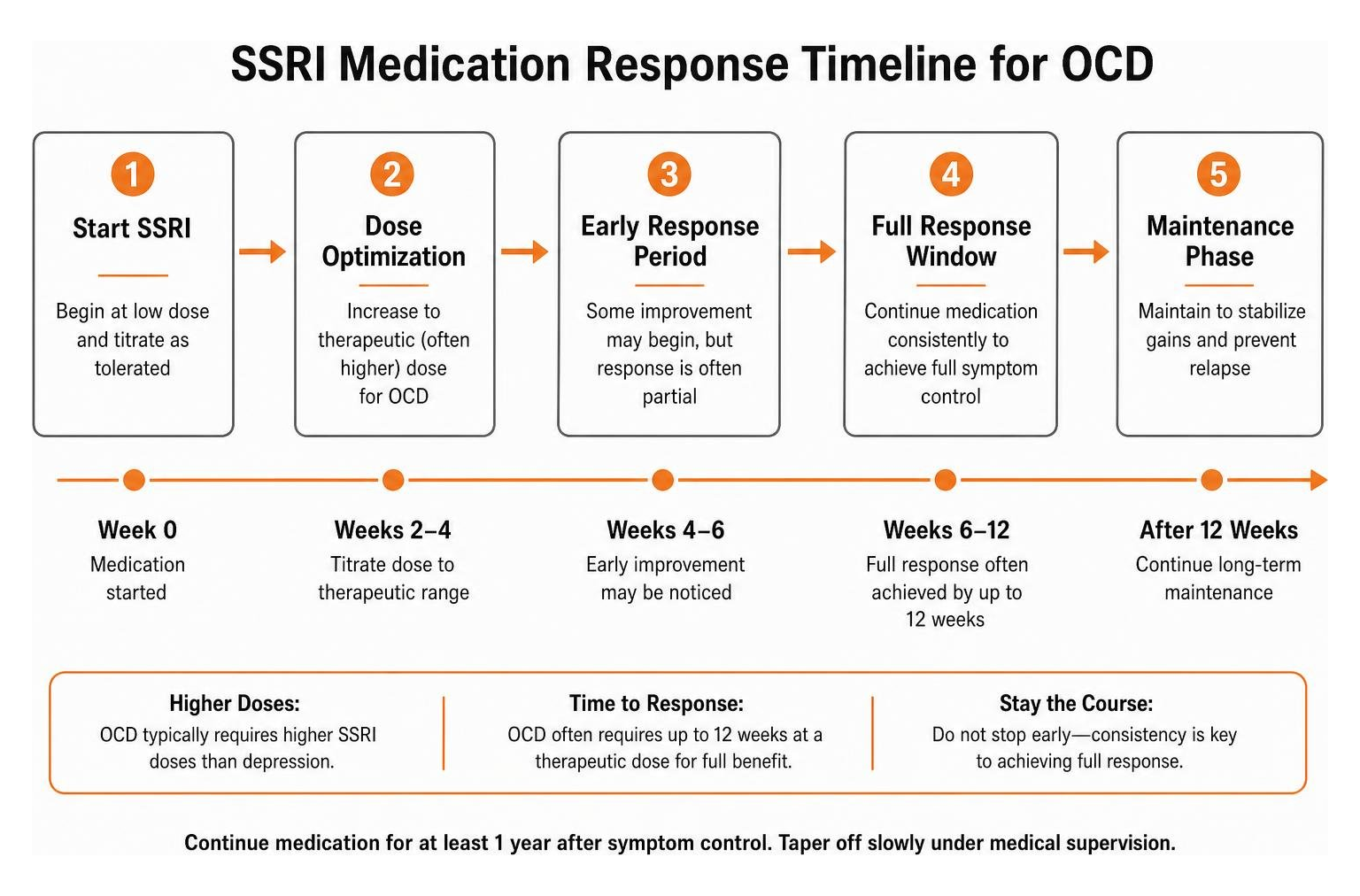
Once symptom control is established, guidelines recommend maintaining medication for at least one year to stabilize gains and prevent relapse. Medications should never be stopped abruptly; tapering off under medical supervision prevents discontinuation syndrome and reduces relapse risks. Learn more about therapeutic options at our dedicated services/behavior therapy program resource.
Advanced and Interventional Options for Treatment-Resistant OCD
When standard SSRI medications and intensive ERP do not yield sufficient relief, advanced interventional strategies offer new pathways to recovery. Modern research, detailed in the Clinical practice guidelines for obsessive-compulsive disorder: 2025 update – PMC, outlines options for treatment-resistant cases:
- Transcranial Magnetic Stimulation (TMS): Deep TMS uses targeted magnetic pulses to stimulate specific neural circuits implicated in OCD, such as the anterior cingulate cortex and medial prefrontal cortex. Three TMS systems (including BrainsWay and NeuroStar) hold FDA clearance for adult OCD. Research shows that roughly half of patients with treatment-resistant OCD experience significant symptom reduction following a course of TMS.
- Deep Brain Stimulation (DBS): Approved by the FDA under a Humanitarian Device Exemption for adults 18 and older with severe, intractable OCD, DBS involves surgically implanting electrodes into target brain regions to modulate abnormal neural signaling.
- Emerging Pharmacotherapies: Clinical trials are actively investigating novel agents, including glutamatergic modulators (such as ketamine infusions) and psychedelic-assisted therapy paradigms under strictly controlled research settings.
Practical Self-Care Strategies and Family Support
Professional treatment provides the foundation for recovery, but daily self-care habits help reinforce clinical progress and keep compulsions at bay.
Managing Intrusive Thoughts and Resisting Compulsions
Living with OCD means learning to change your relationship with intrusive thoughts. Research estimates that the human brain experiences over 6,000 thoughts per day—meaning unwanted thoughts are an ordinary part of human cognition. The key is how we respond to them:
- Accept Uncertainty: OCD thrives on demanding 100% certainty (“Are you sure you locked the door?”). Practice answering obsessive doubts with deliberate neutrality: “Maybe I did, maybe I didn’t.”
- Label the Thought: When an intrusive image appears, acknowledge it calmly: “There is an intrusive OCD thought again.” This creates distance between your self-identity and the symptom.
- Delay and Reduce Compulsions: If resisting a ritual completely feels too difficult, start by delaying it. Set a timer for 15 minutes before acting on the urge. Often, the urge crests and subsides during the wait.
- Avoid Using Self-Care as a Compulsion: Be mindful that wellness routines (like excessive research, repeated self-reassurance, or rigid cleaning rituals) do not turn into disguised compulsions.
- Use Mindful Distraction: Engage in absorbative activities like photography, crafting, or exercise to refocus attention without arguing with intrusive thoughts. To read more about evidence-based mind-body strategies, check out our guide on mind over matter with CBT and evidence-based therapy.
Coping Strategies for Families and Support Networks
OCD rarely affects just one person—it frequently impacts the entire household. Loved ones often fall into family accommodation, helping complete rituals, checking locks, or providing constant reassurance to ease the person’s distress.
While accommodating behavior comes from a place of love, it inadvertently feeds the OCD cycle by confirming that the obsession was dangerous.

Effective family support strategies include:
- Establishing clear, compassionate limits around reassurance seeking.
- Participating in family psychoeducation to understand how compulsions work.
- Encouraging the individual to practice their ERP homework exercises.
- Joining dedicated family support groups through organizations like the International OCD Foundation to share experiences and coping tools.
Frequently Asked Questions About OCD Treatment
What is the primary first-line treatment for OCD?
The established first-line treatment for OCD is Exposure and Response Prevention (ERP)—a specialized form of Cognitive Behavioral Therapy (CBT)—either alone or in combination with a Selective Serotonin Reuptake Inhibitor (SSRI) medication. ERP helps individuals confront distress-inducing thoughts without performing compulsive rituals, rewiring the brain’s alarm response over time.
How long does it take for OCD medication to work?
Unlike medication for general anxiety or acute stress, SSRIs prescribed for OCD require higher doses and longer response windows. Patients typically need to take an SSRI consistently for 8 to 12 weeks at therapeutic target dosages before observing maximum symptom relief. Maintenance treatment is generally recommended for at least one year following stabilization.
What treatments should be avoided for OCD?
Psychotherapy modalities that involve unguided talk therapy, deep memory regression, classical psychoanalysis, EMDR, hypnotherapy, or brainspotting are not evidence-based for core OCD symptoms and can sometimes increase symptom severity by encouraging compulsive over-analysis. Additionally, standalone benzodiazepines should be avoided as a primary treatment due to risk of dependence and lack of anti-obsessional efficacy.
Conclusion: Taking the First Step Toward OCD Recovery
Finding the best way to treat ocd involves pairing scientifically proven therapies with compassionate, individual care. Whether you are experiencing intrusive thoughts for the first time or seeking advanced interventional solutions for long-standing symptoms, evidence-based care can bring relief and help you regain control over daily life.
At Oak Health Center, we provide comprehensive, compassionate mental healthcare tailored to your needs. With convenient locations across Southern California—including Beverly Hills, Fullerton, Laguna Hills, Rancho Cucamonga, and South Pasadena—as well as statewide virtual care across California, taking the next step is straightforward and accessible.
Find compassionate therapy services tailored to your needs and reach out to our clinical team today to begin your recovery journey.