


Build an OCD Care Plan That Fits Your Life
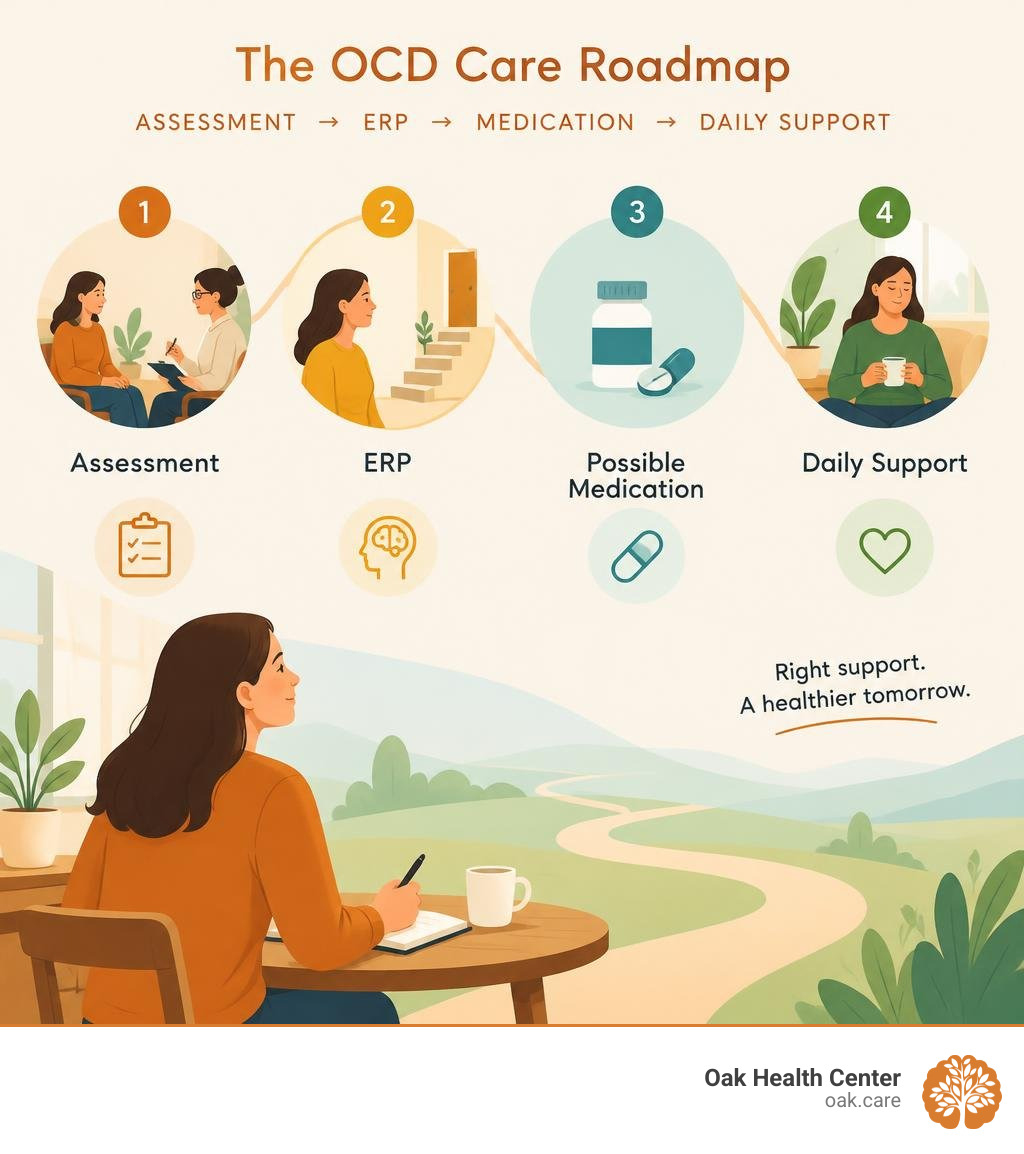
A practical OCD care plan starts with an assessment, then pairs treatment with support you can use day to day. Ask a qualified mental health professional about cognitive behavioral therapy (CBT) with exposure and response prevention (ERP). If symptoms are harder to manage, a prescriber can help you decide whether medication also makes sense. Between appointments, notice what triggers your distress and practice the steps you agree on with your therapist.
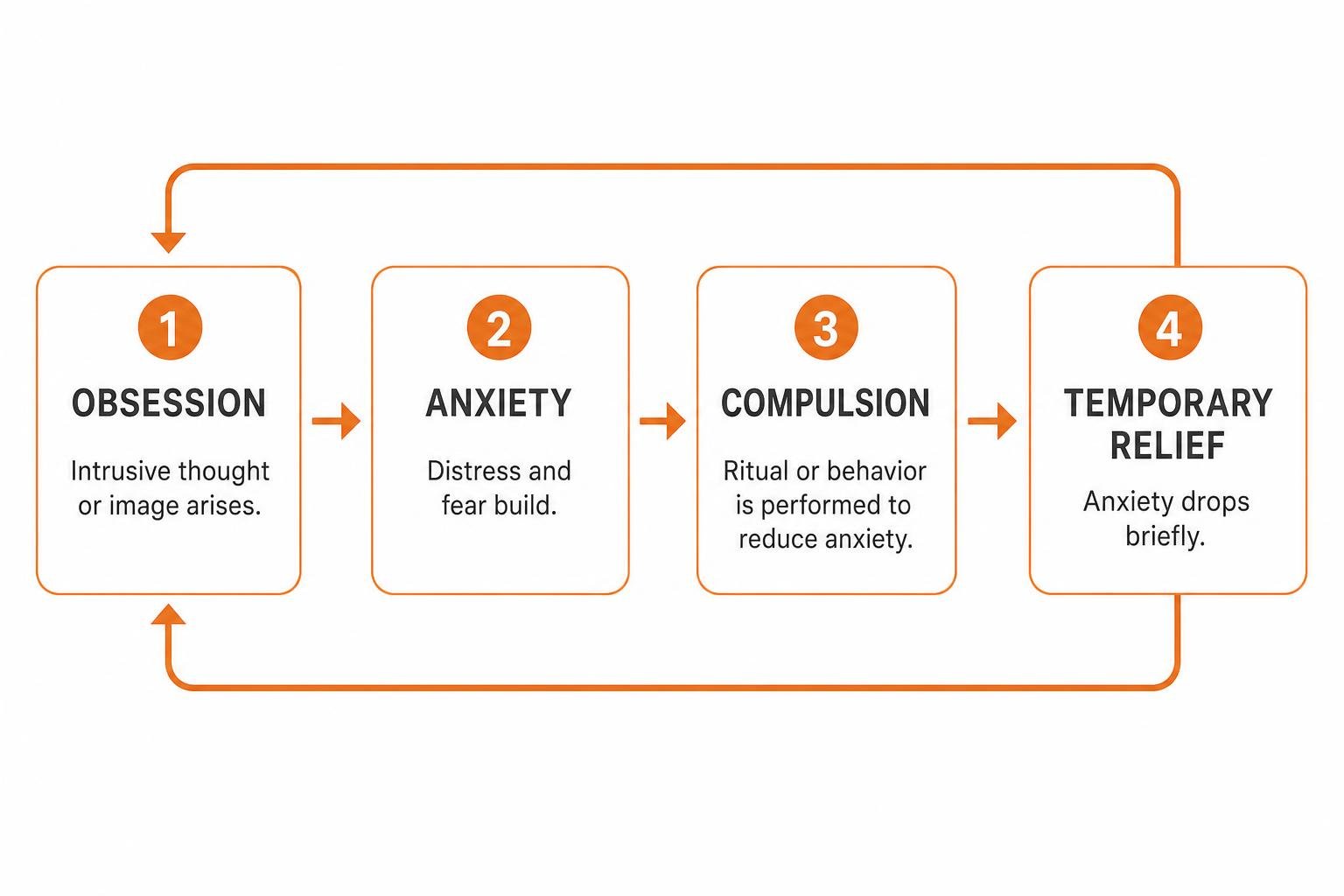
OCD can pull you into a cycle: an unwanted thought brings anxiety, and a ritual offers brief relief before the worry returns. The goal is not to stop every unwanted thought. It is to change how you respond, with support that fits your needs and schedule.
I’m Andrew Brewer, Practice Manager at Oak Health Center, where I work with clinical teams to improve how people access and experience care. I bring that practical lens to questions like “my ocd care”: what support is available, and how can you make it work in everyday life?
Understanding Clinical Treatment and My OCD Care Options
Living with obsessive-compulsive disorder can feel like carrying a radio tuned to maximum volume, constantly broadcasting static, alarm bells, or worst-case scenarios. Research shows that an average person experiences over 6,000 thoughts each day. Most people have occasional thoughts that feel strange, distressing, or completely out of character. For someone with OCD, the brain treats these ordinary mental blips as urgent emergencies requiring immediate action.
When building a personalized roadmap, understanding the ultimate guide to OCD treatment options helps you separate evidence-based methods from temporary fixes. Effective treatment does not involve magical thinking or endless willpower battles. Instead, clinical care relies on a stepped-care model that adjusts intensity based on how much OCD impacts your daily life.

A comprehensive clinical assessment by a trained mental health professional marks the starting line. During this evaluation, clinicians evaluate the nature of your obsessions (recurrent, intrusive thoughts, images, or urges) and compulsions (repetitive physical or mental actions designed to reduce distress). From there, your care team tailors a multi-layered intervention plan.
Evidence-Based Psychotherapy and ERP in My OCD Care Plan
The gold standard for OCD psychotherapy is Cognitive Behavioral Therapy (CBT), specifically an evidence-based approach known as Exposure and Response Prevention (ERP). Rather than trying to suppress intrusive worries—which usually makes them bounce back stronger—ERP teaches your brain that uncertainty and discomfort are not emergencies.
In our behavior therapy program, ERP begins with identifying your primary triggers and mapping them on a distress hierarchy. Under clinical guidance, you gradually expose yourself to situations or thoughts that provoke anxiety while choosing not to perform the compulsive ritual.
Through mind over matter with CBT and evidence-based therapy, clients learn cognitive restructuring alongside behavioral challenges. For people experiencing mild to moderate symptoms, a standard treatment protocol typically involves 8 to 20 structured therapy sessions, paired with targeted home practice between appointments. Over time, your nervous system habituates to the distress, and the compulsive urge loses its grip.
Medication Management and Pharmacotherapy
When OCD symptoms are moderate to severe, combining therapy with pharmacotherapy often provides the best foundation for recovery. The first-line medications for OCD are Selective Serotonin Reuptake Inhibitors (SSRIs).
SSRIs help regulate serotonin pathways in the brain, reducing the raw intensity of intrusive alarms so that ERP exercises feel manageable. However, the timeline for OCD medication differs from standard depression treatment:
- Patience is essential: It frequently takes up to 12 weeks of consistent SSRI use under close medical supervision to experience noticeable therapeutic benefits.
- Duration: Most clinical guidelines recommend maintaining effective medication for at least one full year to consolidate progress and minimize the risk of relapse.
- Collaboration: Any medication adjustments should always be managed alongside your psychiatrist or psychiatric nurse practitioner to fine-tune dosage and monitor potential side effects.
Core Strategies for Navigating Intrusive Thoughts and Daily Distress
Therapy sessions provide the blueprint, but daily life is where recovery is won. Managing intrusive thoughts requires shifting your relationship with your mind from an adversarial fight to one of calm observation.

One valuable technique is creating psychological distance. Instead of viewing a distressing thought as a personal truth, try naming the pattern. Some people playfully name their OCD voice (e.g., calling it “The Overprotective Alarm” or a fictional character) to remind themselves that the thought is just faulty wiring, not a character flaw. Practicing acceptance of uncertainty—reminding yourself, “Maybe my hands are dirty, maybe they aren’t, and I can handle not knowing right now”—is central to recovery.
For additional everyday coping tools, reviewing self-care for OCD from Mind offers practical grounding exercises that keep you anchored in the present moment.
Breaking the Compulsion Cycle Through Exposure
Compulsions offer fleeting relief, but they feed the OCD cycle long-term. To break this loop, you can implement gradual response prevention strategies:
- Delay the Urge: If you feel the need to check a lock, wash your hands, or seek reassurance, set a timer for two minutes before acting. Gradually stretch this pause to five, ten, and twenty minutes.
- Reduce the Ritual: Perform the compulsion with less rigidity. If you typically wash your hands three times, reduce it to one standard wash.
- Resist Digital Checking: Digital devices often become modern venues for compulsive checking, scrolling, or reassurance-seeking. Setting firm boundaries around online activity helps curb these invisible rituals.
Integrating practical anxiety coping skills used in modern therapy gives you alternative ways to process physiological tension without resorting to rituals.
Cultivating Everyday Wellbeing and Mindful Self-Care
General physical wellness creates biological resilience against anxiety spikes. Prioritizing consistent sleep hygiene, balanced nutrition, regular physical activity, and time in nature directly supports nervous system regulation. Engaging in creative hobbies, sensory distractions, and mindful breathing also redirects attention away from repetitive thought loops.
However, a word of caution: self-care can itself become compulsive if turned into a rigid rule. If missing a meditation session or eating off-schedule causes an OCD panic spike, it is no longer self-care—it has morphed into a ritual. Genuine self-care is flexible, gentle, and forgiving.
Structuring a Long-Term Support Ecosystem for Lasting Recovery
Recovery from OCD is not a solo journey. Long-term wellness relies on building a robust support network of family, friends, peer groups, and clinical specialists.
Learning how therapy helps people living with OCD involves looking beyond symptom reduction to focus on value-driven living, healthy communication, and boundary setting. Educating loved ones about OCD is crucial; well-meaning friends and family often inadvertently feed compulsions by providing repeated reassurance. Replacing reassurance-seeking with open, supportive check-ins empowers lasting autonomy.
| Coping Approach | Focus & Mechanism | Best Used For |
|---|---|---|
| Self-Guided Coping & Grounding | Grounding objects, delay tactics, lifestyle balance, and mindfulness. | Managing mild daily distress and maintaining general wellness between sessions. |
| Exposure & Response Prevention (ERP) | Systematic exposure hierarchies and intentional response prevention. | Directly breaking the clinical obsession-compulsion cycle and retraining fear responses. |
| Medication Management | SSRIs and psychiatric care to balance neurochemistry. | Reducing baseline symptom intensity to make behavioral therapy accessible and sustainable. |
What to Expect When Designing My OCD Care Journey
When you begin establishing my ocd care routines, knowing what to expect in your first therapy appointment removes the intimidation factor. During intake, you and your clinician will explore your history, identify specific triggers, and set meaningful life goals.
Understanding how to treat OCD and find the best therapist near you ensures you connect with a provider specialized in evidence-based modalities like ERP and CBT.
Frequently Asked Questions About OCD Management
How long does it take for OCD treatments to show noticeable benefits?
While individual timelines vary, structured CBT with ERP typically demonstrates measurable symptom reduction within 8 to 20 weekly sessions when paired with consistent home exercises. For those utilizing pharmacotherapy, SSRIs usually take between 8 to 12 weeks to show meaningful therapeutic improvements, with treatment typically maintained for a year or more.
Can daily self-care routines accidentally become compulsive behaviors?
Yes. When self-care routines become rigid, rule-bound, or driven by fear (e.g., “If I don’t meditate for exactly 30 minutes, something terrible will happen”), they have transformed into compulsions. Healthy self-care remains flexible and adaptable.
When should someone transition from self-help strategies to specialized therapy?
If intrusive thoughts and compulsive behaviors consume more than an hour a day, cause significant emotional distress, or interfere with work, school, and relationships, it is time to seek professional support. Comprehensive mental health services provide the structured clinical care necessary to regain daily function.
Conclusion
Living well with OCD is entirely possible. Recovery does not mean never having an intrusive thought again; it means building the skills, confidence, and physiological resilience to let those thoughts pass without letting them dictate your life.
At Oak Health Center, we provide compassionate, personalized care across our Southern California locations in Beverly Hills, Fullerton, Laguna Hills, Rancho Cucamonga, and South Pasadena, alongside statewide virtual telehealth across California. Whether you are seeking diagnostic clarity, medication management, or dedicated ERP support, explore our psychotherapy services to take the next step toward lasting recovery today.