


Obsession Treatment: Where to Start
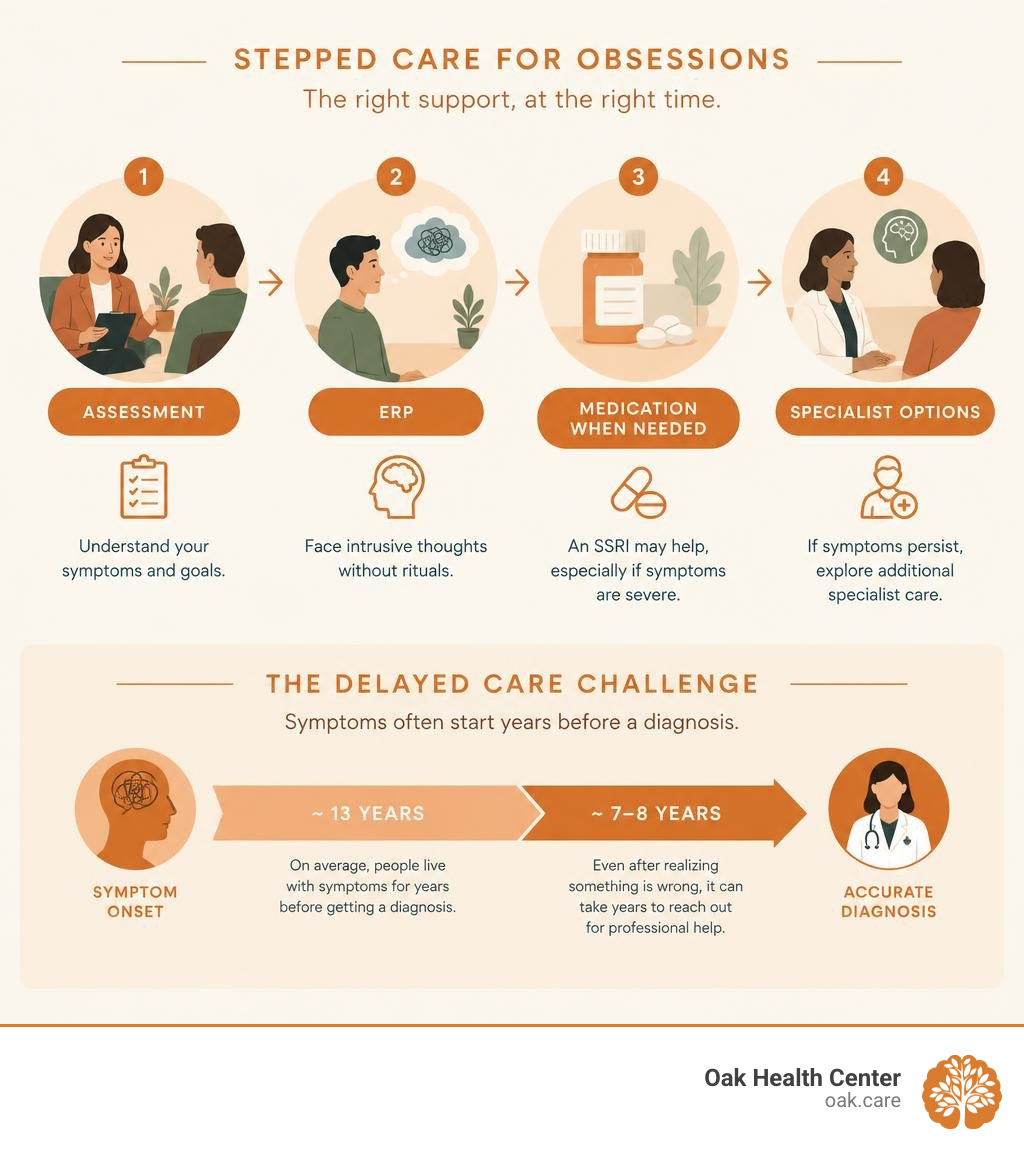
Obsession treatment usually starts with exposure and response prevention (ERP), a therapy that helps you face intrusive thoughts without doing the rituals that follow them. A clinician may also recommend an SSRI medication, especially if symptoms are severe or therapy alone is not enough. If unwanted thoughts or repeated behaviors are disrupting your work, relationships, or daily life, ask for an OCD assessment. You do not need to wait until things get worse.
Obsessions can be hard to talk about, and some compulsions happen entirely in your mind. A good assessment helps clarify what is going on. From there, you and your clinician can choose a starting treatment, track your progress, and adjust the plan if needed.
At Oak Health Center, clear, accessible paths to obsession treatment help patients and families understand what to expect from assessment, therapy, and medication support.
Understanding Obsessions, Diagnostic Challenges, and Risks of Delayed Care
Obsessive-compulsive conditions are far more common than many realize, with a lifetime prevalence in the general population estimated between 1% and 3.2%—affecting roughly 2 out of every 100 people across the United States. Yet, behind these statistics lies a quiet crisis of delayed care. On average, individuals navigate intrusive, distressing symptoms for 13 years before receiving an accurate diagnosis. Even after recognizing that something is wrong, people often spend seven to eight years trying to cope before reaching out to a psychiatrist or physician.
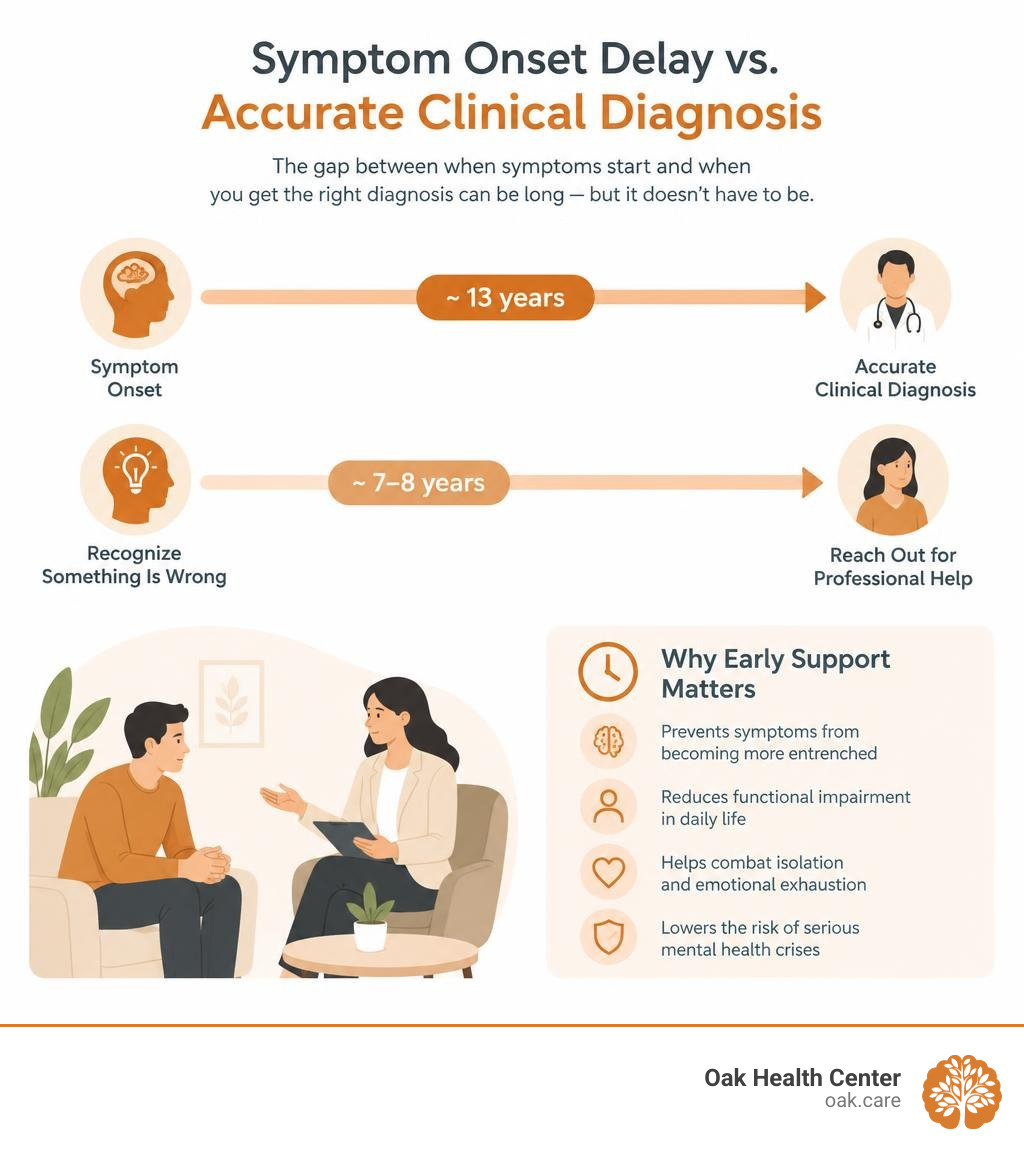
This diagnostic gap carries profound consequences. Untreated obsessions do not simply remain static; they tend to entrench themselves deeper into neural pathways, causing extensive functional impairment across academic, professional, and personal spheres. When individuals struggle in silence, isolation and emotional exhaustion mount. Research reveals that individuals living with untreated obsessive-compulsive patterns face a suicide risk approximately five times higher than the general population.
Understanding clinical obsessive-compulsive patterns requires recognizing that obsessions are fundamentally ego-dystonic. This means the intrusive thoughts, images, or urges directly contradict a person’s core values, character, and desires. Whether the themes revolve around taboo harm, contamination, blasphemy, or relationship doubts, the sufferer finds them deeply abhorrent. Differentiating these intrusive phenomena from generalized anxiety, post-traumatic stress, or psychosis is crucial for initiating appropriate clinical care.
Recognizing the Cycle of Intrusive Thoughts and Compulsions
The mechanism of an obsession follows a predictable, exhausting neurobiological loop. An internal or external trigger sparks an intrusive thought, which the brain’s cortico-striato-thalamo-cortical (CSTC) circuitry misinterprets as an immediate, catastrophic threat. This misfire causes a massive surge in anxiety and physiological distress.
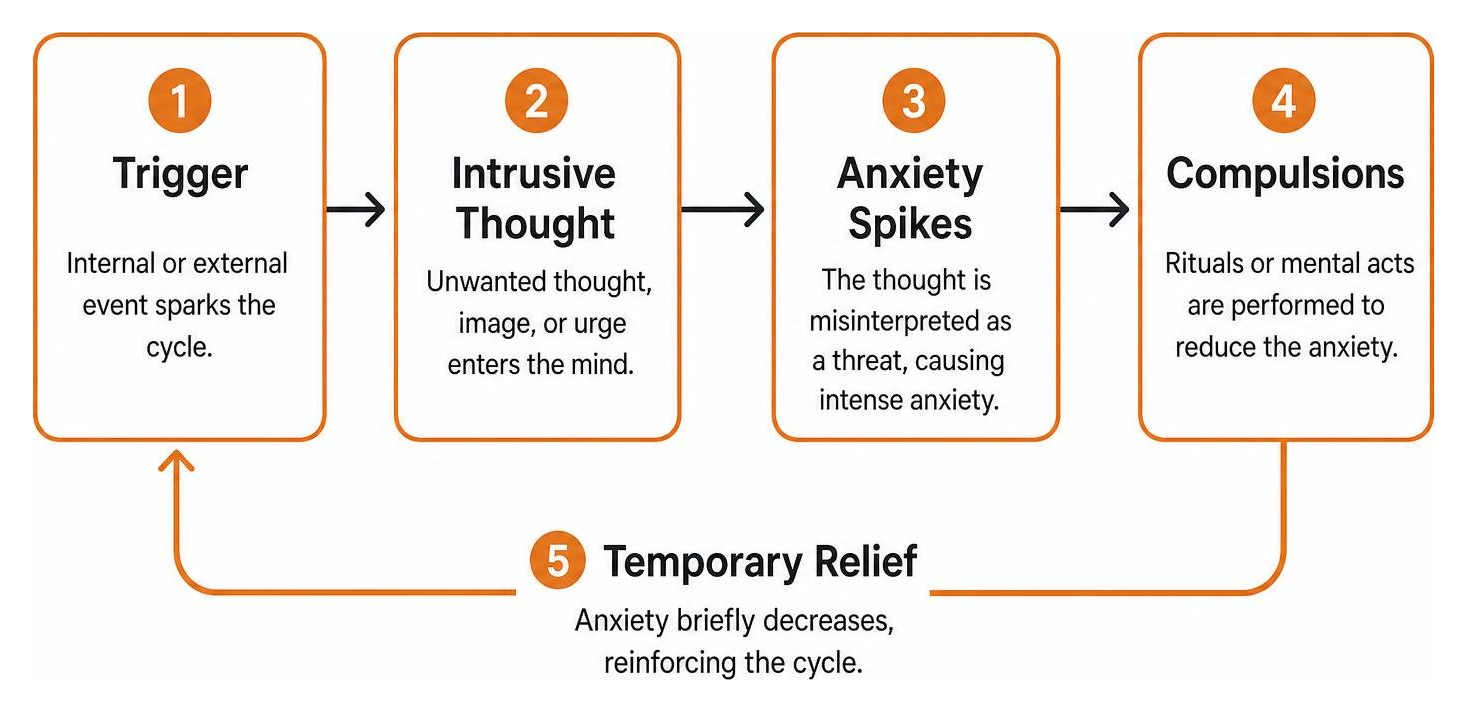
To neutralize this spike in terror, the individual performs a compulsion—such as physical checking, washing, ordering, or covert mental rituals like repeating phrases or reviewing memories. While the compulsion provides fleeting relief, it inadvertently reinforces the brain’s belief that the original thought was dangerous. In clinical diagnostic assessments, clinicians utilize structured tools like the Yale-Brown Obsessive Compulsive Scale (Y-BOCS) to measure the severity, time consumption, and interference of these cycles to establish an accurate baseline.
Overcoming Clinical Misdiagnosis and Assessment Barriers
One of the greatest obstacles to timely care is symptom concealment. Because obsessions often touch on disturbing themes—such as fears of accidentally harming a loved one or violating moral codes—individuals frequently experience intense shame and hide their internal experiences.
Furthermore, general clinical screening can fail when practitioners mistake mental compulsions for generalized rumination or major depressive disorder. Standardized screening tools like the Obsessive-Compulsive Inventory (OCI-4) help bypass this hurdle by asking targeted questions about distress and neutralizing behaviors. Integrating evidence-based cognitive interventions early in the diagnostic pathway ensures that individuals receive specialized interventions rather than standard talk therapies that inadvertently encourage compulsive analysis.
First-Line Obsession Treatment: Exposure Therapy and Pharmacotherapy
When addressing clinical obsessions, modern psychiatry and behavioral psychology rely on a stepped-care framework rooted in neuroplasticity. First-line treatments aim to alter how the brain processes fear signals and recalibrate serotonin signaling within hyperactive neural loops.

The two gold-standard first-line interventions are Exposure and Response Prevention (ERP) and high-dose Selective Serotonin Reuptake Inhibitors (SSRIs). Clinicians frequently deploy them as monotherapies for mild-to-moderate presentations or combine them for moderate-to-severe symptoms.
| Treatment Modality | Mechanism of Action | Typical Response Time | Key Strengths | Considerations |
|---|---|---|---|---|
| ERP Therapy | Promotes inhibitory learning and uncouples triggers from rituals | 8–16 weeks | High durability; low relapse rate post-treatment | Requires active willingness to tolerate short-term distress |
| SSRI Monotherapy | Modulates serotonin reuptake in CSTC brain circuits | 8–12 weeks | Reduces baseline obsession frequency and anxiety spikes | Higher dosages required than for depression; potential side effects |
| Combined (ERP + SSRI) | Dual biological symptom dampening and behavioral relearning | 8–12 weeks | Highest response rate in severe or treatment-resistant cases | Requires coordination between therapist and prescriber |
Exposure and Response Prevention (ERP) as Primary Obsession Treatment
Exposure and Response Prevention is a specialized behavioral therapy designed to systematically break the obsession-compulsion link. Through structured evidence-based exposure protocols, patients work alongside a trained therapist to confront feared thoughts, objects, or situations (exposure) while actively choosing to refrain from performing neutralizing rituals (response prevention).
ERP does not rely on simple habituation—the outdated idea of waiting until anxiety naturally fades away. Instead, modern protocols leverage inhibitory learning theory (Roh et al., 2023). This approach teaches the prefrontal cortex to build new, safety-oriented neural associations that override old threat responses, expanding the patient’s capacity to tolerate uncertainty.
Exposures are delivered in two primary formats:
- In-Vivo Exposures: Confronting physical triggers in the real world, such as touching an unwashed doorknob or leaving an item slightly out of order.
- Imaginal Exposures: Utilizing detailed audio scripts or written narratives to confront feared worst-case scenarios that cannot be safely created in real life.
For individuals seeking structured support across California, our specialized behavior therapy protocols provide dedicated behavioral roadmaps designed to dismantle compulsive cycles step by step.
Medications and SSRIs for Symptom Reduction
Pharmacotherapy serves as a powerful biological stabilizer. The FDA has approved five specific antidepressants for obsessive-compulsive symptoms: fluoxetine, fluvoxamine, paroxetine, sertraline, and the tricyclic antidepressant clomipramine.
Unlike treatments for major depressive disorder, managing obsessions pharmacologically typically demands significantly higher dosages and longer trial periods. While depression might respond within four to six weeks, an adequate trial for obsessions requires 8 to 12 weeks at therapeutic ceilings. SSRIs work by blocking the reuptake of serotonin in the synaptic cleft, gradually desensitizing presynaptic autoreceptors and restoring balance to communication pathways in the brain. Navigating these options is part of our comprehensive OCD treatment approaches, helping clients establish steady biological footing alongside their therapy.
Second-Line and Neuromodulation Options for Resistant Symptoms
While first-line therapies provide life-changing relief for many, standard treatments are not universally curative on the first attempt. Between 40% and 60% of patients achieve only a partial response to initial SSRI and ERP regimens, and approximately 20% to 25% remain clinically resistant to standard frontline interventions (Roh et al., 2023).

When first-line treatments yield insufficient progress, stepped-care guidelines recommend escalating to second- and third-line strategies, including pharmacological switching, medication augmentation, and targeted neuromodulation.
Stepped-Care Escalation and Augmentation Strategies
If an initial SSRI trial fails to produce a 25% to 35% reduction on the Y-BOCS after 12 weeks at maximum tolerated doses, psychiatrists typically consider two primary pharmacological steps:
- Switching Agents: Transitioning to a different high-dose SSRI or switching to clomipramine, a potent serotonergic tricyclic antidepressant with robust efficacy.
- Antipsychotic Augmentation: Adding low-dose atypical antipsychotics—most notably aripiprazole or risperidone. These agents modulate dopamine pathways in the striatum, producing clinical response rates between 10% and 40% in previously resistant cases.
Additionally, emerging research highlights the role of glutamate dysregulation in the CSTC loop. Off-label augmentation with glutamate modulators, such as memantine, has shown promising safety and efficacy in clinical trials (Roh et al., 2023). Beyond pharmacology, clinicians evaluate systemic barriers, working closely with family members to eliminate unintended accommodation behaviors (such as family members providing repetitive reassurance or participating in rituals) that can inadvertently sustain symptoms.
Advanced Neuromodulation and Brain Stimulation
For severe, refractory obsessions that do not respond to multiple medication trials and intensive therapy, advanced neuromodulation offers non-invasive and surgical options to alter maladaptive brain circuitry directly (Roh et al., 2023).
- Transcranial Magnetic Stimulation (TMS): Deep TMS (dTMS) utilizes specialized magnetic coils to deliver targeted pulses to the anterior cingulate cortex and medial prefrontal cortex. With FDA clearance for obsessive-compulsive indications, approximately 50% of treatment-resistant patients achieve meaningful symptom reduction.
- Deep Brain Stimulation (DBS): An FDA-approved surgical option under Humanitarian Device Exemption (HDE) for severe, unyielding cases. DBS involves implanting microelectrodes into specific structures—such as the ventral capsule/ventral striatum—delivering continuous electrical pulses that normalize pathological circuit firing. Clinical data indicates that roughly two-thirds of DBS recipients experience substantial symptom relief.
Adjunctive Therapies and Building a Long-Term Care Plan
Achieving initial symptom relief is an incredible milestone, but building enduring wellness requires a comprehensive, multimodal approach. Adjunctive psychotherapies bolster standard ERP by targeting the emotional distress, perfectionism, and cognitive rigidity that often accompany chronic obsessions.
Integrating ACT, DBT, and Mindfulness into Obsession Treatment
While ERP directly targets behavioral response prevention, adjunctive therapeutic frameworks strengthen psychological resilience:
- Acceptance and Commitment Therapy (ACT): Rather than challenging the factual likelihood of an intrusive thought, ACT emphasizes cognitive defusion and values-based action. It teaches individuals to accept the presence of uncomfortable thoughts as harmless mental noise while pursuing meaningful life goals.
- Dialectical Behavior Therapy (DBT): DBT’s distress tolerance and emotion regulation modules provide essential coping skills for individuals who experience overwhelming emotional spikes during exposure exercises.
- Inference-Based CBT (I-CBT): This modality focuses on resolving the inferential confusion that triggers obsessions, helping patients recognize how their imagination misleads them into treating hypothetical doubts as immediate physical realities.
Engaging with long-term therapeutic support allows individuals to rebuild self-trust, repair relationships impacted by rituals, and rediscover everyday meaning beyond symptom management.
Developing a Personalized Relapse Prevention Plan
Long-term stability relies on a proactive maintenance strategy. Relapse is not a sign of failure; rather, it is an expected part of managing a chronic neurobiological vulnerability. A robust plan includes:
- Identifying Early Warning Signs: Tracking subtle behavioral shifts, such as creeping reassurance-seeking, subtle mental reviewing, or avoiding minor triggers.
- Maintenance Exposures: Scheduling regular self-directed exposures to maintain high uncertainty tolerance.
- Structured Medication Management: Avoiding abrupt medication cessation; any dose adjustments should occur gradually under close psychiatric supervision.
- Support Networks: Maintaining open dialogue with trusted loved ones and clinicians who understand the condition.
For a deeper look at day-to-day maintenance strategies, explore our practical field guide to staying well.
Frequently Asked Questions About Obsession Treatment
How Long Does It Take for Treatment to Reduce Obsessions?
Most individuals engaging in weekly, therapist-guided ERP begin experiencing measurable reductions in distress within 8 to 16 weeks. For pharmacological interventions with SSRIs, initial benefits typically emerge around weeks 8 to 12 at therapeutic dosages. Full neurobiological stabilization and behavioral mastery often develop over 6 to 12 months of sustained practice.
Can ERP Therapy Be Practiced Effectively at Home?
Yes. In fact, home practice is essential for long-term recovery. While a licensed clinician guides assessment and in-office exposure design, the majority of neural relearning occurs when patients complete daily exposure homework in their home, workplace, or community settings. Self-directed tracking apps and exposure logs help maintain accountability between sessions.
What Should I Do If First-Line Medications Fail?
If an initial SSRI does not provide meaningful relief after a full 12-week trial at its maximum tolerated dosage, consult your psychiatrist to explore evidence-based escalation steps. These include switching to a secondary SSRI, initiating a clomipramine trial, or adding an augmenting agent like aripiprazole or memantine (Roh et al., 2023). For persistent cases, evaluating non-invasive neuromodulation like deep TMS is an excellent next step.
Conclusion
Living with intrusive thoughts can feel all-consuming, but clinical obsessions are highly treatable conditions. With accurate diagnosis, gold-standard ERP, personalized medication plans, and advanced neuromodulatory care, you can retrain your brain’s threat responses and reclaim a fulfilling life.
At Oak Health Center, we provide comprehensive, compassionate mental healthcare tailored to your unique journey. With convenient clinics across Southern California—including Beverly Hills, Fullerton, Laguna Hills, Rancho Cucamonga, and South Pasadena—as well as statewide virtual care throughout California, our multidisciplinary team is here to support you every step of the way. Connect with our team today to explore our compassionate outpatient psychotherapy and take your next step toward lasting relief.
References
Roh D, Jang KW, Kim CH. “Clinical Advances in Treatment Strategies for Obsessive-compulsive Disorder in Adults..” Clinical psychopharmacology and neuroscience : the official scientific journal of the Korean College of Neuropsychopharmacology, 2023. PMCID PMC10591165.