


Understanding Common and Hidden Anxiety Symptoms Women Experience
Anxiety symptoms in women often include ongoing physical and behavioral signs such as heart palpitations, digestive distress, sleep disruption, chronic muscle tension, persistent worry, and high-functioning overworking. While occasional nervousness before a deadline is normal, these symptoms reflect a nervous system that is stuck in high alert. At its core, anxiety triggers the body’s autonomic nervous system, activating the primitive fight-or-flight response. When mental or physical stressors persist, the nervous system remains in this protective state long after any real threat has passed.
For many women, this chronic activation manifests not just as psychological worry, but as deep physical and behavioral exhaustion. Because women often juggle multiple competing roles, these warning signs are easily dismissed as everyday burnout. Recognizing the difference between ordinary fatigue and chronic autonomic arousal is the first step toward reclaiming your health.
When the sympathetic nervous system stays perpetually switched on, it floods the body with adrenaline and cortisol. Over time, this leads to chronic fatigue that a full night’s sleep fails to fix, pervasive digestive distress (such as cramping, bloating, or irritable bowel patterns), and sudden chest tightness. Learning about recognizing severe anxiety symptoms helps demystify these physical alarms so you can seek appropriate support rather than suffering in silence.
Somatic and Physical Anxiety Symptoms Women Experience
The physical manifestations of anxiety can be intense and frightening. Many women present to primary care clinics or emergency departments convinced they are facing a medical emergency, only to learn their symptoms stem from intense nervous system dysregulation.
Common somatic symptoms include:
- Heart palpitations and rapid pulse: Sudden fluttering or pounding in the chest that occurs without physical exertion.
- Hyperventilation and air hunger: Feeling as though you cannot take a full, satisfying breath, leading to lightheadedness or dizziness.
- Tension headaches and jaw clenching: Involuntary muscle tightening across the scalp, neck, shoulders, and jaw (often leading to nighttime teeth grinding).
- Gastrointestinal disruption: Nausea, sudden stomach upsets, and erratic digestive flare-ups tied to the gut-brain axis.
- Persistent sleep disruption: Lying awake with racing thoughts or waking up abruptly at 2:00 a.m. with an elevated heart rate.
During acute surges of fear, these physical sensations can peak rapidly. Consulting a dedicated checklist for anxiety attack symptoms can help you identify whether what you are experiencing is an acute anxiety attack or a different physical health concern.
High-Functioning Behavioral Anxiety Symptoms Women Exhibit
Not all anxiety looks like overt panic or withdrawal. A significant number of women experience what clinicians refer to as high-functioning anxiety. On the outside, a woman with high-functioning anxiety appears accomplished, organized, dependable, and composed. On the inside, however, she is driven by a relentless fear of failure, judgment, or losing control.
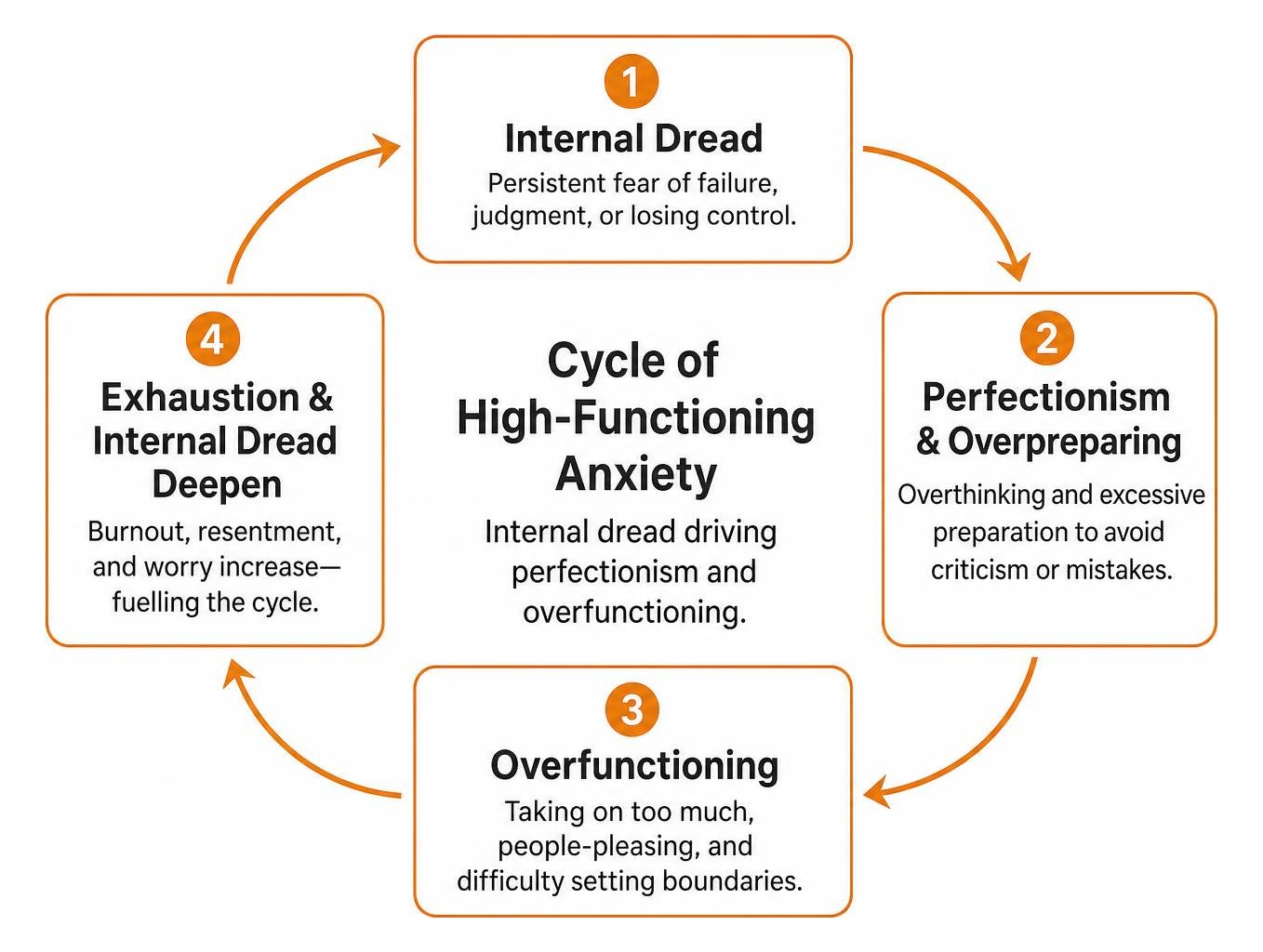
Key behavioral signs include:
- Overfunctioning: Taking on excessive responsibilities at work, at home, or in social circles because delegating feels unsafe or irresponsible.
- Chronic perfectionism and overpreparing: Spending hours fine-tuning tasks to avoid perceived criticism, often working late into the night.
- People-pleasing: Difficulty setting boundaries or saying “no,” followed by silent resentment and emotional exhaustion.
- Constant mental inventory: Maintaining a perpetual internal to-do list, feeling as though you have “47 browser tabs open” in your mind at all times.
- Inability to rest: Viewing leisure as lazy or risky, making true downtime feel physically uncomfortable.
This dynamic is particularly prevalent among leaders, caregivers, and executives. Exploring the patterns of anxiety in high-achieving professionals can reveal how external achievement often masks profound internal distress.
Why Women Face Higher Risks for Anxiety Disorders
Public health data consistently shows a substantial gender gap in mental health conditions: approximately 26.7% of U.S. women experience a mental health condition annually compared to 20.0% of men, and lifetime rates for generalized anxiety disorder, panic disorder, and specific phobias are roughly twice as high in women.
This increased vulnerability is not a sign of personal fragility; it is the outcome of a complex intersection between biology, neurochemistry, and societal demands:
- Neuroactive Steroid Sensitivity: Female reproductive hormones directly modulate central neurotransmitters like serotonin and gamma-aminobutyric acid (GABA). Fluctuations in these hormones can alter neural circuits governing fear, emotional reactivity, and stress resilience.
- Disproportionate Caregiver Burden: Women continue to carry the bulk of unpaid domestic labor, child-rearing, and elder care—an “invisible load” that generates chronic cognitive and emotional strain.
- Trauma and Interpersonal Stress: Statistically, women face higher rates of interpersonal violence, relational trauma, and gender-based discrimination, all of which prime the nervous system for hypervigilance.
- Cognitive Coping Styles: Women are more prone to rumination—repetitively analyzing stressors and potential negative outcomes—which can amplify anxiety cycles.
The FDA guidance on women and anxiety emphasizes that while stress is a common human reaction, clinical anxiety disorders represent diagnosable, treatable medical conditions. Clinicians evaluate these presentations against standardized DSM-5 clinical criteria to establish clear diagnoses and targeted care plans.
| Feature | Everyday Stress | Clinical Anxiety Disorder |
|---|---|---|
| Trigger | Clear, identifiable external stressor (e.g., job deadline) | Can occur without an obvious trigger; feels free-floating |
| Duration | Resolves once the stressor passes | Persists for months; chronic or recurring |
| Somatic Symptoms | Mild muscle tightness or temporary headache | Severe palpitations, chronic GI distress, shortness of breath |
| Impact on Function | Mildly challenging, but daily tasks continue | Impairs work, social life, relationships, or self-care |
| Thought Patterns | Proportional concern regarding the problem | Catastrophizing, pervasive dread, uncontrollable worry |
Clinical Classifications and Co-Occurring Conditions
Anxiety is not a monolithic diagnosis. In clinical practice, we evaluate several distinct diagnostic presentations:
- Generalized Anxiety Disorder (GAD): Characterized by excessive, uncontrollable worry about multiple everyday topics for at least six months. Lifetime prevalence is about 6% in women versus 3% in men.
- Panic Disorder: Characterized by recurrent, unexpected panic attacks accompanied by persistent concern about future attacks or behavioral avoidance. It is twice as prevalent in women.
- Social Anxiety Disorder & Specific Phobias: Involves an intense fear of social scrutiny or specific triggers (such as medical procedures or enclosed spaces). Specific phobias affect 12–27% of women compared to 6–12% of men.
- Agoraphobia: Fear or avoidance of environments where escape might be difficult or embarrassing during an anxiety episode.
Furthermore, anxiety rarely exists in total isolation. Many women experience overlapping mood disruptions, making identifying overlapping anxiety and depression symptoms critical for building a complete psychiatric profile. For a detailed breakdown of diagnostic subtypes, consult our in-depth guide to anxiety disorders.
The Hormonal Lifespan: Menstrual Cycles, Perinatal Phases, and Menopause
From puberty through postmenopause, a woman’s reproductive physiology undergoes constant cyclical and life-stage transitions. Far from being purely reproductive mechanisms, estrogen and progesterone act as powerful neuromodulators in the central nervous system.

Extensive psychiatric research on female lifespan anxiety highlights that the rate of hormone change—rather than baseline hormone levels—frequently triggers neurochemical instability. Estrogen supports serotonin synthesis and receptor sensitivity, while allopregnanolone (a metabolite of progesterone) interacts directly with GABA-A receptors, functioning much like the brain’s internal calming system. When hormone levels plummet, this neurochemical buffering drops, exposing the central nervous system to heightened anxiety.
Premenstrual Dysphoric Disorder (PMDD) and Cycle Tracking
While up to 80% of reproductive-age women experience at least one physical or emotional symptom during the luteal phase (the two weeks between ovulation and menstruation), 5% to 8% suffer from Premenstrual Dysphoric Disorder (PMDD).
PMDD is a severe neurobiological sensitivity to normal hormonal shifts. During the late luteal phase, affected women experience profound mood volatility, cyclical panic attacks, severe irritability, and deep existential dread that lifts within a few days of bleeding. Prospective daily tracking using tools like the Daily Record of Severity of Problems (DRSP) allows clinicians to confirm if symptoms strictly align with the menstrual calendar.
Perinatal, Postpartum, and Perimenopausal Windows
Hormonal transitions across life milestones represent specific windows of psychiatric vulnerability:
- Pregnancy: Anxiety affects up to 1 in 5 pregnant women. Persistent prenatal worry regarding fetal health or delivery can elevate maternal cortisol and increase the risk of adverse birth outcomes if left untreated.
- Postpartum: Following childbirth, estrogen and progesterone levels drop steeply within 48 hours. Postpartum anxiety—which is actually more common than postpartum depression—frequently involves distressing, intrusive thoughts regarding infant safety and hypervigilant insomnia.
- Perimenopause: The multi-year transition leading to menopause involves erratic swings in estradiol. Data from the Study of Women’s Health Across the Nation (SWAN) demonstrated that women are 40% more likely to experience clinical mood and anxiety spikes during perimenopause. Approximately 16.6% of perimenopausal women experience mild anxiety, and 4.4% develop moderate-to-severe symptoms alongside night sweats and sleep fragmentation.
Evidence-Based Treatments and Daily Coping Strategies
Anxiety disorders are among the most treatable mental health conditions. Comprehensive recovery involves a multi-pronged approach tailored to a woman’s specific biology, lifestyle, and clinical needs.
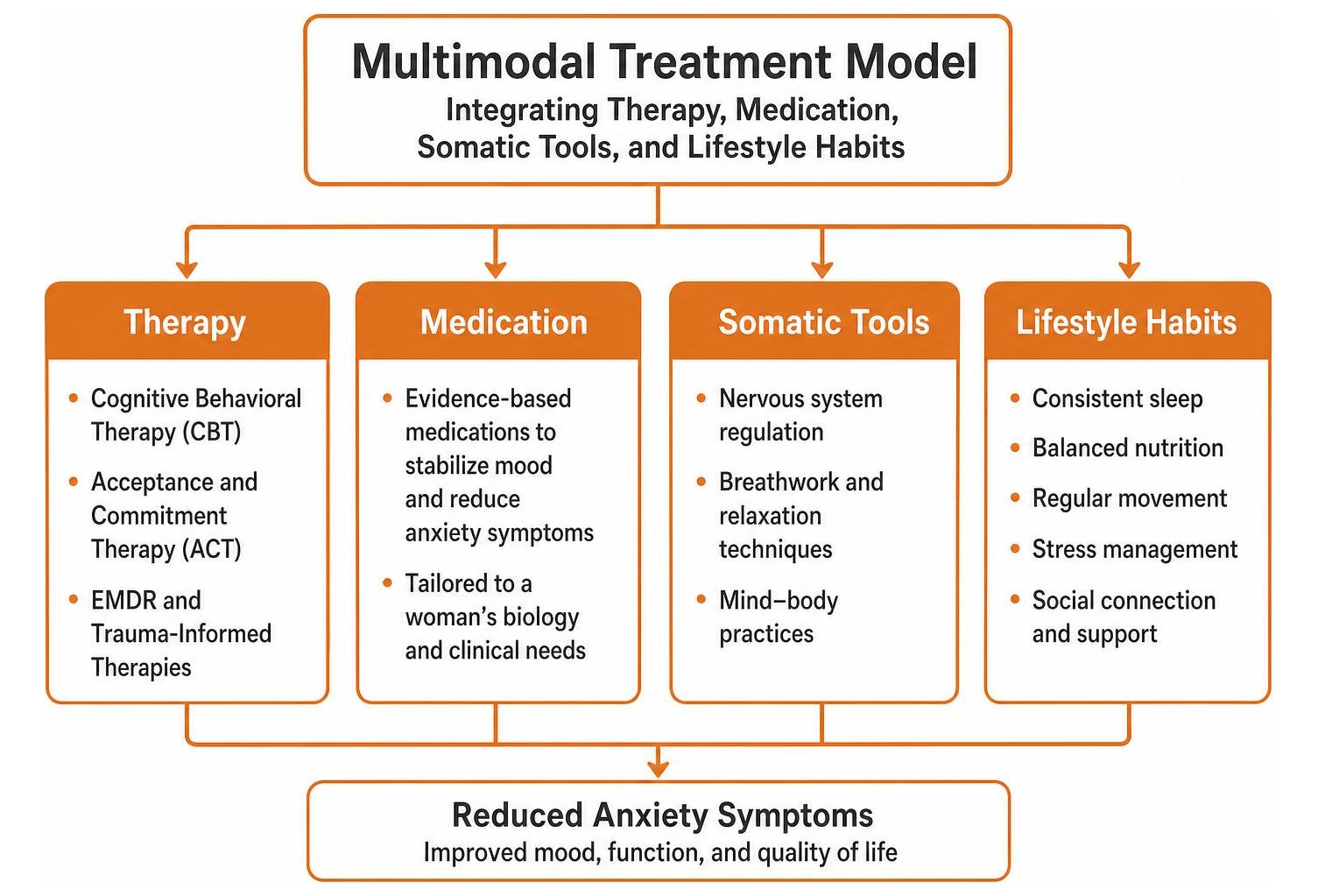
Evidence-Based Psychotherapies:
- Cognitive Behavioral Therapy (CBT): The gold standard for anxiety. CBT helps identify cognitive distortions, challenge automatic negative thoughts, and reduce avoidance through structured exposure.
- Acceptance and Commitment Therapy (ACT): Focuses on psychological flexibility, helping individuals accept anxious sensations without letting fear dictate their actions.
- EMDR and Trauma-Informed Therapies: Highly effective for processing unresolved trauma that keeps the nervous system hypervigilant.
- Explore our clinical overview of effective clinical anxiety therapy options for deeper insight into these modalities.
Targeted Pharmacotherapy:
- First-Line Medications: Selective Serotonin Reuptake Inhibitors (SSRIs) and Serotonin-Norepinephrine Reuptake Inhibitors (SNRIs) provide foundational neurochemical stabilization for both anxiety and co-occurring mood symptoms.
- Adjunctive Options: Medications like buspirone or non-habit-forming beta-blockers (such as propranolol) help manage acute physical symptoms like racing heart and trembling.
- Note: Always discuss medication safety with a licensed psychiatric provider, especially when planning pregnancy or breastfeeding.
Somatic and Nervous System Regulation:
- The Physiological Sigh: Two quick inhales through the nose followed by one long, slow exhale through the mouth rapidly re-engages the parasympathetic nervous system.
- Progressive Muscle Relaxation (PMR): Systematically tensing and releasing muscle groups to relieve unconscious bodily tension.
- Review our collection of modern anxiety coping skills for actionable somatic exercises.
Integrating Lifestyle Changes and Nervous System Regulation
Long-term anxiety management is supported by day-to-day lifestyle habits that promote nervous system equilibrium:
- Cycle-Aware Scheduling: If you experience luteal-phase dips, schedule demanding tasks during your follicular phase and prioritize restorative routines during the premenstrual window.
- Caffeine and Alcohol Moderation: Both substances directly dysregulate heart rate, sleep architecture, and neurotransmitter balance.
- Blood Sugar Stabilization: Irregular eating causes glucose crashes that mimic adrenaline rushes, triggering false-alarm anxiety. Pair complex carbohydrates with healthy fats and protein.
- Intentional Boundaries: Learn to treat rest not as a reward for finishing everything, but as an essential prerequisite for health.
Understanding how anxiety appears in everyday life makes it easier to catch subtle signs before they escalate into overwhelming episodes.
Frequently Asked Questions about Anxiety Symptoms in Women
How can I tell if my anxiety is caused by hormones or an anxiety disorder?
The clearest way to differentiate hormonal anxiety from a generalized disorder is through prospective symptom tracking. Track your physical and emotional symptoms daily on a calendar for two to three consecutive months. If your anxiety consistently surges during the luteal phase, postpartum window, or alongside perimenopausal cycle irregularities—and completely abates during other phases—it likely has a strong hormonal driver (such as PMDD). If excessive worry and somatic tension remain constant throughout the entire month regardless of your cycle, a generalized anxiety disorder may be the primary cause.
Why does anxiety often feel like a serious physical medical issue in women?
When anxiety triggers the sympathetic nervous system, it produces immediate physiological shifts: blood vessels constrict, heart rate accelerates, breathing becomes shallow, and muscles tighten. In women, this autonomic surge frequently manifests as chest tightness, lightheadedness, shooting pains in the jaw or shoulder, and severe nausea. Because these symptoms mirror cardiac or respiratory disorders, they feel genuinely life-threatening. A medical evaluation is always recommended to rule out physical conditions (like thyroid dysfunction or arrhythmias), after which specialized anxiety care can begin.
When is the right time to seek professional mental health support?
You should seek professional support whenever anxiety begins interfering with your daily functioning, work performance, personal relationships, or overall quality of life. If you have been experiencing persistent dread, sleep disruption, or physical symptoms for more than two weeks, or if you are experiencing frequent panic attacks or intrusive thoughts, reaching out to a mental health professional can provide clarity and relief.
Conclusion
Living with anxiety can make you feel disconnected from your body, drained of energy, and isolated in your struggles. But you do not have to carry this burden alone or accept constant tension as your baseline. By understanding how hormonal shifts, physical symptoms, and behavioral patterns intersect, you can take meaningful steps toward recovery.
At Oak Health Center, we provide comprehensive, compassionate mental healthcare across Southern California—including Beverly Hills, Fullerton, Laguna Hills, Rancho Cucamonga, and South Pasadena—alongside secure statewide virtual services throughout California. Our multidisciplinary team works with you to develop personalized treatment plans that honor your unique biological and psychological needs. If you are questioning whether your current experiences are manageable stress or something more, read our guide on navigating stress and anxiety attack symptoms to learn more about the path toward lasting relief.