


When Standard Antidepressants Stop Working: What You Need to Know
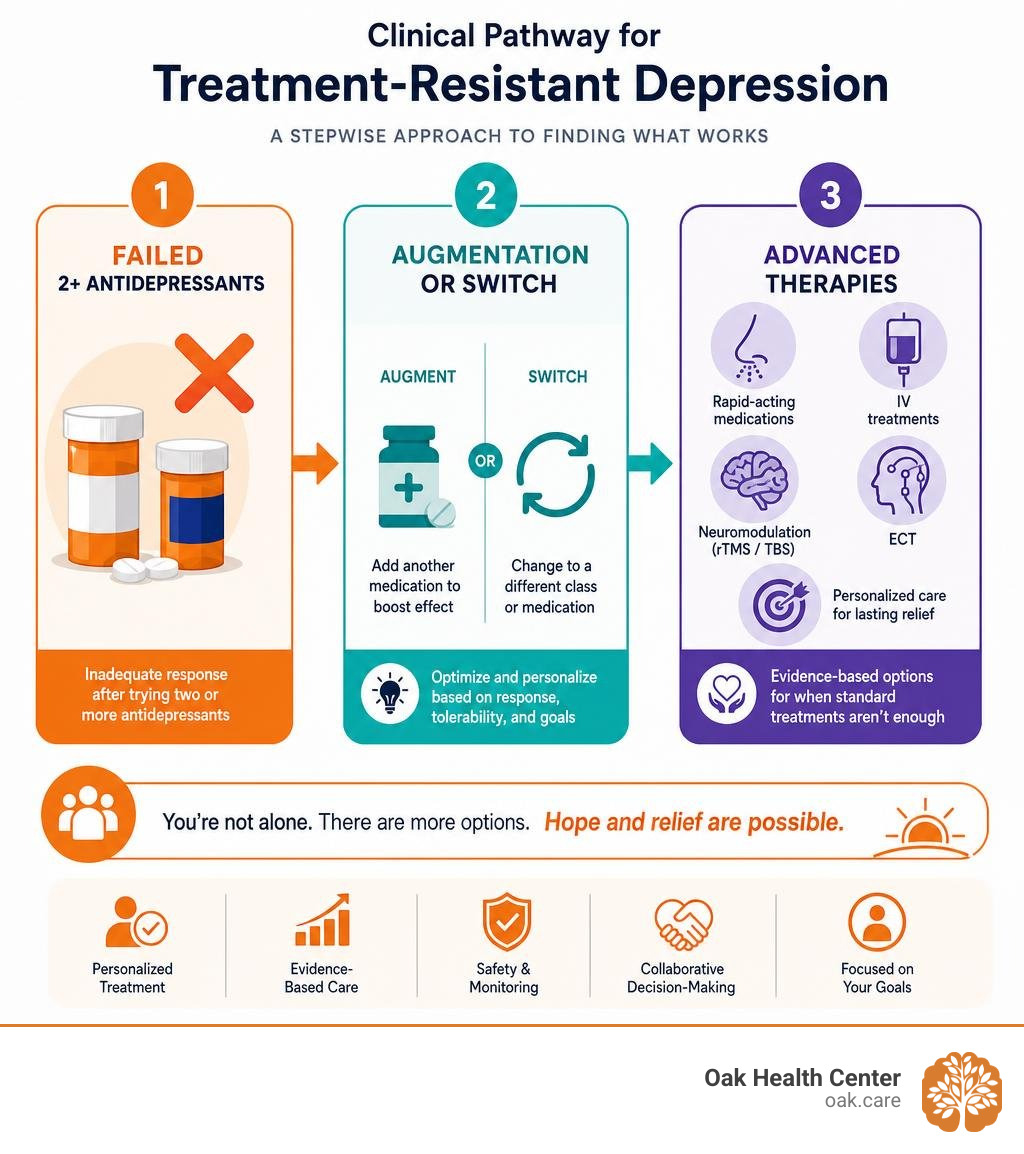
Finding the best antidepressant for resistant depression is one of the most pressing challenges in mental health care today — and if you’ve already tried two or more medications without relief, you’re far from alone.
Quick answer: The most evidence-backed options for treatment-resistant depression (TRD) include:
| Treatment | Type | Key Benefit |
|---|---|---|
| Aripiprazole (Abilify) | Atypical antipsychotic augmentation | Highest response rate among oral options (74.3% in VAST-D study) |
| Esketamine nasal spray (Spravato) | NMDA receptor antagonist | Rapid relief within 48 hours; FDA-approved for TRD |
| Quetiapine XR (Seroquel) | Atypical antipsychotic augmentation | 58.9% response rate; widely used |
| Olanzapine + fluoxetine (Symbyax) | Combination therapy | First FDA-approved pharmacotherapy for TRD |
| IV Ketamine | NMDA receptor antagonist | 71% response rate; fastest-acting option |
| ECT | Neuromodulation | Highest statistical efficacy of any TRD treatment |
| rTMS / TBS | Neuromodulation | Effective, well-tolerated, no systemic side effects |
About 30% of people diagnosed with major depressive disorder (MDD) meet the clinical threshold for treatment-resistant depression. That’s not a small number. And despite the intimidating label, “resistant” doesn’t mean “hopeless” — it simply means standard first-line medications haven’t worked yet, and it’s time to explore a structured set of more advanced options.
The encouraging reality is that a growing body of clinical research — from large-scale trials like STAR*D and VAST-D to recent head-to-head studies comparing esketamine against quetiapine — has produced clear, evidence-based guidance on what actually works when SSRIs and SNRIs fall short.
This article walks through those options, compares the evidence, and helps you have a more informed conversation with your provider.
I’m Andrew Brewer, Practice Manager at Oak Health Center, where I’ve helped grow and develop programs specifically aimed at complex cases — including TMS, psychiatry, and medication management for patients searching for the best antidepressant for resistant depression. I work closely with our clinical teams to make sure patients have access to the most current, evidence-based treatment pathways available.
Basic best antidepressant for resistant depression glossary:
- treatment resistant depression
- how to manage treatment for drug resistant depression
- new drug for treatment resistant depression
What is treatment-resistant depression (TRD) and how is it diagnosed?
In the mental health community, “treatment-resistant depression” is a term that can sound incredibly daunting. However, in clinical practice, it is simply a diagnostic threshold that signals it is time to move past basic, first-line treatments.
Formally, TRD is defined as a state where a person has tried at least two different standard antidepressant medications of adequate dosage and duration (typically 6 to 8 weeks per trial) during a single major depressive episode without experiencing significant symptom relief or remission.
Major depressive disorder itself is remarkably common, affecting 5% to 17% of people at some point in their lives. However, up to 70% of individuals will continue to experience burdensome, lingering symptoms despite receiving evidence-based first-line therapies. When standard selective serotonin reuptake inhibitors (SSRIs) or serotonin-norepinephrine reuptake inhibitors (SNRIs) fail to cross the “therapeutic threshold,” we must look deeper into the physiological and environmental root causes.
To understand why some individuals do not respond to standard medications, researchers point to several biological factors:
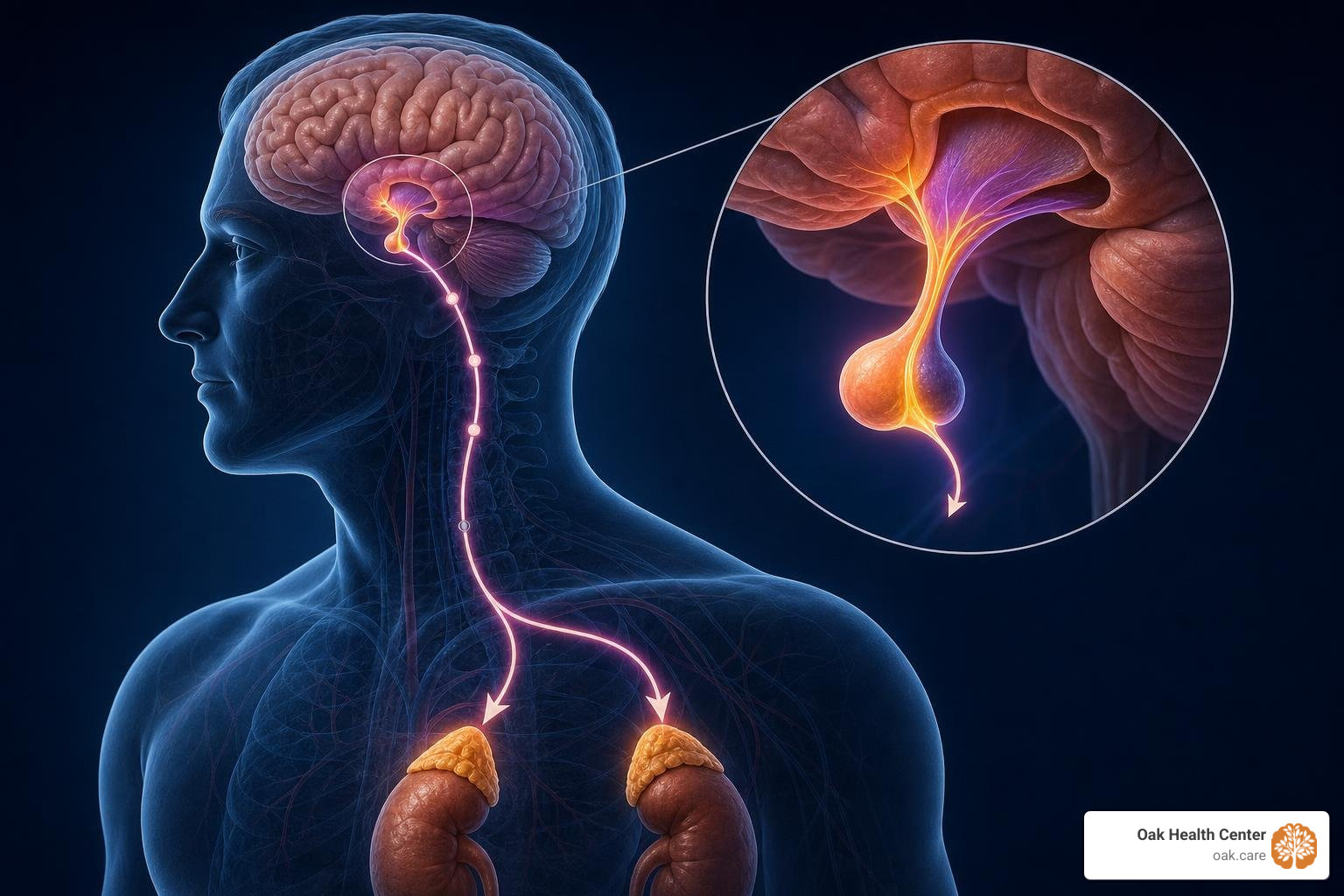
- HPA Axis Dysfunction: Chronic stress can overactivate the hypothalamic-pituitary-adrenal (HPA) axis, altering how the brain adapts to stress and dampening the effectiveness of traditional serotonergic medications.
- Physical Comorbidities: Underlying medical conditions, such as hypothyroidism or metabolic disorders, can mimic or actively worsen depressive symptoms, making standard antidepressants ineffective.
- Genetic Variations: Differences in how our bodies metabolize medications can mean a standard dose is either processed too quickly to be effective or too slowly, causing intolerable side effects.
If you are struggling to find relief, obtaining a thorough psychiatric diagnostic evaluation is the critical first step. For more details on what this diagnostic journey looks like, you can read our guide on What TRD really means and consult the Cleveland Clinic TRD Guide for a comprehensive clinical overview.
Evaluating the best antidepressant for resistant depression: Efficacy and options
When a first-line antidepressant fails to bring relief, a psychiatrist has three primary clinical pathways to choose from: optimizing the current dose, switching to a different class of antidepressant, or augmenting the treatment by adding a second medication.
The following sequential treatment selection diagram outlines the typical decision-making framework clinicians use to navigate these options:
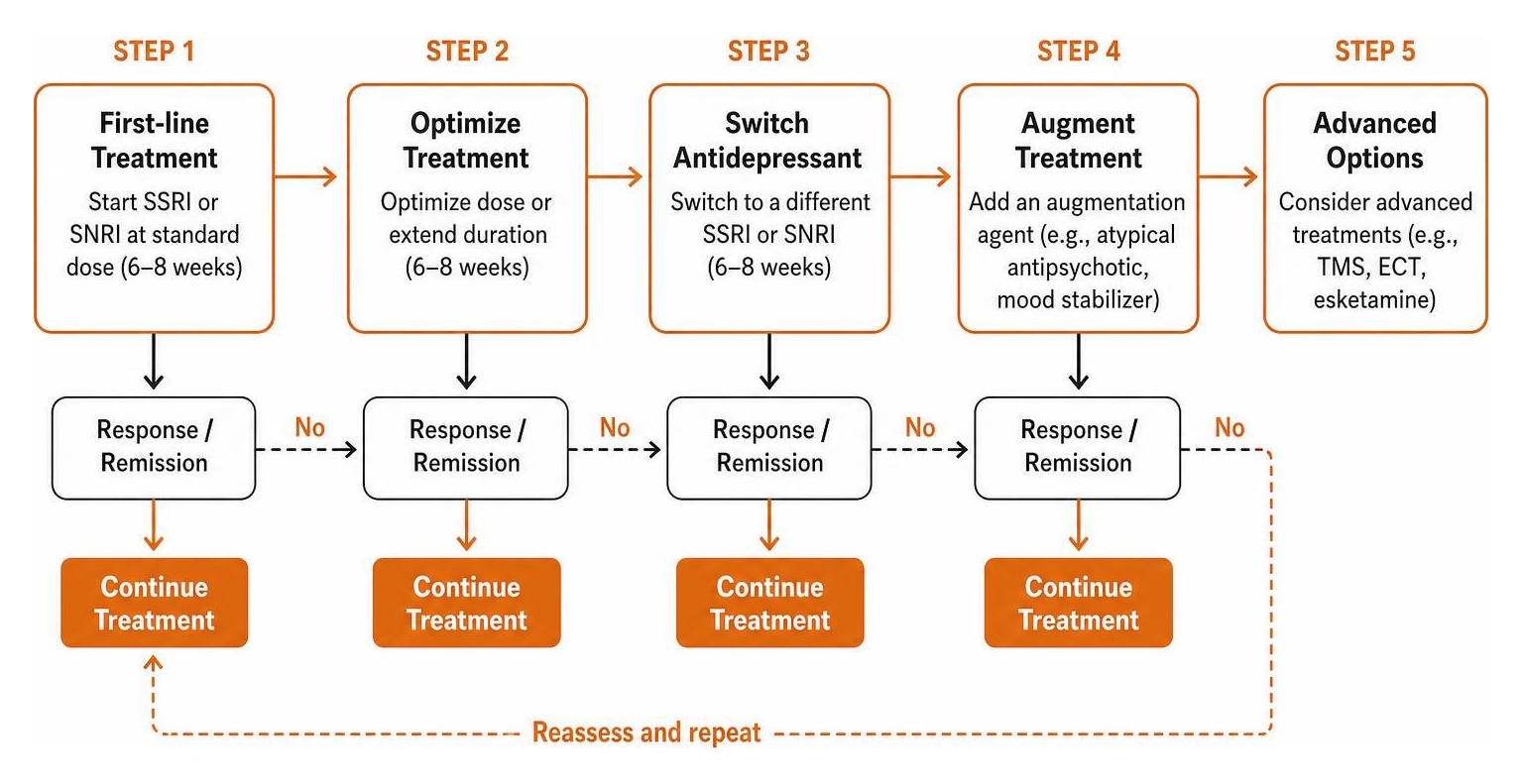
Many patients assume that if one antidepressant fails, the only option is to switch to another. However, clinical data repeatedly shows that simply switching from one standard antidepressant monotherapy to another often yields disappointing results. In fact, large-scale studies demonstrate that switching between different classes of standard antidepressants (such as switching from an SSRI like Zoloft to an SNRI like Effexor) yields modest remission rates of only about 20% to 28%.
Instead, clinical trials highlight the superior efficacy of augmentation strategies—adding a non-antidepressant medication (such as an atypical antipsychotic or a mood stabilizer) to your existing antidepressant.
Consider the hard data from major clinical trials:
- The VAST-D Study: This landmark trial compared veterans’ responses to three strategies: switching to bupropion, combining bupropion with an existing antidepressant, or augmenting with the atypical antipsychotic aripiprazole. Augmentation with aripiprazole resulted in a significantly higher response rate (74.3%) compared to combining medications (65.6%) or switching to bupropion alone (62.4%).
- The Han et al. Study: This clinical evaluation found that augmenting an existing antidepressant with aripiprazole led to a 60% response rate and a 54% remission rate, compared to just 32.6% and 19.6% respectively for patients who simply switched to a different standard antidepressant.
- Lithium Augmentation: Adding lithium to an antidepressant has long been a gold-standard strategy, yielding a 52% response rate compared to just 25% for a placebo in classic trials like those by Katona et al.
These findings are echoed in the Mayo Clinic Panel Insights, which emphasize that linear, one-size-fits-all guidelines often fail to address real-world clinical complexities. Instead, personalized medicine—which considers a patient’s age, metabolic health, and personal preferences—is essential. To explore these structured options further, take a look at our Ultimate Guide to TRD.
Why finding the best antidepressant for resistant depression requires looking beyond standard SSRIs
For decades, the psychiatric community relied heavily on the “monoamine hypothesis”—the theory that depression is primarily caused by a simple chemical imbalance of serotonin, norepinephrine, or dopamine in the brain. Standard SSRIs and SNRIs were designed specifically to target these neurotransmitters.
However, the landmark STAR*D study, which sequentially tracked thousands of patients through multiple levels of treatment, revealed a sobering truth: with each successive standard antidepressant trial, the likelihood of achieving remission drops significantly. If two standard medications have failed, the probability of a third standard oral antidepressant working is incredibly low.
This is because depression is far more complex than a simple lack of serotonin. Genetic factors play a massive role in how our bodies process these drugs. Some patients possess genetic variations that make them “ultra-rapid metabolizers,” meaning their bodies break down standard SSRIs before they ever reach a therapeutic level in the brain.
To find a medication that actually works, we must look beyond standard monoamine-targeting drugs and explore novel mechanisms of action, such as glutamatergic pathways or neuroplasticity-promoting agents. Learn more about matching your unique biology to the right medication in our guide to Finding your perfect match.
Comparing atypical antipsychotics to find the best antidepressant for resistant depression
If your provider recommends an oral augmentation strategy, the most common and evidence-backed choices are atypical antipsychotics (also known as second-generation antipsychotics, or SGAs). While originally developed to treat conditions like schizophrenia, at low doses, these medications act as powerful chemical boosters that amplify the brain’s response to your primary antidepressant.
According to a comprehensive Network meta-analysis of TRD treatments published in Neuropsychopharmacology, aripiprazole stands out as the most consistently effective oral augmentation agent under a strict definition of treatment resistance.
Here is how the top atypical antipsychotics compare:
- Aripiprazole (Abilify): Known for its high efficacy, aripiprazole acts as a partial dopamine agonist, helping to stabilize dopamine levels in the brain. However, it carries a unique side effect known as akathisia—an intense, uncomfortable sensation of inner restlessness and the urge to move. This side effect occurs in approximately 25% of patients taking aripiprazole, compared to just 4% on a placebo, and tends to increase at higher doses.
- Quetiapine XR (Seroquel): Augmentation with quetiapine XR (at 300 mg/day) has been shown to produce a solid 58.9% response rate and a 42.5% remission rate (significantly higher than placebo rates of 46.2% and 24.5%). While highly effective, quetiapine is highly sedating and carries a higher risk of weight gain and metabolic changes.
- Olanzapine-Fluoxetine Combination (OFC / Symbyax): This combination was the very first FDA-approved pharmacotherapy specifically indicated for treatment-resistant depression. Clinical trials show it achieves a 27% remission rate in TRD patients, compared to 17% for fluoxetine alone and 15% for olanzapine alone. The primary drawback of OFC is its substantial metabolic side-effect profile, which can include rapid weight gain and increased cholesterol and blood sugar levels.
Rapid-acting alternatives: Ketamine, esketamine, and neuromodulation
For many patients struggling with severe depression, waiting four to eight weeks for an oral medication to build up in their system is simply not an option—especially if they are experiencing an acute crisis or severe suicidal ideation. This is where rapid-acting, novel therapies have completely transformed the landscape of interventional psychiatry.
The most notable breakthroughs in this category target the brain’s glutamate system, specifically NMDA receptors, to rapidly promote synaptogenesis (the growth of new connections between brain cells).
- Intravenous (IV) Ketamine: Administered off-label in specialized clinics, IV ketamine infusions have demonstrated a staggering 71% response rate in patients with treatment-resistant depression in clinical trials (compared to 0% for a placebo). What makes ketamine truly is its speed: patients often report a dramatic lifting of depressive symptoms and suicidal thoughts within just a few hours of their first infusion.
- Esketamine Nasal Spray (Spravato): Esketamine is the S-enantiomer of ketamine and is FDA-approved specifically for treatment-resistant depression. In clinical trials, esketamine combined with an oral antidepressant achieved a 69.3% response rate (compared to 52.0% for a placebo plus antidepressant).
Because of the potential for temporary dissociation (feeling disconnected from your body or reality), sedation, and brief spikes in blood pressure, esketamine must be administered in a certified clinical setting under a strict FDA Risk Evaluation and Mitigation Strategy (REMS) program. Patients must remain at the clinic for a 2-hour monitoring period post-dose to ensure their safety.
For a deep dive into the clinical data, you can read the Esketamine meta-analysis or explore our Ultimate Guide to Ketamine Infusion.
Non-pharmacological procedures: TMS, ECT, and DBS
When medications fail entirely, or when a patient prefers to avoid systemic side effects altogether, advanced brain stimulation (neuromodulatory) therapies offer highly effective alternatives.
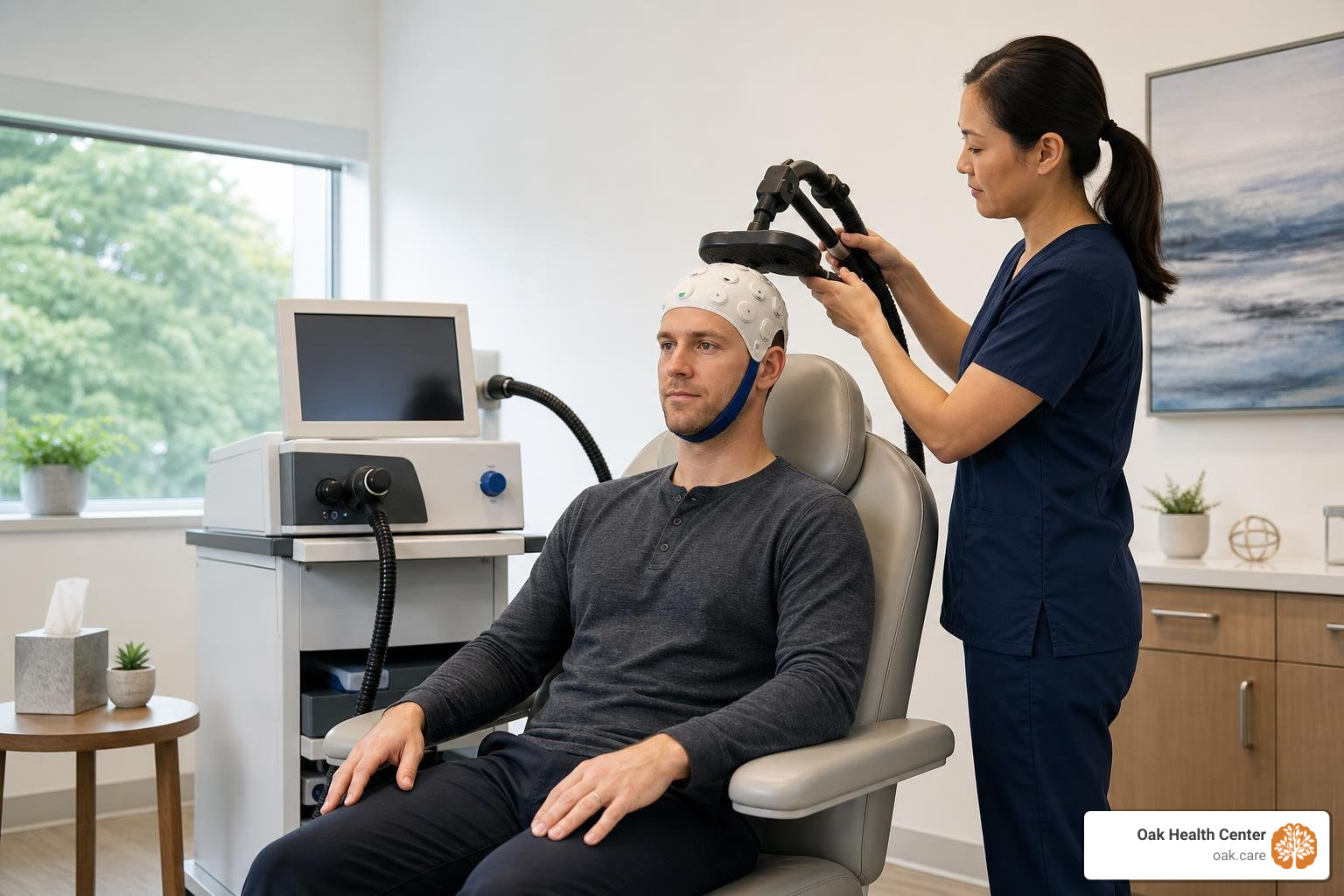
- Repetitive Transcranial Magnetic Stimulation (rTMS) & Theta-Burst Stimulation (TBS): TMS is a non-invasive, FDA-approved procedure performed while the patient is fully awake. It uses targeted magnetic pulses—similar to those of an MRI machine—to stimulate underactive mood-regulating regions of the brain. Because it does not require sedation and has zero systemic side effects (no weight gain, sexual dysfunction, or brain fog), it is highly preferred by patients. Theta-Burst Stimulation (TBS) is a newer, ultra-rapid form of TMS that delivers the same therapeutic benefits in sessions lasting just three to ten minutes. To understand the science behind this treatment, read about How TMS works.
- Electroconvulsive Therapy (ECT): Despite outdated pop-culture stigmas, modern ECT is a safe, highly controlled medical procedure performed under general anesthesia. It remains the single most effective treatment in all of psychiatry, with a massive statistical odds ratio for response of 12.86 in clinical network meta-analyses. It is typically reserved for severe, life-threatening, or catatonic depression.
- Deep Brain Stimulation (DBS): Currently reserved for highly severe, refractory cases under clinical trials, DBS involves surgically implanting a small device that sends direct electrical signals to specific, deep-seated emotional centers of the brain.
Frequently Asked Questions about treatment-resistant depression
How long should I wait before deciding an antidepressant isn’t working?
Standard clinical guidelines state that you must give an antidepressant trial at least 4 to 8 weeks at an optimized therapeutic dosage before concluding it is ineffective. Many patients stop taking their medications too early because they do not feel immediate changes or because they experience mild, temporary side effects in the first two weeks. It takes time for these medications to reach a stable “therapeutic threshold” in your brain chemistry. Always consult your provider before adjusting your dose or stopping a medication.
What are the main side effects of aripiprazole augmentation?
While aripiprazole is a highly effective augmentation agent, its most common side effect is akathisia (a distressing physical restlessness or inability to sit still), which affects roughly 25% of patients. Other potential side effects include mild fatigue, insomnia, blurred vision, and a risk of modest weight gain. These side effects are often dose-dependent, meaning they can frequently be managed by working with your doctor to find the lowest effective dose.
Is esketamine nasal spray more effective than oral antipsychotics?
Yes, according to the landmark ESCAPE-TRD study (a Phase 3b randomized, active-controlled trial), esketamine nasal spray combined with an SSRI/SNRI was statistically superior to extended-release quetiapine augmentation. At week 8, 27.1% of patients in the esketamine group achieved complete clinical remission, compared to 17.6% in the quetiapine group. Furthermore, by week 32, the remission rate rose to 49.1% for the esketamine group, and patients on esketamine experienced significantly lower rates of treatment discontinuation due to side effects.
Conclusion
Living with treatment-resistant depression can feel like an exhausting, uphill battle, but the clinical reality in July 2026 is clearer than ever: “resistant” does not mean treatable options do not exist. From advanced atypical antipsychotic augmentation and rapid-acting esketamine nasal spray to non-invasive neuromodulation like TMS, modern psychiatry has a robust toolkit designed specifically to help you find relief when standard oral medications fail.
At Oak Health Center, we believe in simplifying your access to compassionate, cutting-edge psychiatric support. We offer personalized, comprehensive care plans tailored to your unique biological and genetic profile. Whether you prefer to visit us in person at one of our five Southern California locations—Beverly Hills, Fullerton, Laguna Hills, Rancho Cucamonga, or South Pasadena—or utilize our convenient statewide virtual services across California, our dedicated team of psychiatrists, nurse practitioners, and therapists is here to walk alongside you.
You do not have to navigate this journey alone. When you are ready to take the next step toward a personalized treatment plan, we invite you to Schedule a psychiatry consultation with us today.