


What a Psychology Assessment Can Tell You
A psychology assessment brings together an interview, relevant history, and sometimes standardized tests to understand your symptoms, strengths, and daily challenges. Unlike a quick screening quiz, it looks at the whole picture. The findings can help clarify a diagnosis and guide treatment or practical support at work or school.
If anxiety, low mood, or trouble focusing is affecting your day, you do not need to know which test you need. Start by describing what has changed and what you hope to understand; a qualified professional can decide which parts of an assessment would be useful.
I’m Andrew Brewer, Practice Manager at Oak Health Center, where I work with clinical staff to improve how people access and move through care. That operations experience shapes this guide to psychology assessment; qualified clinicians handle the testing, interpretation, and diagnosis discussed below.
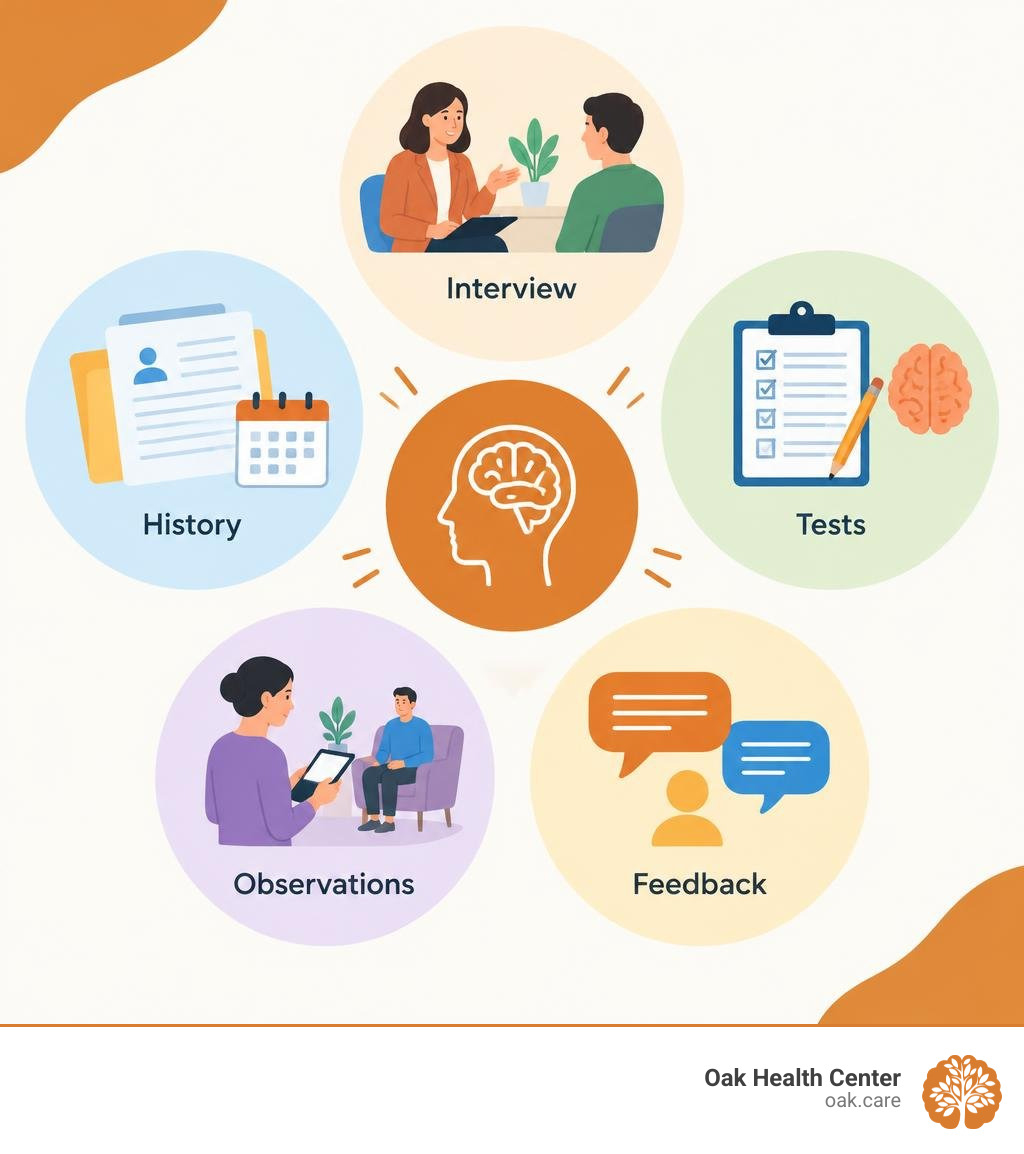
Psychological Testing vs. Psychology Assessment: Core Differences
It is common to hear the terms “psychological testing” and “psychological assessment” used interchangeably, but in clinical practice, they refer to distinctly different parts of the evaluation process. Testing is the administration of specific instruments, whereas an assessment is the broader, integrative process that puts those results into the context of your life.
Testing is largely focused on measurement: gathering data via questionnaires, performance tasks, and psychometric tools. Assessment, however, is problem-solving. It requires a clinician to synthesize test scores with developmental background, clinical observations, personal history, and interpersonal dynamics.
At Oak Health Center, our clinicians provide comprehensive psychological assessment services designed to look far beyond simple numbers to uncover the root causes of cognitive, behavioral, and emotional challenges.
| Feature | Psychological Testing | Psychology Assessment |
|---|---|---|
| Primary Scope | Administering and scoring specific standardized tools | Comprehensive evaluation of whole-person functioning |
| Methodology | Standardized instruments, self-report scales, computer tasks | Clinical interviews, records review, testing batteries, behavioral observations |
| Data Produced | Raw scores, standard scores, percentile ranks | Diagnostic synthesis, cognitive profiles, customized treatment plans |
| Role of Clinician | Technician or examiner administering protocols | Licensed psychologist interpreting data within life context |
| Clinical Outcome | Specific metric or symptom severity rating | Actionable roadmap for therapy, medical care, or institutional accommodations |
Understanding Standardized Psychological Testing
Standardized psychological tests are norm-referenced instruments. This means an individual’s performance is objectively compared against a large, representative sample of peers of the same age or educational background.
These tools rely on rigorous psychometric properties, specifically reliability (the consistency of the test results across time and administration) and validity (the degree to which the test measures what it claims to measure). When an evaluator administers validated psychological assessment measures, they follow strict, uniform protocols so that the resulting data remains unbiased and scientifically sound.
The Comprehensive Nature of a Psychology Assessment
A full assessment uses test data as just one piece of a complex puzzle. Psychologists integrate testing metrics with a detailed clinical interview, developmental records, medical history, and collateral reports from teachers, partners, or physicians.
This holistic approach builds a complete biopsychosocial formulation. By looking at how biological factors, psychological patterns, and social environments interact, the clinician creates an accurate diagnostic synthesis that explains not just what symptoms are present, but why they are occurring and how best to resolve them.
Common Types of Diagnostic Tools and Inventories

A comprehensive evaluation battery rarely relies on a single tool. Instead, psychologists choose an array of instruments tailored to your specific referral questions. If you are exploring early concerns, identifying early mental health screening options can often serve as an initial starting point before moving into formal diagnostic testing.
Cognitive and Academic Achievement Measures
Cognitive batteries assess intellectual capabilities, neurological processing, and problem-solving styles. The Wechsler Adult Intelligence Scale-IV (WAIS-IV) is widely utilized to assess intellectual ability across four core domains:
- Verbal Comprehension Index (VCI): Measures verbal reasoning, concept formation, and acquired knowledge.
- Perceptual Reasoning Index (PRI): Examines nonverbal fluid reasoning, spatial processing, and visual-motor integration.
- Working Memory Index (WMI): Evaluates the capacity to hold, manipulate, and process information in immediate awareness.
- Processing Speed Index (PSI): Assesses the speed of mental and graphomotor processing.
Standardized scores categorize intellectual ability into clear descriptive classifications:
- 130 and above: Very Superior (98th to 99.9th percentile)
- 120 to 129: Superior (91st to 97th percentile)
- 110 to 119: High Average (75th to 90th percentile)
- 90 to 109: Average (25th to 73rd percentile)
- 80 to 89: Low Average (9th to 23rd percentile)
- 70 to 79: Borderline (2nd to 8th percentile)
- 69 and below: Extremely Low (Below the 2nd percentile)
To evaluate academic functioning alongside cognitive potential, clinicians frequently use achievement batteries like the Woodcock-Johnson Tests of Achievement (WJ-III). These tools evaluate academic fluency in reading, mathematics, written language, and oral expression.
The Relative Proficiency Index (RPI) within the Woodcock-Johnson illustrates how easily an individual handles academic tasks compared to peers. For example, an RPI of 0/90 to 3/90 indicates severely impaired functioning where academic demands in that specific domain feel nearly impossible without structured interventions.
Mood, Personality, and Behavioral Screening Tools
Mood inventories and behavioral scales help quantify the frequency and intensity of emotional symptoms. Standardized screeners like the Patient Health Questionnaire-9 (PHQ-9) and Generalized Anxiety Disorder-7 (GAD-7) evaluate depressive and anxiety symptoms against established clinical thresholds. Tools like the Burns Depression Inventory and Burns Anxiety Inventory rate symptom frequency on a 0-to-3 scale, identifying behavioral barriers that may disrupt employment or relationships.
For deeper clinical insight, evaluators administer comprehensive personality inventories, trauma scales such as the PCL-5, and targeted ADHD rating inventories that assess executive dysfunction across both childhood and adult environments. These tools support routine mental health screening protocols by establishing baseline severity markers that track improvement over time.
The Step-by-Step Clinical Evaluation Process

Undergoing an evaluation is a structured, collaborative journey designed to provide clarity rather than stress.
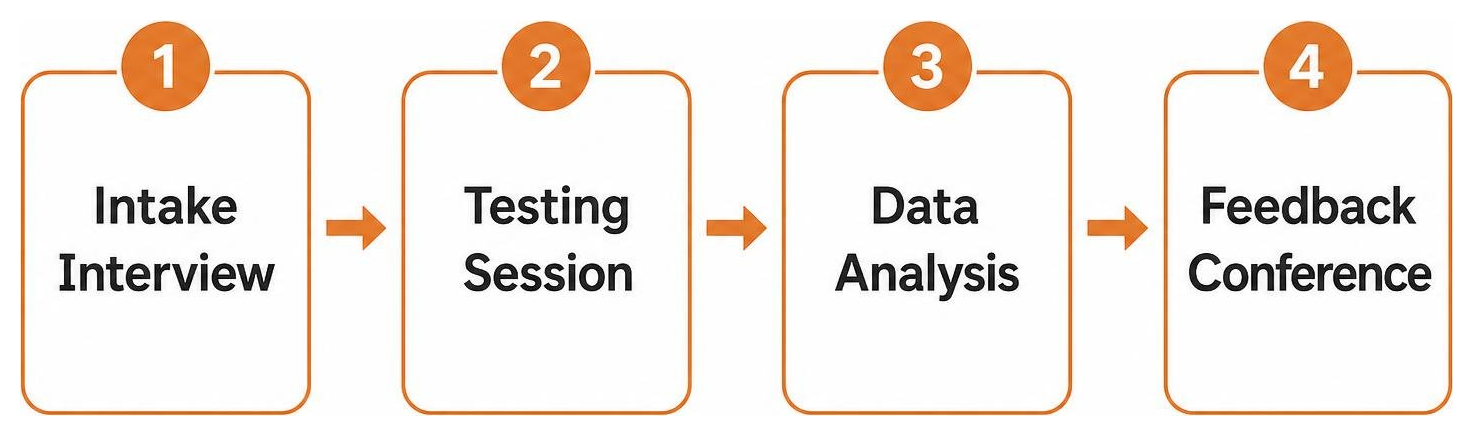
Preparing for Your Initial Psychology Assessment
The assessment begins with clarifying the referral question—the primary reason you are seeking help. During the intake phase, you will participate in a detailed clinical interview covering your medical history, family dynamics, schooling, career milestones, and current challenges. Understanding what happens during your initial consultation will help you feel grounded and prepared.
You do not need to study or practice for your assessment. In fact, reviewing test materials beforehand can distort your natural response patterns and invalidate the results. Ensure you get a restful night of sleep, eat a balanced meal, bring any corrective eyewear or hearing aids, and arrive ready to engage openly.
Standard Scores, Percentiles, and Data Interpretation
After testing concludes, your psychologist scores and analyzes the data using psychometric baselines. Raw test scores are converted into standardized metrics, typically featuring a mean score of 100 with a standard deviation of 15.
Clinicians translate these numbers into percentile ranks and clinical severity bands using standardized clinical assessment batteries. If you score in the 75th percentile, it means you performed equal to or higher than 75% of individuals in your normative peer group. Evaluators review these patterns using established clinical interpretation reference guidelines to identify distinct discrepancies between your cognitive potential and your daily output.
Functional Limitations and Tailored Intervention Planning
The most valuable outcome of an evaluation is turning diagnostic data into practical, everyday support. Once an evaluation establishes clear insights, individuals can transition seamlessly into a structured psychotherapy process tailored specifically to their cognitive profile and emotional goals.
Evaluating Workplace and Educational Functional Domains
Psychological assessments measure functional limitations that impact school, vocational training, and everyday life. Clinicians often use the World Health Organization Disability Assessment Schedule 2.0 (WHODAS 2.0) and functional rating scales to assess capability across seven core functional domains:
- Mobility: Physical and mental stamina required to navigate professional or educational environments.
- Self-Direction: The capacity to initiate, plan, organize, and execute complex daily responsibilities independently.
- Self-Care: Maintaining personal health, hygiene, and emotional equilibrium during stressful periods.
- Interpersonal Skills: Navigating social communication, workplace collaboration, and peer relationships effectively.
- Communication: Receptive and expressive capacity to convey and process complex information.
- Work Tolerance: Sustaining mental focus, emotional regulation, and productivity across extended periods.
- Work Skills: The ability to learn, master, and generalize specialized vocational tasks.
Accommodations for ADHD, Mood Disorders, and Trauma
Identifying functional limitations enables clinicians to outline specific, legally protected accommodations under the Americans with Disabilities Act (ADA) or Section 504 plans:
- Attention-Deficit/Hyperactivity Disorder (ADHD): Recommendations often include extended time on exams, quiet workspaces to reduce distractibility, task breakdown protocols, and structured digital organizational systems.
- Major Depressive Disorder: Interventions may feature flexible scheduling during symptom flare-ups, gradual return-to-work pacing, and modified shift hours to combat severe morning fatigue.
- Post-Traumatic Stress Disorder (PTSD): Accommodations often emphasize predictable routines, designated low-stimulation rest zones, and trauma-informed communication adjustments.
If assessment findings point to complex neurological or neurochemical contributions, knowing when to see a psychiatrist is essential for considering medication management alongside therapy. Patients can also explore comparing psychiatric nurse practitioners and psychiatrists to determine the right medical provider for their ongoing treatment plan.
Professional Standards and Clinical Administration Guidelines
Psychological evaluations require high levels of clinical precision, advanced training, and strict ethical accountability. Clinical assessment remains an active area of empirical study; leading journals like Psychological Assessment (which holds an impact factor of 3.1 and a 5-year impact factor of 4.4, ranking 43rd out of 184 journals in the Clinical Psychology category) regularly advance our understanding of psychometrics, test validation, and diagnostic decision-making.
Only licensed clinical psychologists possess the doctoral-level training necessary to administer, score, and interpret comprehensive psychometric batteries. When selecting a practice, knowing the right questions to ask when choosing a mental health clinic helps ensure you work with qualified, ethical providers.
Licensed clinicians align their testing practices with the APA ethical guidelines and standards and the Diagnostic and Statistical Manual of Mental Disorders (DSM-5). These frameworks require clinicians to remain culturally competent, select tests suited to each client’s linguistic background, and communicate results in clear, accessible language.
Frequently Asked Questions About Psychological Evaluations
What is the primary difference between a mental health screen and an assessment?
A mental health screen is a brief questionnaire (such as a 4-item or 20-question survey) designed to flag potential risks or symptoms in a few minutes. A comprehensive psychological assessment is an in-depth clinical evaluation involving extensive interviews, multiple standardized tests, records reviews, and formal diagnostic synthesis conducted by a licensed psychologist.
How long does a formal psychological evaluation take to complete?
The total direct testing time typically ranges from 2 to 6 hours, depending on the complexity of the questions being explored. These hours may be scheduled across one or two sessions. Following testing, the psychologist requires approximately two to three weeks to score the protocols, interpret data, compile the formal written report, and host your feedback conference.
Can you fail or study for a psychological evaluation?
No. You cannot pass or fail a psychological evaluation. These instruments are designed to capture your authentic cognitive abilities, emotional functioning, and behavioral traits. Modern assessment batteries include validity indicators that detect unusual response patterns or overthinking, so the best approach is to respond naturally and honestly.
Conclusion
A comprehensive psychological assessment provides clarity when emotional, behavioral, or learning difficulties disrupt your life. By combining objective, standardized psychometrics with clinical expertise, an evaluation replaces guesswork with an accurate diagnostic roadmap.
Whether you need academic accommodations, vocational clarity, or targeted mental health treatment, an assessment delivers actionable steps forward. Explore our extensive mental health resources and support tools to learn more about our diagnostic approaches.
Oak Health Center provides comprehensive, compassionate mental healthcare at five Southern California locations—including Beverly Hills, Fullerton, Laguna Hills, Rancho Cucamonga, and South Pasadena—alongside statewide virtual services across California. When you are ready to take the next step toward understanding your mental health, connect with our team to explore our evidence-based psychotherapy services and schedule your evaluation today.