


When Exhaustion Won’t Let Go: What to Do About Depression Fatigue
If you’re searching for depression fatigue treatment, here’s a quick answer:
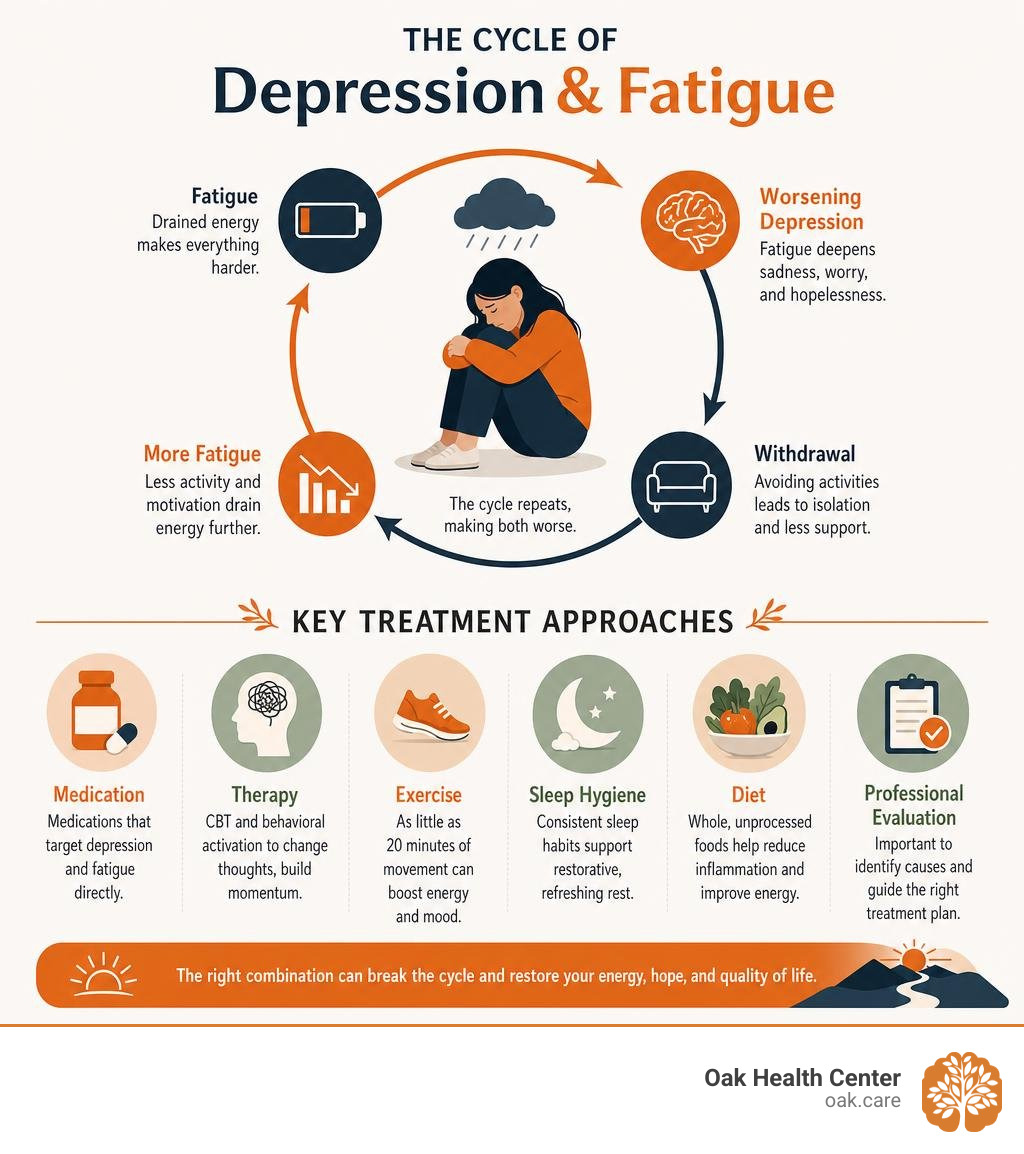
The most effective approaches combine several strategies:
- Medication – Antidepressants with activating properties (like bupropion) or adjunct medications (like modafinil) that target fatigue directly
- Therapy – Cognitive Behavioral Therapy (CBT) and behavioral activation to break the fatigue-depression cycle
- Exercise – As little as 20 minutes of low-to-moderate intensity movement has measurable benefits
- Sleep hygiene – Consistent sleep schedules and habits that support restorative rest
- Diet – Whole, unprocessed foods shown to reduce inflammation and improve energy
- Professional evaluation – To distinguish between residual depression symptoms and medication side effects
You feel exhausted. Not just tired — bone-deep exhausted. You slept, but you don’t feel rested. Getting off the couch feels like a monumental task. And no matter what you try, the fatigue just won’t lift.
This isn’t laziness. It isn’t weakness. It’s one of the most common — and most overlooked — symptoms of depression.
Research shows that up to 90% of people with clinical depression experience fatigue. And even when antidepressants start working, fatigue is often the last symptom to go. In fact, it’s the second most common residual symptom of major depressive disorder — meaning it sticks around even after everything else improves.
That cycle is brutal. Depression drains your energy. Low energy makes depression worse. And round and round it goes.
The good news? This cycle can be broken — with the right combination of clinical support and practical strategies.
I’m Andrew Brewer, Practice Manager at Oak Health Center, where I’ve helped grow and shape programs specifically designed to address complex conditions like depression fatigue treatment. While my background is in operations and organizational development rather than clinical care, I’ve worked closely alongside our clinical teams to expand evidence-based services — and I’ve seen how the right treatment approach transforms lives. Let’s walk through exactly what works.
Simple depression fatigue treatment word guide:
- alternative treatments for depression
- alternative ways to treat depression
- meds to treat depression
Understanding Depression Fatigue vs. Normal Tiredness
We have all had those days where we hit the snooze button one too many times or feel a bit sluggish after a long week. But there is a massive difference between ordinary tiredness and the heavy, all-encompassing weight of depression fatigue.
Normal tiredness is usually situational and resolves after a solid night of sleep or a relaxing weekend. Depression fatigue, however, is chronic, pervasive, and doesn’t care how many hours you spend in bed. To truly understand this symptom, we have to look at how it manifests across three distinct domains:
- Physical Fatigue: Your limbs feel like they are made of lead. Simply walking to the kitchen to pour a glass of water feels like climbing a mountain. You might also experience physical aches, slow movement, and a general lack of physical vitality.
- Cognitive Fatigue: Often referred to as “brain fog,” this includes difficulty concentrating, problems with recall, slow processing speeds, and trouble making simple decisions. You might find yourself staring at an email for twenty minutes, unable to formulate a response.
- Emotional Fatigue: A profound sense of apathy, flat emotions, and a lack of motivation. You might want to want to do things, but the emotional energy required to engage with the world is completely zapped.
According to extensive clinical data compiled in a landmark review on Fatigue in Patients with Major Depressive Disorder: Prevalence, Burden and Pharmacological Approaches to Management | CNS Drugs | Springer Nature Link , this symptom is not just a minor inconvenience. It is a core feature of the illness that severely disrupts daily functioning, social relationships, and workplace productivity.
The Prevalence and Burden of Depressive Exhaustion
Let’s look at the numbers, because they paint a striking picture of just how common this struggle is. Studies consistently show that 90% of individuals with clinical depression also deal with fatigue. It is one of the most common presenting complaints when people first seek help.
Perhaps even more frustrating is its persistence. Up to one-third of major depressive disorder (MDD) patients who have achieved clinical remission or response still continue to experience symptoms of fatigue. This makes it the second most prominent residual symptom of MDD.
Alarmingly, a clinical study revealed that more than 90 percent of patients with MDD had severe fatigue despite the fact that more than 80 percent of these patients were already taking antidepressant medications. This tells us that standard treatments don’t always target the energy centers of the brain effectively.
When fatigue is left untreated, it carries a heavy burden. It impairs your ability to work, strain marriages, and makes social withdrawal almost inevitable. It is also a major red flag for relapse: patients with persistent residual fatigue are significantly more likely to experience a full recurrence of active depressive symptoms.
This is particularly true for medically complex individuals. As detailed in the clinical review “I’m Just So Tired”: Fatigue in a Medically Complicated Patient | Psychiatric Times , when depression co-occurs with autoimmune issues like systemic lupus erythematosus (SLE) or chronic pain, the diagnostic picture becomes muddy. In these complicated cases, identifying the exact root of the fatigue is crucial to prevent “diagnostic overshadowing”—where physical symptoms are mistakenly attributed entirely to mental health, or vice versa, leading to poor treatment choices.
Depression Fatigue vs. Chronic Fatigue Syndrome (ME/CFS)
Because the symptoms overlap so heavily, many people wonder if they have depression-related fatigue or Myalgic Encephalomyelitis/Chronic Fatigue Syndrome (ME/CFS). While they share features like unrefreshing sleep, brain fog, and muscle aches, they are distinct clinical conditions with different diagnostic criteria and treatment paths.
Here is a quick breakdown to help distinguish between the two:
| Feature | Depression-Related Fatigue | Chronic Fatigue Syndrome (ME/CFS) |
|---|---|---|
| Post-Exertional Malaise (PEM) | Typically absent or mild. | Defining feature. Severe crash in energy and worsening of symptoms 12-48 hours after minor physical or mental exertion. |
| Motivation vs. Ability | Often a lack of motivation or interest in activities (anhedonia). | The desire and motivation are present, but the body physically lacks the energy to perform. |
| Diurnal Variation | Fatigue is often worse in the morning and may slightly improve as the day goes on. | Typically unpredictable or consistently severe throughout the entire day. |
| Response to Exercise | Often improves with low-to-moderate aerobic exercise. | Typically worsens significantly due to PEM. |
| Physical Symptoms | Aches and sleep issues are common, but systemic physical signs are rare. | Often accompanied by sore throat, tender lymph nodes, and orthostatic intolerance (dizziness when standing). |
| Response to Antidepressants | Often improves when the correct antidepressant regimen is found. | Highly variable; standard antidepressants rarely resolve the primary fatigue. |
Why Does Depression Make You So Tired?
To understand how to treat this condition, we have to look under the hood. Depression is not just “in your head”—it is a systemic biological condition that alters how your brain and body produce and use energy.
When standard treatments fail to lift this heavy fog, it may point to a more complex presentation. If you find your energy levels remain bottomed out despite trying multiple standard therapies, you might be dealing with Understanding Treatment-Resistant Depression: When Standard Treatments Aren’t Enough.
Biological Mechanisms: Neurotransmitters and Inflammation
At the cellular level, several biological pathways are disrupted when you are depressed:
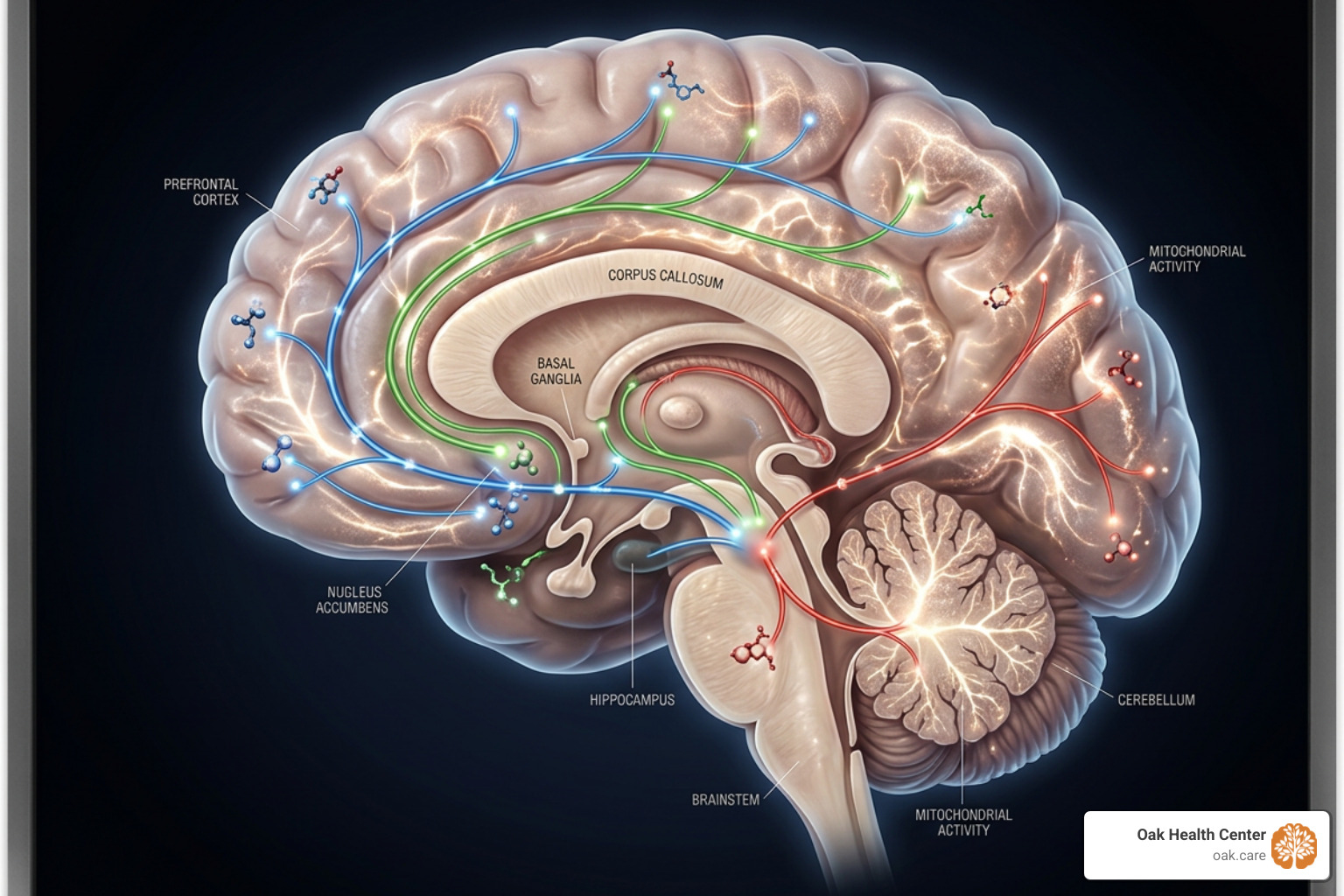
- Neurotransmitter Imbalances: Dopamine and norepinephrine are the chemical messengers responsible for motivation, alertness, focus, and physical energy. Serotonin regulates sleep and mood. In a depressed brain, the pathways that govern these neurotransmitters are often disrupted. In fact, serotonin can sometimes inhibit the dopaminergic system, which explains why some standard antidepressants can actually make you feel more sluggish.
- Hypothalamic-Pituitary-Adrenal (HPA) Axis Dysregulation: The HPA axis is your body’s stress response system. Chronic stress and depression cause this system to run constantly, leading to abnormal cortisol levels. Eventually, this system becomes exhausted, leaving you feeling permanently drained.
- Inflammation and Immune Dysfunction: Modern research views depression as an inflammatory condition. Elevated inflammatory cytokines (like IL-6 and TNF-alpha) act directly on the brain to induce “sickness behavior”—which presents as lethargy, social withdrawal, sleepiness, and a lack of appetite.
- Mitochondrial Dysfunction: Mitochondria are the powerhouses of your cells, responsible for generating ATP (cellular energy). Studies show a direct correlation between mitochondrial dysfunction and the severity of both depression and fatigue.
Addressing these deep-rooted biological issues often requires looking beyond basic medication. You can read more about comprehensive biological approaches in our guide on Exploring Holistic and Alternative Ways to Treat Depression.
The Bidirectional Relationship of Sleep and Stress
Sleep and depression have a notoriously toxic, bidirectional relationship. Depression disrupts your sleep, and poor sleep makes your depression worse.
People with depression are far less likely to cycle naturally through deep, restorative sleep phases. Instead, depression alters REM sleep patterns, meaning you spend too much time in light, active dreaming states and not enough time in the deep, slow-wave sleep your body needs to physically repair itself. The result? You sleep for nine hours but wake up feeling like you haven’t slept a wink.
Additionally, there is a strong link between depression and sleep disorders. Approximately 18% of people with major depressive disorder also have obstructive sleep apnea (OSA), and conversely, 17.6% of those with OSA experience depression. If you are snoring, waking up gasping, or experiencing extreme daytime sleepiness, a clinical sleep study may be an essential step in your recovery.
Understanding this cycle is the first step toward breaking it. If standard approaches haven’t worked, it is worth exploring What Treatment-Resistant Depression Really Means and What You Can Do About It.
Medical and Clinical Options for Depression Fatigue Treatment
Because depression fatigue is multifactorial, treating it requires a highly personalized, clinical approach. There is no one-size-fits-all solution.
When you work with a psychiatric professional, the first step is always a thorough evaluation to rule out other medical causes of fatigue (such as thyroid issues, vitamin deficiencies, or sleep apnea) and to map out a symptom-specific treatment plan. Finding the right medication strategy is often a key piece of this puzzle, which you can explore in detail in our guide to Meds to Treat Depression: Finding Your Perfect Match.
Pharmacological Approaches to Depression Fatigue Treatment
Not all antidepressants are created equal when it comes to energy. In fact, some can make you feel much more tired. If fatigue is your primary complaint, your provider will likely look at medications with activating profiles or consider targeted add-on therapies:
- Bupropion (Wellbutrin): Unlike SSRIs, bupropion acts on dopamine and norepinephrine. It is highly activating and is associated with significantly lower rates of residual fatigue compared to standard SSRIs.
- SNRIs (Serotonin-Norepinephrine Reuptake Inhibitors): Medications like venlafaxine or duloxetine boost norepinephrine, which can help improve alertness and physical energy.
- Atypical Antidepressants: Newer agents may be selected specifically for their neutral effect on sleepiness and weight.
- Adjunct Wake-Promoting Agents (Modafinil): For patients who have seen improvements in their mood but still struggle with residual, disabling fatigue and brain fog, modafinil can be an incredibly effective off-label tool. You can read more about how this works via Modafinil for Depression Fatigue: Adjunct Therapy | RXshop .
- Psychostimulants: In select cases, low doses of stimulants (like methylphenidate or lisdexamfetamine) may be used under strict supervision to help patients regain the cognitive focus and physical energy needed to engage in daily life.
The efficacy of these add-on strategies is backed by solid research. For instance, a preliminary double-blind, placebo-controlled study showed that adding modafinil to standard antidepressant therapy led to significant improvements in fatigue and sleepiness within the first two weeks of treatment. You can review the clinical data in the Adjunct Modafinil for the Short-Term Treatment of Fatigue and Sleepiness in Patients With Major Depressive Disorder: A Preliminary Double-Blind, Placebo-Controlled Study .
Advanced Interventions and Depression Fatigue Treatment
If traditional medications have failed to lift the heavy fog of depression fatigue, it may be time to consider advanced, non-systemic clinical treatments.
One of the most exciting and effective options available today is Transcranial Magnetic Stimulation (TMS). TMS is a non-invasive, FDA-cleared treatment that uses gentle magnetic pulses to stimulate the specific areas of the brain responsible for mood regulation and energy. Because it is non-systemic, it does not cause the fatigue, weight gain, or brain fog often associated with oral medications. You can learn more about this life-changing technology by reading How TMS Therapy Works for Depression.
At Oak Health Center, we are proud to offer this cutting-edge care to our patients. We recently expanded our services to make this treatment more accessible; you can read about our launch in Oak Health Center Launches New TMS Therapy Program.
Another highly effective rapid-acting option for treatment-resistant depression and fatigue is Ketamine Infusion Therapy. Ketamine works on glutamate pathways to rapidly rebuild neural connections, often restoring energy, motivation, and mood within hours or days rather than weeks. To see if this path is right for you, check out The Ultimate Guide to Ketamine Infusion for Depression.
Lifestyle and Self-Management Strategies
While clinical treatments provide the biological foundation for recovery, lifestyle changes are the daily actions that keep depression fatigue at bay.
When you are exhausted, the idea of changing your lifestyle can feel overwhelming. The key is to start incredibly small and be exceptionally gentle with yourself. Behavioral activation—doing things even when you don’t feel like it—is a powerful tool, but it must be balanced with energy conservation and pacing.
A comprehensive network meta-analysis published in Frontiers | Effect of nonpharmacologic therapies on depressive symptoms in patients with chronic fatigue syndrome: a network meta-analysis highlighted that non-pharmacological interventions, particularly structured dietary changes and psychological support, play a massive role in reducing both fatigue and depressive symptoms.
Sleep Hygiene and Dietary Adjustments
To give your body the best chance at producing natural energy, we have to look at what you put into it and how you let it rest.
Sleep Hygiene Habits
- Keep a Strict Schedule: Go to bed and wake up at the exact same time every single day, even on weekends. This helps regulate your circadian rhythm.
- Limit Stimulants and Sedatives: Avoid caffeine and alcohol within 4 to 6 hours of bedtime. While alcohol might make you fall asleep faster, it destroys your REM sleep cycles, leaving you more fatigued the next day.
- Curate Your Environment: Keep your bedroom dark, quiet, and cool. Limit screen time for at least one hour before bed, as blue light suppresses melatonin production.
- Limit Daytime Naps: If you must nap, keep it under 20 minutes to avoid falling into deep sleep, which can disrupt your nighttime rest.
Dietary Interventions
Your brain is an energy-hungry organ, consuming about 20% of your body’s calories. A 2017 study revealed that when participants with depression received nutritional counseling and transitioned to a diet rich in whole, unprocessed foods, their depressive symptoms and energy levels improved significantly. Conversely, a 2019 study found that diets high in processed foods and refined sugars actively worsen systemic inflammation and fatigue.
Try incorporating:
- Whole, Unprocessed Foods: Nuts, seeds, whole grains, and olive oil.
- Anti-inflammatory Options: Green tea, leafy greens, and wild-caught fish.
- Hydration: Dehydration is a sneakily common cause of daytime fatigue. Keep a water bottle nearby throughout the day.
For a deeper dive into ranking the most effective professional and holistic lifestyle treatments, explore The Best Professional Alternative Treatments for Depression Ranked.
The Power of Graded Exercise and Pacing
When you are suffering from depression fatigue, telling you to “just go run a 5K” is not only unhelpful — it is clinically inappropriate. Instead, the gold standard is Graded Exercise Therapy (GET) and pacing.
Research has shown that just 20 minutes of low-to-moderate intensity exercise helps to relieve fatigue and depression. You do not need to lift heavy weights or run sprints. Gentle movement like walking, stretching, yoga, pilates, or Tai Chi is highly effective.
A randomized controlled trial published in Frontiers | Effects of exercise supplementary to standard therapy on cognition and sleep in depression: a randomised controlled trial demonstrated that adding structured, moderate-intensity exercise to standard psychiatric care led to statistically significant improvements in sleep quality, mood, and cognitive function.
How to start:
- The 5-Minute Rule: Commit to just 5 minutes of gentle walking or stretching. If you feel completely exhausted after 5 minutes, give yourself permission to stop. More often than not, once you start moving, your energy levels will naturally begin to rise.
- Pacing: Never exceed your planned activity level on a “good day.” If you feel a sudden burst of energy, it is tempting to clean the entire house. This often leads to a severe energy crash the following day. Stick to a consistent, gradual increase in activity.
Frequently Asked Questions about Depression Fatigue
How do I know if my fatigue is from depression or my medication?
Differentiating between residual symptoms of depression and treatment-emergent side effects is one of the most common challenges in psychiatric care.
To help solve this puzzle, your provider will look closely at your clinical history. If your fatigue was present before you started taking your medication and has remained unchanged, it is highly likely a residual symptom of your depression. If the fatigue only appeared after starting or increasing the dose of a specific medication (such as a sedating SSRI, tricyclic antidepressant, or atypical antipsychotic), it is likely a side effect.
Never stop or adjust your medication on your own. If you suspect your medication is causing your fatigue, schedule a consultation with your psychiatrist to discuss adjusting the dose, switching to a more activating agent, or changing the time of day you take it.
Can lifestyle changes alone cure depression-related fatigue?
For mild cases of depression or temporary fatigue, lifestyle changes like improved sleep hygiene, a whole-food diet, and regular low-intensity exercise can make a massive difference.
However, for moderate-to-severe clinical depression, lifestyle changes alone are rarely enough. Because depression fatigue is driven by complex biological mechanisms—including neurotransmitter imbalances, HPA axis dysregulation, and systemic inflammation—most people require a multifaceted approach. Combining lifestyle modifications with professional clinical treatments (such as psychotherapy, targeted medication management, or advanced options like TMS) offers the highest rate of lasting recovery.
When should I seek professional help for persistent exhaustion?
You should seek professional help if your fatigue:
- Persists for more than two weeks despite getting adequate sleep.
- Causes significant functional impairment, such as struggling to perform at work, keep up with school, or maintain your personal relationships.
- Is accompanied by other core symptoms of depression, such as persistent sadness, loss of interest in activities you used to enjoy, changes in appetite, or feelings of hopelessness.
- Is accompanied by thoughts of self-harm or suicide. If you are experiencing thoughts of suicide, please call or text the Suicide & Crisis Lifeline at 988 immediately, or go to the nearest emergency room.
Conclusion
Depression fatigue is a heavy, exhausting burden to carry — but you do not have to carry it alone. At Oak Health Center, we specialize in providing comprehensive, compassionate, and highly personalized mental healthcare designed to help you reclaim your energy and your life.
Whether you are looking for expert psychiatric medication management, advanced non-invasive options like TMS, or compassionate talk therapy, we are here to simplify your access to care. We offer convenient, in-person support across five Southern California locations:
- Beverly Hills, CA
- Fullerton, CA
- Laguna Hills, CA
- Rancho Cucamonga, CA
- South Pasadena, CA
In addition to our physical clinics, we provide robust virtual services statewide across California, ensuring you can access the support you need from the comfort of your own home.
Ready to take the first step toward reclaiming your vitality? Explore our Services or book a consultation directly through our Psychiatry Services portal today. Let’s work together to kick depression fatigue to the curb for good.