

When Antidepressants Stop Working: What You Need to Know
The treatments for treatment resistant depression available today are more varied — and more effective — than most people realize. If you’ve tried one or more antidepressants without feeling better, you are far from out of options.
Quick answer: Main treatments for treatment-resistant depression
| Treatment | What It Is | How Fast It Works |
|---|---|---|
| Augmentation (e.g., aripiprazole, lithium) | Adding a second medication to your current antidepressant | Weeks |
| Antidepressant switch | Moving to a different antidepressant class | Weeks |
| Ketamine / Esketamine | IV infusion or nasal spray targeting NMDA receptors | Hours to days |
| TMS (Transcranial Magnetic Stimulation) | Non-invasive magnetic stimulation of brain circuits | 2–6 weeks |
| ECT (Electroconvulsive Therapy) | Brief electrical stimulation under anesthesia | Days to weeks |
| CBT and other psychotherapy | Structured talk therapy with lasting skill-building | Weeks to months |
| VNS (Vagus Nerve Stimulation) | Implanted or external nerve stimulator | Months |
Here is the reality: roughly 30% of people diagnosed with major depressive disorder don’t get better after standard treatment. In the landmark STAR*D study, only 37% of patients recovered after their first antidepressant trial — and after four trials, remission rates dropped to just 13%. That is a lot of people still struggling, still searching, still hoping.
But struggling through multiple failed treatments does not mean depression is untreatable. It means a more targeted approach is needed.
This guide walks through every evidence-backed option — from medication adjustments to brain stimulation to psychotherapy — so you can have a more informed conversation with your care team.
I’m Andrew Brewer, Practice Manager at Oak Health Center, where I’ve helped grow and expand clinical programs — including TMS and other treatments for treatment resistant depression — to serve more patients across Southern California. I’ll be sharing what the latest research and our clinical experience can tell you about finding a path forward.
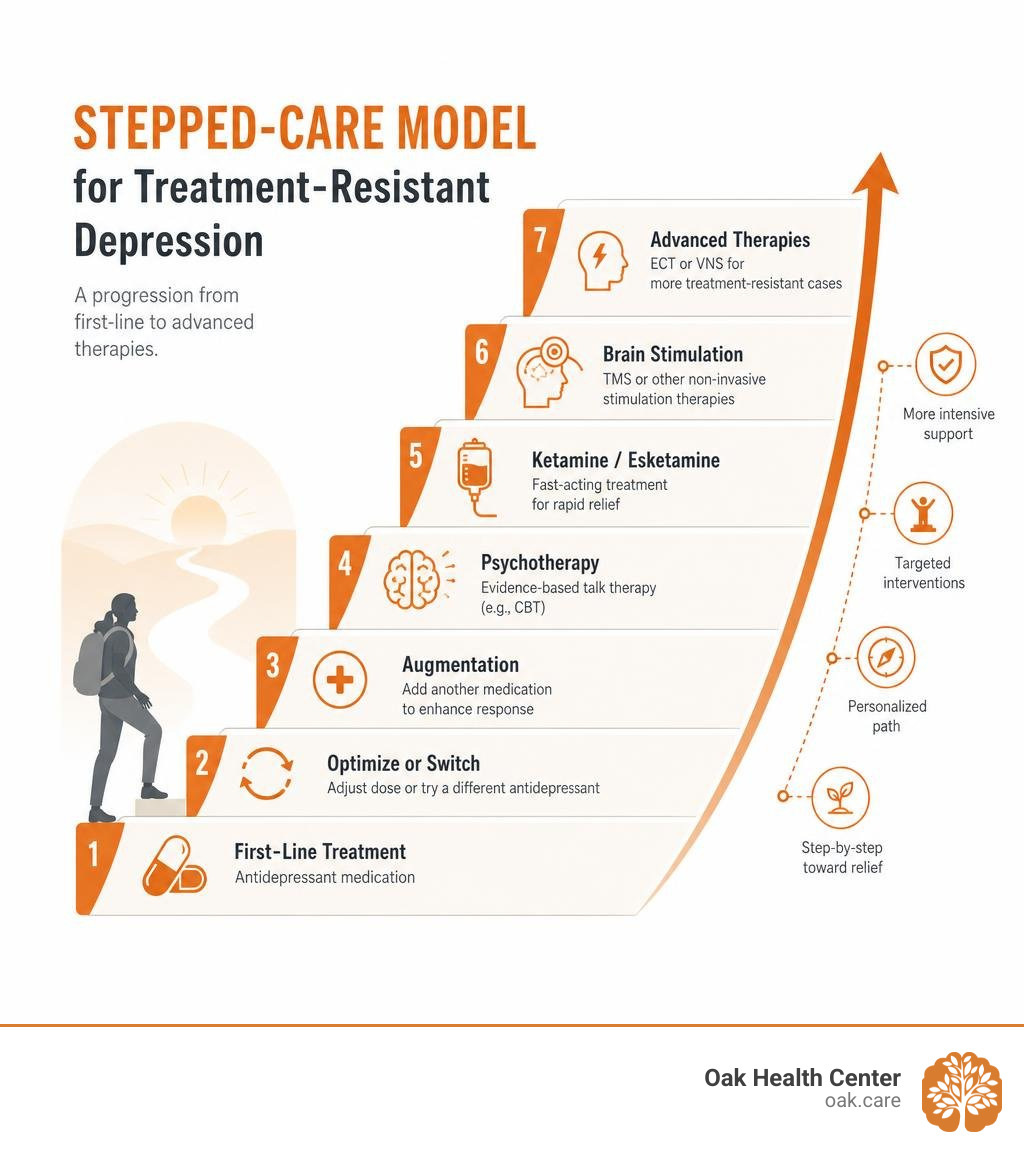
What is Treatment-Resistant Depression?
When you are dealing with persistent depression, it can feel like you are carrying a heavy backpack all day long. Worse, watching a growing list of medications fail to lift that weight can be incredibly disheartening. If standard antidepressants are not providing relief, you are not failing the medication — the medication is simply failing to target the underlying biological mechanisms of your unique brain chemistry.
At Oak Health Center, we believe that understanding the science behind your symptoms is the first step toward reclaiming your life. To explore what this diagnosis means on a deeper level, read our guide on What Treatment Resistant Depression Really Means and What You Can Do About It.

Defining Treatment Resistance in 2026
In clinical practice as of July 2026, treatment-resistant depression (TRD) is formally defined as a major depressive episode that does not respond satisfactorily after at least two separate trials of antidepressant monotherapy.
However, for a medication trial to be considered a true “failed trial,” it must meet strict criteria:
- The medication must have been taken at an adequate dose.
- The trial must have lasted for an adequate duration (typically 6 to 8 weeks).
- The patient must have demonstrated consistent medication adherence.
If a patient stops a medication after two weeks due to mild side effects, or takes a sub-therapeutic dose, it does not count as a true treatment failure. Clinicians use systematic clinical staging to look at how many truly adequate treatments have been tried. This helps map out the next logical steps, rather than repeating the same therapeutic mistakes. For a deeper dive into these clinical criteria, check out our Ultimate Guide to Treatment Resistant Depression.
Risk Factors and Pretreatment Assessments
Why do some people develop TRD while others respond quickly to a basic SSRI? The answer lies in a complex web of biology, genetics, and lifestyle. Key risk factors and biological markers include:
- Neuroinflammation: Emerging research shows that chronic inflammation can alter brain chemistry. Elevated inflammatory markers such as C-reactive protein (CRP), TNF, IL-1, and IL-6 are frequently observed in people with TRD.
- Genetic Predisposition: Genetic variations linked to neuroticism, insomnia, and metabolic pathways can influence how our bodies process antidepressants.
- Comorbid Conditions: Co-occurring anxiety, personality disorders, substance use, or physical health conditions (like thyroid dysfunction or sleep apnea) can mimic or worsen depression symptoms, keeping standard treatments from working.
Before we start any advanced treatments for treatment resistant depression, we perform a thorough pretreatment assessment. This includes confirming the diagnosis (to rule out bipolar depression or prolonged grief), reviewing your complete treatment history, checking thyroid function, and addressing any active sleep or substance use issues. You can read more about this diagnostic phase in our article on Understanding Treatment Resistant Depression When Standard Treatments Aren’t Enough.
Pharmacological Augmentation and Switching Strategies
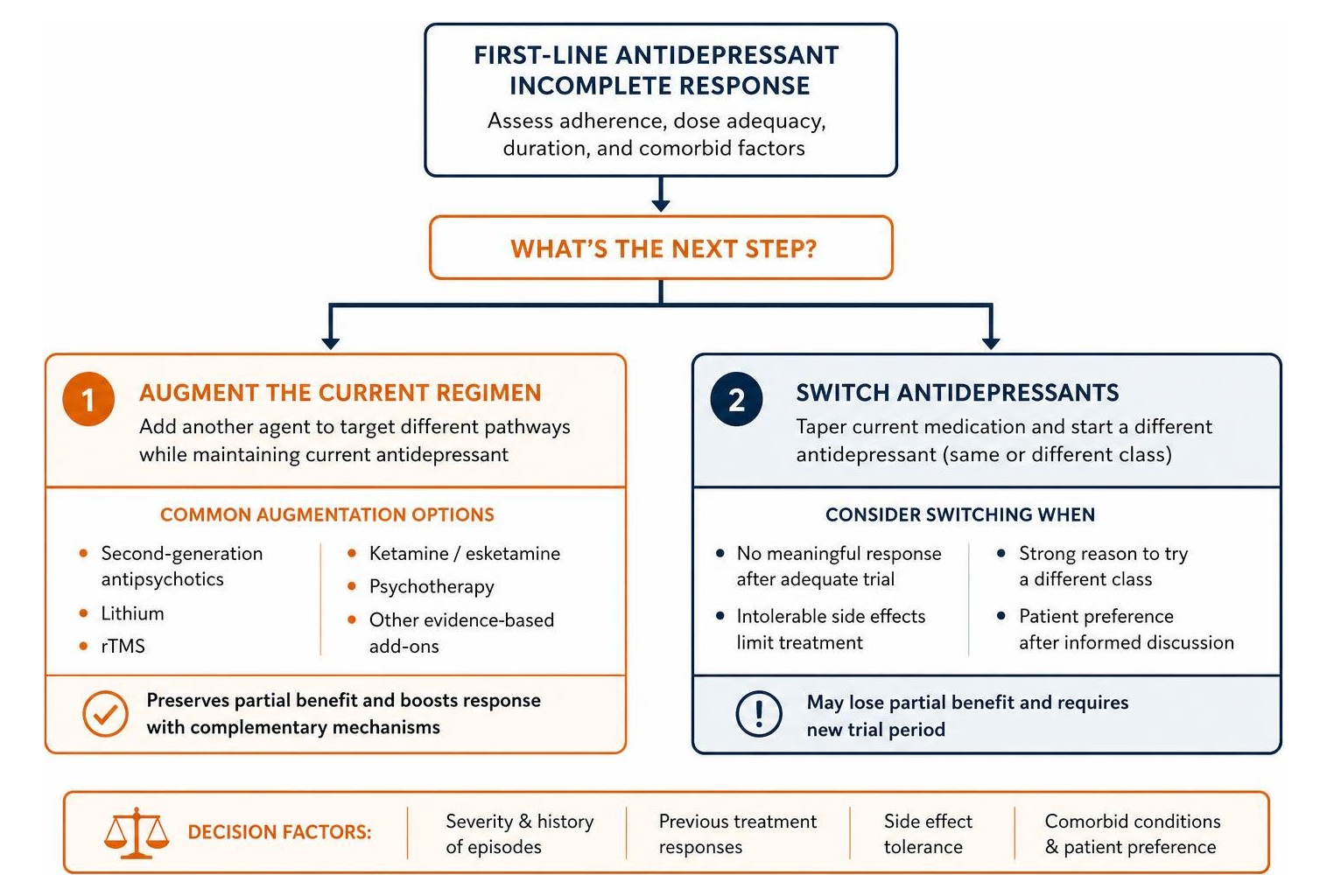
When a first-line antidepressant fails, clinicians generally face a crossroads: do we switch to a completely different antidepressant, or do we augment (add something else to) the current regimen?
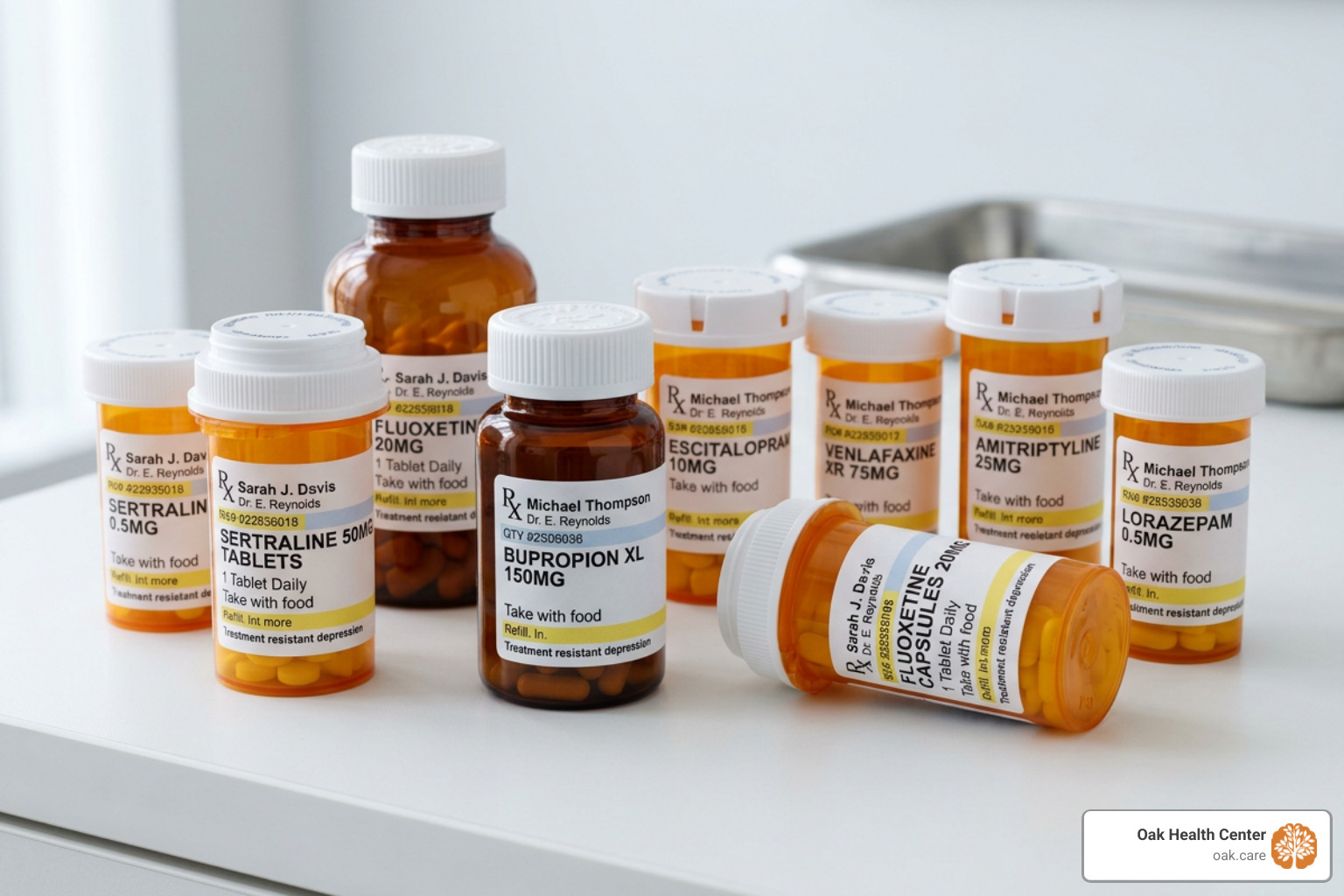
Finding the right combination is a highly personalized process. To learn more about selecting the right medication classes, read our guide on Meds to Treat Depression: Finding Your Perfect Match.
First-Line Augmentation vs. Switching Antidepressants
Historically, switching to a different antidepressant class was the default next step. However, modern clinical consensus strongly favors augmentation over switching as the initial approach for moderate to severe cases.
Augmentation keeps the partial progress made on your current medication while adding a second agent to target different brain pathways. This strategy is backed by significant clinical evidence:
- The ASCERTAIN-TRD Trial: In this rigorous randomized clinical trial published in Molecular Psychiatry, researchers directly compared augmentation strategies against switching to SNRIs like venlafaxine or duloxetine. Augmentation with repetitive transcranial magnetic stimulation (rTMS) showed statistically significant superiority over switching, and augmentation with aripiprazole showed better patient-rated outcomes than switching.
- Mayo Clinic Insights: The Mayo Clinic Depression Center Panel consensus reinforces that after multiple failed antidepressant trials, adding a second-generation antipsychotic, TMS, or ketamine/esketamine provides a much higher chance of remission than simply cycling through another standard antidepressant monotherapy.
Comparative Efficacy of Second-Generation Antipsychotics and Lithium
Among pharmacological augmentation strategies, second-generation (atypical) antipsychotics and lithium have the strongest clinical track records.
- Second-Generation Antipsychotics (SGAs): Medications like aripiprazole, brexpiprazole, quetiapine, and cariprazine are highly effective add-ons. A landmark meta-analysis of 28 trials involving over 7,300 patients found that the clinical response was 40% greater when adding an SGA compared to adding a placebo. Aripiprazole is often preferred as a first choice because it tends to have fewer metabolic side effects than older atypicals.
- Lithium Augmentation: Across five distinct meta-analyses, the probability of clinical response was two to three times greater with lithium augmentation than with a placebo. Lithium remains a powerhouse for stabilizing mood and reducing suicidal ideation, though it requires regular blood monitoring to ensure safe levels.
- Thyroid Hormone (T3): Adding triiodothyronine (T3) is another well-tolerated option, with research showing patients are nearly twice as likely to respond compared to a placebo.
While combining standard antidepressants is sometimes tried, a meta-analysis of 20 randomized trials (n > 4,500) found that the clinical advantage of combining two traditional antidepressants is relatively small compared to the robust effects of SGA or lithium augmentation. You can review the comprehensive data on these comparisons in this systematic review and network meta-analysis of randomized controlled trials.
Advanced Treatments for Treatment Resistant Depression
When oral medications are not enough, we look to advanced, rapid-acting therapeutics and neuromodulation therapies. These treatments target the brain’s physical neural networks directly, bypassing the slow-acting chemical pathways of traditional pills.
To see how these advanced options stack up against one another, explore our resource on The Best Professional Alternative Treatments for Depression Ranked.
Ketamine and Esketamine Infusions as Rapid-Acting Treatments
Traditional antidepressants can take 4 to 8 weeks to work. For someone in the depths of severe depression, that wait can feel agonizing. Ketamine and its nasal-spray relative, esketamine, have revolutionized psychiatry by offering relief in a matter of hours.
- IV Ketamine: Delivered via a slow intravenous infusion in a clinical setting, racemic ketamine has a rapid-acting antidepressant effect. It works by blocking NMDA receptors, which triggers a surge in glutamate and rapidly stimulates synaptogenesis—essentially helping the brain rebuild damaged neural connections. Most patients experience a peak response within 72 hours of their first infusion.
- Esketamine (Spravato): Esketamine is an FDA-approved nasal spray derived from a portion of the ketamine molecule. Because of its potential for temporary dissociation and blood pressure changes, it is administered in our certified clinics under medical supervision.
If you want to understand what to expect during a session, read The Ultimate Guide to Ketamine Infusion for Depression.
Neuromodulation Therapies: TMS, ECT, and VNS
Neuromodulation therapies use magnetic fields, electrical currents, or nerve stimulation to physically reset underactive brain circuits.
- Transcranial Magnetic Stimulation (TMS): TMS is a non-invasive, FDA-approved treatment that uses magnetic pulses (similar to an MRI) to stimulate the prefrontal cortex—the area of the brain responsible for mood regulation. It requires no anesthesia, has no systemic side effects, and allows you to drive yourself home immediately afterward. Learn more about the technology behind this treatment in our article on How TMS Therapy Works for Depression, or explore our dedicated Transcranial Magnetic Stimulation service page.
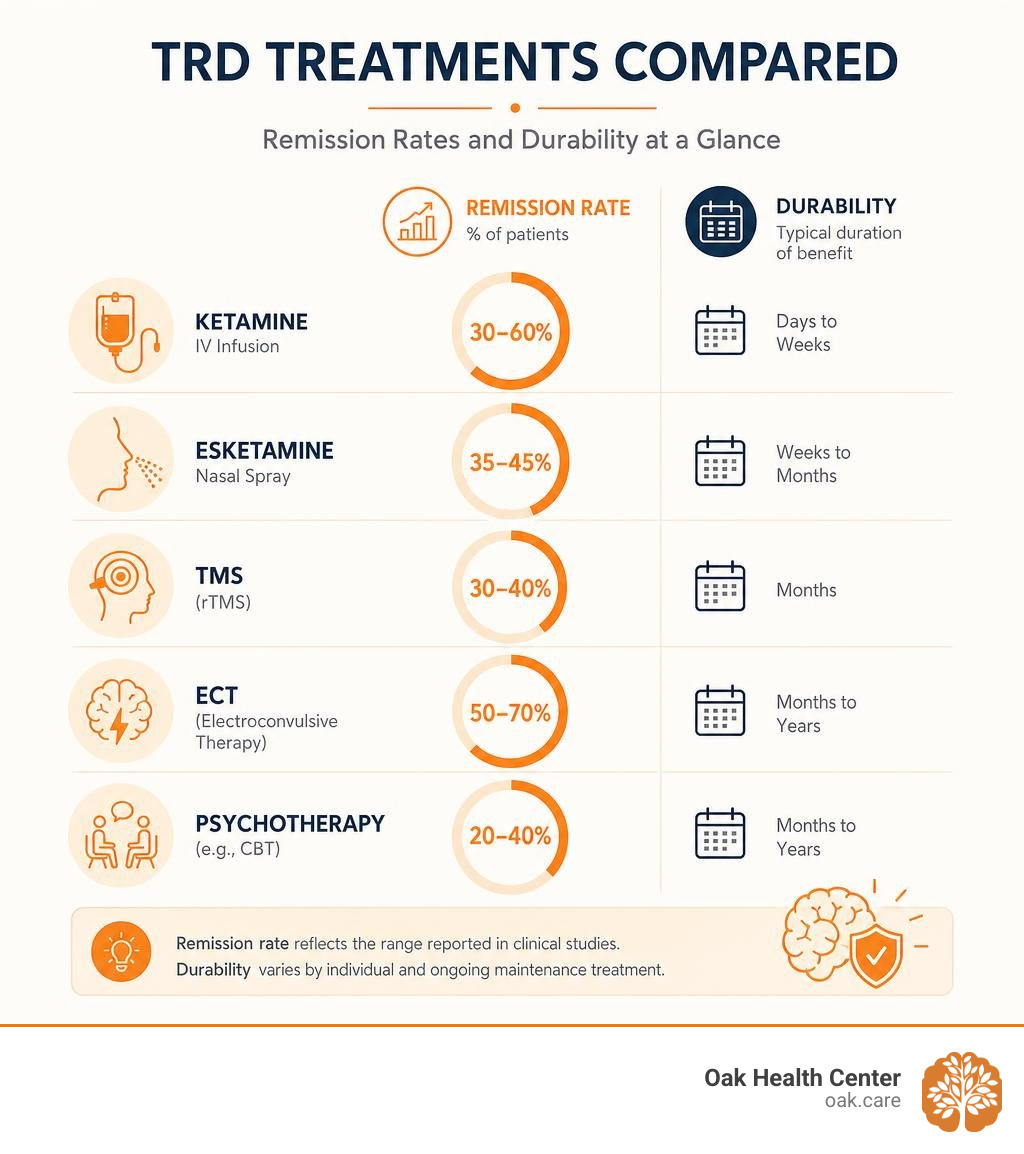
- Electroconvulsive Therapy (ECT): Often referred to as the clinical “gold standard” for severe, acute depression, ECT uses a brief, controlled electrical current under general anesthesia to trigger a therapeutic seizure. While highly effective (boasting response rates up to 50–70%), modern protocols use ultra-brief pulses to minimize temporary cognitive side effects like memory loss.
- Vagus Nerve Stimulation (VNS): For long-term, highly resistant cases, VNS uses a small implanted device (similar to a pacemaker) to deliver mild electrical pulses to the vagus nerve. It is generally reserved for patients who have failed multiple antidepressants and neuromodulation trials.
For an academic review of how these therapies physically alter neural networks, check out this paper on innovative pathways in neuromodulation.
Evidence-Based Psychotherapy and Holistic Approaches
We know that medication is only one piece of the puzzle. Combining advanced medical treatments with evidence-based psychotherapy and lifestyle changes provides the most durable, long-term defense against relapse.
To learn more about integrating these non-pharmacological therapies, read our guide on Exploring Holistic and Alternative Ways to Treat Depression.
Evidence-Based Psychotherapy Treatments
Talk therapy is not just about venting; it is a structured, active process that helps rewire negative thought patterns and build lasting behavioral coping skills. For TRD, three modalities stand out:
- Cognitive Behavioral Therapy (CBT): CBT helps you identify and change negative thought loops and self-sabotaging behaviors. A meta-analysis of three randomized trials (n=522) found that clinical response occurred in significantly more patients who received CBT augmentation alongside their antidepressants (46%) than in those who received antidepressants alone (22%). For a detailed look at this research, you can read the CBT augmentation study here.
- Cognitive Behavioral Analysis System of Psychotherapy (CBASP): Specifically designed for chronic depression, CBASP focuses heavily on interpersonal relationships and situational analysis to help patients overcome feelings of helplessness.
- Dialectical Behavior Therapy (DBT): DBT is highly effective for managing severe emotional dysregulation, teaching mindfulness, distress tolerance, and interpersonal effectiveness.
Lifestyle Modifications and Adherence Management
When you are fighting severe depression, basic self-care can feel like climbing a mountain. However, incorporating small, sustainable lifestyle shifts can significantly support your medical treatments:
- Exercise: Regular physical activity, even a brief daily walk, stimulates endorphins and brain-derived neurotrophic factor (BDNF), which supports brain plasticity.
- Sleep Hygiene: Sleep disturbances can actively block depression recovery. Establishing a consistent sleep schedule and limiting screen time before bed are critical.
- Stress Reduction: Practices like mindfulness meditation, yoga, and journaling help lower cortisol levels and reduce the neuroinflammation associated with TRD.
- Adherence Support: It is incredibly common to miss doses when feeling unmotivated or overwhelmed. We work with our patients using open, nonjudgmental communication to set up reminders, simplify pill regimens, and manage side effects before they lead to treatment discontinuation.
For practical, compassionate tips on navigating this daily balancing act, read How to Manage Treatment for Drug-Resistant Depression Without Losing Your Mind.
Frequently Asked Questions about Treatment-Resistant Depression
Evaluating the success rates and commitment levels of advanced treatments can help you make an informed decision alongside your doctor.
How long does it take to know if a depression treatment is working?
Standard oral antidepressants typically require 4 to 8 weeks at a therapeutic dose before you can fully evaluate their effectiveness. This is because the brain needs time to adjust receptor sensitivity and grow new neural connections. However, rapid-acting treatments like ketamine can show results within hours to days, while TMS usually begins to show noticeable improvements within 2 to 6 weeks.
What is the difference between ketamine and esketamine?
While both target the NMDA receptor to rapidly increase glutamate, they differ in molecular structure and delivery:
- Ketamine is a racemic mixture of two molecules (R-ketamine and S-ketamine) and is typically delivered via an intravenous (IV) infusion in an off-label but highly researched clinical setting.
- Esketamine (Spravato) consists only of the S-enantiomer molecule, is delivered via an FDA-approved nasal spray, and is covered by many insurance plans for TRD.
Is ECT still used for treatment-resistant depression?
Yes, ECT remains one of the most effective treatments available for severe, life-threatening depression. Modern ECT is highly sophisticated; it is performed under general anesthesia with muscle relaxants, and clinicians often use ultra-brief pulse widths to target specific brain regions. This significantly reduces the risk of temporary memory loss while maintaining high remission rates.
Conclusion
If standard therapies have left you feeling stuck, please remember: a lack of response to your first few medications is not a dead end. It is simply a signpost pointing toward more specialized, advanced treatments for treatment resistant depression.
At Oak Health Center, we provide comprehensive, compassionate mental healthcare tailored to your unique biology and lifestyle. With convenient Southern California locations in Beverly Hills, Fullerton, Laguna Hills, Rancho Cucamonga, and South Pasadena — alongside our virtual telehealth services statewide — we make it easy to access the specialized care you deserve.
You do not have to carry this weight alone. Schedule a consultation with Oak Health Center today and let us help you find a path back to yourself.