


Find the Right Mental Health Screen for Your Symptoms
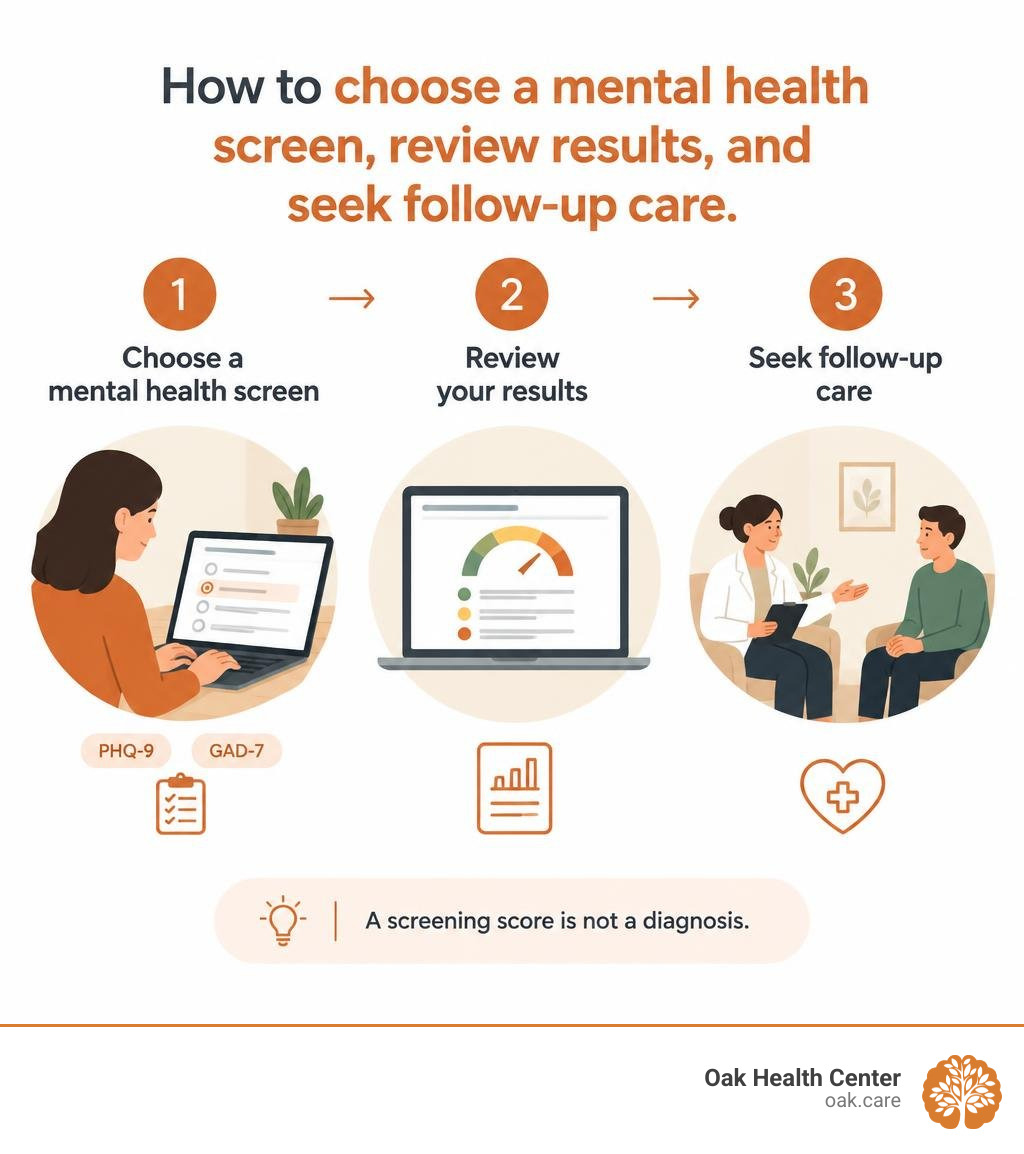
A mental health screen is a short questionnaire that can help you spot symptoms and decide whether to seek support. To get started, choose a science-backed screen that fits your concern, such as the PHQ-9 for depression or the GAD-7 for anxiety. Answer based on the time period in the questions, then save your results to discuss with a mental health professional. A screening score is not a diagnosis.
A screen can be a useful first step when work stress, worry, or low mood is affecting your day. It gives you a way to describe what you have been experiencing, even if you are not sure what to call it.
I’m Andrew Brewer, practice manager at Oak Health Center, where I work with clinical teams to improve access and care workflows. That experience shapes how I explain what a mental health screen can tell you and when a full assessment may help.
What Is a Mental Health Screen and How Does It Work?
At its core, a mental health screen functions as a quick, structured check of your emotional well-being. Think of it like a blood pressure cuff at a routine physical: it does not pinpoint the exact cause of a problem, but it flags when numbers fall outside a typical baseline so you know whether to take a closer look.
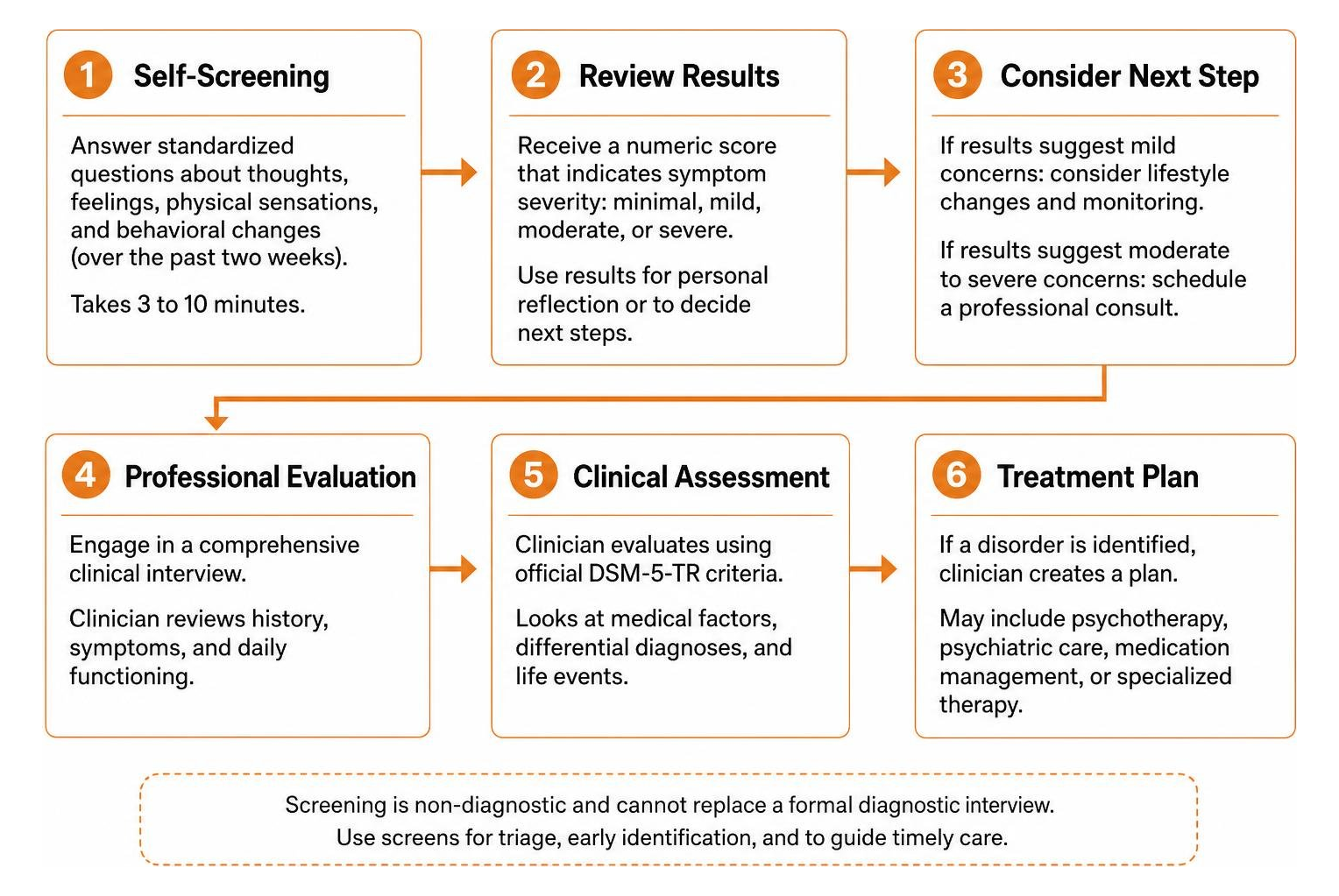
When you take an online or paper self-assessment, you answer a set of standardized questions about thoughts, feelings, physical sensations, and behavioral changes over a specific window of time—often the past two weeks. The responses generate a numeric score that indicates whether your current distress falls into minimal, mild, moderate, or severe ranges.
In clinical practice, we use these tools for triage and early identification. They help clinicians determine how quickly someone needs care, which conditions require exploration, and whether safety protocols need immediate activation.
| Feature | Mental Health Screen | Formal Clinical Diagnosis |
|---|---|---|
| Primary Purpose | Flags potential risk and measures symptom severity | Identifies specific disorders and guides comprehensive treatment plans |
| Administration Time | 3 to 10 minutes | 45 to 90 minutes (or multiple clinical sessions) |
| Format | Self-administered questionnaire or brief intake survey | Comprehensive clinical interview, history review, and cognitive/behavioral assessment |
| Administered By | Individual, primary care nurse, school counselor, or online platform | Licensed mental health professional (Psychiatrist, Psychologist, LCSW, LMFT, LPCC) |
| Diagnostic Authority | Non-diagnostic; cannot confirm a clinical disorder | Diagnostic; applies official DSM-5-TR criteria |
| Follow-Up Action | Personal reflection, lifestyle changes, or scheduling a professional consult | Evidence-based psychotherapy, psychiatric care, medication management, or specialized therapy |
Screening Tools vs. Formal Clinical Diagnosis
While a screen provides an immediate snapshot, it cannot replace a formal diagnostic interview. A questionnaire measures whether you have checked off specific symptoms, but it cannot evaluate underlying medical factors, differential diagnoses, or subtle psychological nuances.
For example, when diagnosing an anxiety disorder, a licensed clinician evaluates your full developmental background, medical history, and daily functioning against formal guidelines for anxiety DSM-5 criteria. A full evaluation looks at whether physical conditions like thyroid dysfunction might mimic panic, or whether life events are producing a temporary adjustment reaction rather than an ongoing chronic disorder.
Confidentiality, Anonymity, and Data Privacy
One of the biggest advantages of modern digital screening tools is privacy. Many individuals hesitate to discuss mental health due to social stigma or concerns about employment records.
Reputable organizations offer reputable online screening tests that run entirely client-side or without requiring personal identifiers like names, emails, or phone numbers. When taking a screen online, check that the host platform uses standard encryption protocols (HTTPS) and does not sell user responses to third-party advertisers. Once you decide to share those results within a clinical setting, your data transitions under strict HIPAA regulations, ensuring your medical records remain private and secure.
Common Types of Mental Health Screening Tools
Screening instruments are designed with specific psychometric properties—meaning researchers have tested them extensively to ensure they measure what they claim to measure.

Common Conditions Assessed in an Online Mental Health Screen
Clinicians and researchers have developed validated screeners across a broad spectrum of mental health conditions:
- Depression: Measures persistent sadness, sleep disruption, energy loss, and feelings of worthlessness.
- Generalized Anxiety & Panic: Evaluates excessive worry, restlessness, irritability, and muscle tension.
- Attention-Deficit/Hyperactivity Disorder (ADHD): Examines chronic inattention, executive dysfunction, disorganization, and impulsivity.
- Post-Traumatic Stress Disorder (PTSD): Screens for intrusion symptoms, hyperarousal, avoidance behaviors, and negative alterations in mood following traumatic events.
- Eating Disorders: Assesses body image distress, restrictive habits, bingeing patterns, and compensatory behaviors.
- Bipolar Disorder & Psychosis: Identifies periods of mania, hypomania, unusual perceptual experiences, or racing thoughts.
Because mood conditions rarely appear in neat isolation, clinicians frequently screen for overlapping issues. Learning about identifying co-occurring anxiety and depression symptoms helps make sense of why a single screener may not capture the full clinical picture.
Validated Questionnaires: PHQ-9, GAD-7, and Beyond
Among the dozens of validated instruments available, two stand out as universal staples in clinics and digital platforms:
- PHQ-9 (Patient Health Questionnaire-9): A 9-item scale evaluating the frequency of core depressive symptoms over the preceding two weeks. Scores range from 0 to 27, categorized into minimal (0–4), mild (5–9), moderate (10–14), moderately severe (15–19), and severe (20–27).
- GAD-7 (Generalized Anxiety Disorder-7): A 7-item scale focused on uncontrollable worry, tension, and nervous energy. Tools like the decoding GAD-7 anxiety scores framework help individuals understand how scores between 0 and 21 reflect mild, moderate, or severe anxiety profiles.
In both digital screening portals and outpatient care, providers frequently combine these scales. Understanding the clinical reasoning behind interpreting dual GAD-7 and PHQ-9 screening protocols reveals how providers track parallel symptoms to build a balanced treatment strategy.
Key Trends and Data from Nationwide Mental Health Screenings
Large-scale digital screening initiatives offer an unvarnished look at population mental health trends. Because people can complete these assessments privately in their own homes, the data captures distress long before individuals enter a physical clinic.
Since its launch in 2014, Mental Health America’s (MHA) Online Screening Program has supported over 31 million individuals, establishing itself as the nation’s largest real-time early identification database. In 2024 alone, the program reached more than 5.9 million people globally, with 1,728,957 screens completed within the United States.
The findings illustrate a high level of distress among help-seekers:
- 78% of U.S. users who took a screen in 2024 scored at risk for a moderate-to-severe mental health condition.
- 57% of individuals with positive screens reported that they had never received mental health treatment before.
- 91.87% of those taking an eating disorder screen scored at risk—the highest risk proportion across all clinical categories.
Youth Mental Health Trends and Suicidal Ideation
The data highlights a significant youth mental health crisis. Screeners under the age of 25 represented nearly two-thirds (64%) of all participants in 2024, with youth under 18 making up 42% of all completed screens.
The findings from national 2024 screening data reveal serious severity markers among young people:
- 87% of individuals under 18 who completed a depression screener scored positive for moderate to severe depressive symptoms.
- 48% of youth under 18 taking a depression screen reported experiencing frequent suicidal ideation (thinking about suicide more than half the week or nearly every day).
- Across all age brackets taking the PHQ-9, 37% reported frequent suicidal ideation.
Adolescents also showed distinct engagement with behavioral addiction screeners, accounting for nearly 70% of all Behavioral Addiction Symptom Checklist (BASC) completions, with self-harm behaviors (45%) emerging as a primary concern.
Demographic Disparities Across Race, Age, and Identity
Screening programs also illuminate how life stressors shape emotional well-being across diverse backgrounds. In 2024, 54% of screeners who scored at risk identified low self-esteem or self-image as the primary driver of their struggles—a figure that climbed to 60% among youth.
Other leading self-reported contributors included:
- Relationship problems (41.18%)
- Loneliness and social isolation (39.60%)
- School or employment difficulties (37.08%)
Demographic trends show that 64% of screeners identified as female, 32% as male, and 5% as non-binary. Marginalized groups, including LGBTQ+ individuals and racial minorities, reported elevated rates of trauma related to discrimination, loneliness, and systemic barriers, reinforcing the need for culturally competent, accessible care pathways.
Interpreting Results and Professional Screen Applications
Receiving a high score on an online assessment can feel unsettling, but a number on a screen is simply data to inform your next steps.
What Your Screening Score Means for Next Steps
Screening scores serve three practical functions:
- Validation: They offer objective confirmation that what you are feeling is real and deserving of care.
- Baseline Measurement: They provide a reference point so you and your clinician can monitor whether symptoms improve over time.
- Actionable Direction: They indicate whether self-care adjustments, peer support, or professional therapy is the most appropriate step.
If your score falls into the moderate or severe range, scheduling a consultation with a licensed professional is the best next move. When looking for care, reviewing selecting the right mental health clinic can help you find a clinical team that aligns with your specific needs, insurance, and scheduling requirements.
How Public Programs and Clinicians Use Functional Screens
Screening tools are not limited to self-assessments; public healthcare systems, social service departments, and county agencies rely on functional screening instruments to coordinate public assistance and mental health resources.
For instance, government health departments use standardized criteria to determine eligibility for community-based support programs, as outlined in official state functional screen guidelines. These evaluations assess not just clinical symptoms, but how conditions impair daily living skills, vocational stability, and housing security, ensuring resources reach the individuals who need them most.
When to Transition from Self-Assessment to Clinical Care

A self-assessment is an entry point, not the end of the road. Recognizing when a screening tool has reached its limits is essential for your long-term well-being.
Evaluating the Limitations of a Digital Mental Health Screen
While online screeners are accessible and quick, they come with inherent limitations:
- Subjectivity and Recall Bias: Scores reflect how you feel in the exact moment you take the questionnaire, which can fluctuate based on acute daily stress.
- Lack of Diagnostic Context: A screener cannot identify whether physical illnesses (such as vitamin deficiencies or hormonal imbalances) or life transitions are driving your symptoms.
- Symptom Overlap: High anxiety scores can easily mask underlying neurodevelopmental traits, trauma responses, or depressive episodes.
- Absence of Clinical Nuance: A digital form cannot observe non-verbal cues, tone of voice, or personal relational dynamics.
Immediate Crisis Support and Professional Help Pathways
If a screen indicates high risk, or if you or a loved one are experiencing thoughts of self-harm, immediate help is available. You do not have to wait for an appointment to speak with someone who can support you.
- National Suicide & Crisis Lifeline: Call or text 988 (Available 24/7, free, and confidential)
- The Crisis Text Line: Text HOME to 741741 to connect with a crisis counselor
- The Trevor Project (for LGBTQ youth): Call 1-866-488-7386 or text START to 678-678
When you feel ready to transition from a digital screener to professional care, learning about preparing for your first therapy session will help demystify the intake process so you feel confident walking through the door.
Frequently Asked Questions About Mental Health Screening
How accurate is an online mental health screen?
Clinically validated screening tools (such as the PHQ-9 or GAD-7) are scientifically vetted to ensure high sensitivity and reliability. However, their accuracy depends entirely on honest self-reporting. They are accurate at detecting the presence of distress, but only a licensed clinician can confirm whether those symptoms constitute a specific mental health disorder.
Can a mental health screen provide an official diagnosis?
No. An online or paper screen cannot give an official clinical diagnosis. Diagnoses require a comprehensive evaluation conducted by a qualified professional (such as a psychiatrist, psychologist, or licensed therapist) who examines your medical history, psychological symptoms, and psychosocial functioning.
What should I do if my screening results show high risk?
If your score places you in a moderate, moderately severe, or severe category, treat it as an invitation to connect with a professional. Save or print a copy of your results, note any specific symptoms that are disrupting your work, school, or relationships, and schedule an appointment with a licensed mental health clinic or your primary care physician.
Conclusion
Taking a mental health screen is a proactive step toward understanding your emotional health and taking control of your well-being. Whether you are navigating chronic stress, sudden panic, or persistent low mood, screening tools help transform overwhelming feelings into clear, organized data that points toward relief.
At Oak Health Center, we provide comprehensive, compassionate mental healthcare at five Southern California locations—including Beverly Hills, Fullerton, Laguna Hills, Rancho Cucamonga, and South Pasadena—along with virtual care across California. Our multidisciplinary team is dedicated to simplifying your access to care, offering personalized diagnostic evaluations, medication management, and comprehensive outpatient psychotherapy services. If your screening results indicate that it is time for support, reach out to our team today to take the next step on your path toward lasting wellness.