

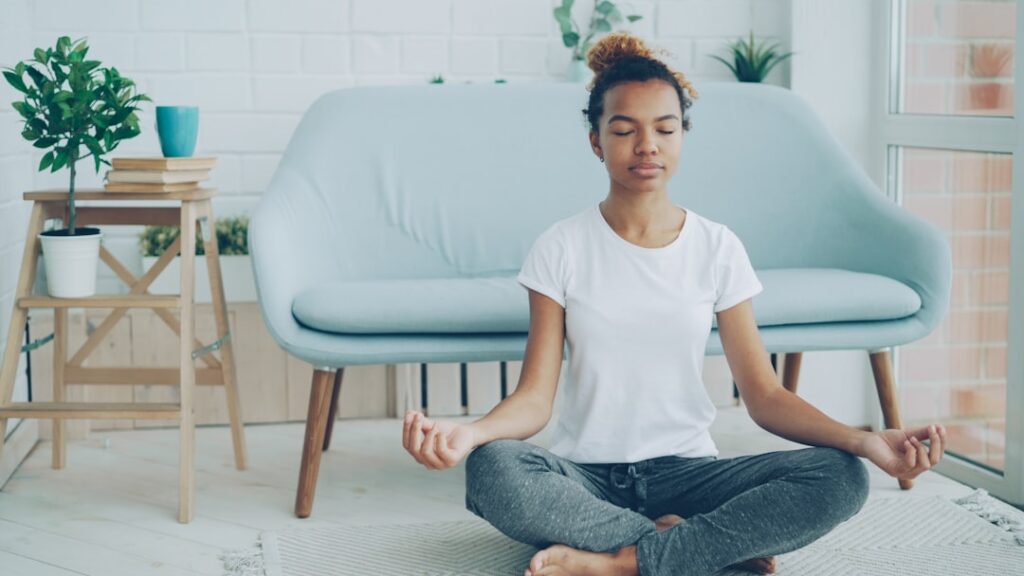
Anxiety and Relaxation Techniques: Start Calming Your Body Today
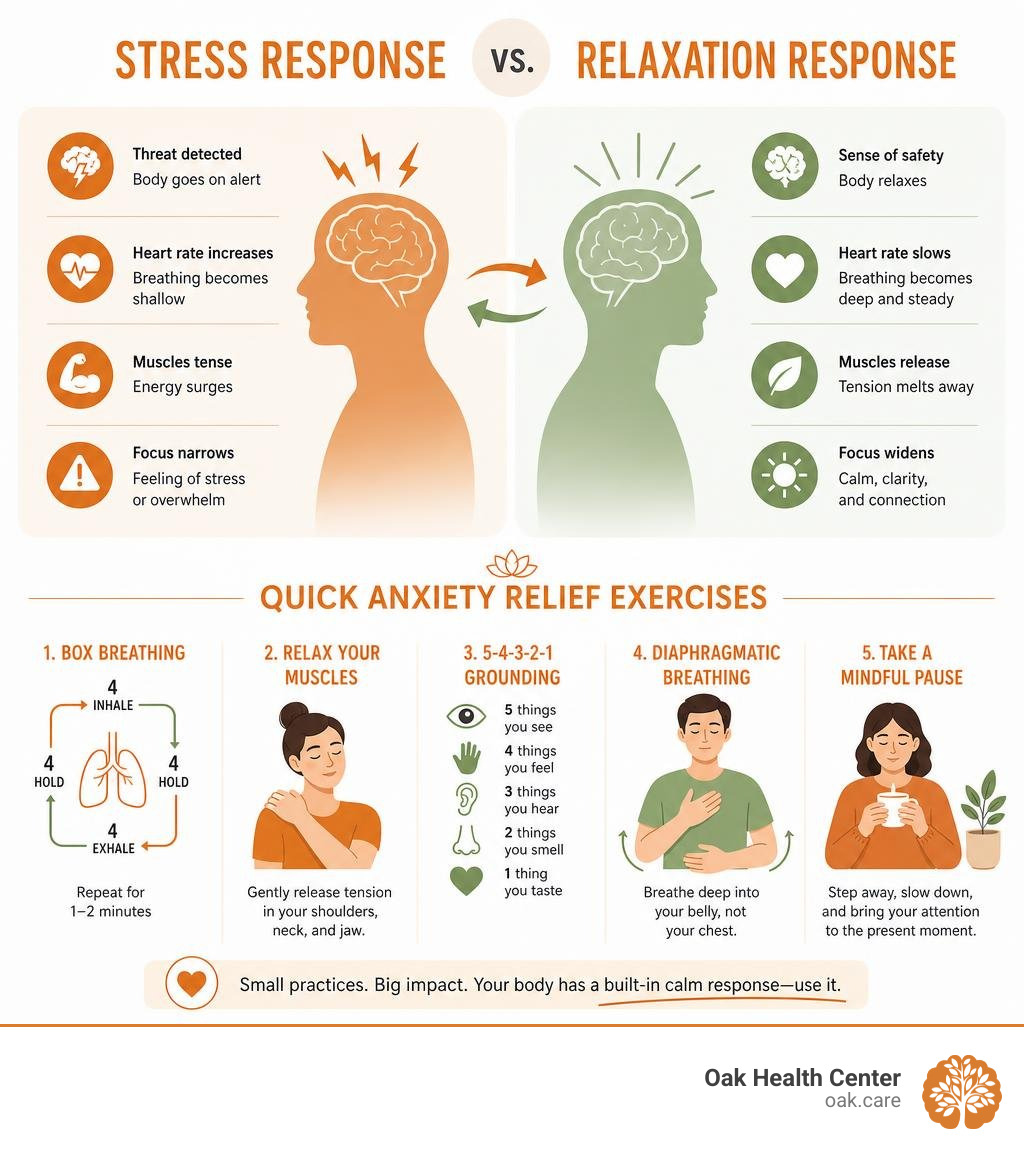
When anxiety rises, start with a simple body-based skill: slow your breathing, release muscle tension, or ground yourself in the present moment. Try box breathing for one to two minutes, gently relax your shoulders and jaw, or name five things you can see. These anxiety and relaxation techniques can help reduce the physical surge of stress, including a racing heart, tight muscles, and shallow breathing.
The goal is not to force anxiety away. It is to give your nervous system a clear signal that you are safe enough to slow down. With regular practice, techniques like diaphragmatic breathing, progressive muscle relaxation, guided imagery, and mindfulness can make it easier to respond to daily pressure without feeling overwhelmed.
I am Andrew Brewer, Practice Manager at Oak Health Center, where I work alongside clinical teams supporting accessible, thoughtful mental health care. My background in healthcare operations and program development has shown me why practical anxiety and relaxation techniques can be valuable tools alongside individualized therapy and clinical support.
The Physiology Behind Anxiety and Relaxation Techniques
When you experience stress, your body is not acting out of malice—it is simply relying on ancient survival programming. Decades of clinical work illustrate how our evolutionary fight-or-flight response, designed to outrun physical threats, gets triggered by modern psychological challenges like rush-hour traffic, looming work deadlines, or financial strain.
Understanding the underlying neurobiology helps explain how 5 ways anxiety shows up in everyday life physically drains your energy. When we engage in targeted somatic practices, we flip the biological switch from distress to restoration.
Stress Response vs. The Relaxation Response
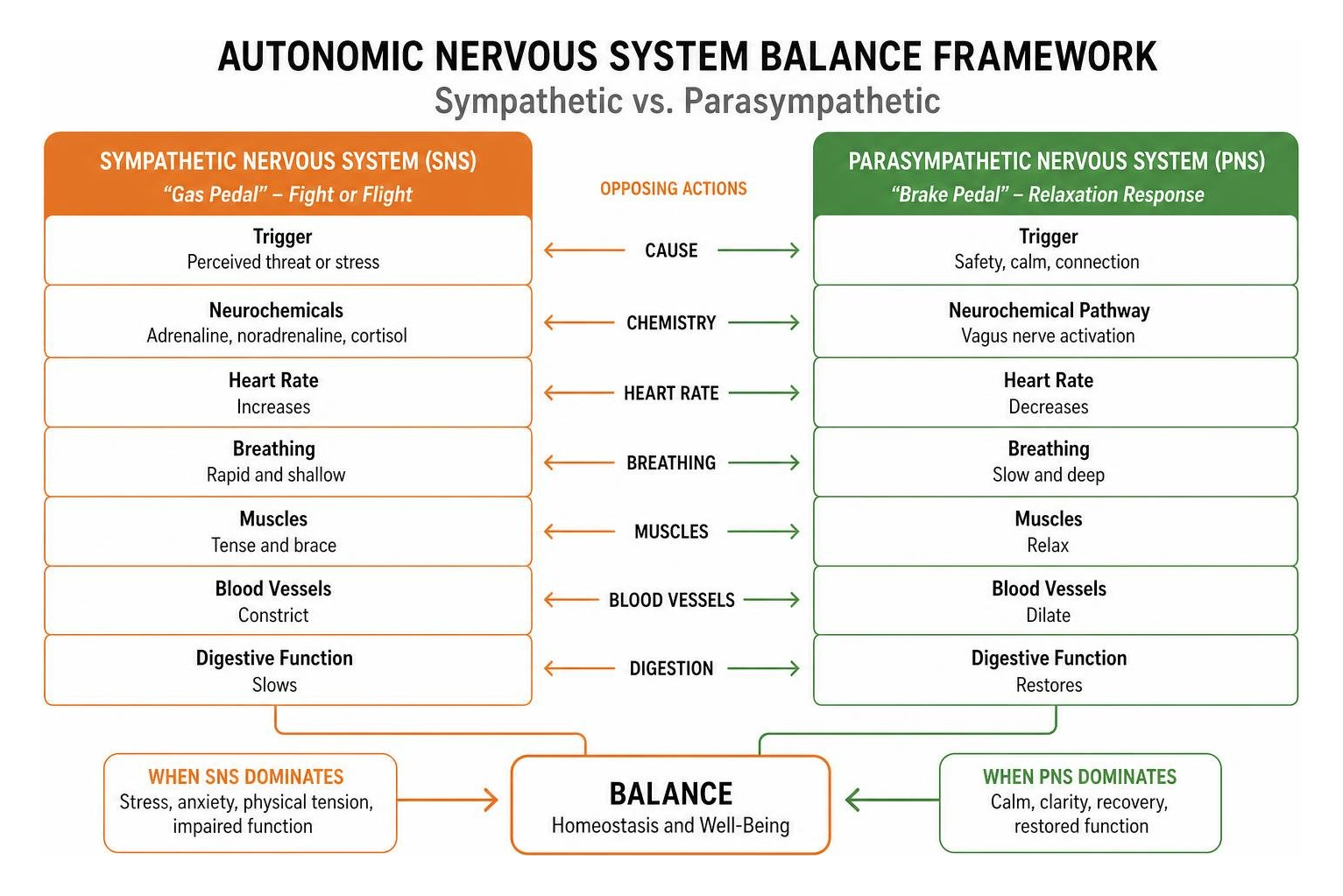
The human autonomic nervous system operates through two primary branches:
- The Sympathetic Nervous System (SNS): The gas pedal. Upon detecting a threat, the SNS floods your bloodstream with catecholamines (adrenaline and noradrenaline) and cortisol. Heart rate spikes, peripheral blood vessels constrict, respiration becomes rapid and shallow, and muscles brace for impact.
- The Parasympathetic Nervous System (PNS): The brake pedal. Mediated largely by the vagus nerve, the PNS initiates what Dr. Herbert Benson of Harvard Medical School termed the “relaxation response” in the 1970s. As documented in a Harvard Health analysis of the relaxation response, this physiological state actively lowers blood pressure, decreases heart rate, restores healthy digestive function, and brings the body back to homeostasis.
Neurological and Hormonal Impact of Mind-Body Practices
Chronic psychological distress does more than cause fleeting tension; over time, it physically reshapes neural architecture. Unmanaged, ongoing stress alters brain development, particularly within the amygdala (which drives emotional processing and threat detection) and the prefrontal cortex (which governs executive functioning, emotional regulation, and decision-making).
According to a StatPearls clinical review on relaxation techniques, structured relaxation methods directly counteract this strain by lowering systemic cortisol levels. By calming the hyperactive amygdala and restoring blood flow to the prefrontal cortex, mind-body exercises foster neuroplasticity—strengthening your capacity to evaluate stressors rationally rather than spiraling into autonomic distress.
6 Step-by-Step Relaxation Exercises for Daily Anxiety Relief
Think of mind-body conditioning like building physical stamina. You would not run a 10K race without prior training; similarly, somatic practices require consistent daily rehearsal during calm periods so your nervous system can instinctively execute them during high-stress spikes.
1. Diaphragmatic Breath Focus and Box Breathing
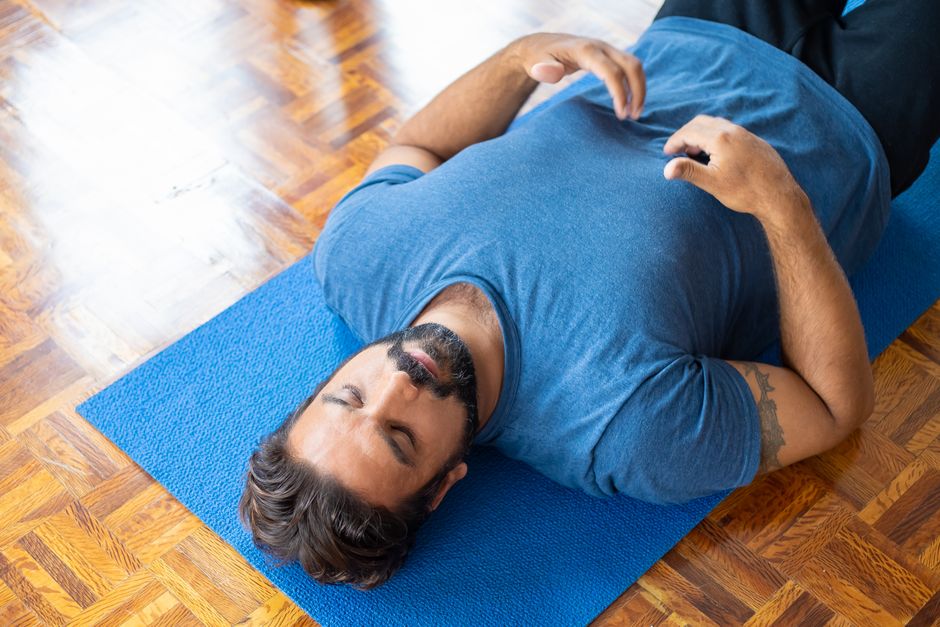
When panic surfaces, people often hyperventilate by taking fast, shallow breaths into their upper chest. Diaphragmatic breathing and box breathing regulate blood gas chemistry by balancing oxygen and carbon dioxide levels.
As detailed in the University of Michigan clinical guide to relaxation skills, controlling the speed and rhythm of your breathing matters more than taking forced, overly deep breaths. If you notice physical signs of an impending panic surge, refer to the essential checklist for anxiety attack symptoms while using this exercise to anchor your autonomic system.
How to Practice Box Breathing:
- Inhale: Slowly breathe in through your nose for a count of 4, expanding your abdomen rather than lifting your shoulders.
- Hold: Gently retain your breath for a count of 4.
- Exhale: Release the air smoothly through your mouth for a count of 4.
- Hold: Pause and hold empty for a count of 4 before your next breath.
- Pacing Tip: If 4 seconds feels too long or induces air hunger, scale down to a comfortable 2-second or 3-second cadence. Repeat for 4 to 6 cycles.
2. Systematic Progressive Muscle Relaxation (PMR)
PMR targets somatic tension by systematically isolating, contracting, and relaxing individual muscle groups. Developed by physician Edmund Jacobson, this technique trains your brain to recognize subtle muscular bracing.
A 2015 systematic review highlighted that progressive muscle relaxation effectively reduces anxiety and depressive symptoms in older adults, with emotional gains maintained 14 weeks post-intervention. Furthermore, the Mayo Clinic stress management guidelines recommend PMR for improving sleep quality and reducing chronic tension headaches.
Step-by-Step PMR Sequence:
- Sit or lie down comfortably in a quiet space without distractions.
- Feet & Calves: Curl your toes downward and tense your calf muscles. Hold this isometric contraction firmly for 5 seconds (never tense to the point of pain or cramping).
- Release: Release the tension instantly and completely. Focus entirely on the warm sensation of blood flowing back into the tissue for 10 to 30 seconds.
- Thighs & Glutes: Squeeze your thigh and buttock muscles tightly for 5 seconds. Release completely for 10 to 30 seconds.
- Abdomen & Chest: Tighten your core muscles as if bracing for an impact for 5 seconds. Exhale and release for 10 to 30 seconds.
- Shoulders & Neck: Shrug your shoulders up toward your ears for 5 seconds. Drop them completely, letting the tension melt away for 10 to 30 seconds.
- Hands & Face: Clench your fists and scrunch your facial features tightly for 5 seconds. Release everything, taking a slow, deep breath.
3. Five-Sense Guided Imagery and Visualization
Guided imagery uses multi-sensory cognitive visualization to redirect the brain away from catastrophic or intrusive thoughts. In cognitive behavioral therapy (CBT), our emotions stem from our thoughts; deliberately introducing soothing sensory inputs regulates your downstream emotional state.
Practicing Five-Sense Beach Visualization:
Find a supported seated posture, close your eyes, and visualize a tranquil coastline:
- Sight: Picture rhythmic, deep blue waves rolling onto pristine, golden sand under a clear sky.
- Sound: Listen closely to the gentle crash and retreat of the ocean waves.
- Smell: Inhale the familiar, pleasant aroma of sunscreen and crisp sea salt air.
- Taste: Notice the faint, crisp taste of sea mist on your lips.
- Touch: Feel the comforting warmth of the midday sun radiant against your skin and soft sand beneath your feet.
Remain in this detailed mental environment for 5 to 10 minutes while maintaining slow, measured diaphragmatic breaths.
4. Mindfulness Meditation and Body Scan Protocols
Mindfulness meditation emphasizes nonjudgmental, present-moment awareness. Instead of attempting to banish anxious thoughts, you observe them like passing clouds. A landmark 2023 randomized clinical trial demonstrated that Mindfulness-Based Stress Reduction (MBSR) is clinically noninferior to escitalopram, a widely prescribed first-line medication for anxiety disorders.
How to Conduct a 5-Minute Body Scan:
- Sit upright with your spine straight and feet flat on the floor.
- Close your eyes and direct your internal spotlight of attention to the soles of your feet.
- Note any tingling, warmth, tightness, or lack of sensation without labeling it “good” or “bad.”
- Gradually sweep your attention upward through your ankles, shins, knees, pelvic floor, torso, chest, hands, neck, and scalp.
- If your mind wanders to a worry or your daily to-do list, simply acknowledge the thought (“thinking”) and gently return your focus to the physical sensation in your body.
5. Somatic Movement: Yoga and Heart Rate Variability Biofeedback
For many people, sitting motionless during intense anxiety feels counterproductive or even distressing. Rhythmic somatic movement discharges pent-up adrenaline while restoring autonomic balance.
- Yoga: A 2021 randomized controlled trial demonstrated that Kundalini yoga was significantly more efficacious for generalized anxiety disorder than standard stress education. The coordinated pacing of physical postures and breathwork engages the parasympathetic nervous system.
- Heart Rate Variability (HRV) Biofeedback: A 2017 meta-analysis of 24 studies found that HRV biofeedback effectively lowers self-reported stress and anxiety. By using wearable sensors to match your breathing rate to your heart’s natural rhythm (typically around 6 breaths per minute), you strengthen vagal tone.
6. Autogenic Training and Grounding Exercises
Developed by German psychiatrist Johannes Heinrich Schultz, autogenic training utilizes passive verbal self-statements to elicit feelings of heaviness and warmth throughout the limbs, indicating peripheral vasodilation and muscle relaxation.
Quick Autogenic Protocol:
Silently repeat the following phrases while maintaining slow, diaphragmatic breathing:
- “My right arm is heavy and warm… I am completely calm.”
- “My heartbeat is steady and relaxed… My breathing is effortless.”
- “My abdomen is soft and warm… My forehead is cool and clear.”
If racing thoughts prevent sleep onset, combining autogenic statements with sleep hygiene can help you overcome sleep anxiety naturally.
Tailoring Practices to Specific Clinical Anxiety Disorders
No single relaxation technique works identically for every presentation of anxiety. Selecting the right somatic tool depends on your clinical symptom profile.
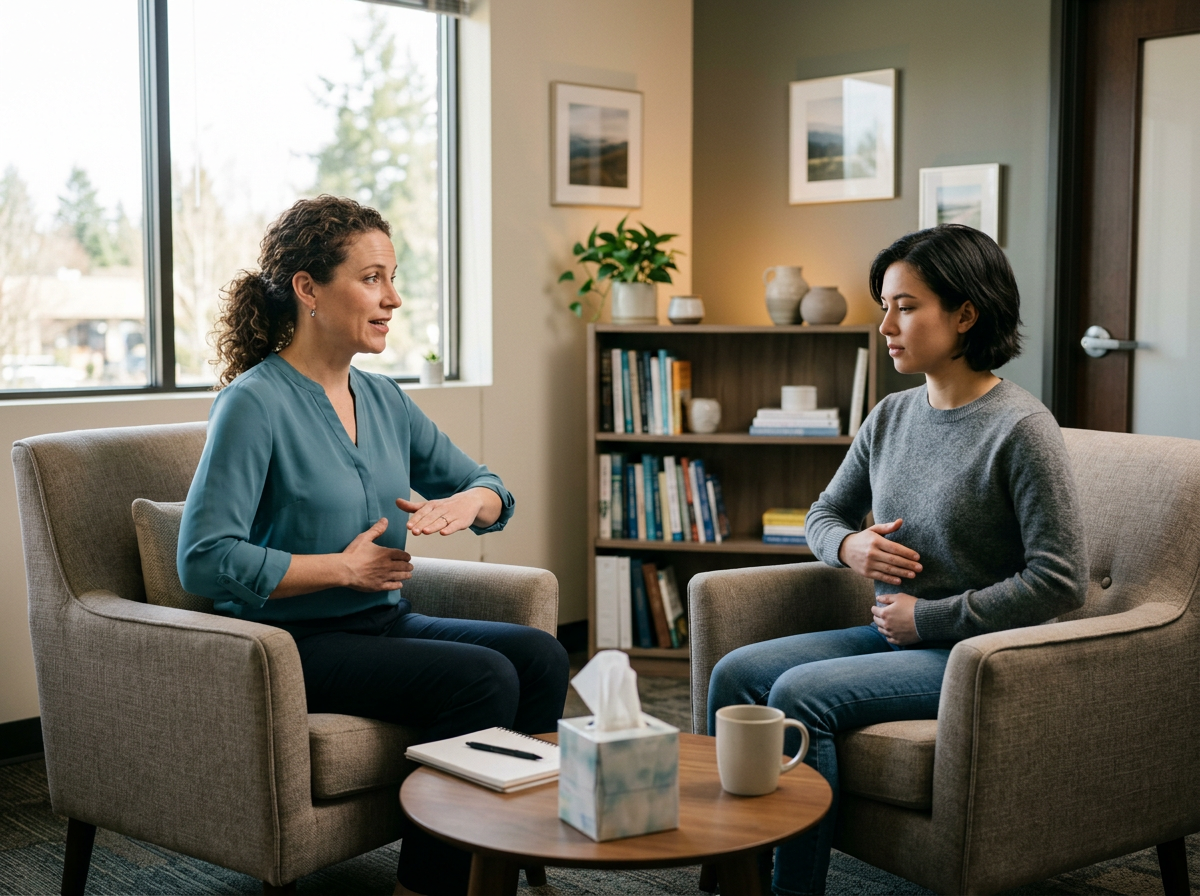
If you are unsure where your symptoms fall on the clinical spectrum, reviewing our in-depth guide to anxiety disorders can provide valuable clarity.
Matching Generalized and Panic Symptoms to Anxiety and Relaxation Techniques
For generalized anxiety disorder (GAD), characterized by persistent somatic tension and chronic worry, proactive daily PMR and mindfulness meditation help recalibrate baseline autonomic arousal.
Conversely, during acute panic attacks, intense internal sensations often lead to misinterpretations of bodily cues. Using rigid deep breathing during a panic surge can inadvertently cause hyperventilation if forced. In these moments, 5-4-3-2-1 external sensory grounding (identifying 5 things you see, 4 you feel, 3 you hear, 2 you smell, and 1 you taste) works best by pulling cognitive focus away from internal physiological distress. Understanding these distinctions helps clarify why your anxiety keeps getting worse when relying solely on internal coping strategies.
Addressing Social Phobia and Sleep-Related Distress
Social anxiety involves significant somatic hyperarousal (blushing, sweating, tremor) paired with fears of negative evaluation. Short, discreet somatic exercises like subtle box breathing (using a 2-second or 3-second count) or isometric hand releases allow you to calm your nervous system without drawing attention.
For nighttime rumination and sleep-onset insomnia, progressive muscle relaxation and autogenic warmth training facilitate the physical transition into restorative sleep. You can learn more about how autonomic hyperarousal disrupts circadian architecture by understanding the anxiety-sleep connection.
Clinical Safety, Contraindications, and Therapeutic Integrations
While relaxation techniques are generally low-risk, non-invasive, and cost-effective, they are not universally benign for every individual. Understanding their proper clinical application ensures safe and effective outcomes.
Adapting Clinical Protocols: When Anxiety and Relaxation Techniques Need Modification
- Trauma and PTSD Considerations: Individuals with post-traumatic stress disorder (PTSD) or significant trauma histories may experience paradoxical anxiety or sudden panic during silent meditation or internal body scans. Closing the eyes and focusing inward can occasionally trigger dissociative states or hyperawareness of distressing somatic sensations. In these cases, open-eye external grounding, rhythmic somatic movement, or walking mindfulness under clinical supervision provide a safer foundation.
- Medical and Physical Contraindications: Breath-holding exercises (like extended box breathing) may require modification for individuals with cardiovascular disease, asthma, chronic obstructive pulmonary disease (COPD), or heart failure. Similarly, PMR should be adjusted to avoid contracting muscles near recent surgical incisions, herniated discs, or acute orthopedic injuries.
- The Avoidance Trap: Relaxation techniques should never be used purely to escape or suppress anxious feelings. Trying desperately to force anxiety away signals to the brain that anxiety itself is dangerous, reinforcing long-term distress. Somatic skills are designed to help you tolerate and navigate discomfort, not run from it.
Comparing Somatic Exercises with CBT and Pharmacotherapy
A comprehensive 2018 meta-analysis of 50 studies involving 2,801 participants found no significant difference in efficacy between relaxation therapy and Cognitive Behavioral Therapy (CBT) for managing generalized anxiety disorder, panic disorder, and social anxiety disorder. However, for conditions like OCD and PTSD, structured psychotherapy involving cognitive restructuring and exposure therapy remains the primary evidence-based choice.
As summarized in the NCCIH research digest on mind and body approaches, relaxation strategies shine brightest when integrated into a multimodal treatment plan. You can explore how evidence-based therapy reshapes anxious thinking patterns in our guide on mind over matter with CBT.
| Treatment Modality | Primary Mechanism of Action | Clinical Indication Strengths | Clinical Considerations |
|---|---|---|---|
| Relaxation Techniques (PMR, Breathwork) | Direct down-regulation of the sympathetic nervous system via vagal nerve stimulation. | Generalized anxiety, somatic muscle tension, stress-related insomnia, mild panic. | Requires regular daily practice; less effective as a standalone treatment for OCD or complex PTSD. |
| Cognitive Behavioral Therapy (CBT) | Cognitive restructuring, behavioral experiments, and systematic exposure. | GAD, panic disorder, social phobia, OCD, PTSD, phobias. | Gold-standard psychotherapy; addresses core maladaptive beliefs and behavioral avoidance. |
| Pharmacotherapy (SSRIs / SNRIs) | Rebalancing central nervous system neurotransmitter availability (serotonin, norepinephrine). | Moderate to severe generalized anxiety, panic disorder, major depression. | Highly effective; may involve temporary side effects during initial titration or discontinuation. |
For many individuals, combining non-pharmacological tools with structured psychotherapy provides comprehensive relief. Learn more about navigating your options in our overview on managing anxiety without medication and our step-by-step guide to psychotherapy.
Frequently Asked Questions About Anxiety Relief Exercises
How often and for how long should relaxation techniques be practiced?
Clinical consensus recommends practicing relaxation techniques for 15 to 20 minutes daily, though even a consistent 5-minute to 10-minute daily session yields measurable benefits. Treating these exercises like daily athletic conditioning builds neural pathways during calm periods, allowing your nervous system to access the relaxation response more easily when acute stress strikes.
Can relaxation exercises trigger paradoxical anxiety or panic?
Yes. Known clinically as relaxation-induced anxiety (RIA), this phenomenon occurs when the sudden drop in muscle tension or intense focus on internal physiological cues feels unfamiliar or threatening. If you experience heightened anxiety during an exercise, open your eyes, switch from internal monitoring to external sensory grounding (naming surrounding objects), and adjust your breathing to a natural, comfortable pace.
How do healthcare professionals incorporate relaxation techniques into patient care?
Clinicians regularly integrate relaxation training as an adjunctive tool alongside psychotherapy and medical treatment. Healthcare providers teach diaphragmatic pacing, biofeedback, and PMR to help patients manage treatment-related anxiety, dental phobias, procedural distress in oncology, and chronic somatic pain. Teaching these practical self-regulation skills empowers patients to actively participate in their overall care plan.
Finding Lasting Calm and Resilience
Learning to downregulate your central nervous system through practical, evidence-based somatic exercises is a powerful step toward reclaiming your daily well-being. Whether you begin with two minutes of box breathing, a nightly progressive muscle relaxation routine, or mindful sensory visualization, these tools help restore calm to a stressed nervous system.
However, when persistent worry, panic attacks, or severe somatic symptoms interfere with your ability to function, self-guided exercises alone may not be enough. If you find yourself struggling to manage chronic distress, reviewing the diagnostic benchmarks in our clinical guide on meeting the criteria for GAD can help you determine the right next step.
At Oak Health Center, we provide comprehensive, compassionate mental healthcare tailored to your unique needs. With convenient clinical locations across Southern California—including Beverly Hills, Fullerton, Laguna Hills, Rancho Cucamonga, and South Pasadena—as well as comprehensive virtual tele-behavioral health services across the state, our dedicated psychiatrists, psychologists, and therapists are here to help. Reach out to our team today to schedule an evaluation and build a personalized treatment plan for lasting peace of mind.