


Anxiety Chest Symptoms in Women: Know the Red Flags First
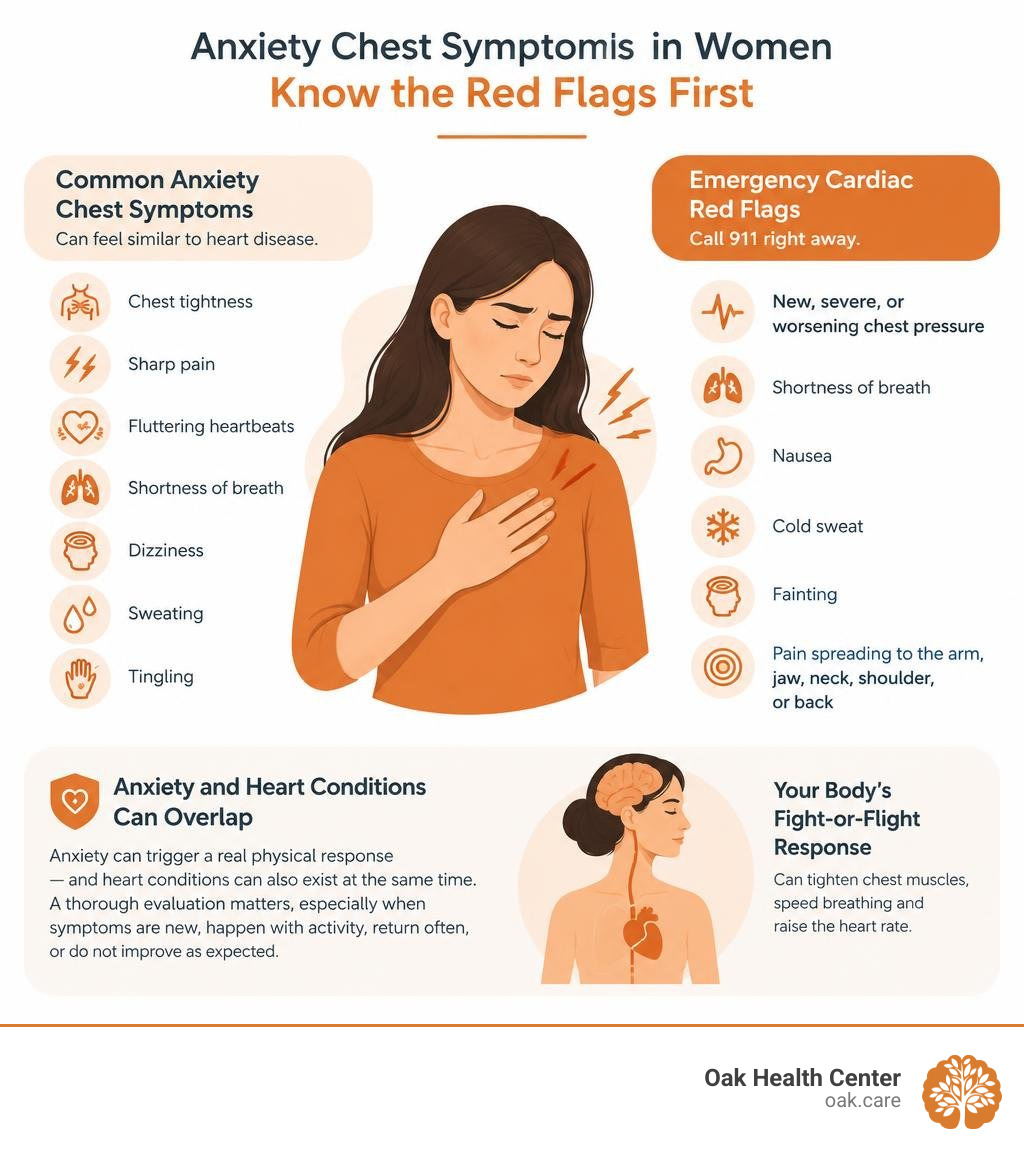
Anxiety can cause chest tightness, sharp pain, fluttering heartbeats, shortness of breath, dizziness, sweating, and tingling. These anxiety symptoms in women chest sensations can feel frighteningly similar to heart disease.
Do not assume chest symptoms are anxiety. Call 911 right away for new, severe, worsening, or persistent chest pressure – especially with shortness of breath, nausea, cold sweat, fainting, or pain spreading to the arm, jaw, neck, shoulder, or back. Heart disease is still the leading cause of death for women in the U.S., and women may have less obvious symptoms such as unusual fatigue, nausea, or lightheadedness.
Anxiety is common, and the body’s fight-or-flight response can tighten chest muscles, speed breathing, and raise the heart rate. Many emergency chest-pain visits are ultimately not caused by a heart problem. But anxiety and heart conditions can also exist at the same time, so a prior anxiety diagnosis should never be used to rule out a cardiac cause.
Women can be especially vulnerable to dismissal when symptoms overlap with panic, stress, perimenopause, or depression. A thorough evaluation matters when symptoms are new, happen with activity, return often, or do not improve as expected.
I am Andrew Brewer, Practice Manager at Oak Health Center, where I work with clinical teams to build accessible, coordinated care programs. My work in healthcare operations supports systems that help people receive thoughtful evaluation and mental health support for anxiety symptoms in women chest concerns and other distressing physical symptoms.
Recognizing Anxiety Symptoms in Women Chest Sensations and Patterns
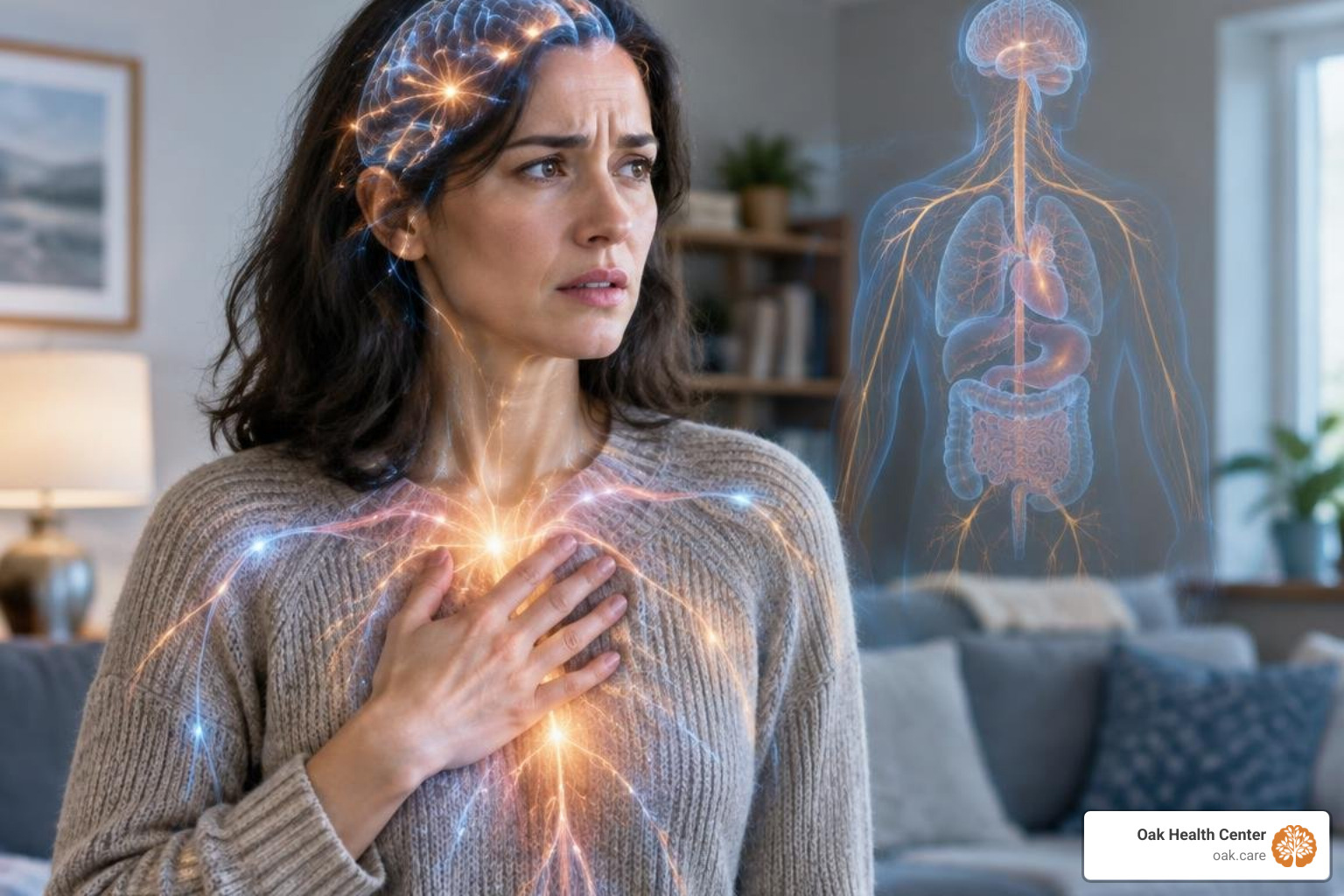
Experiencing sudden chest tightness or rapid fluttering can stop you in your tracks. When emotional distress triggers physical symptoms, your body is responding to complex neurochemical signaling. In emergency departments across the country, roughly 50% of all visits for acute chest pain turn out to have non-cardiac origins. The two most common non-cardiac causes are panic disorder and generalized anxiety disorder (GAD).
Yet, female biology experiences these somatic manifestations uniquely. Research examining gender differences in non-cardiac chest pain shows that women presenting with low cardiac risk endorse symptoms like heart flutter, nausea, and shortness of breath far more frequently than men (Carmin et al., 2008). Rather than classic crushing chest pain, women experiencing autonomic arousal often report sudden respiratory constriction or localized twitches.

Identifying Physical Triggers of Anxiety Symptoms in Women Chest Discomfort
When your brain perceives a threat—whether an impending work deadline, interpersonal conflict, or an unconscious physiological stressor—it activates the sympathetic branch of the autonomic nervous system. Adrenaline (epinephrine) and cortisol surge into your bloodstream, priming your body to fight, flee, or freeze.
This hormonal surge produces distinct physical changes:
- Intercostal Muscle Constriction: The muscles wrapping around your rib cage contract forcefully. When stress is chronic, these tiny muscles spasm, producing a sharp or restrictive band around the ribs.
- Hyperventilation and Shallow Respiration: Rapid, upper-chest breathing alters blood carbon dioxide levels. This causes respiratory alkalosis, leading to lightheadedness, numbness in the extremities, and chest wall discomfort.
- Elevated Vascular Tone and Tachycardia: Surging catecholamines increase both the force and speed of heart contractions, creating a pounding or fluttering sensation against the sternum.
Understanding your somatic profile is critical. Reviewing an essential checklist for anxiety attack symptoms can help you recognize how emotional stress turns into physical distress.
Sensation Profiles: Sharp Spasms, Fluttering, and Muscle Tension
Anxiety-induced chest discomfort does not look identical for everyone. Women frequently describe three distinct physical sensations:
- Sharp, Localized Stabs: Unlike the diffuse pressure of typical cardiac ischemia, anxiety pain often manifests as a pinpoint, needle-like poke or intercostal spasm. You might be able to point to the exact spot on your chest with a single finger.
- Heart Flutter and Palpitations: Sensation of skipped beats, fluttering, or rapid racing (sinus tachycardia) often occurs without physical exertion.
- Esophageal Tightness and Tactile Tenderness: Severe anxiety can trigger esophageal spasms or costochondritis (inflammation of the cartilage connecting ribs to the sternum), making the chest wall tender when pressed.
When these symptoms escalate, they can be terrifying. Using a guide for recognizing severe anxiety symptoms helps you distinguish panic sensations from other medical emergencies.
Anxiety vs. Heart Disease: Diagnostic Overlaps and Critical Differences
Distinguishing between acute anxiety and a genuine cardiovascular event is one of the most challenging tasks in clinical medicine—particularly in women, who naturally exhibit higher rates of “atypical” cardiac symptoms.
| Feature | Anxiety / Panic Attack | Myocardial Infarction (Heart Attack) in Women |
|---|---|---|
| Onset | Sudden, often peaking within 10 minutes | Gradual or sudden; may build intermittently over hours or days |
| Pain Quality | Sharp, stabbing, pinpoint, or localized twitch | Heavy pressure, squeezing, fullness, burning, or aching |
| Location & Radiation | Localized to center/left; rarely radiates down both arms | Center of chest; radiates to jaw, neck, back, shoulder, or left arm |
| Exertion Effect | Occurs at rest or during emotional stress; rarely worsens with physical movement | Frequently triggered or worsened by physical exertion or exertion-like stress |
| Associated Symptoms | Hyperventilation, tingling fingers/lips, trembling, feelings of unreality | Profound unexplained fatigue, cold sweats, nausea/vomiting, lightheadedness |
| Duration | Usually peaks within 10 minutes and subsides within 20–30 minutes | Persists longer than a few minutes, or fades and returns with intensity |
Differentiating Cardiac Events from Anxiety Symptoms in Women Chest Pain
Cardiac events in women frequently defy Hollywood stereotypes. While men often clutch their chest from crushing substernal pressure, women are significantly more likely to experience heart disease symptoms without classic central chest pain.
During a coronary event, women often report:
- Profound, debilitating fatigue that begins days or weeks before the event
- Persistent indigestion, nausea, or upper abdominal fullness
- Aching discomfort spreading into the upper back between the shoulder blades, neck, or lower jaw
- Sudden shortness of breath accompanied by cold sweats and dizziness
Because anxiety, stress, and mood conditions can also produce bodily discomfort, many women confuse ongoing psychological distress with physical illness. Exploring how to identify symptoms of anxiety and depression provides clarity on how mental health conditions affect physical well-being.
Hidden Conditions: INOCA, MINOCA, and Coronary Microvascular Dysfunction
One of the most dangerous clinical pitfalls is assuming that clear coronary arteries mean a woman’s chest symptoms are purely psychological. A significant proportion of women suffer from non-obstructive cardiovascular conditions that are routinely invisible on standard angiograms:
- Ischemia with Non-Obstructive Coronary Arteries (INOCA): Adequate blood flow is blocked not by large fatty plaques, but by functional abnormalities in the blood vessels.
- Coronary Microvascular Dysfunction (CMD): The tiny microscopic branches of the coronary arterial tree fail to dilate properly, starving heart tissue of oxygen during times of demand.
- Myocardial Infarction with Non-Obstructive Coronary Arteries (MINOCA): An actual ischemic heart attack occurs despite the main epicardial arteries showing less than 50% stenosis on an angiogram.
These conditions are far more prevalent in women. Because conventional testing often looks only for major blockages, women suffering from CMD or INOCA are frequently told their hearts are “normal” and referred for psychiatric evaluation. True clinical safety requires ruling out microvascular dysfunction before attributing ongoing exertion-related chest discomfort to anxiety alone.
The Menopausal Transition and Hormonal Influences on Symptoms
Midlife marks a dramatic cardiovascular and neurological turning point for women. During perimenopause and menopause, fluctuating and declining estrogen levels alter vascular physiology and the autonomic nervous system.
Estrogen serves as a natural protector of the female cardiovascular system. It stimulates nitric oxide production, which helps blood vessels stay dilated, elastic, and responsive to blood pressure changes. It also regulates lipid profiles and dampens systemic inflammation. As estrogen levels drop during the menopausal transition, arterial stiffness increases, endothelial function declines, and autonomic regulation becomes less stable.
When interpreting bodily signals, somatic symptoms can sometimes meet formal diagnostic frameworks. Familiarizing yourself with anxiety DSM-5 criteria helps illustrate how clinicians evaluate generalized anxiety during life transitions.
How Hormonal Shifts Alter Cardiovascular and Anxiety Presentation
During perimenopause, abrupt drops in estradiol trigger autonomic surges. The hypothalamus misinterprets baseline body temperature, provoking sudden vasomotor responses: hot flashes, profuse sweating, and sudden nighttime palpitations.
These nocturnal surges frequently wake women from a sound sleep with racing pulses, chest tightness, and sudden dread. When paired with the insomnia common to midlife, an exhausting cycle begins. Understanding how anxiety, depression, and sleep problems feed each other is essential for managing midlife somatic distress.
Navigating Diagnostic Bias and Advocating for Comprehensive Cardiac Care
A major hurdle women face when seeking care for chest discomfort is diagnostic bias. Research consistently shows that women have an approximately 50% higher chance of being initially misdiagnosed during a cardiac event compared to men. Furthermore, women with low traditional cardiac risk profiles are more than 2.5 times more likely than men to be prescribed psychotropic medications when reporting chest-related complaints (Carmin et al., 2008).
When a woman’s medical chart contains a recorded history of anxiety, depression, or chronic stress, clinicians may unconsciously engage in “diagnostic overshadowing”—attributing new physical symptoms to an existing psychiatric label without conducting an objective medical evaluation.
Practical Steps When Symptoms Are Dismissed as Stress
If you find yourself in an emergency room or doctor’s office and suspect your physical symptoms are being minimized as “just stress,” use these clear self-advocacy strategies:
- Ask for Specific Diagnostic Markers: Politely request objective testing: “Can we run a high-sensitivity cardiac troponin panel and an EKG to rule out acute ischemia before we conclude this is stress?”
- Highlight Exertional Triggers: If your chest discomfort, breathlessness, or fatigue worsens with physical exertion (like climbing stairs) rather than purely during emotional stress, state this clearly.
- Request Documentation: If a physician declines to run recommended diagnostic tests, say: “Please document in my chart that I presented with new chest symptoms and that diagnostic cardiac testing was declined at this time.” This often prompts a second, more thorough review.
- Seek an Advanced Second Opinion: If standard testing is normal but exertional chest tightness or profound fatigue persists, consult a specialized women’s heart center or a cardiologist experienced in coronary microvascular dysfunction and INOCA.
While obtaining medical clarity, practicing evidence-based anxiety coping skills can help reduce autonomic reactivity and ease your physical distress.
Transforming Medical Education and Diagnostic Standards
Reducing gender disparities in cardiovascular outcomes requires systemic changes across healthcare. Medical curricula are shifting away from treating female physiology as a smaller version of male physiology.
Current systemic initiatives include:
- Updated Triage Protocols: Emergency departments are standardizing high-sensitivity troponin assays and gender-specific biomarker cutoffs to catch subtle cardiac events in women.
- Integrating Women’s Heart Health into Primary Care: Primary care doctors and OB-GYNs are collaborating to screen for midlife cardiovascular risks during routine menopausal visits.
- Comprehensive Non-Invasive Imaging: Routine use of coronary CT angiography (CCTA), stress cardiac MRI, and PET scans designed to detect microvascular disease when traditional angiograms show clear arteries.
Frequently Asked Questions About Female Chest Discomfort
How long does anxiety-related chest pain typically last in women?
Anxiety-induced chest pain associated with an acute panic attack usually peaks within 10 minutes and subsides within 20 to 30 minutes as your sympathetic nervous system calms down. However, chronic generalized tension can cause sustained intercostal muscle aching that lingers for hours or days. Practicing relaxation exercises that calm anxiety helps release tension in the chest wall and restore balanced breathing.
Why does anxiety chest pain occur on the left side?
Anxiety-related chest pain frequently localizes on the left side due to a combination of muscle tension, posture, and autonomic hypersensitivity. When people feel anxious, they often unconsciously tense their non-dominant shoulder and pectoral muscles. Additionally, somatic hypervigilance—the tendency to focus on your heart—makes you much more aware of normal left-sided heartbeats, esophageal sensations, or intercostal nerve twitches, amplifying perceived pain in that area.
What medical tests rule out heart disease before confirming anxiety?
Before concluding that chest discomfort is purely psychological, physicians use several foundational diagnostic tests:
- 12-Lead Electrocardiogram (EKG): Checks the electrical rhythm of the heart to identify arrhythmias, past damage, or active ischemia.
- High-Sensitivity Cardiac Troponin Blood Tests: Detects minute levels of heart muscle proteins released into the bloodstream during cardiac injury.
- Echocardiogram: An ultrasound that assesses heart chamber size, wall motion abnormalities, and heart valve function.
- Coronary CTA or Stress Imaging: Evaluates blood flow under physical or pharmacological stress and screens for plaque buildup or microvascular abnormalities.
Once cardiac causes are ruled out, clinical tools like interpreting your GAD-7 anxiety score can help evaluate the severity of an underlying anxiety disorder.
Conclusion
Chest discomfort in women should never be minimized, oversimplified, or dismissed. Understanding the subtle differences between autonomic fight-or-flight sensations and atypical cardiovascular disease allows you to make informed decisions about your health. Always seek immediate emergency medical care for any sudden, severe, exertional, or unexplained chest symptoms to rule out cardiac emergencies first.
Once you have medical clearance, addressing nervous system dysregulation is the next step toward lasting relief. At Oak Health Center, we provide comprehensive, compassionate mental healthcare at our five Southern California clinic locations—including Beverly Hills, Fullerton, Laguna Hills, Rancho Cucamonga, and South Pasadena—as well as through statewide virtual services across California. Our clinical teams specialize in helping you regain control over somatic distress and psychological well-being.
To better understand your physical stress patterns, explore our guide for women on stress versus anxiety attacks and take the first step toward lasting peace of mind.
References
Carmin CN, Ownby RL, Wiegartz PS, Kondos GT. “Women and non-cardiac chest pain: gender differences in symptom presentation..” Archives of women’s mental health, 2008. PMCID PMC2574964.