

Understanding Anxiety Disorders: Definition, Symptoms, and Causes
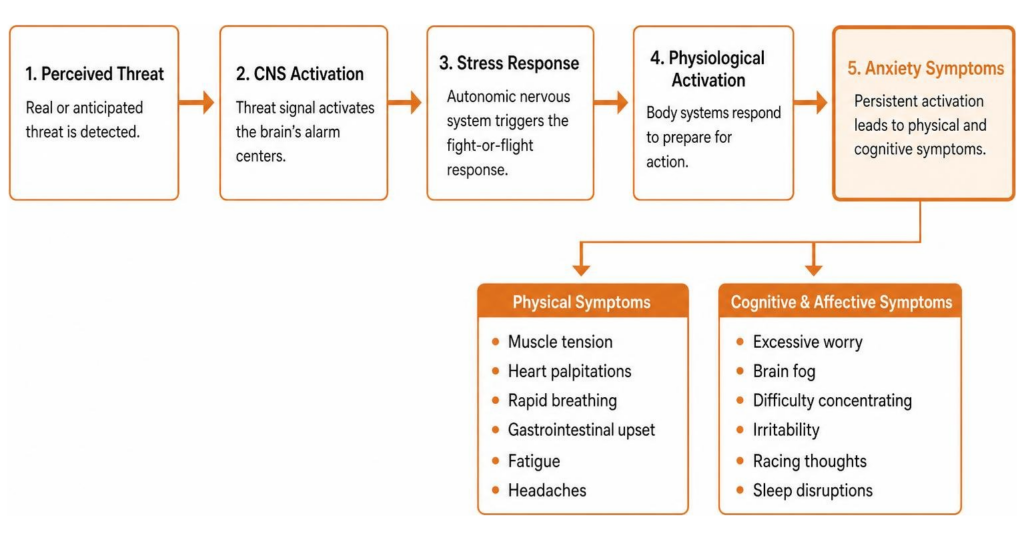
Anxiety disorders involve persistent, intense fear and dread that disrupt normal functioning. Unlike standard stress, these conditions activate the central nervous system’s threat responses even when no immediate danger exists, leading to long-term cognitive and bodily strain.
How Anxiety Disorders Differ from Everyday Stress
Fear is an automatic biological response to immediate danger, while anxiety involves the anticipation of future threats. Everyday stress helps us meet deadlines or react to real challenges, fading once the situation resolves.
In contrast, anxiety disorders involve persistent distress, false alarm reactions, and behavioral avoidance. According to the Overview of Anxiety Disorders, clinical anxiety is diagnosed when worry causes functional impairment or lasts continuously for six months or longer.
Physical and Cognitive Symptoms
Anxiety manifests through both psychological and physical symptoms:
- Physical: Muscle tension, heart palpitations, rapid breathing, gastrointestinal upset, fatigue, and headaches.
- Cognitive and Affective: Excessive worry, brain fog, difficulty concentrating, irritability, racing thoughts, and sleep disruptions.
Understanding how these symptoms manifest in daily life is crucial for early detection. You can learn more about identifying severe presentations in our guide to Recognizing Severe Anxiety Symptoms, see common examples in Everyday Anxiety Manifestations, or explore the restorative impact of rest in the Anxiety and Sleep Connection.
Biological and Environmental Causes
The development of an anxiety disorder typically involves a combination of biological and environmental factors:
- Genetics: A family history of anxiety significantly increases baseline susceptibility. First-degree relatives of individuals with generalized anxiety disorder face up to a 25% genetic risk.
- Neurochemistry: Dysregulation among key neurotransmitters—including GABA, serotonin, norepinephrine, and dopamine—alters fear signaling circuits.
- Brain Structure: Hyperactivity in the amygdala paired with reduced prefrontal cortex control impairs threat regulation.
- Environmental Triggers: Early childhood trauma, chronic workplace stress, or major life changes can provoke symptom onset.
- Physical Health Intersections: Underlying medical issues such as thyroid dysfunction, asthma, or heart conditions can directly trigger or worsen anxiety responses. Detailed clinical insights into these pathways can be found in the StatPearls Anxiety Overview.
Classification and Characteristics of Subtypes
The Diagnostic and Statistical Manual of Mental Disorders (DSM-5-TR) categorizes anxiety disorders into distinct clinical types based on primary triggers and symptom patterns.
Common Types of Anxiety Disorders
| Subtype | Estimated U.S. Prevalence | Primary Clinical Trait |
|---|---|---|
| Specific Phobia | Up to 12% | Irrational, intense fear and avoidance of specific objects or situations |
| Social Anxiety Disorder | ~7% | Intense fear of negative evaluation, scrutiny, or embarrassment in social settings |
| Separation Anxiety Disorder | 1.6%–4% | Excessive fear or distress regarding separation from primary attachment figures |
| Generalized Anxiety Disorder (GAD) | ~3% | Chronic, shifting worry across multiple everyday domains lasting ≥ 6 months |
| Agoraphobia | Up to 1.7% | Fear and avoidance of environments where escape might be difficult during panic |
| Selective Mutism | 0.47%–0.76% | Consistent failure to speak in specific social settings despite speaking comfortably at home |
Generalized Anxiety Disorder
Generalized Anxiety Disorder (GAD) involves chronic, shifting worry across multiple life domains, such as health, finances, work, and family. Diagnostically, the worry must be difficult to control, present for at least six months, and accompanied by at least three physical or cognitive symptoms (restlessness, easy fatigability, concentration difficulties, irritability, muscle tension, or sleep disturbance).
For a comprehensive medical review, consult the Generalized Anxiety Disorder Clinical Overview or explore our detailed breakdown of GAD DSM-5 Standards.
Panic Disorder and Agoraphobia
Panic disorder is defined by recurrent, unexpected panic attacks—sudden surges of intense fear reaching a peak within minutes. Symptoms include chest pain, heart palpitations, shortness of breath, dizziness, and fear of losing control. Panic attack frequency can range from multiple episodes a day to a few per year.
Agoraphobia often develops alongside panic disorder. It involves intense fear and avoidance of situations where escape might be difficult or help unavailable during a panic surge, such as public transit, open crowds, or enclosed spaces.
If you suspect you or a loved one is experiencing panic episodes, review our Checklist for Anxiety Attack Symptoms or read about gender-specific presentations in Stress vs Anxiety Attacks in Women.
Social Anxiety and Specific Phobia
Social anxiety disorder goes far beyond occasional shyness; it involves persistent fear of judgment, humiliation, or rejection in public or performance settings. Specific phobias involve intense, irrational fears directed at distinct objects or environments—such as heights, flying, injections, or animals—leading to immediate distress and active avoidance.
Separation Anxiety and Selective Mutism
While often associated with children, separation anxiety disorder affects up to 1.9% of adults, causing intense distress when separated from key attachment figures. Selective mutism is a childhood anxiety disorder characterized by a persistent failure to speak in specific social settings (such as school) despite speaking freely at home. If left unaddressed, underlying social anxiety can persist into adulthood.
Risk Factors and Diagnostic Evaluation
Identifying anxiety disorders involves recognizing demographic risk factors and conducting a differential diagnosis to rule out secondary medical conditions.
Primary Risk Factors and Demographics
- Gender: Women are approximately twice as likely as men to be diagnosed with an anxiety disorder.
- Personality Traits: Childhood traits such as behavioral inhibition—a tendency to display distress in novel situations—increase future risk.
- Life Stress: High-pressure careers and chronic trauma exposure contribute to symptom escalation. Learn more about professional pressure in our article on Anxiety in High-Achieving Professionals.
Diagnostic Procedures and Medical Workups
Because physical conditions can mimic anxiety symptoms, a medical evaluation is essential. Healthcare providers typically conduct baseline laboratory workups—including complete blood counts (CBC), thyroid panels, blood glucose tests, and urine toxicology screens—to rule out conditions like hyperthyroidism, arrhythmias, or drug interactions.
Clinicians also use validated screening tools:
- GAD-7: Evaluates anxiety severity over the preceding two-week period. Learn how scores are calculated in Decoding Your GAD-7 Anxiety Score.
- PHQ-9: Screens for co-occurring depressive symptoms. Discover why providers assess both tools together in Combining GAD-7 and PHQ-9.
Evidence-Based Treatment Approaches
Despite being highly treatable, global statistics show that only about 1 in 4 people in need (27.6%) receive treatment for anxiety disorders. Effective interventions combine psychological support and medical care.
Psychotherapy and Behavioral Interventions
Cognitive Behavioral Therapy (CBT) is considered a primary psychotherapeutic treatment for anxiety disorders. CBT helps individuals identify and reframe unhelpful thought patterns while reducing avoidance behaviors through structured exposure techniques.

Other effective modalities include Acceptance and Commitment Therapy (ACT), Exposure and Response Prevention (ERP), and Mindfulness-Based Stress Reduction (MBSR). Explore these options in our guide to Evidence-Based Therapy with CBT, learn about broader options in Types of Therapy for Mental Health, or read about non-pharmacological care in Managing Anxiety Without Medication.
Pharmacological Treatments
When medication is appropriate, medical providers usually consider the following first-line options:
- SSRIs and SNRIs: Selective Serotonin Reuptake Inhibitors (e.g., escitalopram, sertraline) and Serotonin-Norepinephrine Reuptake Inhibitors (e.g., venlafaxine) are the standard pharmacological treatments for chronic anxiety. They typically take 3 to 6 weeks to demonstrate therapeutic efficacy.
- Buspirone: A non-benzodiazepine anxiolytic option that reduces generalized anxiety without risk of physical dependence, though it requires approximately two weeks to take effect.
- Beta-Blockers: Used short-term to manage physical symptoms (e.g., rapid heart rate, tremors) during acute performance situations.
- Benzodiazepines: Fast-acting agents reserved for short-term crisis management. Long-term use is generally discouraged due to risks of dependence, tolerance, and cognitive side effects.
For comprehensive federal clinical guidelines and research updates, visit the Anxiety Disorders Overview – NIMH.
Prevention, Self-Care, and Health Complications
Untreated anxiety disorders can impact overall physical health, but preventive self-care habits help build long-term resilience.
Long-Term Health Complications
When left unmanaged, persistent anxiety can lead to secondary complications, including:
- Mental Health Comorbidities: Increased risk of secondary major depressive disorder and substance use disorders driven by self-medication cycles.
- Physical Health Strain: Elevated cardiovascular strain, GI issues, and systemic inflammation.
- Sleep Architecture Disruption: Chronic insomnia and sleep fragmentation.
To explore how these conditions overlap, review How Anxiety and Depression Interact and read about sleep disruptions in Sleep Apnea and Mental Health.
Self-Care Strategies and Prevention
While clinical care remains essential, daily habits help reduce symptom severity:
- Regular Exercise: Moderate daily physical activity helps burn off excess adrenaline and improves mood.
- Mindfulness and Relaxation: Diaphragmatic breathing and progressive muscle relaxation help calm hyperactive nervous system responses.
- Dietary Adjustments: Reducing caffeine, alcohol, and nicotine intake minimizes artificial physical anxiety triggers like heart palpitations.
- Sleep Hygiene: Maintaining a consistent bedtime schedule supports brain restoration. Learn practical habits in Overcoming Sleep Anxiety Naturally.

Frequently Asked Questions
Can underlying physical medical conditions cause anxiety symptoms?
Yes. Underlying physical conditions—such as hyperthyroidism, heart arrhythmias, chronic obstructive pulmonary disease (COPD), asthma, or hypoglycemia—can produce physical symptoms that mimic anxiety. Sudden onset of anxiety without psychological history or avoidance behaviors often warrants a full medical evaluation.
How long does treatment take to show measurable improvement?
Therapeutic outcomes vary by individual. Cognitive Behavioral Therapy (CBT) often yields tangible skill development within 8 to 12 weekly sessions. Antidepressant medications (SSRIs/SNRIs) typically require 3 to 6 weeks of consistent use before significant symptom reduction is felt.
Why are benzodiazepines generally not recommended for long-term management?
While benzodiazepines offer rapid relief for acute panic, long-term use is generally discouraged due to rapid tolerance development, physical dependence, withdrawal challenges, and potential cognitive side effects. First-line maintenance care relies instead on SSRIs, SNRIs, and psychotherapy.
Conclusion
Managing an anxiety disorder begins with recognizing that persistent fear and physical distress are medical signals—not personal shortcomings. With early intervention, proper evaluation, and evidence-based treatment, long-term recovery and symptom relief are achievable.
At Oak Health Center, we provide accessible, compassionate mental healthcare tailored to your unique needs. We operate convenient clinic locations in Beverly Hills, Fullerton, Laguna Hills, Rancho Cucamonga, and South Pasadena, alongside statewide virtual care across California.
If anxiety is interfering with your daily life, reach out to our team today to explore our personalized Psychotherapy Services and begin your path toward sustainable relief.