


Understanding Anxiety in Women Across Life Stages
Anxiety in women can be a normal response to stress. It may be an anxiety disorder when worry or fear persists, feels hard to control, and disrupts work, sleep, relationships, or daily life. Women are more likely than men to experience anxiety disorders. Hormonal changes, family history, trauma, and ongoing stress can all play a role.
Anxiety can change over time, especially around puberty, menstrual cycles, pregnancy, and menopause. One U.S. estimate found that 23.4% of women experienced an anxiety disorder in a year. Whatever your life stage, you do not have to sort out persistent symptoms alone.
I’m Andrew Brewer, Practice Manager at Oak Health Center. My work supporting mental health teams and patient access shapes how I approach this guide to anxiety in women: clear information first, with practical ways to seek help.
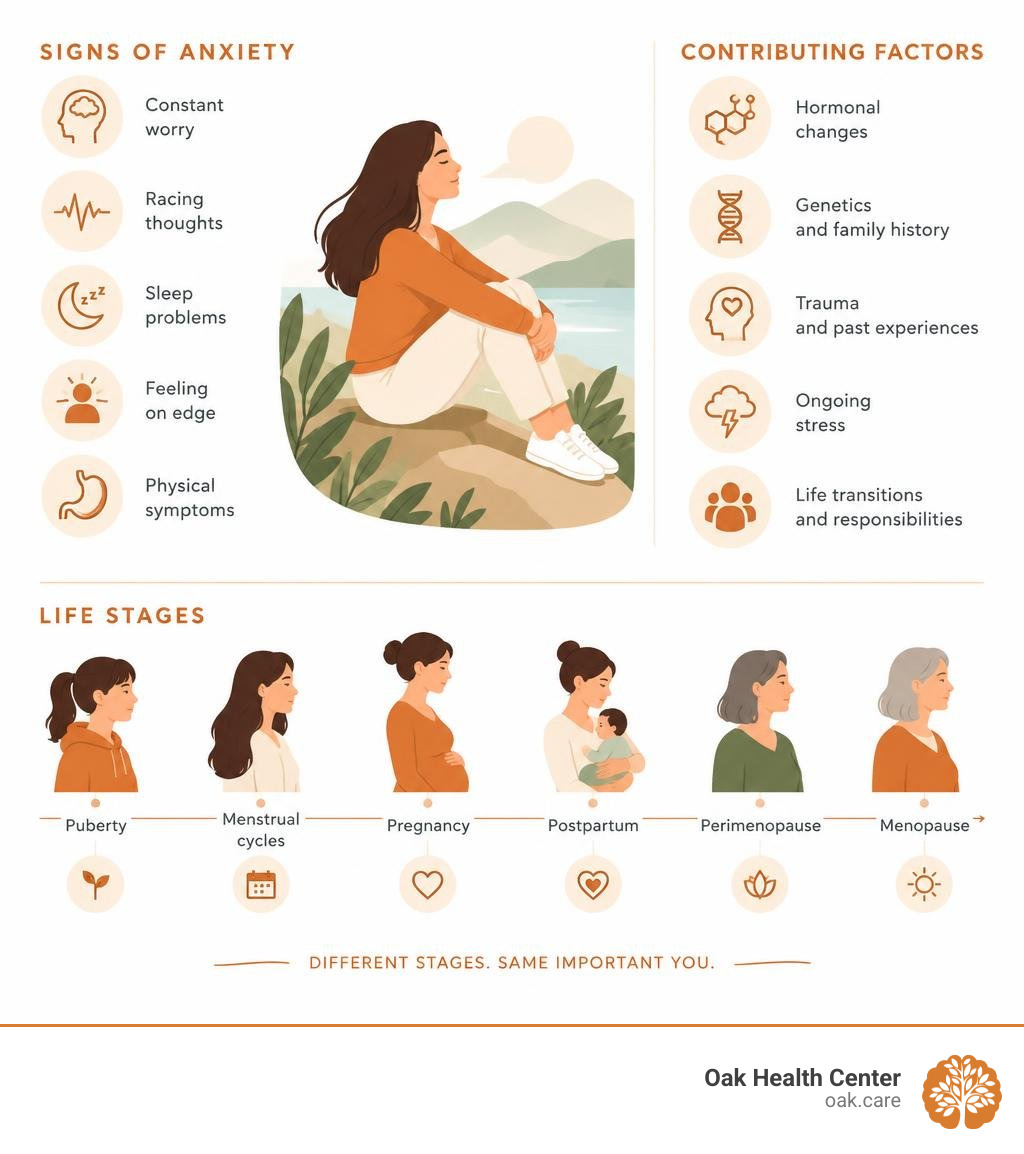
The Root Causes of Anxiety in Women: Biology, Genetics, and Environment
Understanding why anxiety disorders occur requires a comprehensive look at the human body, mind, and environment. We view mental well-being through a biopsychosocial lens—recognizing that emotional distress rarely stems from a single isolated cause.

Neurobiology, Genetics, and Brain Chemistry
At the neurobiological level, differences in brain chemistry and genetic expression create distinct vulnerabilities. Specific genetic factors, such as variants in the monoamine oxidase A (MAOA) gene, interact uniquely with sex hormones, influencing how neurotransmitters like serotonin, dopamine, and norepinephrine are processed.
Female reproductive hormones—specifically estradiol and progesterone—directly modulate neurotransmission. Progesterone breaks down into neuroactive steroids like allopregnanolone, which acts on the brain’s GABA-A receptors (the primary inhibitory system responsible for calming neural activity). When hormone levels fluctuate rapidly, GABA receptor sensitivity can change, leaving the central nervous system more reactive to stressors (Hantsoo & Epperson, 2017). For a foundational look at standard clinical definitions, exploring a practical guide to anxiety DSM-5 criteria helps contextualize how these neurobiological shifts translate into diagnosable symptom clusters.
Research published in a Cambridge University Press review on biological influences highlights that women often exhibit higher baseline anxiety sensitivity—a heightened fear of anxiety-related bodily sensations—and distinct respiratory mechanics that may lower the threshold for panic responses.
Psychosocial Stressors and Physical Health Comorbidities
Anxiety does not exist in a vacuum. External environments and physical health deeply impact mental stability. Women are statistically more likely to experience interpersonal violence, systemic discrimination, and disproportionate caregiving burdens—balancing elder care, child-rearing, and career responsibilities.
Simultaneously, chronic physical illnesses disproportionately affect women and frequently co-occur with heightened anxiety:
- Autoimmune Disorders: Conditions like Hashimoto’s thyroiditis, lupus, and rheumatoid arthritis involve systemic inflammation that directly influences neurochemistry.
- Gastrointestinal Issues: The gut-brain axis plays a massive role in emotional regulation; irritable bowel syndrome (IBS) is twice as common in women and shares strong neural pathways with anxiety.
- Cardiovascular Strain: Chronic anxiety elevates resting heart rate and blood pressure, complicating long-term cardiac health.
- Sleep Disturbances: Disrupted rest impairs emotional regulation, creating a cycle where how anxiety, depression, and sleep problems feed each other becomes an everyday obstacle.
A recent Medical Xpress report on systemic mental health care highlights that addressing these complex, overlapping physical and social pressures requires comprehensive clinical care rather than isolated interventions.
Major Types and Clinical Manifestations of Anxiety Disorders
Anxiety disorders encompass several distinct diagnostic categories, each presenting unique challenges.
Recognizing Generalized Anxiety, Panic, and Phobias
- Generalized Anxiety Disorder (GAD): Characterized by persistent, pervasive worry about everyday matters such as family safety, finances, and health. Lifetime prevalence of GAD is about 6% for women compared to 3% for men. You can learn more about clinical baselines by reviewing how to meet the criteria for GAD DSM-5 standards.
- Panic Disorder: Marked by unexpected, recurring panic attacks accompanied by intense physical symptoms and persistent fear of future attacks. It affects women at more than twice the rate of men. Women experiencing acute episodes can reference a helpful cheat sheet to anxiety attack symptoms in women.
- Specific Phobias: An irrational, intense avoidance of particular objects or situations (e.g., medical procedures, animals, heights). Lifetime rates reach 12% to 27% in women versus 6% to 12% in men.
- Social Anxiety Disorder: Intense apprehension of social evaluation, speaking, or performance, presenting slightly higher in women (5% to 15%) than men.
- Agoraphobia: An intense fear of entering open, crowded, or enclosed spaces where escape might be difficult if panic-like symptoms occur.
For a broad overview of patterns and warning signs, consult a comprehensive guide to anxiety symptoms in women.
Physical vs. Psychological Symptoms of Anxiety in Women
Women frequently experience pronounced somatic (physical) manifestations alongside psychological distress. Because physical sensations can feel overwhelming, understanding decoding anxiety chest symptoms in women and when to seek help is essential for differentiating panic from acute cardiac events.
| Physical (Somatic) Symptoms | Psychological & Cognitive Symptoms |
|---|---|
| Muscle tightness, tension headaches, and jaw clenching | Uncontrollable, catastrophic “what-if” thinking |
| Chronic fatigue, physical exhaustion, and restlessness | Persistent feelings of dread, impending doom, or irritability |
| Palpitations, accelerated heart rate, and chest tightness | Brain fog, memory lapses, and difficulty concentrating |
| Gastrointestinal upset, nausea, IBS flares, and dry throat | Hypervigilance and constant scanning for potential threats |
| Shortness of breath, dizziness, and shaking | Avoidance behaviors impacting work, social, or home life |
Furthermore, somatic symptoms frequently peak at night. Exploring when anxiety keeps you up and understanding the link between sleep and anxiety disorders provides key insights into why nighttime anxiety disrupts physical restoration.
How Hormonal Epochs Shape Anxiety Across the Female Lifespan
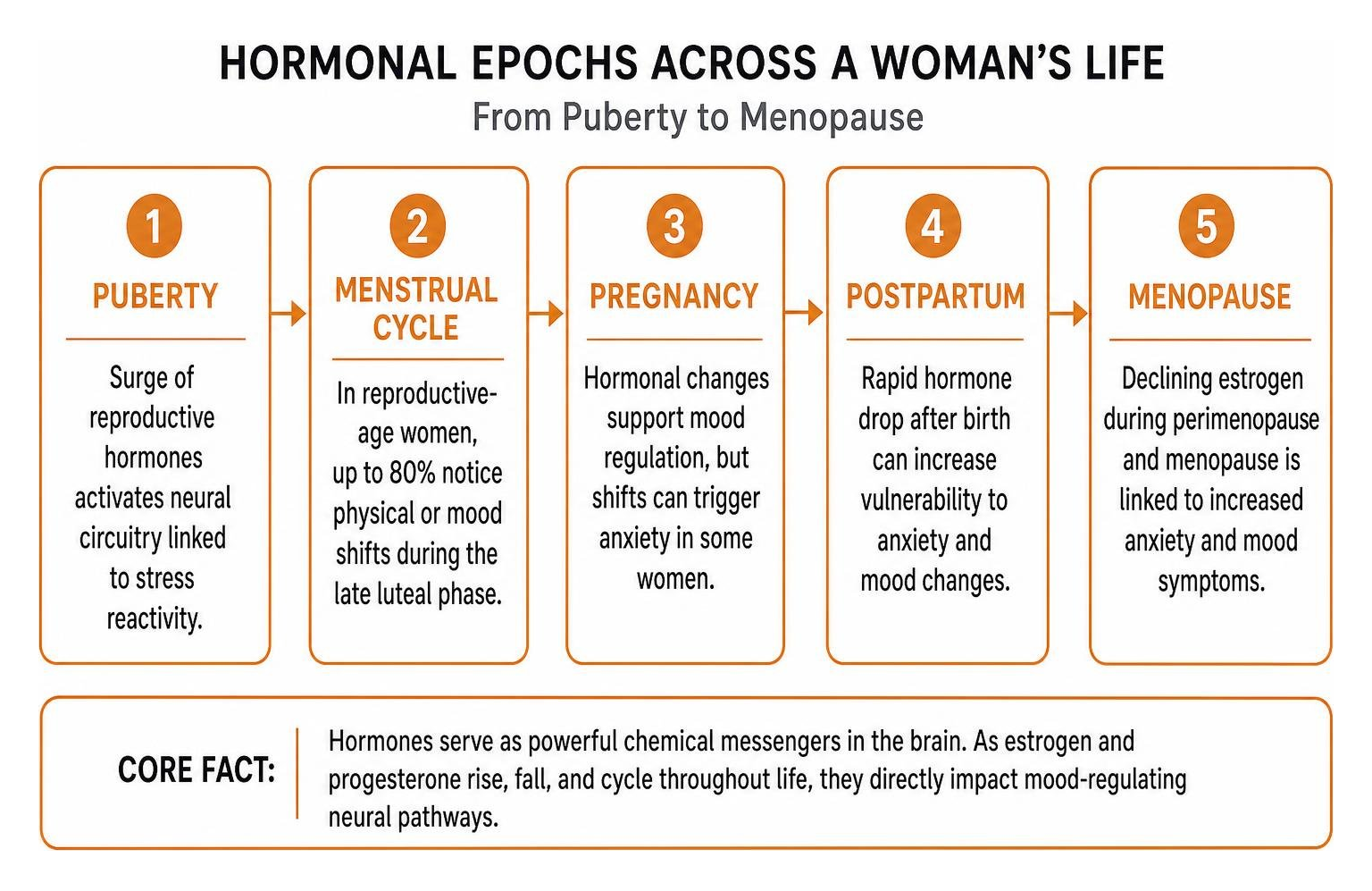
Hormones serve as powerful chemical messengers in the brain. As estrogen and progesterone rise, fall, and cycle throughout life, they directly impact mood-regulating neural pathways.
Puberty, the Menstrual Cycle, and Premenstrual Dysphoria
During puberty, the surge of reproductive hormones activates neural circuitry linked to stress reactivity. In reproductive-age women, up to 80% notice physical or mood shifts during the late luteal phase (the days preceding menstruation), when estrogen and progesterone drop steeply.
Approximately 5% to 8% of women experience Premenstrual Dysphoric Disorder (PMDD), a severe condition characterized by extreme irritability, dysphoria, and marked anxiety during the luteal phase. Notably, around 40% of women with PMDD also meet diagnostic criteria for GAD. Identifying these subtle shifts in daily routines is covered in 5 ways anxiety shows up in everyday life and what to do about it.
Perinatal and Postpartum Anxiety Considerations
The perinatal window—spanning pregnancy and the postpartum year—involves unprecedented hormonal shifts. Estrogen and progesterone skyrocket during pregnancy and drop precipitously within hours after delivery.
While postpartum depression is widely discussed, perinatal and postpartum anxiety are just as common. Symptoms include intrusive, terrifying thoughts about infant harm, hypervigilance, and somatic panic attacks. Clinicians utilize validated screening tools like the Postpartum Specific Anxiety Scale and the Perinatal Anxiety Screening Scale. Comprehensive care guidance is detailed in our complete guide to prenatal and postpartum mental health as well as our resource on understanding postpartum depression signs, symptoms, and support.
Perimenopause, Menopause, and Midlife Transitions
Perimenopause (the transition leading up to menopause) represents a period of significant hormonal volatility. Estrogen does not simply decline smoothly; it fluctuates erratically before dropping permanently (Hantsoo & Epperson, 2017).
According to Johns Hopkins Medicine guidance on perimenopause and anxiety, declining estradiol reduces central serotonin availability while increasing cortisol reactivity. This physiological shift frequently triggers new-onset anxiety or exacerbates preexisting conditions. Research on the global burden of anxiety disorders during perimenopause highlights that up to 16.6% of perimenopausal women experience mild anxiety, with 4.4% reporting moderate to severe symptoms (Zhang et al., 2025).
Physical symptoms like hot flashes and night sweats activate the sympathetic nervous system, mimicking panic attacks. When sleep is continually disrupted, the brain’s emotional resilience falters. If chronic sleep issues emerge during midlife, evaluating sleep apnea and mental health to see why sleep disorders worsen anxiety can prevent misattribution of symptoms solely to psychological stress.
Evidence-Based Therapies, Medications, and Self-Care Approaches
Fortunately, anxiety disorders respond well to treatment. Modern care combines behavioral interventions, pharmacotherapy, and evidence-backed lifestyle modifications.

Tailoring Clinical Treatments for Anxiety in Women
- Psychotherapy: Cognitive Behavioral Therapy (CBT) remains the gold standard, helping patients identify, challenge, and reframe catastrophic cognitive distortions while gradually reducing avoidance behaviors. Acceptance and Commitment Therapy (ACT) and Mindfulness-Based Cognitive Therapy (MBCT) provide additional emotional regulation tools. Explore treatment modalities in the ultimate guide to types of psychotherapy for anxiety.
- Pharmacotherapy: Selective Serotonin Reuptake Inhibitors (SSRIs) and Serotonin-Norepinephrine Reuptake Inhibitors (SNRIs) are first-line medications. In cases of PMDD, SSRIs can sometimes be prescribed intermittently during the luteal phase only.
- Non-Pharmacological Approaches: For mild to moderate symptoms, many women successfully manage symptoms without pharmaceuticals. Read more about managing anxiety without medication when psychotherapy is enough.
Complementary Therapies, Somatic Care, and Lifestyle Adjustments
- Somatic Relaxation: Somatic practices like Progressive Muscle Relaxation (PMR) and diaphragmatic breathing calm an overactive nervous system. Follow practical steps in tense to calm: step-by-step relaxation exercises that melt anxiety away.
- Yoga and Mindfulness: Regular yoga reduces sympathetic tone, lowers resting cortisol levels, and improves emotional regulation.
- Aerobic Exercise: Engaging in 150 minutes of moderate cardiovascular activity weekly promotes neuroplasticity, elevates endorphins, and metabolizes stress hormones.
- Coping Mechanisms: Developing day-to-day resilience strategies is covered extensively in a practical field guide to anxiety coping skills used in modern therapy.
Frequently Asked Questions About Anxiety in Women
What should I do if I think I have an anxiety disorder?
Start by scheduling an evaluation with a primary care physician or mental health professional to rule out underlying medical issues (such as thyroid imbalances or vitamin deficiencies). Clinicians frequently utilize standardized assessment tools; you can learn more by decoding your GAD-7 anxiety score with MDCalc.
If you or a loved one is in immediate crisis, support is available 24/7 by calling or texting the Suicide & Crisis Lifeline at 988.
How are anxiety medications managed during pregnancy and breastfeeding?
Managing medication during pregnancy and lactation involves a careful risk-benefit analysis conducted alongside a psychiatrist and obstetrician. Untreated maternal anxiety carries genuine risks, including elevated stress hormones, preterm labor, and postpartum complications. Many modern medications have established safety profiles during pregnancy and breastfeeding, allowing clinicians to tailor treatment to protect both mother and child.
Why are women more likely than men to develop anxiety disorders?
The heightened prevalence in women stems from an interplay of factors: rapid hormonal fluctuations across reproductive milestones, differences in central GABAergic and serotonergic processing, higher lifetime exposure to interpersonal trauma, and complex psychosocial pressures surrounding caregiving and societal roles.
Conclusion
Anxiety is not a personal failure or an unavoidable reality you must endure alone. Understanding how biological transitions, neurochemistry, and life stressors intersect empowers women to seek effective, personalized care. Less than 37% of people suffering from anxiety disorders receive treatment—yet evidence-based psychotherapy, tailored medications, and intentional lifestyle adjustments offer significant relief and restore vitality.
At Oak Health Center, we provide comprehensive, compassionate mental healthcare across Southern California—with convenient clinic locations in Beverly Hills, Fullerton, Laguna Hills, Rancho Cucamonga, and South Pasadena—as well as virtual telehealth services statewide throughout California. If you or someone you care about is struggling with persistent, overwhelming worry, learn more about recognizing severe anxiety symptoms and getting help or connect with our team today to begin your path toward sustainable relief.
References
Hantsoo L, Epperson CN. “Anxiety Disorders Among Women: A Female Lifespan Approach..” Focus (American Psychiatric Publishing), 2017. PMCID PMC5613977. Zhang Y, Hu TT, Cheng YR, Zhang ZF, Su J. “Global, regional, and national burden of anxiety disorders during the perimenopause (1990-2021) and projections to 2035..” BMC women’s health, 2025. PMCID PMC11706191.