

Anxiety Attack Symptoms in Women: What to Watch For
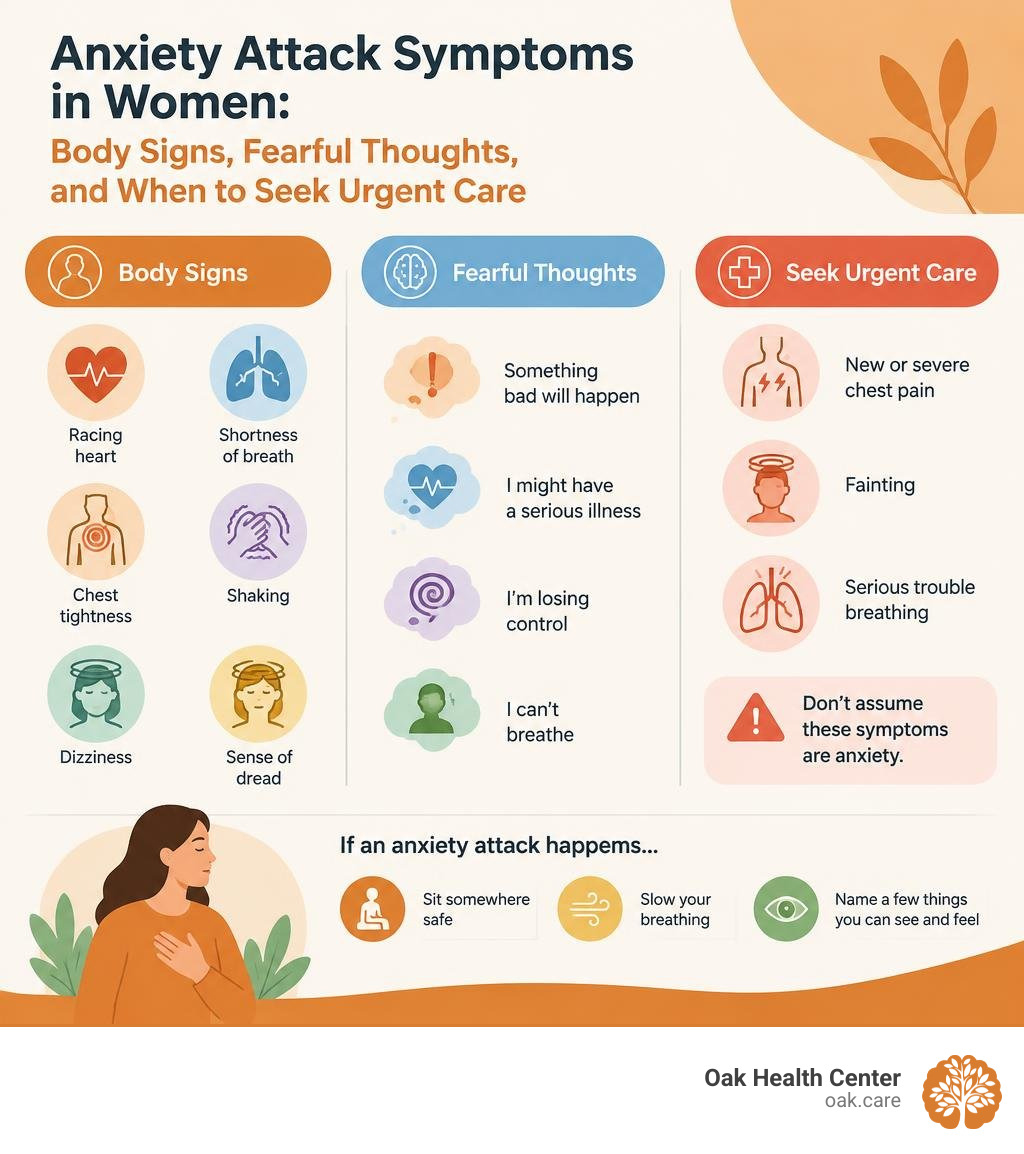
An anxiety attack may bring a racing heart, chest tightness, shortness of breath, shaking, dizziness, or a sudden sense of dread. If it happens, sit somewhere safe, slow your breathing, and name a few things you can see and feel. Get urgent medical help for new or severe chest pain, fainting, or serious trouble breathing. Don’t assume those symptoms are anxiety.
Women are more likely than men to develop anxiety disorders. Stress, poor sleep, and hormonal changes may also affect when symptoms appear. During an acute anxiety attack, women often experience a sudden surge of physical distress that feels overwhelming. This cheat sheet will help you spot these signs and know when to seek professional support.
I’m Andrew Brewer, Oak Health Center’s practice manager, and I work with clinical staff to make mental health care easier to access. I bring that experience to this guide on recognizing and managing female anxiety symptoms, starting with the warning signs you may notice first.
Core Symptoms and Warning Signs of an Anxiety Attack: Women vs. Men

Anxiety disorders are the most common mental health conditions in the United States, impacting roughly 40 million adults every year. Yet, anxiety does not affect all genders equally. In the past year, epidemiological data indicates that 23.4% of females experienced an anxiety disorder compared to 14.3% of males. Lifetime prevalence is even more pronounced: women are more than twice as likely as men to develop an anxiety disorder, including panic disorder.
While both men and women experience sympathetic nervous system arousal during an acute surge of panic, the physiological presentation often diverges. Women are significantly more prone to prominent respiratory symptoms (such as hyperventilation and air hunger) and somatic manifestations involving the gastrointestinal tract and sensory nervous system. In contrast, men frequently present with higher rates of autonomic sweating or externalized irritability.
Understanding these physical cues is critical, especially when decoding anxiety chest symptoms in women and when to seek help, as cardiovascular sensations are among the most distressing elements of an episode.
| Symptom Category | Manifestation in Women | Manifestation in Men |
|---|---|---|
| Primary Respiratory Symptoms | High frequency of shortness of breath, choking sensations, and hyperventilation | Moderate respiratory distress; more localized chest tightness |
| Cardiovascular & Somatic Signs | Rapid tachycardia, dizziness, nausea, paresthesia (tingling), and sudden fatigue | Palpitations, elevated blood pressure, diaphoresis (profuse sweating) |
| Cognitive Features | Fear of losing control, intense depersonalization, internal rumination | Externalized frustration, urge to flee or fight, situational avoidance |
| Agoraphobic Complications | Twice as likely to develop avoidance of spaces where panic occurred | Lower reported rates of subsequent agoraphobia |
Physical vs. Somatic Presentations of an Anxiety Attack in Women
During an episode, the body’s fight-or-flight response floods the bloodstream with adrenaline and cortisol. For women, this surge generates profound somatic distress that can mimic acute medical crises.
- Tachycardia and Palpitations: A sudden, pounding heart rate that feels as though your heart is skipping beats or fluttering violently against your ribs.
- Chest Pain and Tightness: Often described as a sharp, stabbing sensation or an intense band of pressure around the ribcage. Reviewing what anxiety attack chest pain feels like and when to get help can help clarify how muscle tension and rapid breathing drive this discomfort.
- Dyspnea and Air Hunger: The subjective feeling of being unable to draw a full breath, leading to rapid, shallow breathing that inadvertently worsens carbon dioxide depletion.
- Paresthesia and Dizziness: Numbness or tingling sensations, particularly in the fingers, toes, lips, and face, often accompanied by lightheadedness or feeling faint.
- Upper Airway Sensations: Many women ask can anxiety cause dry throat and sudden gagging? Yes; stress constricts the pharyngeal muscles (globus sensation) and halts salivation, creating an uncomfortable throat sensation during peak distress.
For deeper insights into these physical patterns, reviewing clinical insights on female panic attacks provides valuable validation for how somatic signs present in day-to-day life.
Cognitive and Emotional Warning Signs
The mental distress of an anxiety attack is often just as intense as the physical pain. It typically escalates rapidly, reaching maximum severity within 10 minutes.
Women frequently report experiencing derealization (a feeling that the external world is unreal, distant, or dreamlike) and depersonalization (feeling detached from one’s own body or voice). These dissociative defenses occur when the brain becomes overwhelmed by sensory input. They are almost always paired with an overwhelming sense of impending doom or catastrophic thoughts—such as a conviction that you are having a stroke, losing your mind, or dying. Recognizing these signs early using a comprehensive guide to recognizing severe anxiety symptoms helps demystify the experience and prevents the compounding panic that follows bodily misinterpretations.
Hormonal Drivers, Life Stages, and Underlying Triggers

A major reason women experience anxiety attacks at more than double the rate of men lies within the complex interplay between ovarian hormones and central neurotransmitters (Hantsoo & Epperson, 2017). Estrogen and progesterone do not merely govern reproduction; they modulate serotonin, dopamine, and gamma-aminobutyric acid (GABA)—the primary inhibitory neurotransmitter responsible for calming the brain.
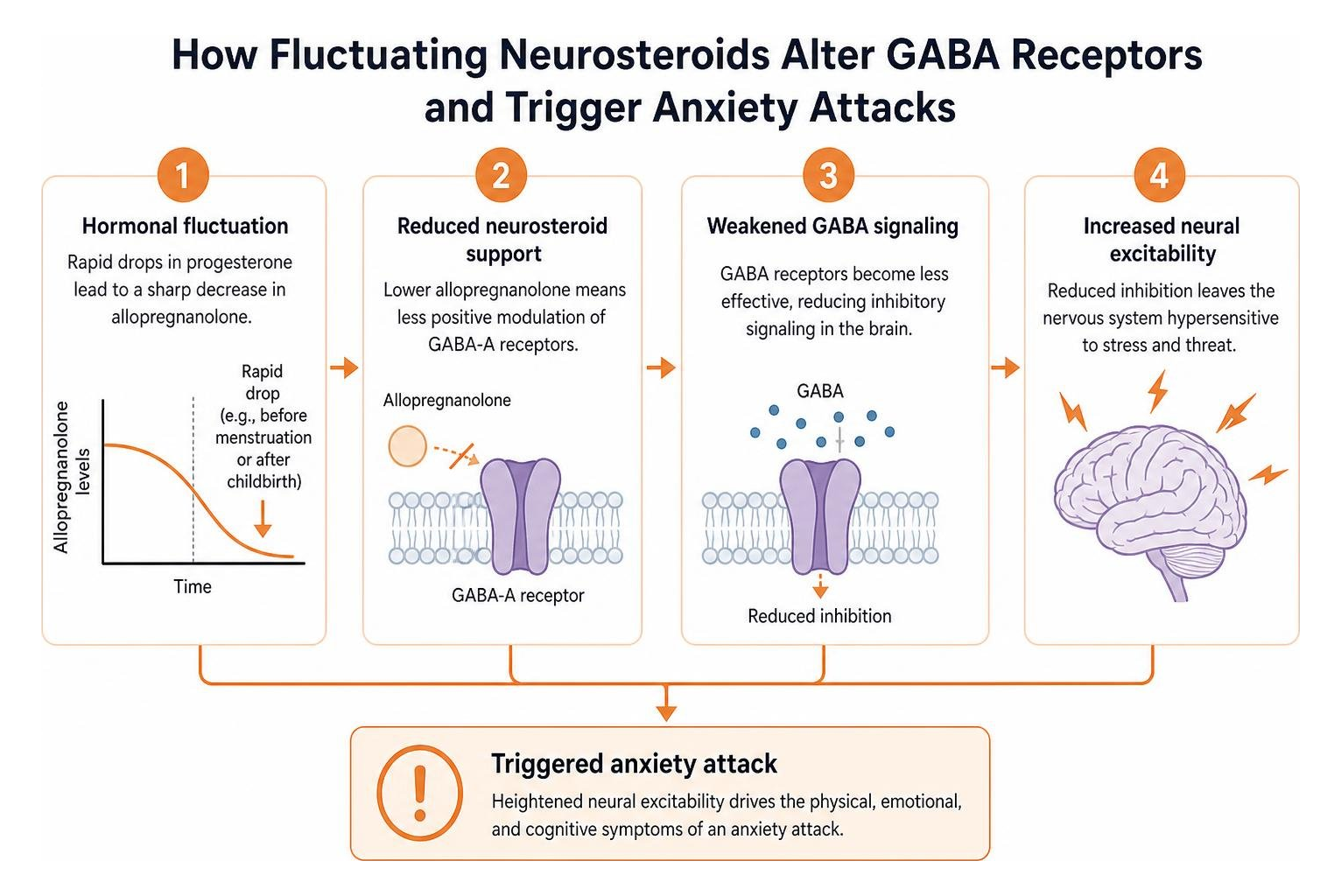
Progesterone converts into allopregnanolone, a neurosteroid that acts directly on GABA-A receptors. Rapid drops in allopregnanolone—such as those occurring right before menstruation or following childbirth—can destabilize GABA signaling, leaving the nervous system hypersensitive to stress.
Reproductive Cycles and Anxiety Attack Frequency Across the Female Lifespan
Throughout life, reproductive milestones create distinct windows of vulnerability for anxiety:
- Puberty Onset: Before puberty, boys and girls experience similar rates of anxiety. Following menarche, female anxiety rates surge dramatically due to early cyclic hormonal swings and neurodevelopmental changes.
- The Luteal Phase and PMDD: During the late luteal phase (the week preceding menstruation), steep declines in estrogen and progesterone provoke premenstrual dysphoric disorder (PMDD) or premenstrual exacerbation of baseline anxiety.
- Perinatal and Postpartum Periods: Pregnancy brings massive neuroendocrine shifts. Following delivery, hormone levels drop abruptly within hours, leaving new mothers vulnerable to postpartum anxiety, intrusive worry, and acute panic. High-profile medical discussions, such as Dr. Jennifer Ashton’s perspective on women’s anxiety attacks, have highlighted how biological vulnerabilities and sudden stressors combine to trigger severe anxiety events.
- Perimenopause and Menopause: In perimenopause, erratic estrogen fluctuations dysregulate the brain’s thermoregulatory center and autonomic nervous system. This often leads to waking up gasping with a racing heart, as outlined in clinical discussions on nighttime panic attacks during perimenopause.
Psychosocial Pressures and Environmental Triggers
Hormones set the biological stage, but psychosocial environments often pull the trigger. Women face disproportionate rates of “role overload”—balancing full-time careers with caregiving responsibilities for children and aging parents. This chronic depletion of cognitive bandwidth leaves little room for nervous system recovery.
We frequently see this in career-driven environments; exploring anxiety in high-achieving professionals shows how relentless perfectionism and masking internal distress accelerate burnout. Furthermore, persistent stress disrupts sleep architectures. Understanding how anxiety, depression and sleep problems feed each other illustrates the bidirectional cycle: sleep deprivation sensitizes the amygdala, making panic attacks more frequent, which in turn fuels bedtime apprehension.
Sociodemographic stressors also play a measurable role. A study on panic attacks in reproductive-age females demonstrated that environmental strain, marital disruption, and family history significantly elevate the odds of acute panic (Al et al., 2025).
Differential Diagnosis and Medical Evaluation
Because the physical symptoms of an anxiety attack are visceral and frightening, comprehensive medical evaluation is essential. An anxiety attack should never simply be assumed until medical mimics are systematically ruled out.
Primary physical conditions that can mimic or exacerbate panic symptoms include:
- Endocrine Disorders: Hyperthyroidism or pheochromocytoma (which cause rapid surges in heart rate and tremor).
- Cardiac Conditions: Supraventricular tachycardia (SVT), mitral valve prolapse, and coronary artery disease.
- Respiratory Diseases: Uncontrolled asthma or pulmonary embolism.
- Nutritional & Metabolic Deficiencies: Severe anemia, hypoglycemia, electrolyte imbalances, or extreme vitamin D/B12 deficiency.
Consulting an in-depth guide to anxiety disorders provides clear context on how physical exams and psychiatric assessments work together to identify the root cause of these episodes.
Distinguishing Anxiety Attacks from Panic Disorder, Cardiac Events, and GAD
Navigating mental health terms can be confusing. While colloquial language often uses “anxiety attack” and “panic attack” interchangeably, clinical practice distinguishes between continuous anxiety and episodic panic:
- Generalized Anxiety Disorder (GAD): Involves chronic, pervasive worry occurring more days than not for at least six months. If you are unsure whether your ongoing tension qualifies, learning how to tell if your worry is actually GAD helps clarify the boundary between everyday stress and clinical anxiety.
- Panic Disorder: Characterized by recurrent, unexpected panic attacks followed by at least a month of persistent worry about having another attack or significant maladaptive behavioral changes (like avoiding public places).
- Comorbid Depression: Anxiety rarely lives in complete isolation. Learning how to identify symptoms of anxiety and depression allows clinicians to address low mood, anhedonia, and panic simultaneously.
Clinical Screening Tools and Diagnostic Criteria
To evaluate your symptoms, mental health clinicians use validated screening instruments alongside standard diagnostic criteria:
- DSM-5 Diagnostic Standards: Evaluates the presence of at least 4 out of 13 specific cognitive and somatic symptoms that peak within minutes. You can review a practical guide to anxiety DSM-5 criteria to see how clinicians structure formal diagnoses.
- The GAD-7 Scale: A 7-item self-report questionnaire assessing symptom frequency. Understanding your clinical baseline begins with decoding your GAD-7 anxiety score to categorize severity from mild to severe.
- Dual Assessments: Because mood and anxiety overlap significantly, psychiatric providers often use tandem screening. The rationale behind double trouble: why doctors use both GAD-7 and PHQ-9 explains how this practice ensures no co-occurring depressive symptoms are missed.
Evidence-Based Treatment Options and Interventions
Anxiety attacks are exceptionally treatable. Less than 37% of people suffering from anxiety disorders currently seek care, often due to stigma or the belief that they must simply “tough it out.” With evidence-based support, full recovery and long-term symptom remission are realistic goals. Knowing how to know when it is time to see a psychiatrist is often the first step toward building an effective, personalized care plan.
Psychotherapy and Cognitive Behavioral Modalities
Psychotherapy is a first-line treatment for anxiety attacks and panic disorders. Among available modalities, Cognitive Behavioral Therapy (CBT) has the strongest clinical track record.
CBT targets both cognitive distortions and bodily fears:
- Cognitive Restructuring: Identifies catastrophic automatic thoughts (e.g., “My racing heart means I’m collapsing”) and replaces them with balanced realities (“My nervous system is activated, but I am physically safe”). Discover how mind over matter with CBT and evidence-based therapy reprograms these neural feedback loops.
- Interoceptive Exposure: Systematically and safely exposes individuals to feared physical sensations (like hyperventilating or spinning in a chair) in a controlled setting, teaching the brain that somatic arousal is harmless.
- Comprehensive Therapy Selection: Beyond CBT, modalities like Acceptance and Commitment Therapy (ACT) and Dialectical Behavior Therapy (DBT) offer specialized tools. Explore the ultimate guide to types of psychotherapy for anxiety to evaluate different approaches.
- Non-Medication Paths: For many women with mild to moderate symptoms, therapy alone is sufficient. Discover practical strategies for managing anxiety without medication to build long-term resilience.
Pharmacological Management and Safety During Pregnancy
When symptoms significantly impair daily life, work, or relationships, medication provides vital neurochemical stabilization:
- Selective Serotonin Reuptake Inhibitors (SSRIs) & SNRIs: Medications such as sertraline, escitalopram, and venlafaxine serve as gold-standard maintenance therapies. They help regulate serotonin and norepinephrine without the risks of habituation or cognitive dulling.
- Beta-Blockers (e.g., Propranolol): Taken as needed, these medications block peripheral adrenaline receptors, blunting physical symptoms like hand tremors and rapid heartbeat during situational spikes.
- Perinatal Considerations: Treating anxiety during pregnancy and breastfeeding requires balancing maternal stability against potential fetal risks. Untreated maternal anxiety carries documented risks, including elevated rates of preterm birth and low birth weight (Hantsoo & Epperson, 2017). SSRIs such as sertraline have extensive safety databases and are frequently prescribed under reproductive psychiatric guidance.
For individualized evaluations, connecting with our specialized psychiatry services ensures your treatment plan is tailored safely to your biological needs and life stage.
In-the-Moment Coping Strategies and Prevention Techniques
When an anxiety attack strikes, logical reasoning goes offline as the amygdala takes over. To halt an attack in its tracks, you must engage the body through somatic grounding and vagus nerve stimulation:
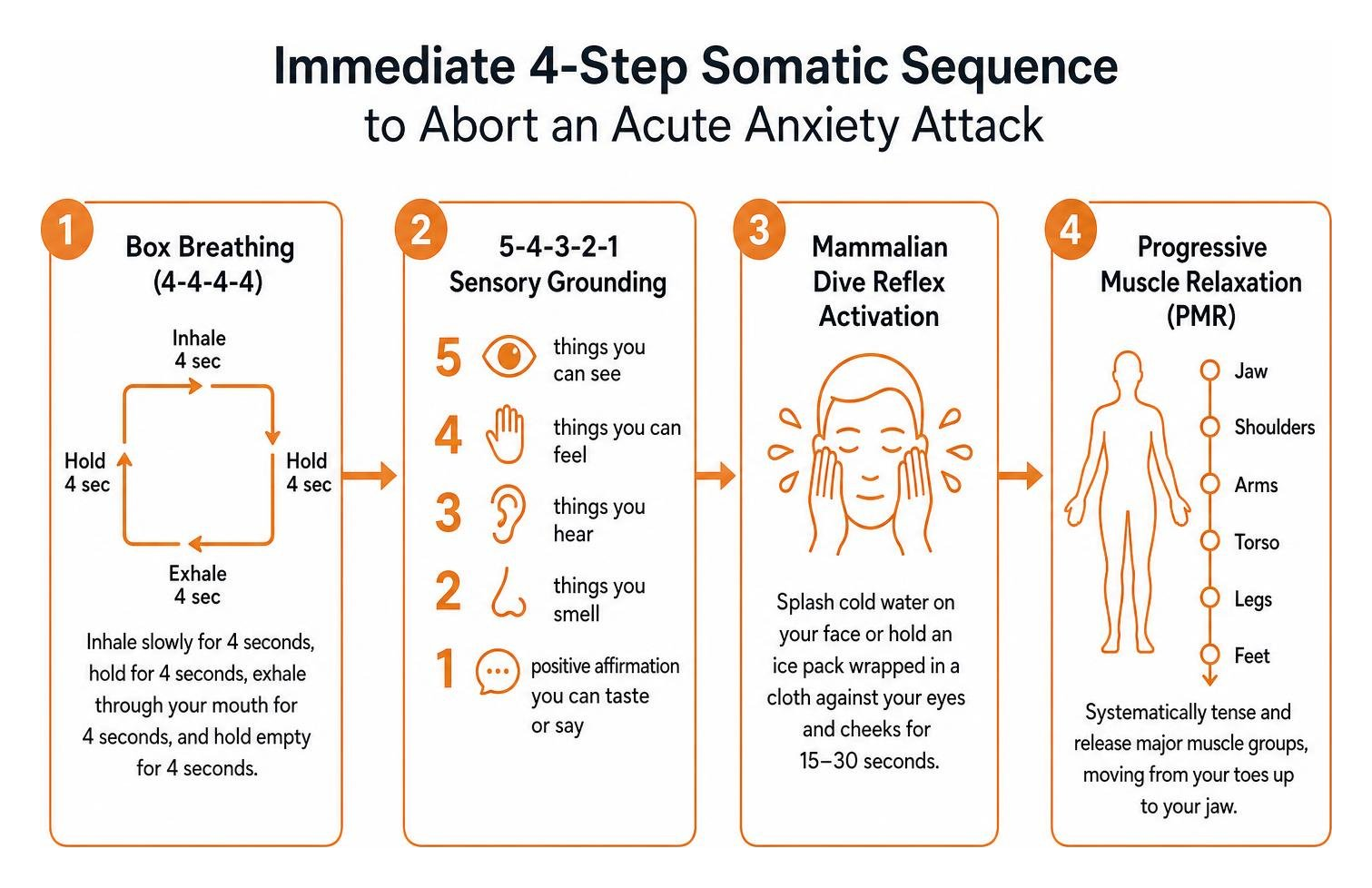
- Box Breathing (4-4-4-4): Inhale slowly for 4 seconds, hold for 4 seconds, exhale through your mouth for 4 seconds, and hold empty for 4 seconds. This resets blood gas levels and halts hyperventilation.
- The 5-4-3-2-1 Sensory Grounding Method: Name 5 things you can see, 4 things you can physically feel, 3 distinct sounds you hear, 2 things you can smell, and 1 positive affirmation you can taste or say.
- Mammalian Dive Reflex Activation: Splash cold water on your face or hold an ice pack wrapped in a cloth against your eyes and cheeks for 15–30 seconds. This rapidly lowers heart rate via the parasympathetic vagal reflex.
- Progressive Muscle Relaxation (PMR): Systematically tense and release major muscle groups, moving from your toes up to your jaw. Practice these skills using tense to calm relaxation exercises to release stored physical tension.
For ongoing daily maintenance, explore a practical field guide to anxiety coping skills and practical steps for overcoming sleep anxiety naturally to keep your baseline nervous system calm and resilient.
Frequently Asked Questions About Female Anxiety Attacks
How can I distinguish between an anxiety attack and a cardiac event?
While both conditions can present with chest discomfort, shortness of breath, and sweating, their clinical patterns typically differ:
- Onset: Cardiac chest pain frequently begins or worsens with physical exertion, whereas anxiety attacks commonly strike while at rest or under emotional stress.
- Pain Quality: Anxiety-related chest pain is often sharp, localized, or stabbing, lasting for brief spikes or resolving within 20–30 minutes. Cardiac pain often presents as an unrelenting crushing, squeezing, or heavy pressure across the chest.
- Radiation: Heart attacks frequently radiate pain steadily into the left arm, jaw, neck, or back.
- Rule of Thumb: If you are experiencing new, unexplained chest pain, pressure, or fainting, always seek immediate emergency medical care. Never attempt to self-diagnose chest pain.
Why do hormonal shifts during perimenopause cause nighttime panic attacks?
During perimenopause, erratic declines in estrogen destabilize both the hypothalamus (the brain’s thermostat) and nocturnal cortisol rhythms. A sudden drop in estrogen can trigger a nocturnal hot flash or night sweat, which activates an immediate adrenaline surge. Women often awaken instantly from a deep sleep in full autonomic fight-or-flight arousal—with tachycardia, trembling, and breathlessness—before they even realize a temperature spike occurred.
What are the safest treatment protocols for anxiety attacks during pregnancy?
First-line interventions for mild to moderate perinatal anxiety include structured non-pharmacological modalities, specifically CBT and mindfulness-based stress reduction. When symptoms are moderate to severe, reproductive psychiatrists and obstetricians collaborate on a risk-benefit analysis. SSRIs (particularly sertraline) are widely studied in perinatal medicine and frequently utilized because untreated maternal panic and sustained cortisol elevation pose independent risks to fetal development and maternal well-being.
Conclusion
Living with recurrent anxiety attacks can feel overwhelming, but these episodes do not have to define your life. Anxiety is not a personal failure, a sign of weakness, or an unavoidable part of womanhood—it is a recognizable, highly treatable neurobiological response.
At Oak Health Center, we provide compassionate, evidence-based mental healthcare tailored to women’s unique biological and psychological needs. Whether you prefer in-person visits at our clinics across Southern California (Beverly Hills, Fullerton, Laguna Hills, Rancho Cucamonga, and South Pasadena) or the convenience of statewide tele-behavioral health across California, our team is here to support you.
If you are trying to understand your symptoms, begin with our stress vs anxiety attack guide for women or reach out to our team today to schedule an evaluation and regain control of your well-being.
References
Hantsoo L, Epperson CN. “Anxiety Disorders Among Women: A Female Lifespan Approach..” Focus (American Psychiatric Publishing), 2017. PMCID PMC5613977. Al Saleh M, Alshammary Z, Alsaif BA, Alzubaidi FH, Bawazeer DM, Al-Asmari B, Alahmari M. “Prevalence and predictors of panic attacks among reproductive-age females among the attendees of primary health centers of Abha, Saudi Arabia..” Journal of education and health promotion, 2025. PMCID PMC12327754.